



Places to Visit in Harbin: Attractions, Areas and Visiting Tips
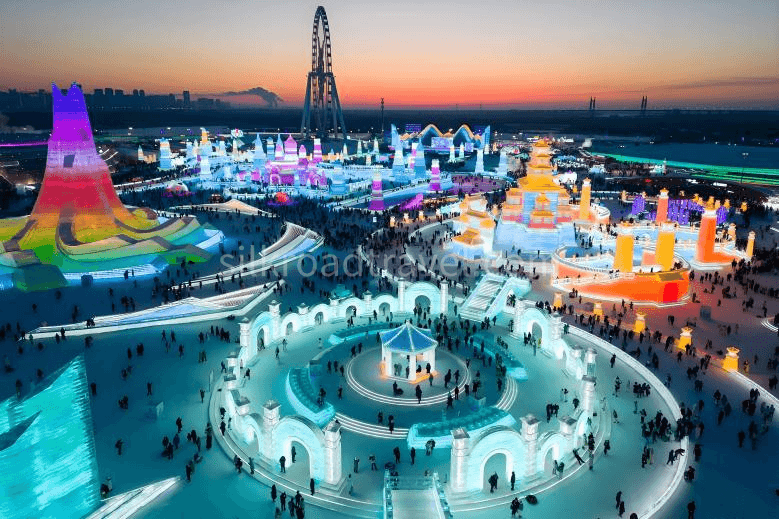
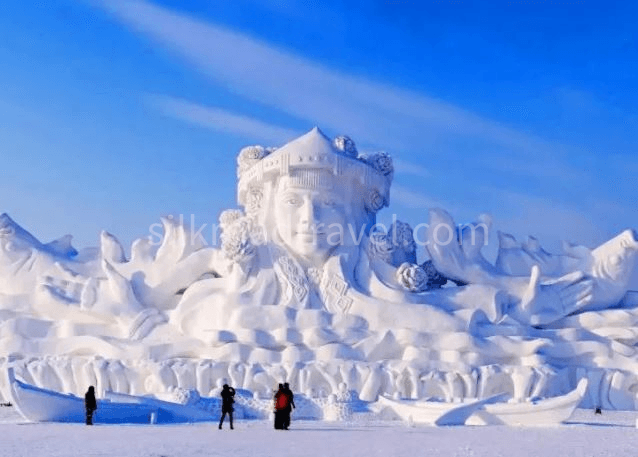
Harbin's main attractions range from illuminated ice buildings and snow sculptures to historic streets, museums and the Songhua River waterfront. For a first visit, Central Street and Saint Sophia Cathedral make a useful starting point. In winter, Ice and Snow World and the Sun Island Snow Sculpture Expo offer two distinct experiences: colourful ice displays after dark and detailed snow carvings best appreciated in daylight.

Choosing the right things to do in Harbin means considering more than a list of landmarks. Some sights fit naturally into a city walk; others, such as Volga Manor, deserve a separate outing. This guide compares what each attraction offers, how long to allow and which places work well together, helping you prioritise a two- or three-day visit or build a longer itinerary around architecture, history, photography or winter scenery.
Harbin Attractions: What Are the Best Places to Visit?
Harbin's attractions offer several ways to experience the city. Walk along Central Street for historic facades and food stops, explore Lao Daowai's courtyards, or follow the Songhua River for views of the waterfront. Museums and cultural sites give context to the buildings, while winter brings a choice between illuminated ice structures and large outdoor snow sculptures.
For a first visit, start with a city walk and the attraction that interests you most, then build the rest of your itinerary around them. Ice and Snow World and the Sun Island Snow Sculpture Expo offer different experiences, but visiting both leaves less time for other sights. Volga Manor and destinations further afield need their own travel arrangements.
What Are the Best Harbin Attractions for a First Visit?
For a first visit, prioritise Central Street, Saint Sophia Cathedral and a section of the Songhua River waterfront. Together, they introduce Harbin's architecture, food and relationship with the river without requiring a separate journey for every stop.
In winter, add Ice and Snow World for illuminated ice buildings or Sun Island Snow Sculpture Expo for large works carved from white snow. If you have only two sightseeing days, choosing one leaves more time for the city. Visiting both makes ice and snow the main focus of your trip.
Beyond these landmarks, let your interests guide the choice. Lao Daowai reveals another side of the city's architectural and commercial history. Museums explain the communities and events that shaped it. Animal attractions, Volga Manor and specialist historical sites add variety, but they do not all need to feature in a first visit.
The times below are editorial planning allowances for a selective visit on site. Add travel, meals and substantial queues separately; they are not official visit durations.
Attractions | Main experience | Time on site | When to choose it |
Central Street | Architecture and food stops | 1–2 hours; longer with a meal | A first introduction to the city |
Saint Sophia Cathedral and Square | Landmark architecture | 30–60 minutes outside | Alongside Central Street; add time for the interior |
Songhua River waterfront | River views and a short walk | 30–60 minutes | A flexible addition to a city outing |
Ice and Snow World | Illuminated ice structures | 3–4 hours; longer for activities | A main winter experience |
Sun Island Snow Sculpture Expo | Snow sculpture and daylight photography | 2–3 hours | Art, detail and a different winter landscape |
Lao Daowai | Courtyards, architecture and dining | 1½–2½ hours | Architecture and food interests |
Harbin Museum | City history and art collections | 1½–2½ hours | A cultural addition to a central-city day |
Unit 731 Museum | Wartime history | 2–3 hours | A dedicated historical visit |
Volga Manor | Themed architecture and grounds | 3–4 hours | A separate outing beyond the centre |
A varied itinerary usually gives a fuller introduction than several similar parks. Start with a city walk, then add a major winter exhibition and a cultural visit before deciding whether another attraction offers something different.
Where Are Harbin's Main Attractions, and Which Can You Visit Together?
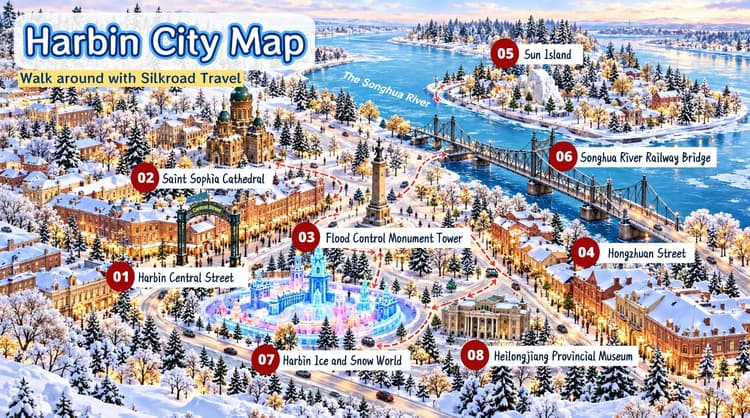
The Songhua River is the most useful starting point for understanding Harbin's sightseeing geography. Much of the historic centre lies south of it, while Sun Island and the main Ice and Snow World site are on the north side.
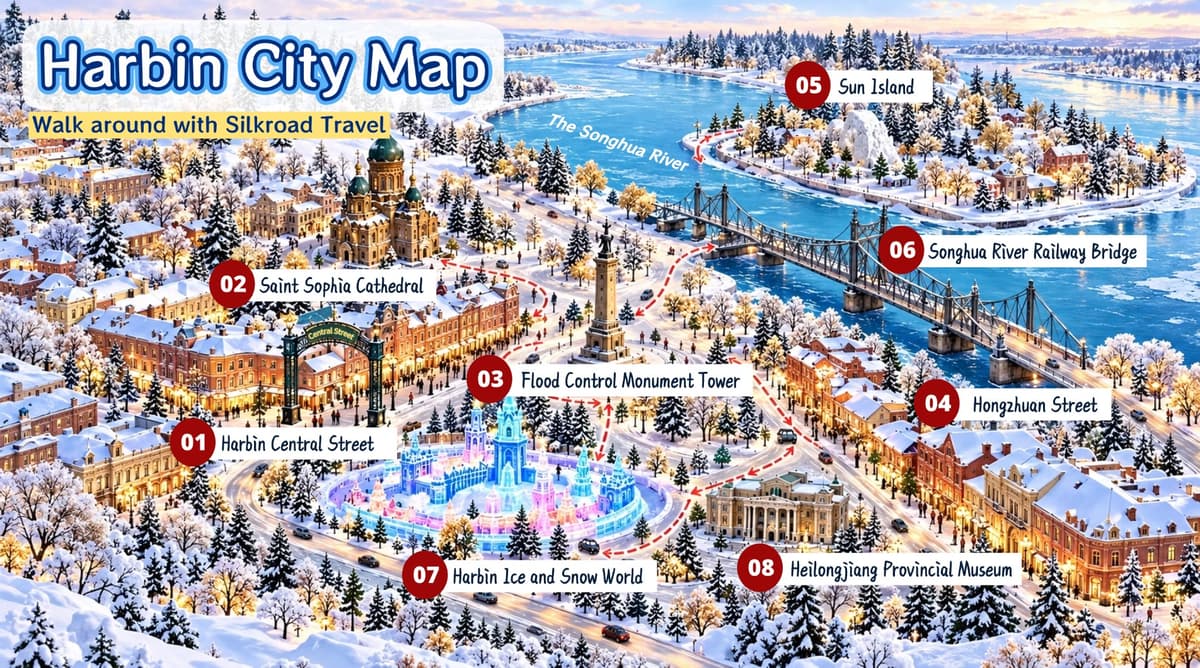
Central Street, Saint Sophia Square and the waterfront form the simplest introductory outing. Start around Sophia Square, continue towards Central Street, then decide whether to reach the river. In winter, a restaurant or café stop along the way makes this more comfortable than one uninterrupted walk.
Lao Daowai is a separate historic area east of the Central Street district. It combines well with the old Binzhou Railway Bridge for visitors interested in streets, railway history and river views. Use a vehicle between them when the weather or walking conditions make a longer connection unattractive.
Sightseeing area | Main places | How it fits into a visit |
Central Daoli and the south-bank waterfront | Central Street, Sophia Square, Stalin Park, Flood Control Monument | A half-day introduction with food and indoor stops |
Lao Daowai and the eastern waterfront | Chinese Baroque Quarter, Binzhou Railway Bridge | A separate architectural outing or an additional half-day |
Sun Island and nearby north-bank venues | Snow Expo, Ice and Snow World, polar attractions | Choose venues individually and allow transfers between entrances |
Wider Songbei | Grand Theatre, Siberian Tiger Park | Plan transport around the chosen attraction |
Nangang and other urban districts | Gogol Street, temples, Dragon Tower and museums | Select by interest and use each venue's exact address |
Places requiring a dedicated journey | Volga Manor, Unit 731 Museum, Acheng and Hulan sights | Reserve a substantial part of the day, including transport |
Two places on the same side of the river may still require a substantial transfer. At large parks, a map pin can mark the grounds rather than the visitor entrance. Plan from entrance to entrance, especially when linking Sun Island with another north-bank venue.
On a short stay, complete one area before moving to the next. Repeatedly crossing the river for individual stops uses time that could otherwise go towards a meal, a museum or a more relaxed visit.
Which Ice and Snow Attractions Should You Visit in Harbin?
Harbin's Ice and Snow Festival is the wider season of winter events. Ice and Snow World is a specific attraction; the Sun Island Snow Sculpture Expo is a separate exhibition. Each has its own admission arrangements and operating dates.
For winter 2026–2027, base your plans on confirmed venue openings rather than a single festival date. At the research check on 27 October 2026, the Ice and Snow World website still displayed ticket information for the 27th edition, the previous winter season. Those prices are not presented here as the new season's rates.
Harbin Ice and Snow World
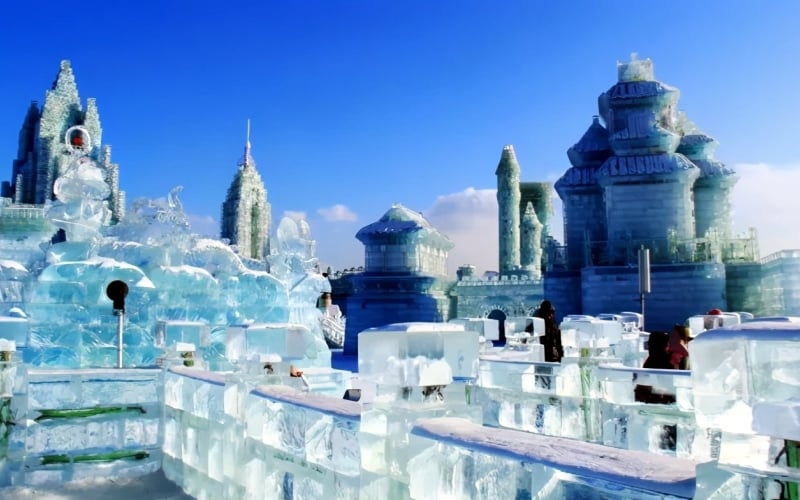
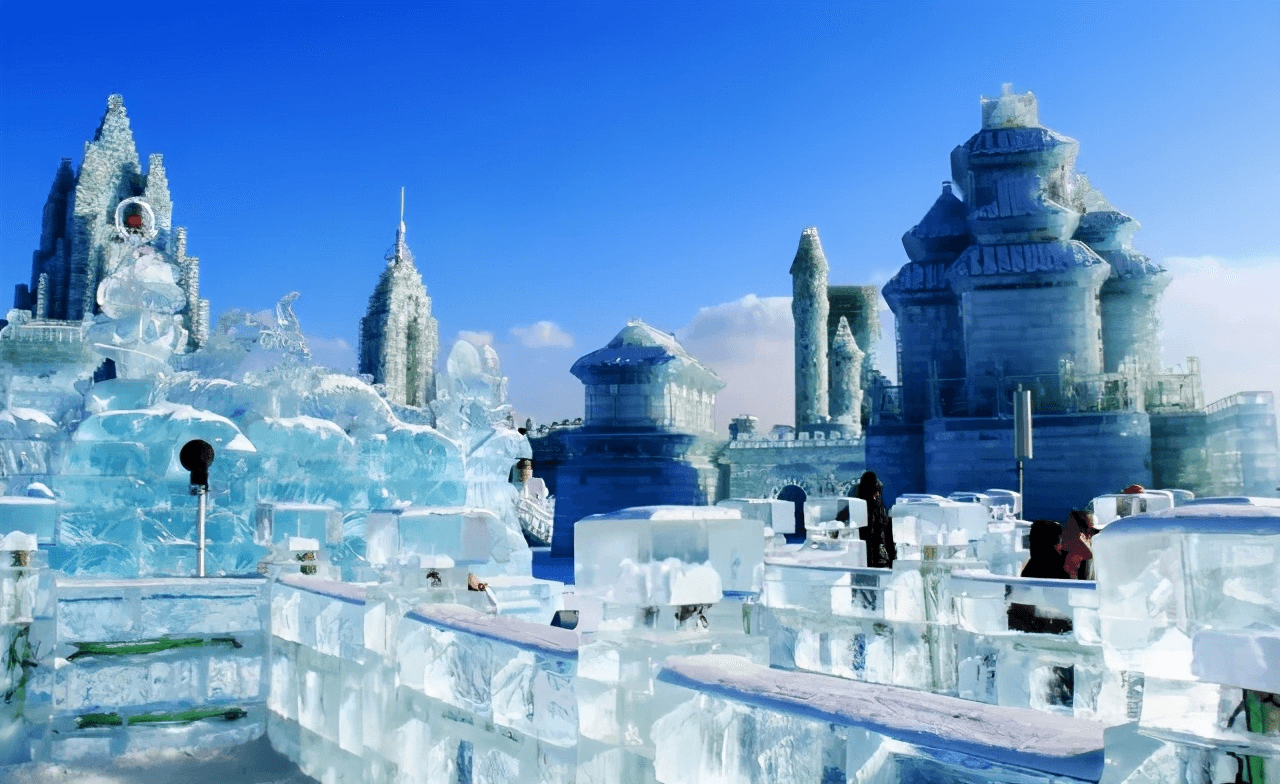
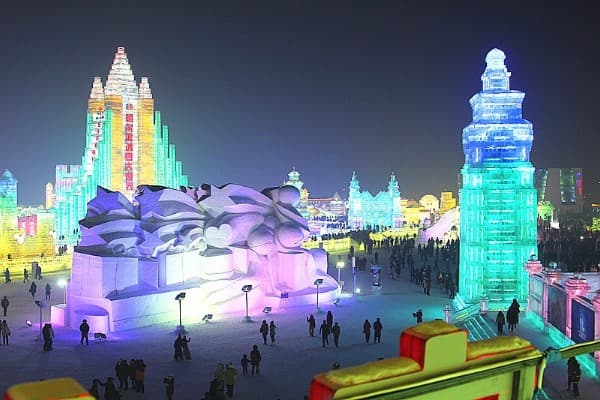
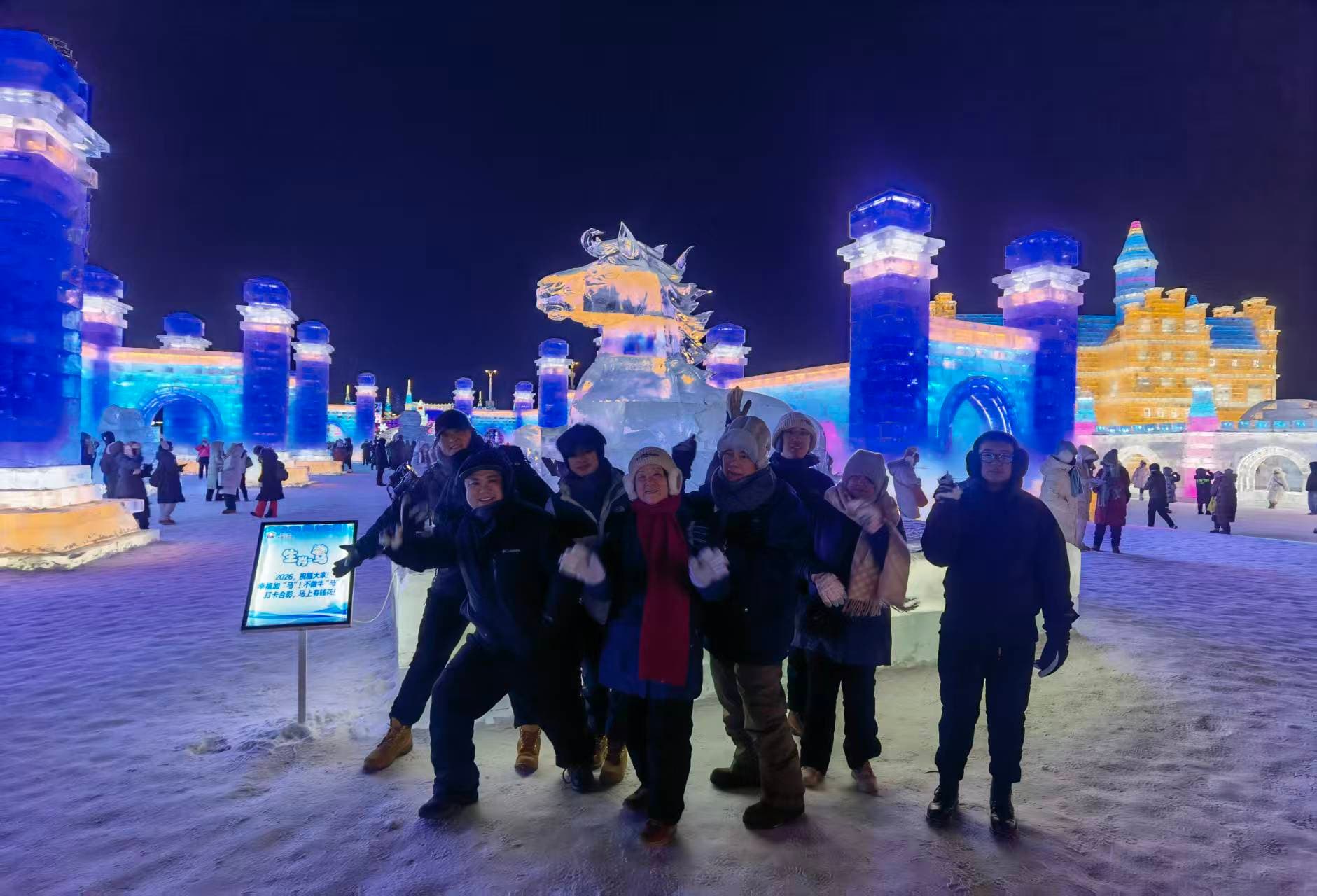
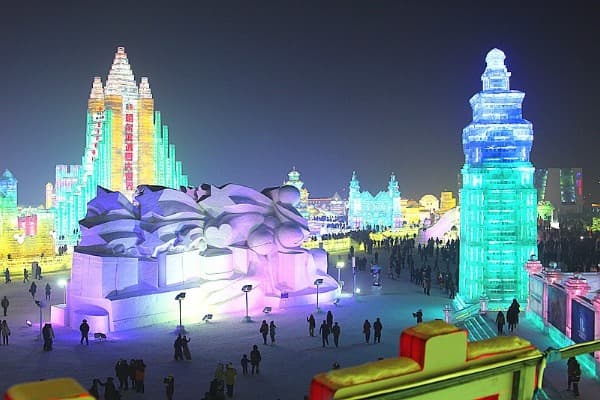
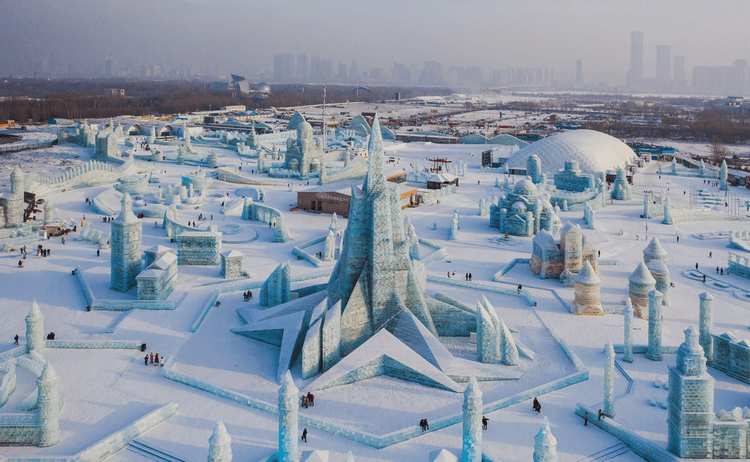
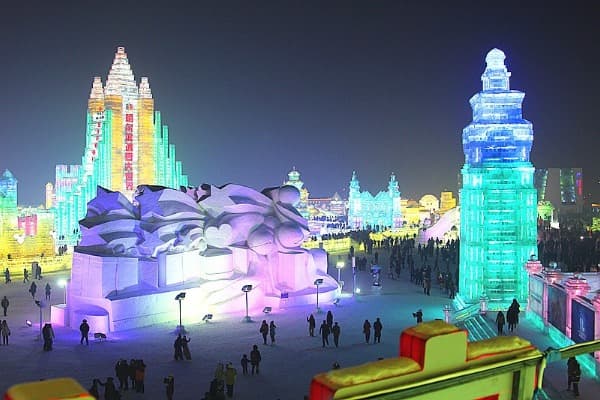
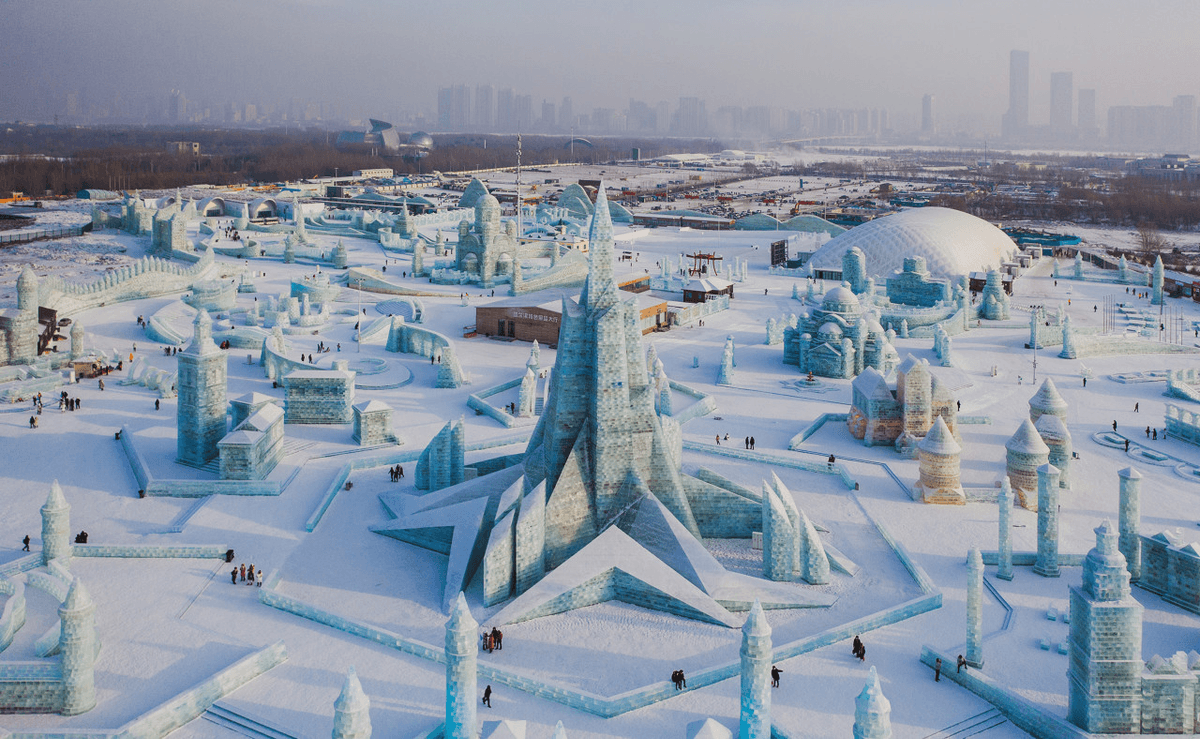
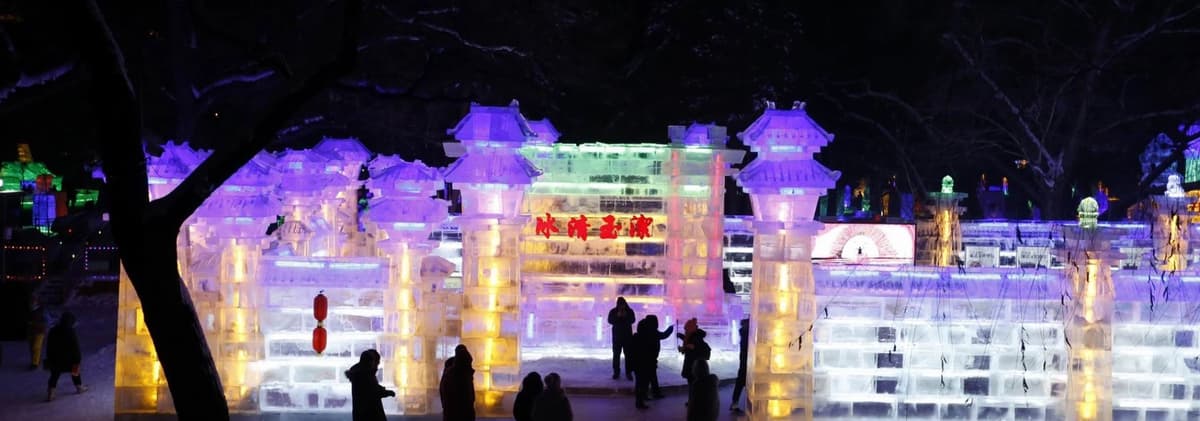
Harbin Ice and Snow World is the strongest choice if you want to walk among large ice buildings and see them illuminated after dark. The scale is part of the experience: people beneath towers, gateways and walls reveal how much larger these structures are than the carvings displayed along a street.
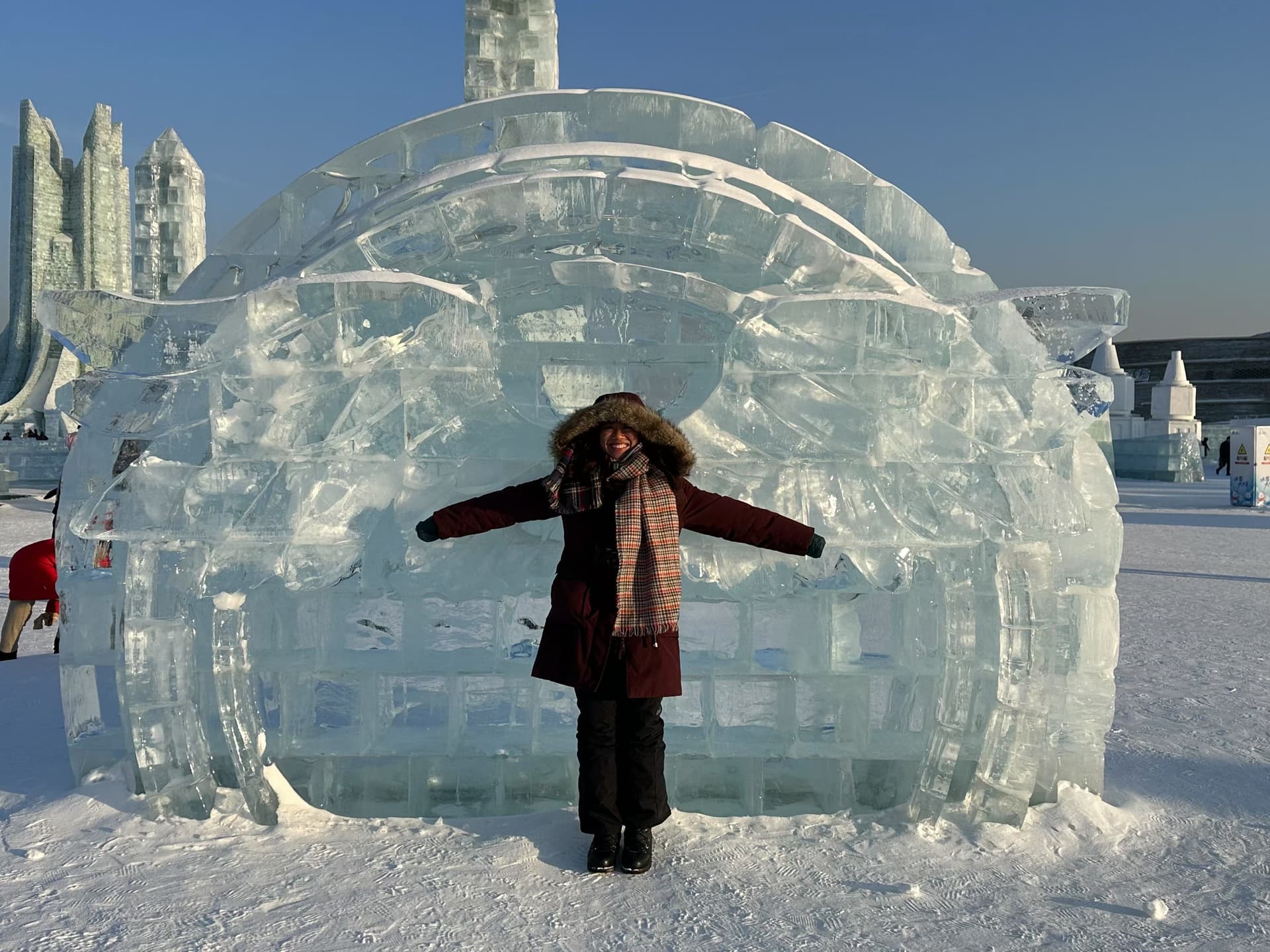
Daylight reveals the material, including its colour, joints and translucency. Evening shifts attention towards lighting and the overall scene. If photography matters, a visit spanning the transition can provide both, as long as the season's opening hours allow it.
Begin with a few landscapes you most want to see rather than trying to cover every structure and activity. On arrival, identify those areas on the current map, locate the exit and any operating indoor facilities, and leave enough energy for the walk back. Viewing the ice can be satisfying without joining a long queue for a slide.
Three to four hours is a useful allowance for sightseeing and photographs. Add time if rides or entertainment are a priority, or shorten the route if your group prefers less time outdoors. The aim is to enjoy the setting, not to stay until every part of the park has been covered.
Metro Line 2 serves Ice and Snow World, making it practical from parts of central Harbin. Include the final walk, entry procedures and evening return in your plans. An arranged pickup can make departure easier after a long visit, but agree on an exact meeting point rather than simply "outside the park".
Sun Island and the Snow Sculpture Expo
Sun Island is a wider scenic area with parkland and cultural venues; the winter Snow Sculpture Expo is one seasonal reason to visit. This matters when booking, because a reference to Sun Island admission does not necessarily describe access to the winter exhibition.
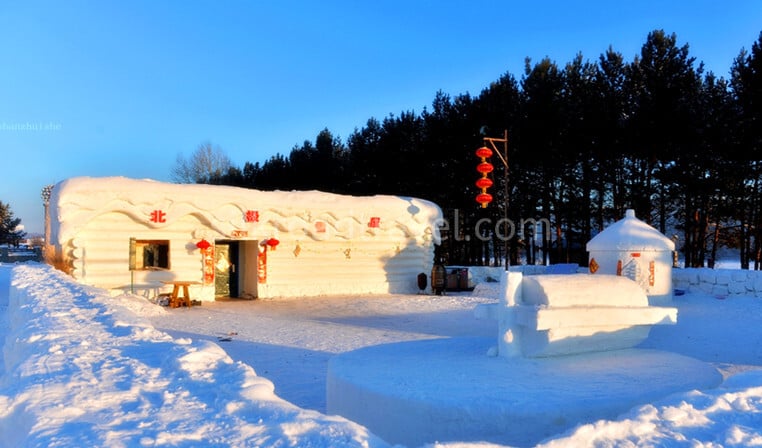
The Sun Island Snow Sculpture Expo suits visitors who enjoy looking closely at form and detail. Packed white snow becomes faces, clothing, animals and broad landscapes. Step back to understand a composition, then move along the permitted path to see how shadows define its surface.
Daylight is particularly useful here. Sunshine creates stronger shadows, while an overcast sky can make it easier to photograph people beside the sculptures without harsh contrast. A blue sky is not essential to an enjoyable visit.
Allow around two to three hours for a selective route. Visitors who stop frequently for photographs or want to examine smaller works should leave more room in the day. Decide how much walking and standing your group will enjoy rather than focusing only on reaching the largest sculpture.
Sun Island Station and the exhibition entrance are separate points in the journey. Use the current entrance information for the final approach, and check whether internal transport is included in your ticket. Outside the snow season, the landscape and individual cultural venues become the main reasons to visit.
Zhaolin Park
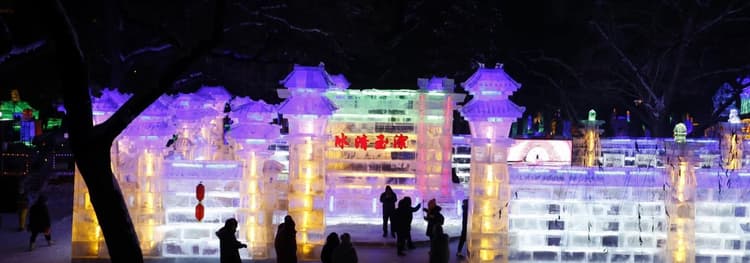
When its seasonal displays are operating, Zhaolin Park offers another introduction to Harbin's ice-lantern tradition. Its central location makes it easier to fit around a city evening than a second large excursion north of the river.
The appeal is a closer view of individual ice designs and illuminated forms within a city park. It can complement Ice and Snow World, particularly for visitors interested in ice carving, but a shorter trip does not need to include every ice venue.
A February 2026 provincial tourism report recorded free admission to that season's ice-lantern event. The 2026–2027 programme and admission arrangements require a fresh announcement; the previous policy should not be assumed to continue.
If the new display opens, roughly an hour is a reasonable starting allowance for a selective visit. Outside the event period, Zhaolin Park is a city park rather than a replacement for the major winter exhibitions.
For most visitors, the central choice is between the evening atmosphere at Ice and Snow World and the daylight sculpture viewing at Sun Island. Both can fit into one day with lunch, an indoor break and a separate transfer between them. Spreading them across two days gives more freedom to respond to cold, queues and tiredness.
Which Historic Streets and Buildings Are Worth Visiting?
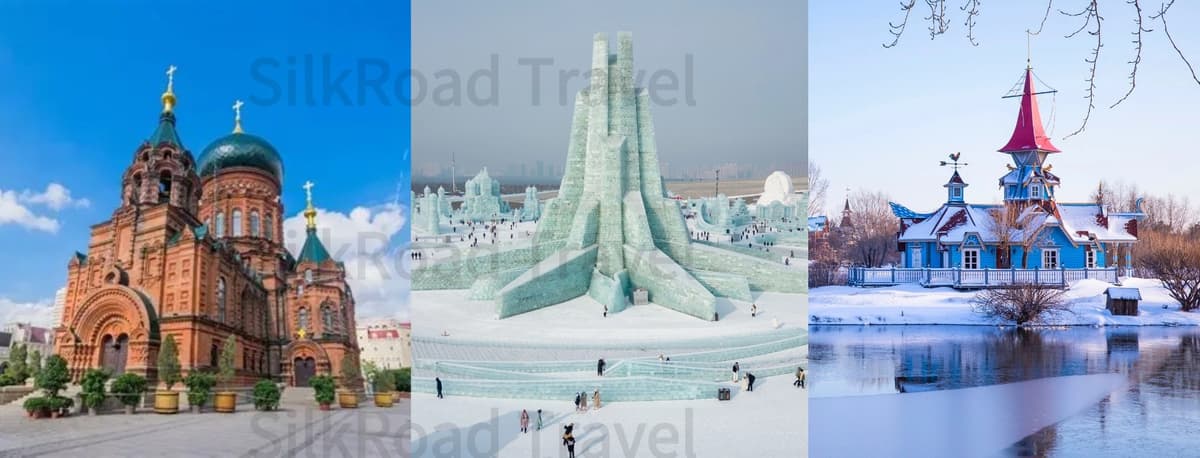
Harbin's architecture reflects railway development, commerce and the different communities that lived and worked here. Looking beyond a single dome or facade reveals more of that history: notice how buildings meet the street, how courtyards connect and how older commercial spaces are used today.
Central Street and Lao Daowai are particularly rewarding together because their differences are visible without specialist architectural knowledge.
·Central Street
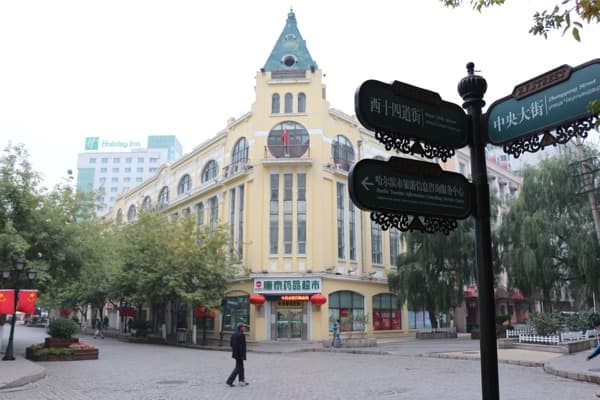
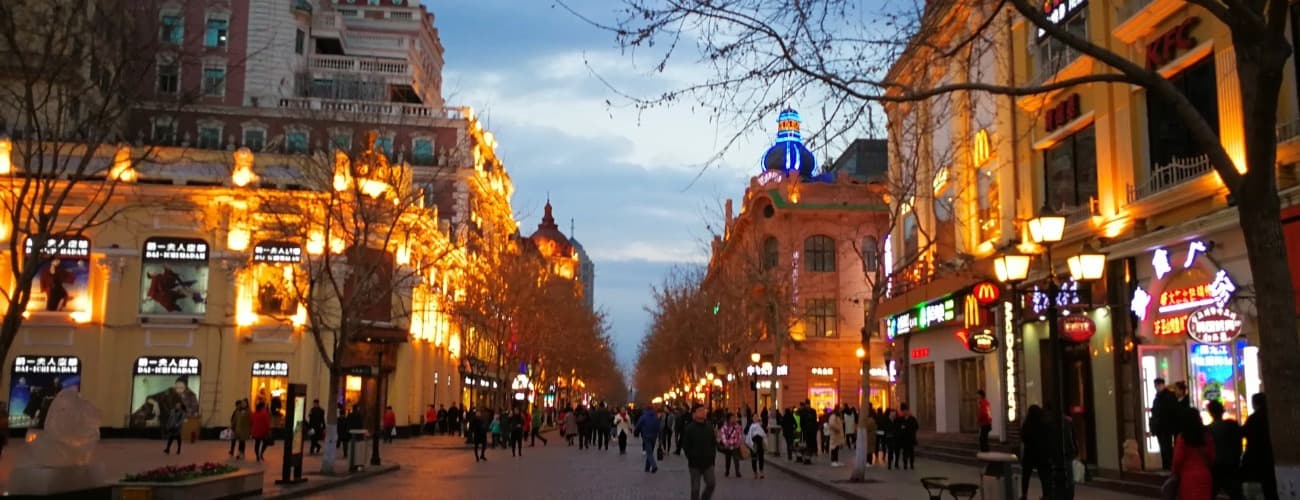
Central Street, or Zhongyang Dajie, is a pedestrian shopping street where historic facades rise above restaurants, food shops and contemporary businesses. Look upwards as well as into the windows: curved corners, balconies and decorative rooflines reveal more than a walk focused entirely on snacks.
Its architectural mixture includes several European-influenced styles associated with Harbin's commercial development. Notice the contrast between restrained facades and more elaborate ones rather than describing every building as "Russian". The street remains a working commercial district, which is part of its interest.
Allow one to two hours for an unhurried walk, longer with a meal. A short visit can cover only part of the street; its full length is not a compulsory route. The northern end connects naturally with the Flood Control Monument and the riverfront.
Daylight brings out architectural detail. In the evening, illuminated shopfronts and people out for food change the atmosphere. During winter, a shorter walk followed by dinner often works better than a prolonged outdoor photography session.
Sampling Harbin's local food, such as red sausage or a Madier ice lolly, can be part of the walk. A shared Northeastern meal offers a more substantial break. Choose food stops for what you want to eat and how they fit your day, rather than assuming the longest queue deserves your time.
·Saint Sophia Cathedral and Square
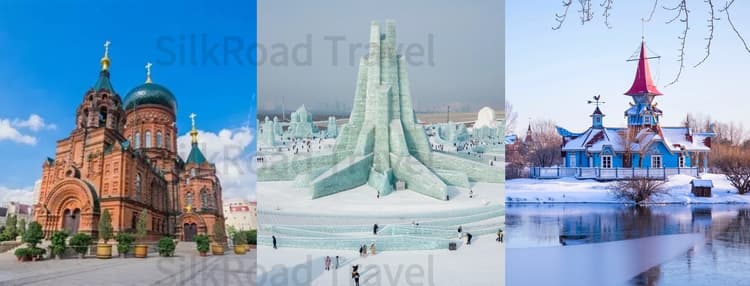
Saint Sophia's red-brick walls and green dome make it an effective introduction to Harbin's architecture. The surrounding square provides enough distance to appreciate the building's proportions; walking around it reveals different arrangements of arches, smaller domes and brickwork.
An exterior visit is enough for many travellers. Allow around 30–60 minutes for looking and photographs, then continue towards Central Street. Add time if you want to enter under the current visitor programme or photograph the building as the light changes.
The square and the interior are separate experiences. Visitor arrangements have included cultural and musical use, so an older description of a permanent photographic exhibition may not reflect what is offered on your date. Check the programme before buying an interior ticket.
Daylight highlights the texture of the brickwork, while an evening view can add atmosphere when the building is illuminated. Lighting schedules are separate from sunset and interior opening hours. A return visit makes most sense if that change in light matters to you.
The square is also a public gathering place. Leave room around people taking photographs and keep entrances clear; an empty foreground should not be a condition for enjoying the building.
·Lao Daowai and the Chinese Baroque Quarter
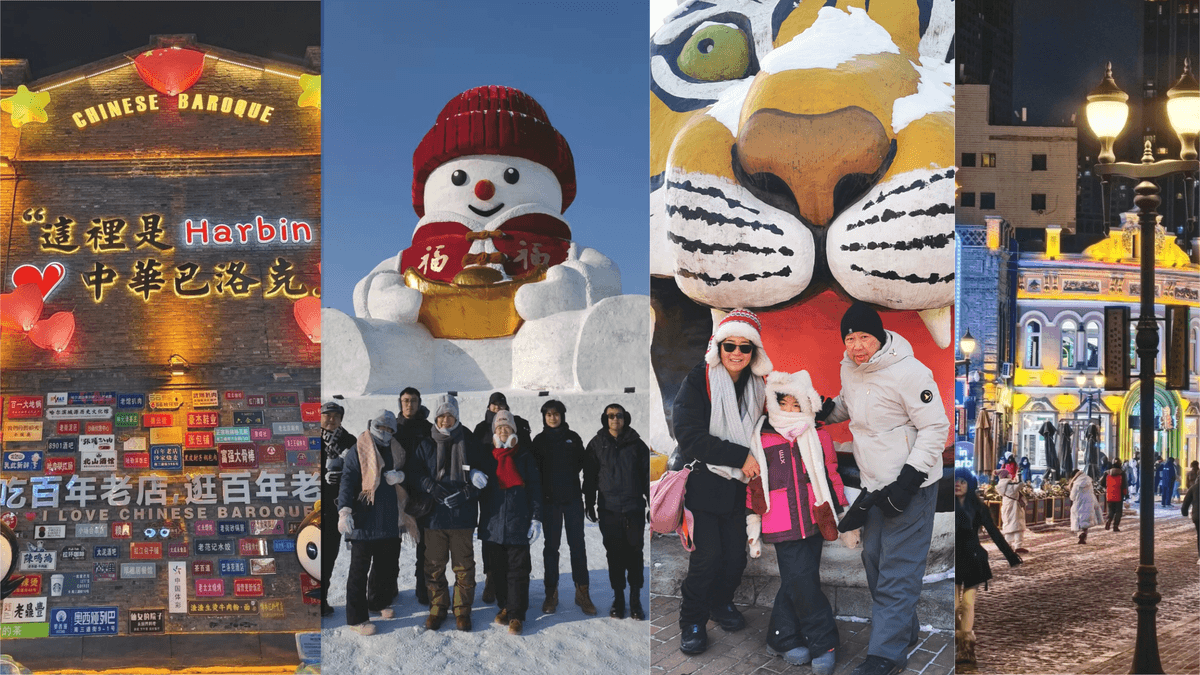
Lao Daowai reveals a different side of Harbin from Central Street. In the Chinese Baroque Quarter, decorative street facades connect with Chinese courtyard layouts. Carved details draw on Chinese ideas of prosperity and good fortune, giving visitors something more specific to look for than a general European appearance.
Explore the publicly accessible lanes and courtyards as well as the most photographed frontage. Changes in scale, doorways and the relationship between shops and inner spaces are central to the experience.
Around one and a half to two and a half hours allows for a walk and a food stop. Lunch fits well here, particularly in winter when two successive architectural walks could otherwise mean a long stretch outdoors.
Parts of the area have been restored and adapted for restaurants and tourism. It is a historic district in contemporary use, with residential doors and other spaces that are not open to visitors. Stay within public areas rather than assuming every courtyard is an attraction.
For a fuller half-day, combine the quarter with Binzhou Railway Bridge and allow a suitable transfer. Central Street is the simpler introduction if you have time for only one historic street area. Add Lao Daowai when architecture, courtyards and local dining are among your priorities.
Gogol Street and Saint Alexeyev Church
Gogol Street offers an alternative urban walk in Nangang, away from the main Central Street sightseeing circuit. Its appeal lies in selected buildings and the surrounding streets rather than a continuous pedestrian promenade of attractions.
Saint Alexeyev Church, near the southern end of the area, gives architecture enthusiasts a specific destination. Its brickwork and domed form make an interesting comparison with Saint Sophia, although visiting both is a matter of interest rather than a sightseeing requirement.
Choose a short section of Gogol Street and one or two buildings instead of committing to an end-to-end walk. Roughly an hour can work for a focused exterior visit, with additional time for nearby shopping or lunch.
Base the plan on exterior viewing unless interior access has been established. Church interiors have their own religious and visitor arrangements. This area is most useful for travellers staying nearby or spending several days exploring Harbin's architecture; a brief first visit can reasonably concentrate on Sophia and Lao Daowai.
Where Can You Enjoy Harbin's River Views, Parks and Cityscapes?
The waterfront and city viewpoints offer a change of scale after the historic streets. They also help you understand Harbin's relationship with the river and its expansion across both banks.
Choose one or two according to your route and the day's visibility. A nearby river walk can be a better addition than a distant viewpoint that leaves little time for the rest of your plans.
·Songhua River Waterfront, Stalin Park and the Flood Control Monument
The south-bank waterfront at the northern end of Central Street is the easiest place to include river views in a first visit. The Flood Control Monument provides a recognisable meeting point, while Stalin Park follows the riverside.
Allow 30–60 minutes for a short walk and photographs, extending the visit when conditions are comfortable. The attraction is the open space: broad river views, the opposite bank and the contrast with the busy streets behind you.
Winter changes the scene considerably. The riverbank path, a managed ice-activity area and an unregulated section of frozen river have different access conditions. Stay on authorised routes and enter ice areas only where access is officially permitted. Other people walking on the ice do not establish that it is safe or permitted.
If seasonal activities are operating, decide whether you want to join them before allocating extra time. A river-view stop can remain a simple walk rather than becoming an afternoon of paid activities.
In warmer months, this area lends itself to a longer promenade walk. In winter, finish near a convenient exit towards restaurants or your pickup point, so the return journey is manageable when you are ready to leave.
·Binzhou Railway Bridge
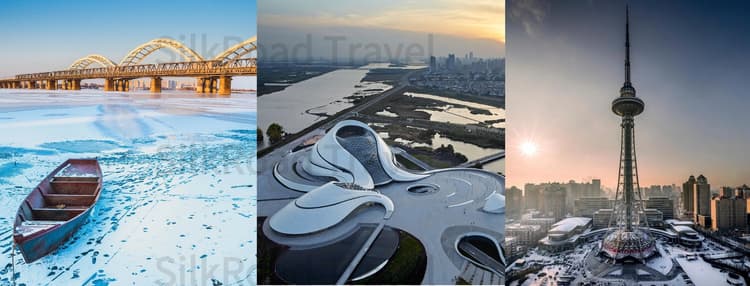
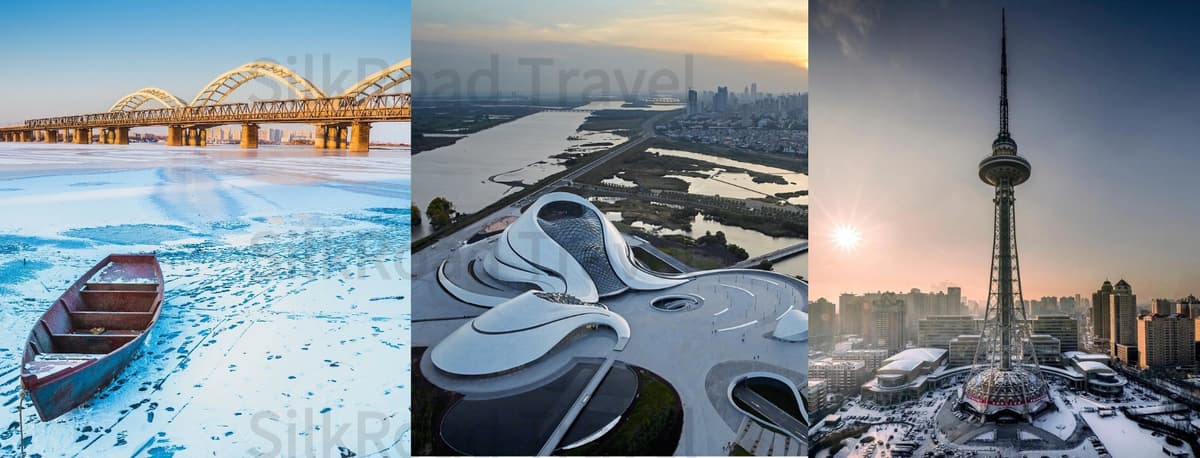
The old Binzhou Railway Bridge brings railway heritage into a river outing. Its steel structure creates repeated lines and frames, making the bridge itself as interesting to photograph as the view across the water.
Recent local reporting records pedestrian use of the bridge and its walkways. In winter, follow the access points and sections open on the day; conditions may differ from those shown in summer photographs.
A 45–60-minute stop is enough to appreciate the structure and walk a selected section. Crossing the whole bridge and returning is optional, not necessary for a worthwhile visit.
The bridge lies east of the main Central Street waterfront. Treat it as a separate stop rather than the automatic endpoint of a short stroll from the Flood Control Monument. It combines well with Lao Daowai for a half-day focused on older Harbin, or it can be a dedicated photography stop.
The exposed setting makes the length of your walk particularly relevant in winter. Choose a turning point before setting out and leave your hands free enough to manage steps or slippery patches.
·Harbin Grand Theatre
Harbin Grand Theatre provides a clear contrast with the historic streets. Its flowing exterior and broad surroundings reward visitors interested in contemporary architecture, even without a performance booking.
Allow roughly 45–90 minutes for exterior viewing and photographs once you arrive. Changing your viewpoint reveals the building's shape, so choose a manageable section of the public area rather than stopping only at the first photo spot.
A performance and an architectural visit are different bookings. Organised sightseeing routes have been offered in the past, but their published arrangements should not be assumed to continue unchanged in winter. If the interior is your main reason to go, establish the available visit or performance first.
The theatre sits in the wider north-bank area and needs a deliberate transfer. It is not attached to Sun Island or Ice and Snow World. Arrange the return before spending time outside, especially late in the day.
·Dragon Tower
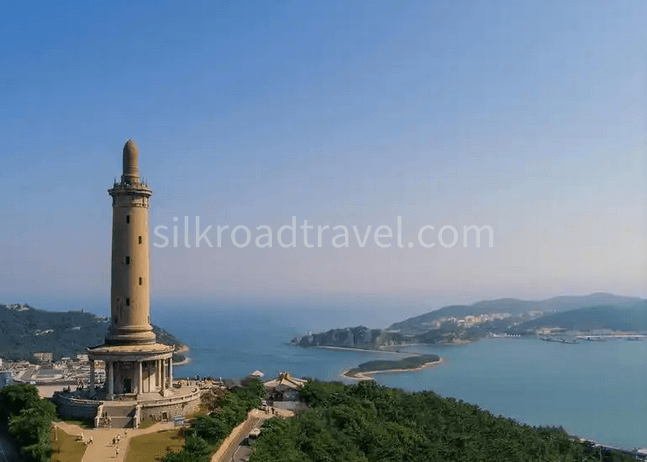
Dragon Tower, also called Longta, is Harbin's television tower and an option for visitors who enjoy seeing a city from above. Its viewing facilities provide a different perspective from street-level architecture and the waterfront.
Choose it when visibility is good and you want to understand the broader cityscape. Central Street, Sophia Square or the Grand Theatre are more direct choices for close architectural photography.
When the viewing facilities are operating, one to two hours is a reasonable sightseeing allowance, with additional time for a separately booked meal. Compare observation admission with restaurant and activity packages so you know which experience you are purchasing.
Confirm current operation and the available viewing areas before making a special journey. An August 2026 notice recorded a temporary weather-related closure; this research did not establish a definitive subsequent reopening announcement. That does not establish an ongoing closure, but it makes direct operator confirmation useful before booking.
·Qunli Bund Wetland
Qunli Bund Wetland offers a more spacious riverside landscape beyond the compact historic centre. Its seasonal appeal comes from wetland vegetation, water and open views rather than a single landmark.
It fits most naturally into a longer stay or an itinerary based in Qunli. In warmer months and early autumn, set aside one to two hours for a selected route using the current public entrances.
For a short winter trip, the Central Street waterfront is usually the more efficient introduction to the Songhua River. Choose Qunli when you want this particular landscape or it fits your location, rather than adding another river stop with a similar purpose.
·Heilongjiang Forest Botanical Garden
The Forest Botanical Garden is a seasonal option for trees, planting and a quieter landscape-focused visit. It belongs more naturally in a warmer-season itinerary than a short holiday centred on winter exhibitions.
It should not currently be treated as a confirmed open stop. A provincial tourism notice announced closure for renovation from 29 June 2026, with works expected to finish at the end of the year. Public reopening requires its own announcement.
For travel after the renovation, establish the reopening date before setting aside a half-day. Sun Island or an open riverfront route offers an alternative outdoor visit in the meantime.
Which Museums and Cultural Sites Are Worth Visiting?
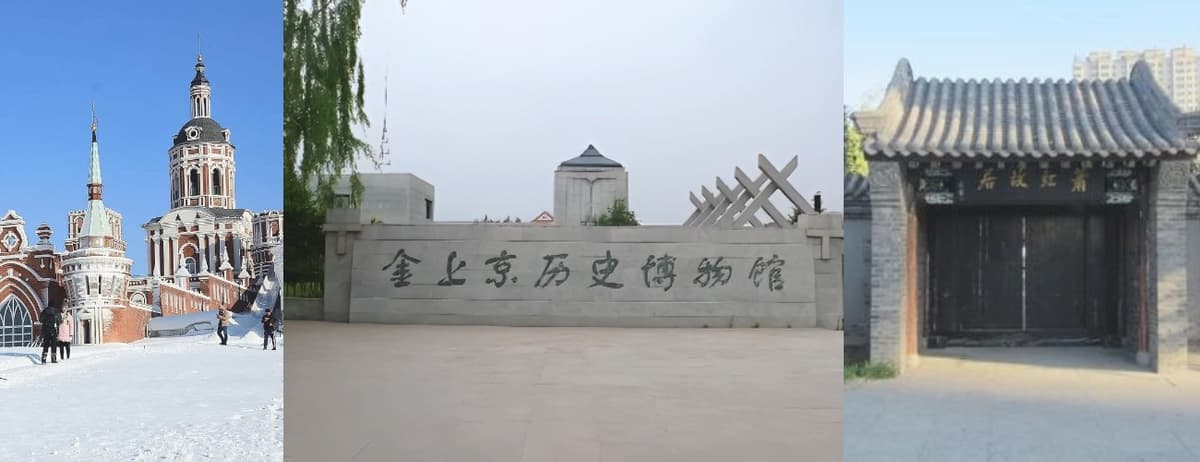
Harbin's cultural sites cover city history, art, different communities, religious traditions and the history of war. Choose according to the subject: these visits serve different purposes, even when several offer time indoors.
One well-chosen museum is usually enough for a short itinerary. English interpretation varies, so background reading, translation tools or an appropriately arranged guide can help with a specialist subject.
·Harbin Museum
Harbin Museum's main complex at 13 Liushu Street contains several exhibition spaces rather than one continuous chronological display. This gives visitors a choice between city history and different forms of art.
Start with the current exhibition list and select two or three subjects. City history provides a useful foundation for a first visit; travellers with particular interests can give more time to ceramics, paintings or other collections.
One and a half to two and a half hours is a reasonable allowance for a selective visit. Seeing every gallery takes considerably longer and may leave little attention for the final rooms.
The museum fits into a central-city outing, but use the main complex's address when navigating. The organisation also includes venues elsewhere in Harbin, so a shared institutional name does not mean every exhibition is at Liushu Street.
·Harbin Jewish History and Culture Memorial Hall
The Jewish History and Culture Memorial Hall occupies the former New Synagogue at 162 Jingwei Street. It introduces a community whose history helps explain Harbin's international connections and commercial life.
The building is part of the attraction, but leave time to connect the people and places in the exhibition with the city you have been exploring. About one to one and a half hours suits a focused visit and fits more naturally with central Daoli than a distant north-bank park.
Use the full name and address when arranging the visit, as Harbin has several sites associated with its Jewish heritage. The memorial hall is a historical and cultural venue; tourist access should not be interpreted as access to religious services.
If this history is a main reason for travelling to Harbin, ask about language support beforehand. Even a short introduction to the community can make the displays and architecture more meaningful.
·Harbin Pharmaceutical Factory No. 6 Printmaking Museum
Often shortened to the Hayaoliu Printmaking Museum, this venue combines an ornate architectural setting with printmaking and pharmaceutical-factory history. It offers a different focus from both a conventional city museum and a historic street walk.
The decorative interior attracts photographers, but give the artwork time as well. Prints and factory-history displays explain more about the collection and Harbin's industrial life than a photograph of the hall alone.
Plan around one and a half to two hours. If stairs or prolonged standing are difficult, establish the route and lift access beforehand rather than assuming every displayed room is equally accessible.
The latest dated provincial tourism notice reviewed for this guide states that, from 31 August 2026, the museum resumed Tuesday–Sunday opening and Monday closure, except for public-holiday arrangements. It lists 09:00–17:00, with admission ending at 16:30. The address is 326 Nanzhi Road, separate from the Lao Daowai historic quarter despite both being in Daowai District.
·The Unit 731 Museum
The Unit 731 Museum documents biological warfare and human experimentation carried out by the Japanese military during its occupation of China. Its evidence, testimony and historical setting make it a significant visit for travellers seeking to understand this part of twentieth-century history.
The subject is emotionally demanding and deserves time and attention. Allow approximately two to three hours for the exhibition, with more time for accessible historic-site elements. Families should consider the content before bringing children.
The museum is in Pingfang District, away from the central sightseeing area. Metro Line 1 serves Xinjiang Dajie Station; the museum's August 2026 notice identifies Exit 2 for the approach to 23 Xinjiang Street.
Under that notice, real-name booking is required one to seven days ahead through the museum's official WeChat account or the Changyou Harbin mini programme. Bring the original identity document used for the booking. Overseas visitors should establish the passport-booking procedure before travelling, as the notice does not explain it fully.
The same museum announcement gives Tuesday–Sunday opening, with Monday closure except on holidays. The main exhibition closes at 17:00 and stops admitting visitors at 16:00. Plan an earlier arrival so there is enough time to engage with the displays.
·Harbin Confucius Temple
Harbin Confucius Temple, or Wenmiao, offers a different architectural vocabulary from the European-influenced landmarks. Courtyards, gateways and traditional rooflines encourage visitors to look at the relationship between buildings rather than a single dominant facade.
The site also houses the Heilongjiang Ethnic Museum, connecting the temple setting with exhibitions about the province's communities and cultures. It is a useful choice for visitors who want a broader understanding of the region beyond railway-era Harbin.
Allow around one to one and a half hours for a selective visit, longer if the current exhibitions interest you. Moving between buildings involves outdoor sections, so plan for the courtyards as well as the galleries.
Use 25 Wenmiao Street as the location reference. Follow current museum admission information: some older visitor pages still contain pandemic-era procedures that no longer provide a reliable booking guide.
·Jile Temple
Jile Temple, also known as the Temple of Bliss, is a Buddhist temple in Nangang. Its halls, courtyards and religious activity introduce a side of Harbin easily missed by a route focused on church architecture.
A visit of roughly 45–90 minutes suits an interest in religion or traditional architecture. Observe how people use the space, leave worshippers room and follow restrictions on interior photography.
As this is an active religious setting, keep voices low and avoid interrupting ceremonies. The visit can form part of a Nangang cultural outing, with nearby stops chosen for their relevance to your interests rather than simply their proximity.
·Heilongjiang Provincial Museum
The provincial museum is a separate institution from Harbin Museum. Consider it for a broader introduction to Heilongjiang's history, cultural heritage and natural history.
Its exhibitions and site arrangements have been changing during preparations for a new museum. Local reporting in February 2026 described visits to the older building on Hongjun Street, while an October 2026 official report recorded public exhibitions across the provincial and ethnic museum sites.
Choose through the museum's current exhibition and booking information, then use the address attached to that booking. A new-building location mentioned in an article about future plans may not be the entrance for your visit.
A selective visit of around one and a half to two hours can complement a Nangang day. If time is short, compare its current displays with Harbin Museum and choose the subject that adds most to your trip.
Are Siberian Tiger Park and Harbin Polarland Worth Visiting?
Both are established visitor attractions, but the decision comes down to whether you want an animal-focused visit. They offer different experiences: Siberian Tiger Park centres on tigers in a managed park, while the polar complex includes several animal venues, exhibitions and scheduled presentations.
For families, discuss what the children actually want to see before adding either to the route. An interest in animals is a better reason to go than a general "family-friendly" label.

·Siberian Tiger Park
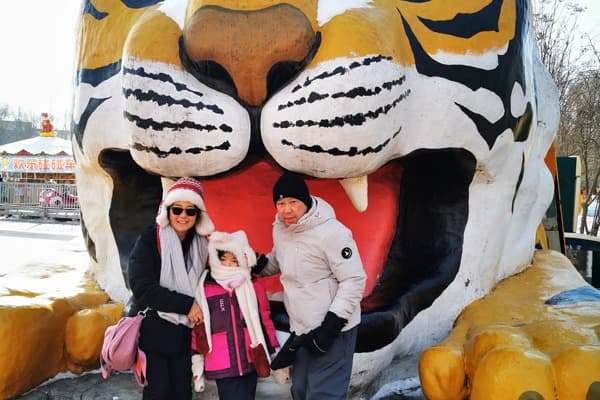
Siberian Tiger Park offers the chance to see tigers in a managed captive setting on Harbin's north side. It is separate from the wild tiger habitats protected in Northeast China's national park.
The visit includes a vehicle-based component and viewing areas. As a planning estimate, allow one and a half to two and a half hours on site, then add the transfer separately.
Watching the animals' movement and behaviour is the main appeal. Winter photographs of tigers against snow can be striking, but their position and activity cannot be arranged around your arrival.
Official sources describe the park's breeding role; visitors should also understand that it is a captive-animal attraction. Feeding experiences need not be part of a visit. Travellers uncomfortable with that type of activity may prefer a cultural or landscape stop.
Arrange return transport before entering, especially if another booking follows. Combining the park with a north-bank attraction may reduce travel, but adding both Sun Island and Ice and Snow World creates a much fuller day. Choose the second venue with your remaining time and energy in mind.
·Harbin Polarland
Harbin Polarland is a familiar English name, but the wider Harbin Polarpark complex includes different venues, including polar and marine halls and a penguin-focused venue. Admission to one hall should not be assumed to cover the whole complex.
Begin with the animals and exhibits you most want to see, then choose the relevant ticket. A large package offers little value if your group is interested in only one part of it.
Reserve a half-day for a substantial venue visit with a scheduled presentation. A shorter visit may work with a specific focus. Indoor galleries offer an alternative to a long outdoor afternoon, although moving between venues and waiting for presentations still takes time.
The complex continues to change. A July 2026 provincial tourism report described the reopening of an upgraded penguin venue, making current venue names and inclusions more useful than an older general "Polarland" ticket description.
Choose between animal viewing, presentations and the nearby snow sculptures before booking everything. Each requires attention and walking, and children may be ready to return to the hotel after one substantial attraction.
Which Attractions Outside Central Harbin Deserve a Separate Trip?
Some rewarding places sit within Harbin's wider municipal area but well beyond the central sightseeing circuit. Give them their own transport and meal arrangements rather than fitting them into a gap between city landmarks.
These outings are most worthwhile when the subject interests you enough to justify the journey. Volga Manor, Acheng and Hulan offer very different reasons to leave the centre.
·Volga Manor
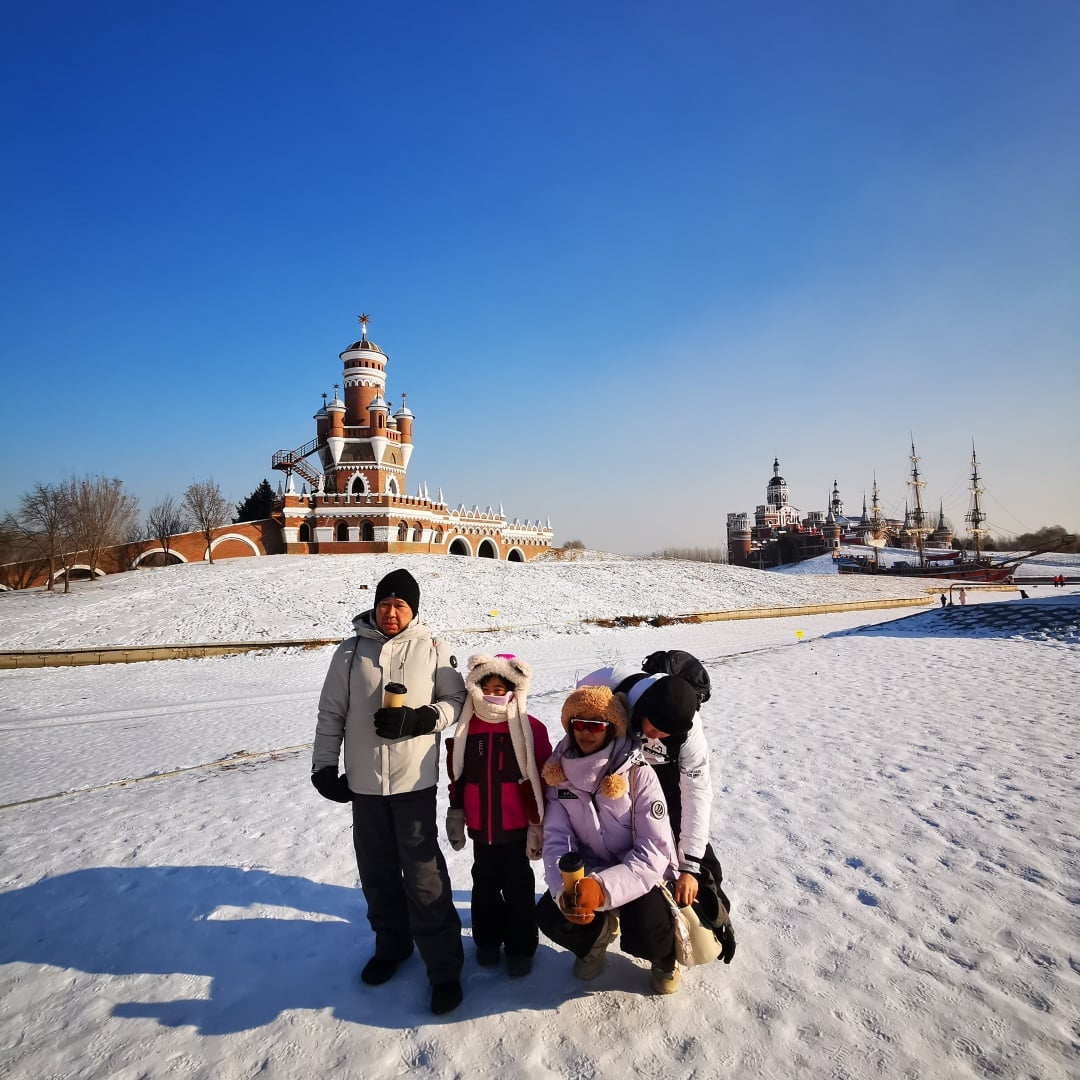
Volga Manor is a Russian-themed cultural estate beside the Ashi River outside central Harbin. Buildings, landscaped grounds and cultural spaces give visitors more room to explore than a short urban architectural stop.
Some structures recreate buildings associated with Harbin's past, including Saint Nicholas Church. The estate is a designed landscape with reconstructed and themed architecture, rather than an intact historic Russian village. Understanding that distinction helps you decide how it complements the original buildings in the city.
Allow three to four hours on site for a selective visit, reserving a substantial part of the day once transport and lunch are included. Photographers may want longer for different viewpoints and any interiors open during the visit.
Winter snow creates cleaner backgrounds and stronger building outlines. In warmer months, greenery and waterside views become a larger part of the appeal. Seasonal activities are additions to the architectural visit, with their own availability and possible charges.
Before choosing a package, establish which buildings, activities and meals it covers. A visit centred on walking and architecture differs considerably from one built around winter recreation.
Volga Manor is a strong option for themed landscapes, architectural photography and Russian cultural connections. If original urban heritage is your main interest and time is limited, start with Central Street, Lao Daowai and an appropriate museum.
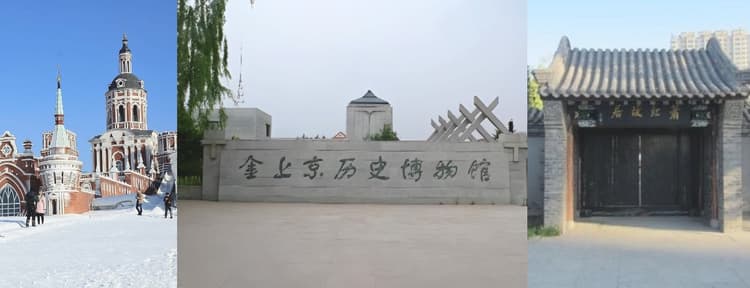
·Jin Shangjing History Museum
Jin Shangjing History Museum in Acheng introduces the Jurchen Jin dynasty and the region's importance centuries before modern Harbin's railway development. It broadens a history-focused trip beyond the city's more familiar nineteenth- and twentieth-century story.
Exhibitions cover the development of the Jin capital and aspects of its culture, including bronze mirrors. A 2026 university visit report confirms these themes and the museum's relationship with nearby historic remains.
Around one and a half to two hours inside is a useful starting allowance, with at least a half-day reserved for the wider outing from central Harbin. Additional archaeological-site visits depend on public access and conditions; nearby remains should not be treated as one continuously open attraction.
The subject rewards preparation. A short introduction to the Jin dynasty or a suitably arranged guide makes the objects and maps easier to understand if the period is unfamiliar.
Choose Acheng because this history interests you. The travel commitment makes it a poor substitute for a convenient indoor stop when you have only an hour to spare.
·Xiao Hong's Former Residence
Xiao Hong's Former Residence in Hulan connects a domestic setting with the life of an important modern Chinese writer. The residence and memorial museum provide a more intimate subject than Harbin's large public landmarks.
Courtyards, rooms and household objects convey the environment associated with her early life. Reading a short introduction to Tales of Hulan River beforehand gives the setting more meaning.
Allow around one to one and a half hours on site, plus travel to Hulan. The visit is particularly worthwhile for literature, social-history and domestic-architecture interests.
Part of the route passes through outdoor courtyard space, which matters in winter. On a brief first trip, it is reasonable to leave Hulan for another occasion. For someone interested in Chinese literature, however, this may be a more rewarding choice than another large entertainment venue.
Which Harbin Attractions Are Best Outside Winter?
Outside winter, give more time to historic streets, museums, the river and landscaped areas. These provide a satisfying itinerary without the seasonal ice structures.
Central Street, Sophia Square and Lao Daowai remain strong choices. Milder conditions allow longer architectural walks, more time in side streets and meals that need not be planned around warming up.
Sun Island becomes a landscape and cultural visit rather than a snow-exhibition visit. Select particular grounds or venues and follow their individual schedules. An October 2026 notice, for example, listed different hours for several cultural venues and temporary closures at two of them. Opening of the wider area does not establish access to every gallery.
The waterfront and Qunli wetland suit visitors looking for more walking and open space. Summer brings longer outdoor evenings, although rain may change the day's plan. Early autumn can be rewarding for vegetation and photography, with colours varying by date and conditions.
For a two-day non-winter visit, combine the historic centre and a museum on one day. For the other, choose Lao Daowai and the river, Sun Island, or Volga Manor. An animal attraction or specialist historical outing can replace that second choice if it better matches your interests.
This is a different kind of Harbin trip: the buildings, communities and everyday city life become the focus, with more time to explore them at walking pace.
How Many Harbin Attractions Can You Visit in Two or Three Days?
With two full sightseeing days, you can get a worthwhile introduction to the city and one major winter exhibition. Three full days provide more room for both exhibitions or a separate outing.
The examples below assume you are in Harbin before the first sightseeing morning. Three calendar days with a late arrival and an early departure offer much less time.
·Two Full Sightseeing Days
Use the first day for Sophia Square, part of Central Street and a short waterfront walk. Have lunch in the central area, then choose Harbin Museum or Lao Daowai for the afternoon. Including both would mean shortening each visit, so select the one that adds most to your day.
Keep the evening flexible. Dinner near the hotel or another short look at Central Street may be enough after travel and walking. If Zhaolin Park's seasonal display is operating, it can be an optional addition rather than another fixed booking.
On the second day, build the schedule around your main winter experience:
· Illuminated ice: keep the morning light, eat a proper lunch and reserve the afternoon or evening for Ice and Snow World.
· Snow sculpture and daylight photography: visit Sun Island Snow Expo during the day, then return for dinner and a relaxed city evening.
· Both exhibitions: visit Sun Island first, include a substantial meal and indoor break, and allow a separate transfer to Ice and Snow World. Leave other major attractions out of this day.
The two-park option suits visitors who have made ice and snow their priority and are comfortable with considerable outdoor time. Families and groups with different walking abilities may enjoy choosing one park more than completing both on a demanding schedule.
·Three Full Sightseeing Days
An extra day often works best as a way to separate the two large winter venues. Spend one day in the city, another at Sun Island with a modest additional stop, and the third on a relaxed morning followed by Ice and Snow World.
If one winter exhibition is enough, use the extra day for a distinct interest:
· Volga Manor for landscaped architecture and photography.
· Unit 731 Museum for a substantial historical visit.
· Siberian Tiger Park or a selected polar venue for animal-focused interests.
· Nangang's museums, temple or architectural stops for a broader city perspective.
Choose one main direction. Individual visits that take "only two hours" become much larger commitments once travel, meals and entry arrangements are included.
·Different Interests and Walking Abilities
For photography, choose one location for the late-afternoon transition instead of rushing between several before dark. Give Sun Island daylight and consider a separate day for the evening ice visit if that produces a more comfortable schedule.
For families, alternate a major attraction with a simpler activity. A short street walk and lunch may work better after a substantial animal-venue visit than another paid park.
For slower walkers, shorten the route within each site. Part of Central Street, selected snow sculptures or a smaller ice-park circuit can still provide a satisfying experience. Agree on the essential stops together so shortening the day does not feel like abandoning its main purpose.
If conditions or energy change, remove the least important extra stop first. Keep time for food and the return journey rather than using those periods to recover an overfilled schedule.
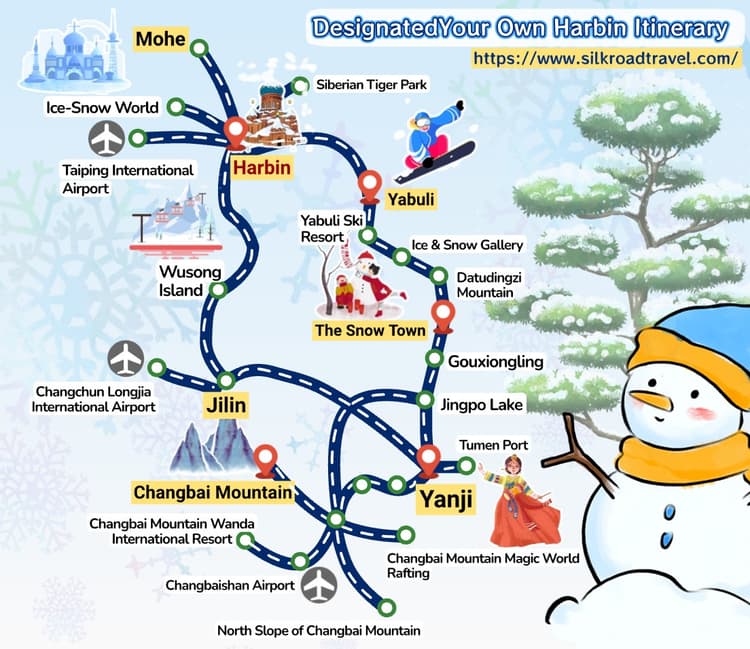
Are Yabuli, Snow Town, Mohe and Changbai Mountain Day Trips from Harbin?
These destinations frequently appear alongside Harbin attractions, but they require different travel commitments. Choose them as extensions with a clear purpose rather than interchangeable nearby sights.
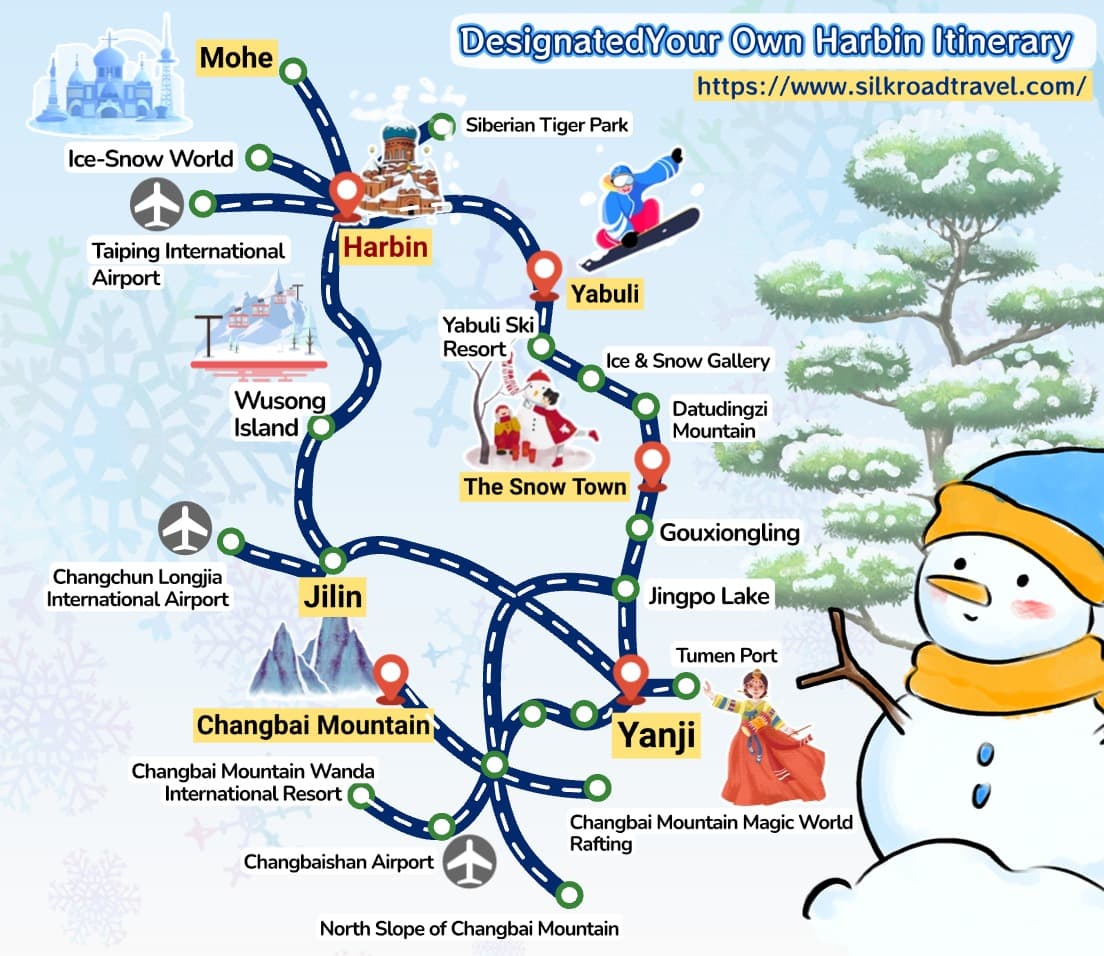
·Yabuli
Yabuli is a regional skiing destination rather than a city attraction. A day trip can work with suitable transport and a focused plan, but its value depends on how much skiing time remains after transfers, changing and equipment collection.
Staying overnight becomes more attractive for lessons, repeated sessions or a less rushed start. Decide which resort and activity you want before arranging transport.
·China Snow Town
China Snow Town, or Xuexiang, offers a village setting and winter snow scenery away from the city. An overnight stay lets you experience the settlement after the main travel day and again the following morning.
A same-day return involves substantial road travel. It may fit a particular itinerary, but it is a demanding way to visit somewhere whose appeal includes lingering outdoors and seeing the village at different times.
·Mohe
Mohe lies in the far north of Heilongjiang. Its town, airport, station, villages and landscape stops are spread across a separate destination area.
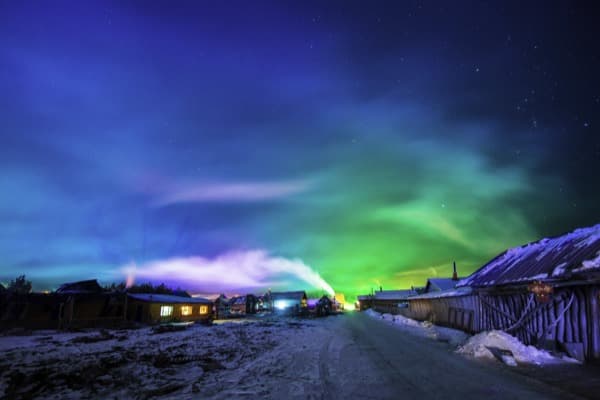
Treat it as a multi-day extension involving air or conventional rail travel and local road transfers. It is not a day trip from Harbin, and aurora sightings should never be the promised basis of the journey.
·Changbai Mountain
Changbai Mountain is in Jilin Province, outside Harbin and Heilongjiang. Combining the two means planning a Northeast China journey with intercity transport and a suitable mountain-area base.
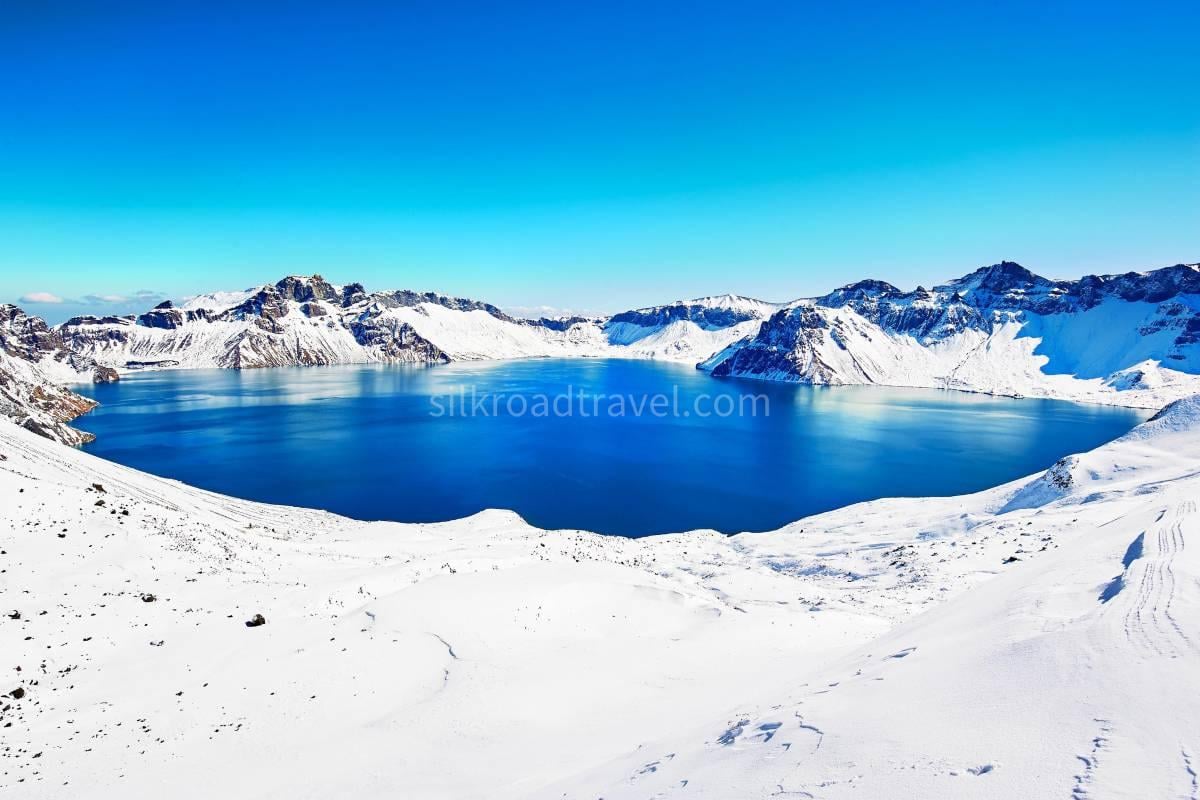
Choose it for mountain scenery, skiing or hot-spring interests. Winter access and visibility at Tianchi depend on weather and management decisions, so this extension needs more time and flexibility than one extra sightseeing day.
What Should Overseas Visitors Know About Tickets and Getting Around?
Book the venue you intend to visit using the identity document you will carry. Similar names can describe different products: Sun Island park access, the Snow Expo, an indoor exhibition and a cable-car journey are not interchangeable. The separate polar venues and their combination packages need the same attention.
For passport bookings, check the document options before paying. Enter the name and passport number in the format required by the system, and retain the confirmation and original passport for entry. Check whether a third-party order needs a further ticket or admission code before you arrive.
Children's and senior concessions may depend on age, height, nationality or specified documents. A policy mentioning a Chinese identity card does not fully explain how an overseas visitor will be processed. Ask about eligibility and entry procedures together.
A free museum visit can still require a reservation. Confirm the branch, date and entry period. Monday is a common closure day among the museums discussed here, but it is not universal, and holidays may bring different arrangements.
For city travel, the metro is convenient when stations are practical at both ends. The walk from the station to the entrance still belongs in the plan. An attraction's name on a station sign does not tell you how far you will walk to the ticket gate.
Taxis or arranged transfers are useful for separate outings, late returns and travellers who want to reduce walking. Agree on a precise pickup point around pedestrian streets and large parks. Send the Chinese place name and entrance to the driver as well as the English name.
Build the day around the most time-sensitive booking, then fit flexible streets, meals and river views around it. Check last admission as well as closing time: arriving before a building closes may still be too late to enter or to enjoy the exhibition properly.
How Can You Choose a Harbin Tour Around the Attractions You Want to See?
Choose a route by its sightseeing time and pace, not simply the number of places listed. Combining both major winter exhibitions suits visitors focused on ice and snow. Those interested in museums or architecture may gain more from a less crowded city day.
Silk Road Travel's 3 Days Harbin City Tour begins with arrival on the first day. The second includes Saint Sophia Cathedral, Central Street, Sun Island and Ice and Snow World, followed by Volga Manor and departure on the third.
This is a compact introduction with a particularly full second day. Consider it if these are your priorities and your departure arrangements allow the final outing. Longer photography stops, more indoor breaks or separate days for the winter parks are reasons to discuss an extended or adjusted schedule; those changes require an individual proposal.
The wider Harbin tour collection includes journeys beyond the city. Compare them after deciding whether your priority is more urban sightseeing, skiing, a Snow Town stay or a longer Northeast China trip.
Share your dates, available days, preferred pace and the places you most want to see. These details provide a useful starting point for planning enough time to enjoy the attractions you choose.