


Best Kashgar Travel Guide | Ancient City, Pamir Highway & Uyghur Culture
Where is Kashgar? Travel Map & Geographical Overview
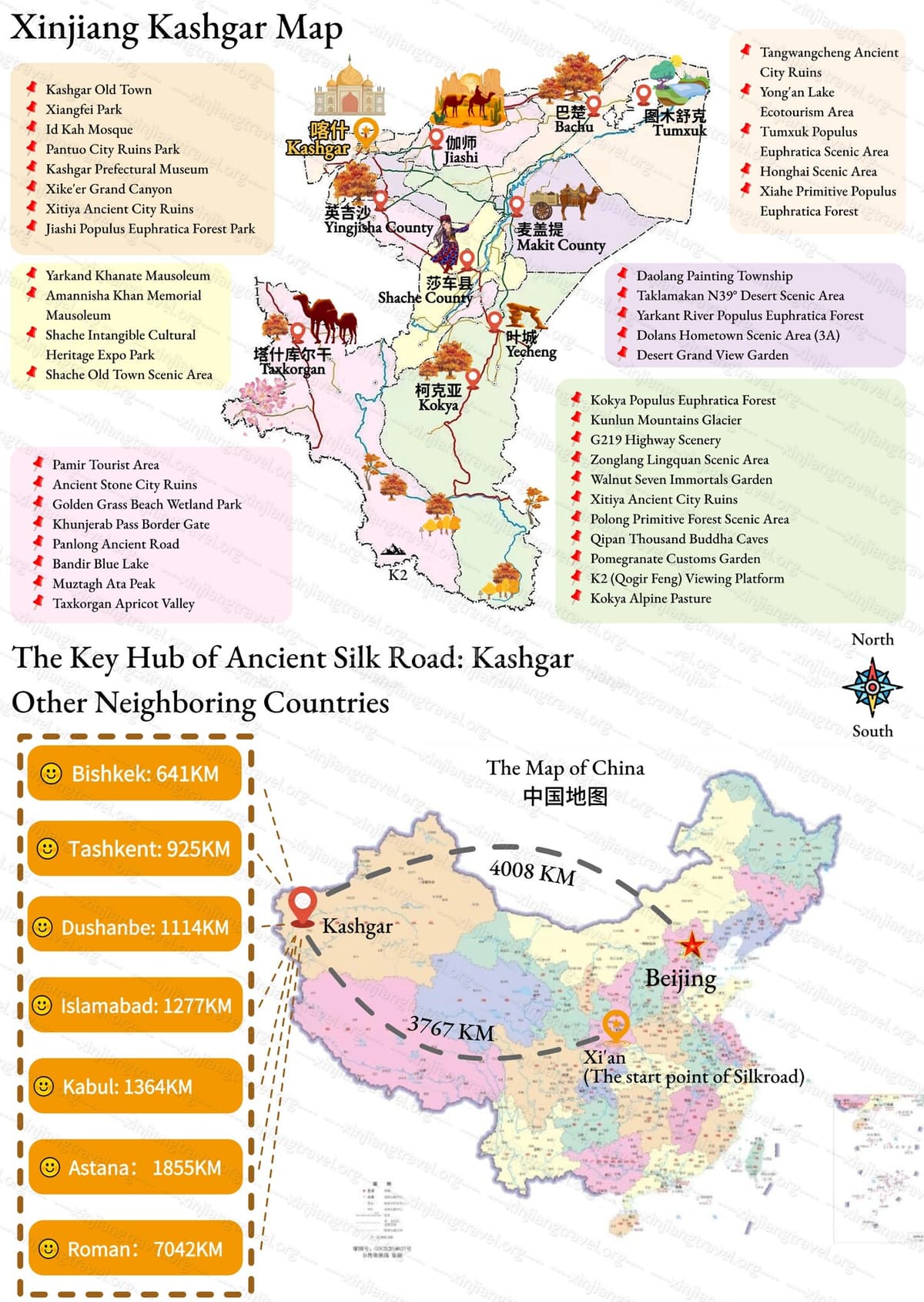
Situated in far western Xinjiang, Kashgar rests on the edge of the Tarim Basin, standing as the gateway to the Pamir Mountains and the famous Karakoram Highway. For travellers, this unique geographic location creates two completely different travel experiences. Within the city, you will wander the maze-like alleyways of Kashgar Ancient City, soak up lively bazaar vibes and experience authentic Uyghur daily life. Drive south out of town, and the landscape rapidly transforms: arid desert plains fade away, giving way to snow-capped peaks, alpine lakes and vast grasslands of the Pamirs. Most classic Kashgar travel plans split your journey into city cultural exploration and highland road trips. Spend 1–2 days discovering Silk Road heritage inside Kashgar city, then set off on the iconic Karakoram Highway to explore the Pamir high altitude scenery. This layout makes Kashgar the perfect starting point combining cultural city sightseeing and epic mountain road adventures.
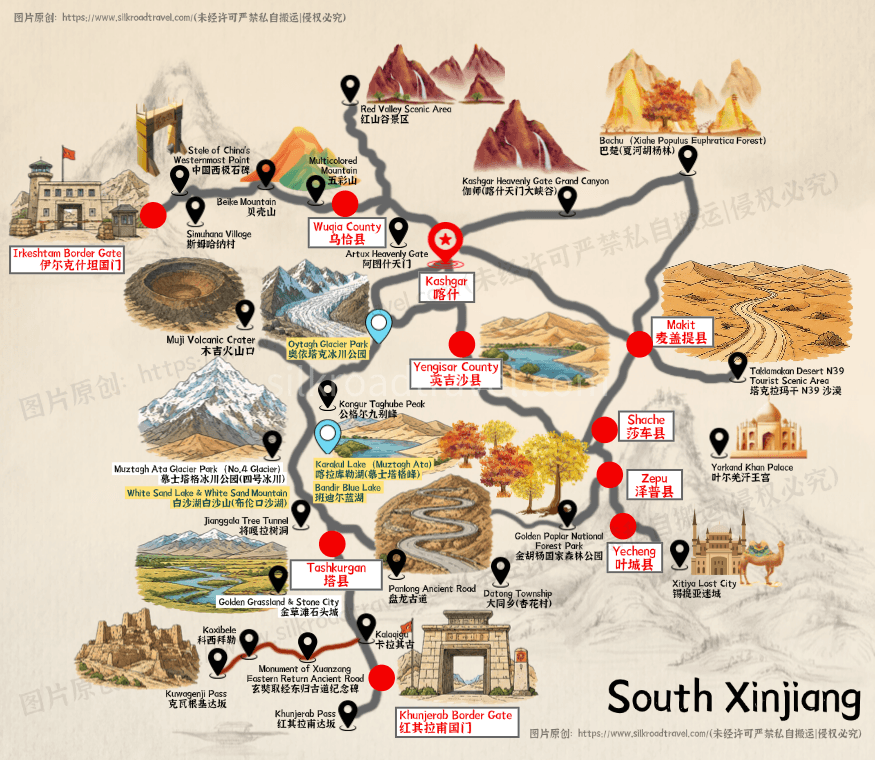
"Map of the South Xinjiang for Tourists"
Kashgar Climate & Precipitation
Kashgar features dry continental weather with extremely scarce rainfall all year round, a feature that deeply shapes every Kashgar travel experience. Annual precipitation stays very low, meaning travellers can expect bright sunshine on most days, yet you must prepare for dramatic day-night temperature swings, the most important weather rule for anyone exploring the region. Weather differs sharply between downtown Kashgar Ancient City and the high-altitude Pamir Mountains along the Karakoram Highway. Even during hot summer months, temperatures drop rapidly once you drive uphill toward Karakul Lake. Clear skies bring stunning views of snow-capped peaks, but powerful ultraviolet radiation calls for reliable sun protection all year long.
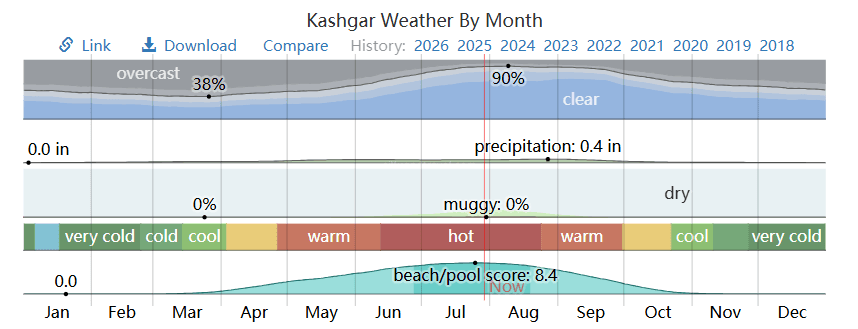
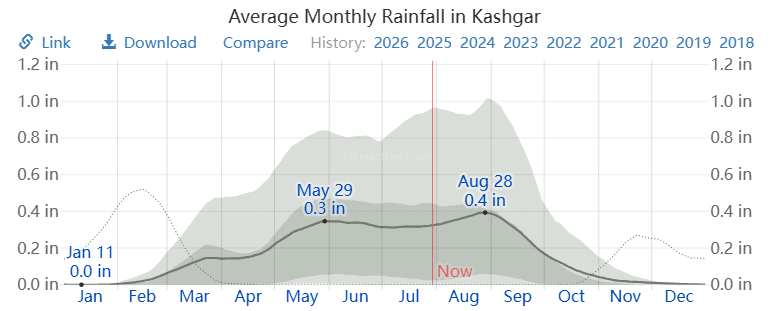
Seasonal shifts bring distinct scenery and sight conditions, closely shaping photography opportunities and road exploration plans. Spring occasionally brings dust winds that can temporarily obscure distant mountain vistas. Summer creates hot, dry conditions within the city, while the Pamir highlands deliver pleasantly cool alpine surroundings. Autumn features transparent air and steady temperatures, creating perfect light for cultural street shots and highland landscape photography. Winter brings calm, quiet alleyways inside the ancient city, alongside snow-covered mountain terrain across the Pamirs.
Top Attractions in Kashgar
This detailed overview covers all signature scenic spots across downtown Kashgar and the iconic Pamir Plateau travel corridor, perfectly blending immersive Silk Road cultural landmarks and breathtaking alpine natural scenery. Every featured attraction highlights unique visual charms, photography advantages and exclusive local experiences, catering to cultural sightseeing, highland road tripping and landscape photography. For full opening hours, official ticket prices, precise transportation routes and in-depth visiting strategies for each site.
Kashgar Ancient City
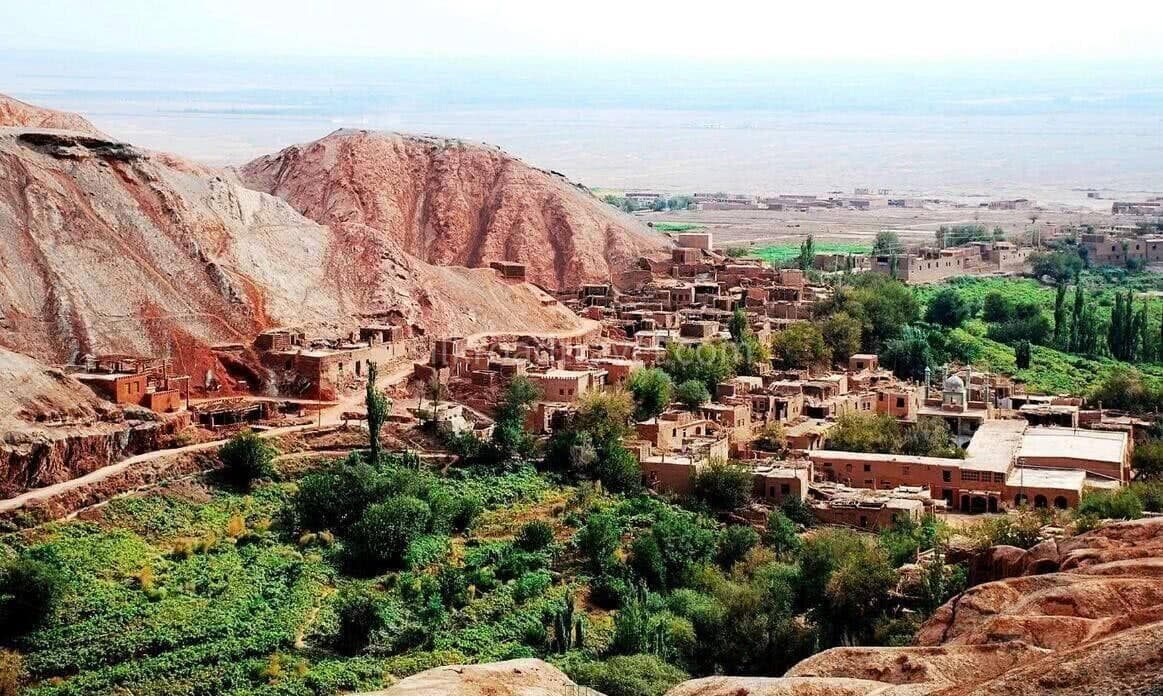
As the core soul of Kashgar travel and one of the most valuable Silk Road cultural heritage sites, Kashgar Ancient City is widely recognised as the world's largest and best-preserved living earthen ancient town. Unlike commercialised ancient towns elsewhere, this sprawling urban complex remains a fully inhabited residential community where centuries-old Uyghur folk traditions and modern daily life coexist harmoniously. Stretching across countless crisscrossing labyrinthine alleys, the old town features distinctive loess adobe buildings with carved wooden doors, painted window frames and layered courtyard layouts that embody classic Central Asian and Uyghur architectural aesthetics.
Packed with viral photography spots and cultural landmarks, the ancient city houses famous themed alleys including Rainbow Alley, Bag Alley and Art Alley, each delivering unique colour gradients and retro streetscape vibes. The iconic Millennium Ancient Street and century-old teahouses serve as ideal spots to experience authentic Uyghur folk music, traditional tea culture and casual local social lifestyles. Scattered artisan workshops specialise in traditional copper forging, Uyghur flower hat weaving, wood carving and handcrafted textile making, showcasing intangible cultural heritage passed down through generations. The grand daily opening ceremony at the East Gate features traditional folk song and dance performances, reviving the prosperous ceremonial scenes of the ancient Silk Road. After sunset, Hanbazaar Night Market lights up the ancient city with vibrant food stalls, aromatic grilled meats, seasonal fruits and handmade snacks, forming the most lively night scenery of Kashgar Ancient City.
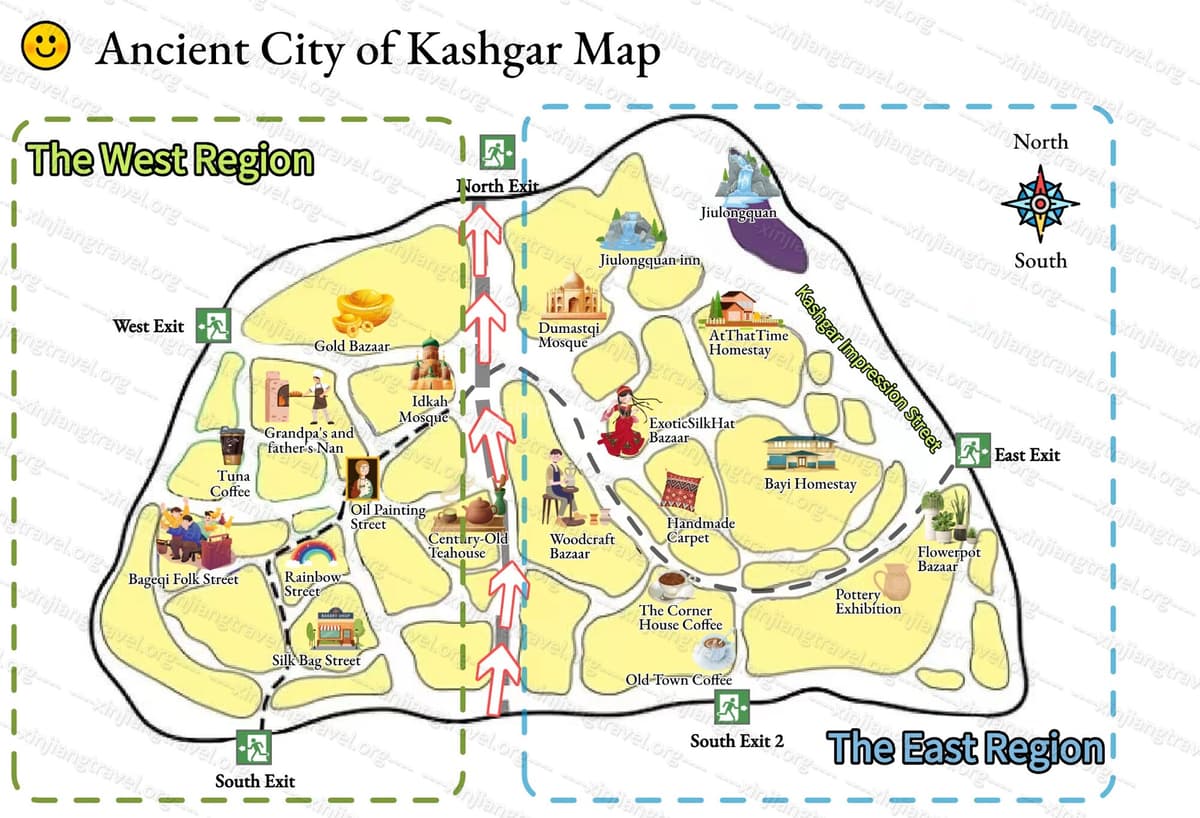
Quick tips: The old town adopts a scientific pavement marking system: hexagonal stone tiles indicate through alleys, while square stone tiles mark dead ends, enabling smooth self-guided wandering. Soft morning and evening light creates the most flattering conditions for architectural and street photography. Spending half a day wandering freely captures the most authentic local atmosphere far better than rushed sightseeing.
Id Kah Mosque
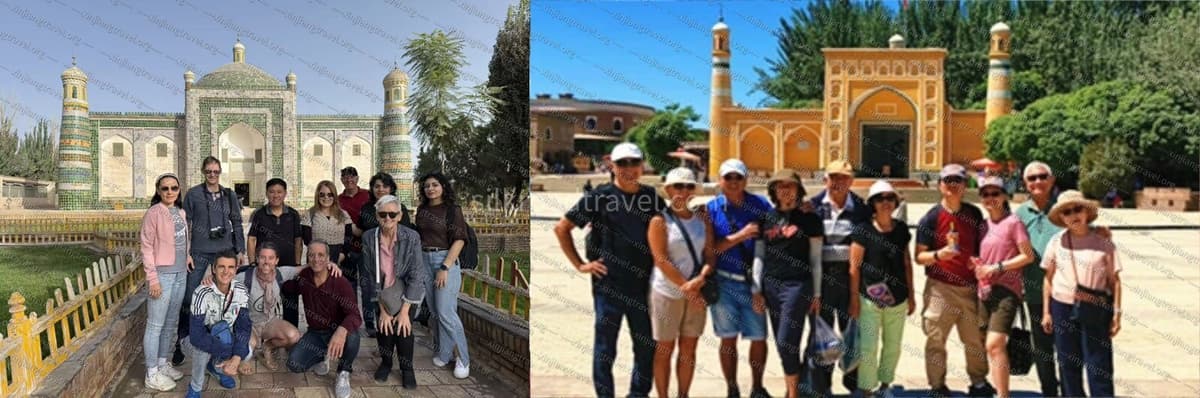
Standing at the geometric centre of Kashgar Ancient City, Id Kah Mosque is the largest Islamic architectural complex in Xinjiang and the spiritual cultural landmark of Kashgar's Silk Road civilisation. First built in the Ming Dynasty and expanded over hundreds of years, the grand complex perfectly blends traditional Uyghur craftsmanship, classic Islamic design and Central Asian architectural characteristics, standing as a representative masterpiece of ancient religious architecture on the western frontier of China.
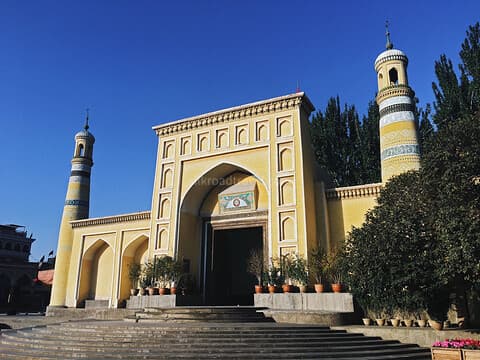
The entire mosque complex features solemn earth-toned exterior walls, orderly arched gateways, intricately carved wooden corridors and spacious open courtyards lined with ancient poplar trees. The grand worship hall boasts a minimalist yet magnificent layout, with neat rows of wooden pillars and diffused natural light creating a serene and sacred atmosphere. Beyond architectural appreciation, the surrounding Id Kah Square serves as the core public cultural gathering space for the entire region. Major traditional Uyghur festivals, folk rituals and cultural celebrations are held here, presenting the most authentic local ethnic customs. As one of the most well-preserved ancient mosques along the ancient Silk Road, it carries profound religious and historical heritage, making it an indispensable stop for cultural exploration during Kashgar tours.
Quick tips: Visiting is available during non-prayer time periods for a quiet and respectful sightseeing experience. Modest and neat attire is recommended to respect local religious customs. Friday grand worship features large-scale religious gatherings with a strong cultural atmosphere.
Gaotai Folk Houses
Perched on a 40-meter-high loess cliff on the western side of Kashgar Ancient City, Gaotai Folk Houses is a primitive layered earthen settlement with a history of more than 2,000 years, representing the most original residential form of ancient Kashgar people. Far less commercialised than the core ancient city area, this cliffside village retains intact primitive living scenes and traditional construction techniques, serving as a living museum of Uyghur folk residential culture.
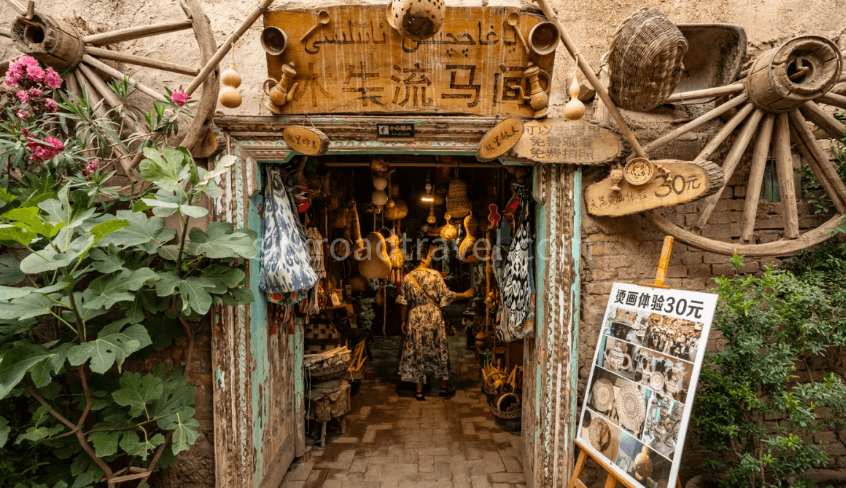
Built layer by layer along the natural terrain of the loess cliff, the stacked earthen houses form a unique three-dimensional terraced architectural landscape. Winding narrow lanes connect scattered courtyards, old wooden doors and earthen walls covered with time-worn traces, fully recording the evolution of Kashgar's folk dwelling culture. Multiple century-old intangible cultural heritage pottery workshops are hidden in the lanes, where inheritors demonstrate traditional hand-thrown pottery making techniques. It is also an excellent panoramic photography platform, offering unobstructed overhead views of the entire ancient city's layered roofscape and sprawling alley networks.
Quick tips: Morning hours feature soft natural light, fewer crowds and superior shooting conditions for architectural panorama and cultural documentary photography. Slow exploration helps discover hidden craft workshops and quiet original alley scenery unseen in the main ancient city area.
Karakul Lake & Muztagh Ata
Located on the core section of the legendary Karakoram Highway in the heart of the Pamir Mountains, Karakul Lake and Muztagh Ata form the most iconic natural landscape combination of Kashgar's high-altitude scenery, ranking among the most photographed alpine scenic spots on the Pamir Plateau. Meaning “black lake” in the local Kyrgyz language, Karakul Lake is a high-altitude glacial lake with extremely clear and transparent water, whose blue tone shifts dynamically with sunlight, cloud layers and seasonal changes.
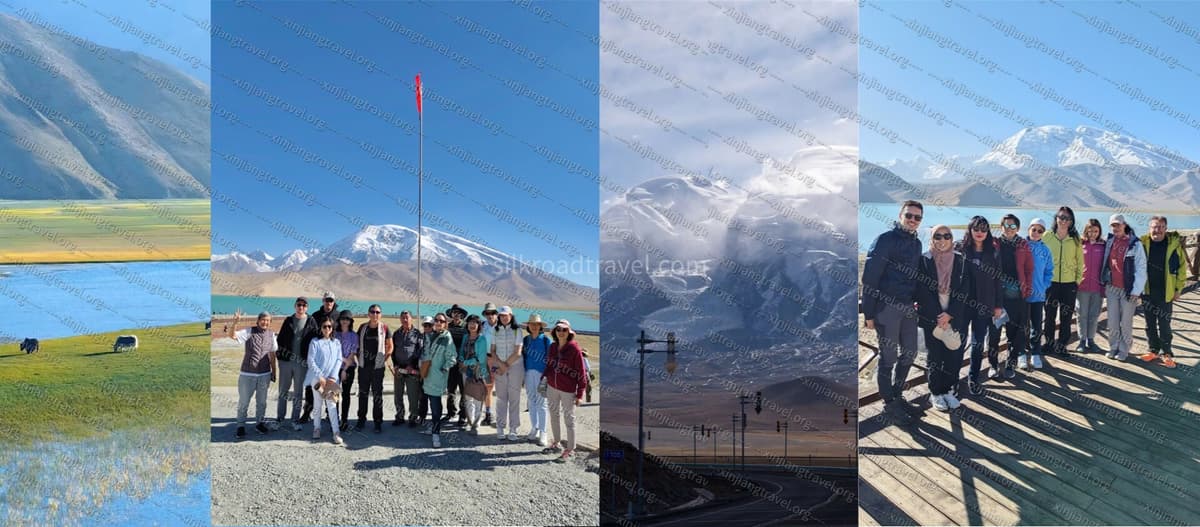
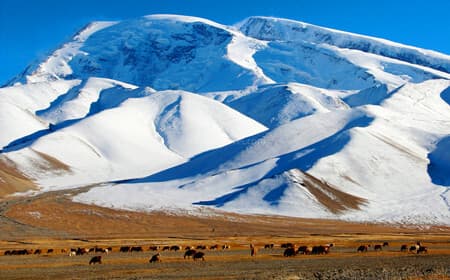
Towering 7,546-meter-high Muztagh Ata, widely known as the “Father of Glaciers”, stands guard directly beside the lake, with permanent snow-capped peaks and sprawling modern glaciers covering its upper slopes. The calm lake surface creates flawless mirror reflections of snow peaks, blue sky and floating clouds, forming a classic symmetrical alpine landscape that defines Kashgar's highland travel imagery. The lakeside is dotted with Kyrgyz nomadic yurt settlements, retaining traditional nomadic lifestyles. Here, it is possible to experience authentic Kyrgyz dairy food, feel the primitive nomadic culture of the Pamir grasslands, and enjoy unobstructed views of continuous snow-capped mountain ranges. As the highlight of Pamir Mountains road trips, this dual landscape perfectly integrates glacier, lake, grassland and snow mountain scenery.
Quick tips: The high-altitude zone features drastic temperature changes and strong wind. Windproof and warm clothing is required even in summer daytime. Sunset brings dramatic light and shadow changes on the lake surface for premium landscape photography.
Panlong Ancient Road
As a world-famous winding mountain road and a core check-in spot for Karakoram Highway road trips, Panlong Ancient Road stretches across the rolling foothills of the Pamir Plateau, featuring more than 600 continuous sharp curves stacked layer upon layer. This artificially built alpine road clings to steep mountain slopes, creating a stunning winding visual effect that showcases the grandeur of plateau mountain terrain.
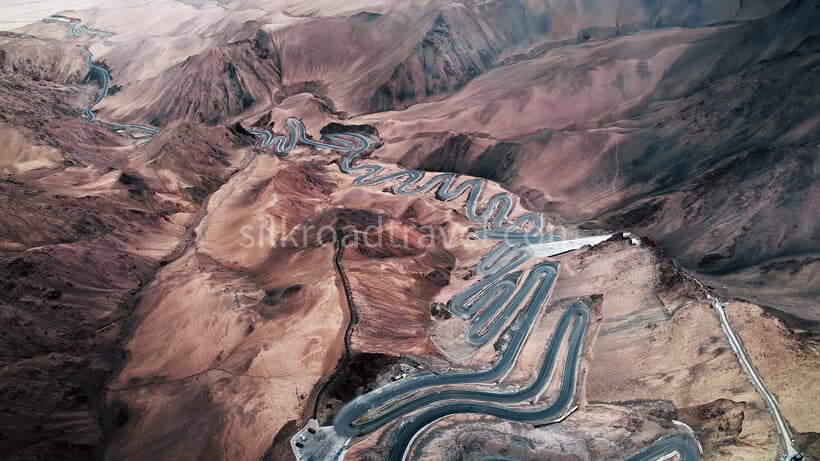
The entire route ascends from valley bottom to mountain ridge, with constantly changing field of vision. Every curve opens up a brand-new layered mountain landscape, with rolling green grasslands, rugged rocky mountain ranges and distant snow-capped peaks forming a rich three-dimensional scenery sequence. Different time periods deliver totally different viewing experiences: midday sunlight brightens the layered road curves and mountain textures, while morning and evening golden light adds a warm tonal filter to the entire mountain range. As a signature landscape of Kashgar's high-altitude self-driving tour, it represents the unique adventurous charm of Pamir Mountains travel.
Quick tips: Strictly control driving speed on the curved road for safety. Multiple designated viewing platforms on the route provide safe parking and shooting positions to capture the full winding panorama of Panlong Ancient Road.
White Sand Lake
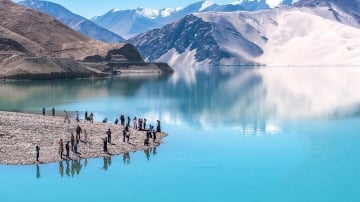
Situated on the classic Karakoram Highway route from Kashgar to Tashkurgan, White Sand Lake is a minimalist high-altitude scenic gem famous for its highly contrasting landscape of pure white sand dunes and crystal blue alpine lake water. Formed by accumulated wind-blown white fine sand and glacial meltwater, this unique plateau lake landscape differs completely from traditional mountain water scenery, presenting a clean, ethereal and otherworldly visual aesthetic.
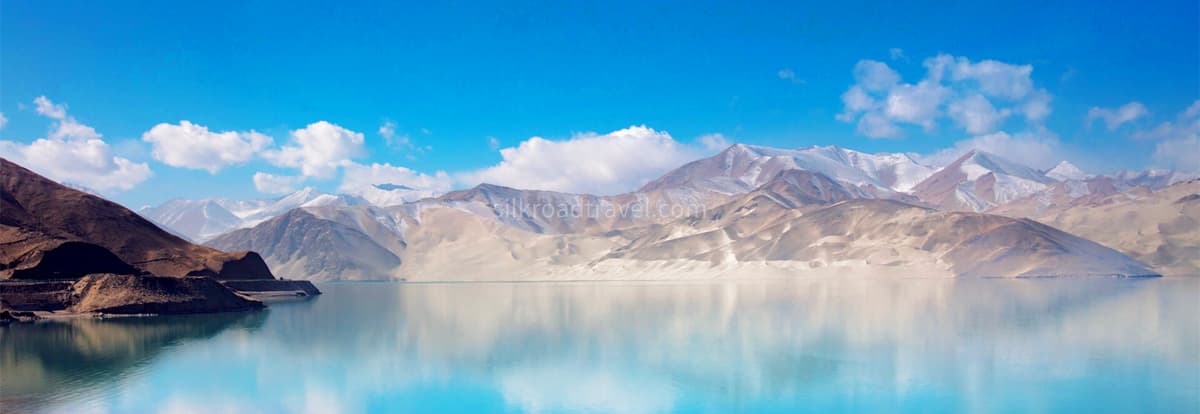
Vast pure-white sand dunes surround the tranquil blue lake surface, with distant snow-capped Pamir peaks serving as the background. The open horizon and simple colour matching of white, blue and snow grey create top-tier minimalist landscape photography effects. The lake water clarity ranks among the highest on the Pamir Plateau, with visible underwater sand textures under calm water surface. The entire scenic area maintains a primitive and quiet state, free from excessive commercial development, making it an ideal stop for relaxing road trip breaks and continuous landscape shooting during Pamir Mountains travel.
Quick tips: Morning time features gentle wind and calm lake water, creating complete snow mountain and sand dune reflections for the most perfect shooting results. Avoid visiting on windy days to prevent blurred lake surface views.
Upal Sunday Bazaar
Upal Sunday Bazaar is the most authentic original rural bazaar in southern Xinjiang and a core folk experience spot for in-depth Uyghur culture exploration. Unlike commercial urban markets, this weekly folk gathering gathers farmers, herdsmen and craftsmen from surrounding Pamir valleys and rural areas, fully presenting the most genuine local livelihood and ethnic customs.
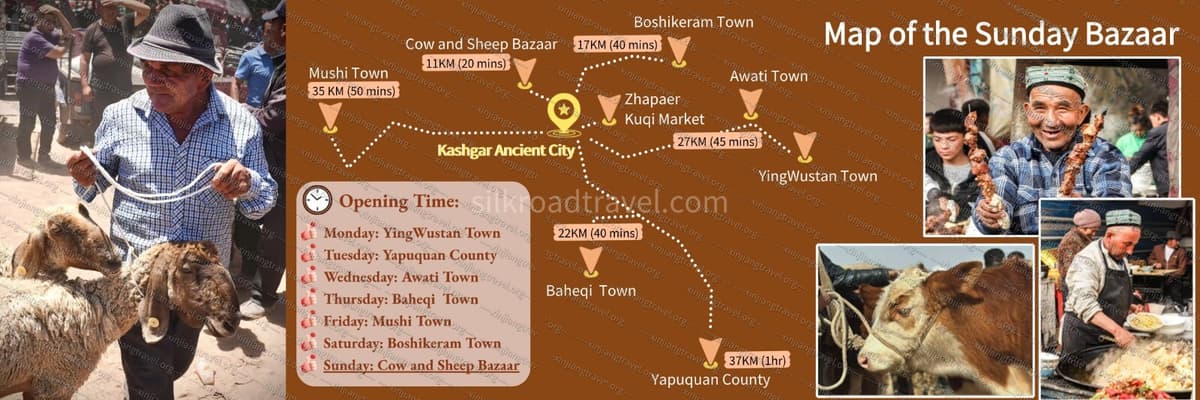
Every Sunday, the entire market street is filled with lively local vitality, with dense stalls covering ethnic handicrafts, handwoven carpets, traditional textiles, local dried fruits, seasonal melons and fruits, and authentic rural street food. Livestock trading areas retain traditional folk transaction customs unique to Xinjiang's farming and nomadic integration regions. Walking through the bazaar allows close contact with local daily life, listening to authentic Uyghur dialogue, watching handmade craft production, and tasting original local flavours. It serves as an unmissable immersive folk experience site for deep cultural travel in Kashgar.
Quick tips: The bazaar only opens every Sunday morning to noon, with the most bustling atmosphere between 10 AM and 12 PM. Arriving during this period captures the richest local market scenes and folk vitality.
Kashgar Local Food, Unique Fruits & Regional Specialties
As the culinary heart of Xinjiang and a historic food hub on the ancient Silk Road, Kashgar boasts a one-of-a-kind gastronomic system shaped by thousands of years of Uyghur dietary tradition, nomadic culture and Silk Road trade exchanges. Unlike generic Central Asian flavours, Kashgar local food features bold, aromatic, hearty tastes with minimal seasoning, relying on high-quality local ingredients including pasture-raised livestock, sun-ripened fruits and pure mountain water. Integrating classic savory street foods, signature staple dishes, seasonal sweet fruits and collectible regional specialties, Kashgar's diverse cuisine forms an essential part of immersive Uyghur culture exploration.
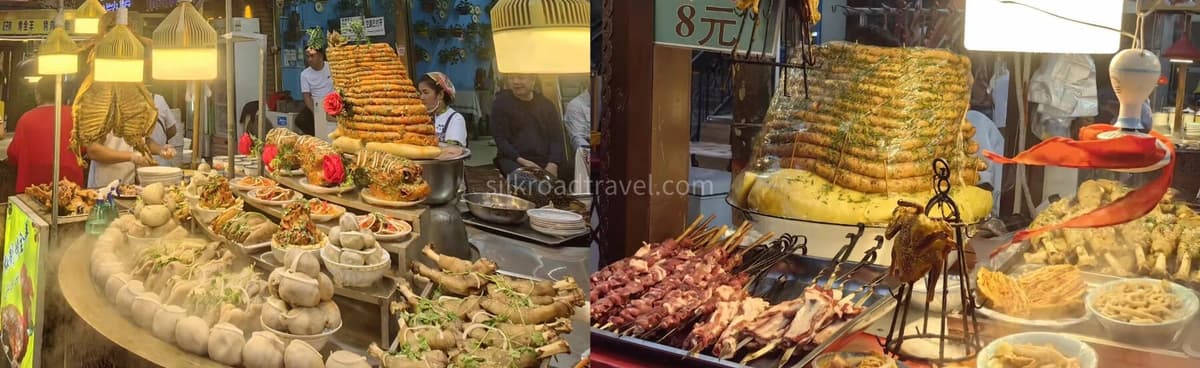
Food exploration runs through the entire Kashgar travel experience, perfectly matching downtown ancient city wandering, bazaar visiting and highland road trips. Vintage teahouses and roadside stalls in Kashgar Ancient City deliver authentic daily flavours, while bustling night markets and rural bazaars gather seasonal delicacies and handmade treats. Every bite reflects the unique geographical advantages of oasis and plateau integration, creating rich and memorable taste impressions unavailable in other Silk Road destinations.
Iconic Kashgar Local Food & Classic Dishes
Kashgar's signature dishes inherit traditional Uyghur cooking techniques dominated by baking, stewing and slow roasting, presenting rich layered flavours that define Xinjiang's classic taste. These time-honoured recipes have been passed down for generations, becoming the core culinary symbols of Kashgar tours.
Kashgar Naan is the most fundamental and representative staple food in Uyghur daily life, with a history spanning more than 2,000 years. Widely known as the timeless staple of the Silk Road, Kashgar naan comes in dozens of variations with distinct textures and flavours. Classic plain naan features crispy golden crusts and soft chewy interiors, while savory meat naan stuffed with seasoned lamb and onion bursts with juicy umami flavours. Sweet versions baked with rose jam, fig paste and sesame create rich sweet-aromatic layers. Freshly baked naan from ancient city tandoor ovens carries a unique smoky wheat fragrance, serving as the perfect pairing for all local dishes.
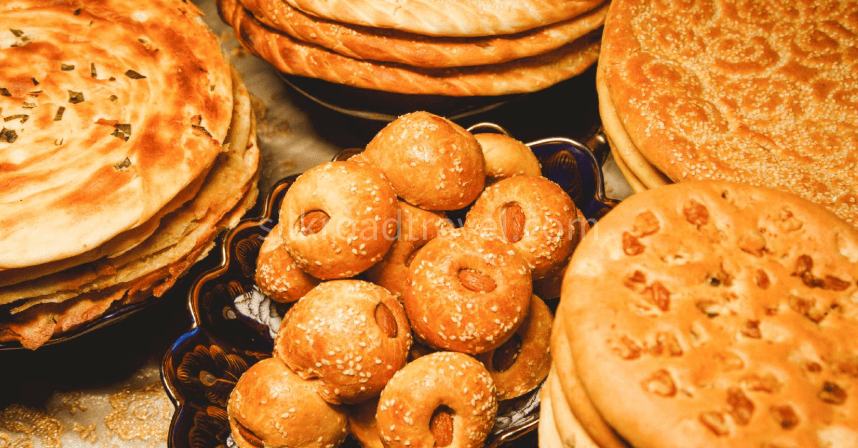
Samsa (Uyghur Baked Dumpling) stands as a must-try street food across Kashgar's bazaars and old town alleys. These pyramid-shaped baked pastries are stuffed with tender diced lamb, fresh onions and precise blends of cumin and local spices. Baked in high-temperature tandoor ovens, the crust turns golden and crispy while the filling remains succulent and aromatic. Featuring concentrated meat flavour and moderate spiciness, samsa delivers authentic Uyghur baking craftsmanship in every bite.
.png&w=1200&q=75 "Samsa (Uyghur Baked Dumpling).png")
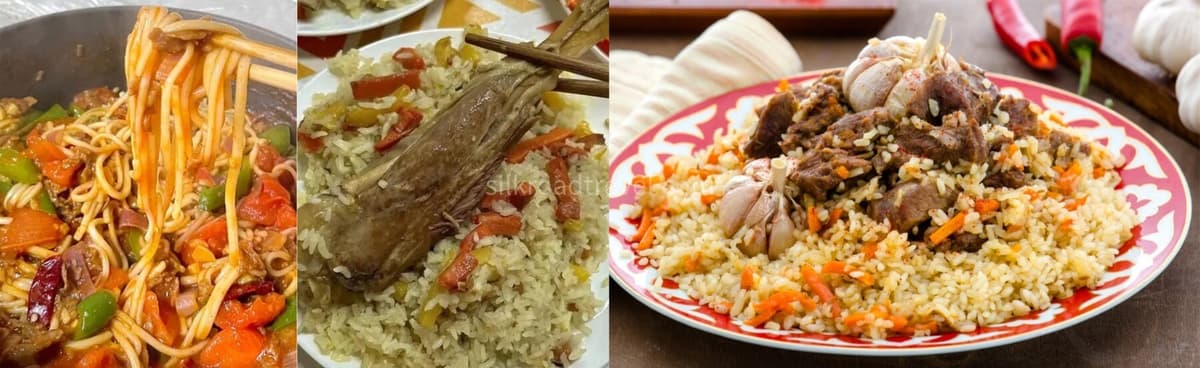
Hand-Pulled Noodles & Lamb Plov represent the hearty daily staple flavours of Kashgar. Fresh hand-pulled noodles boast springy textures, paired with stir-fried lamb, seasonal vegetables and special spice sauces for a satisfying savory meal. Lamb plov, cooked with glutinous rice, tender lamb chunks, carrots and onions over slow fire, absorbs all the meat and vegetable aromas, forming a warm, nourishing and filling signature dish favoured by locals year-round.
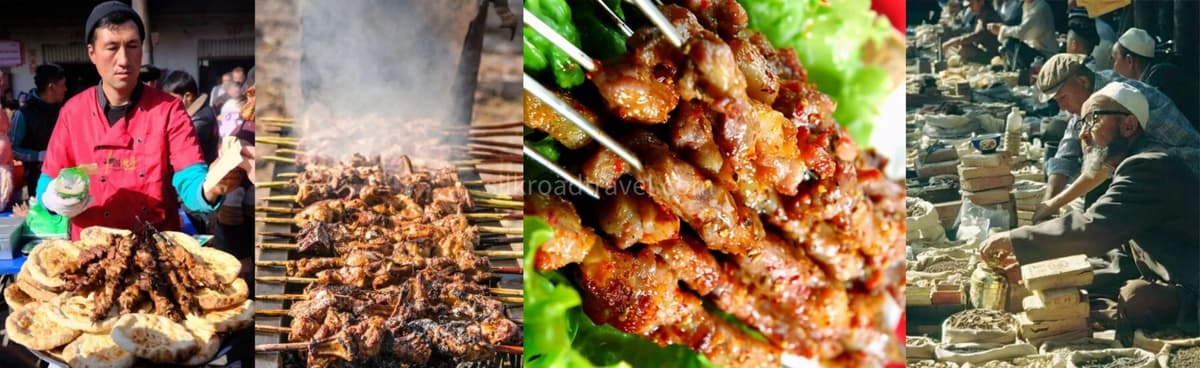
Kashgar Lamb Skewers & Barbecue define Xinjiang's world-famous barbecue culture. Raised on natural alpine pastures with wild herbs and vegetation, local lamb features tender texture, low fat and zero gamey taste. Grilled over charcoal fire with simple cumin and salt seasoning, the skewers retain pure meat fragrance with crispy exteriors and juicy interiors. Various barbecue variations including whole lamb roast and lamb chops fully showcase the bold and unrestrained gourmet style of frontier oasis regions.
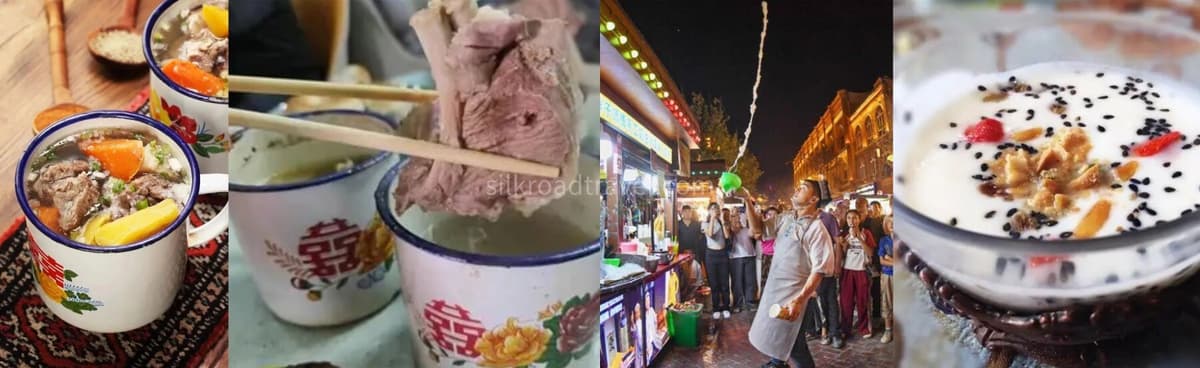
Chuanzi Meat Soup & Traditional Dairy Treats offer light and nourishing gourmet choices. Simmered slowly with fresh lamb and natural spices, chuanzi meat soup delivers mellow, pure and non-greasy flavours, ideal for relieving fatigue after long walks and high-altitude drives. Homemade Uyghur yogurt features thick texture and natural sour sweetness, without artificial additives, perfectly balancing the richness of roasted and baked foods.
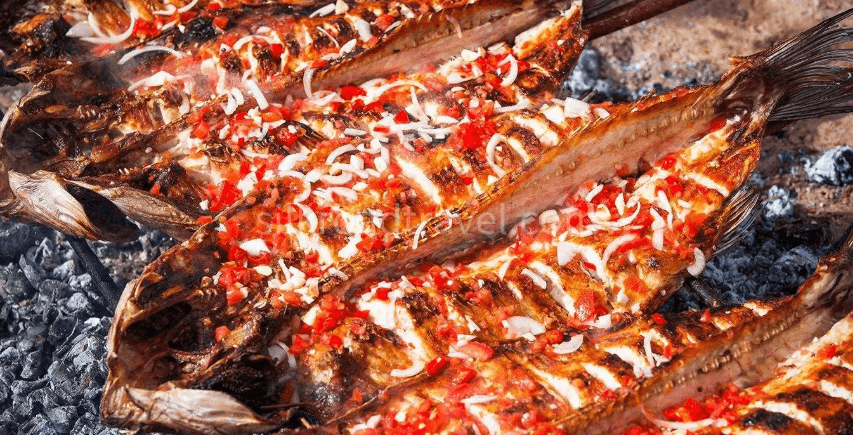
Barchu Grilled Fish is a unique water-source delicacy exclusive to Kashgar's river basins. Fresh river fish are split open and fixed on wooden racks, grilled slowly over charcoal fire with local seasonings. The finished fish boasts tender white meat, fresh and non-fishy taste, integrating smoky fragrance and delicate river flavour, forming a rare aquatic specialty in the arid Xinjiang region.
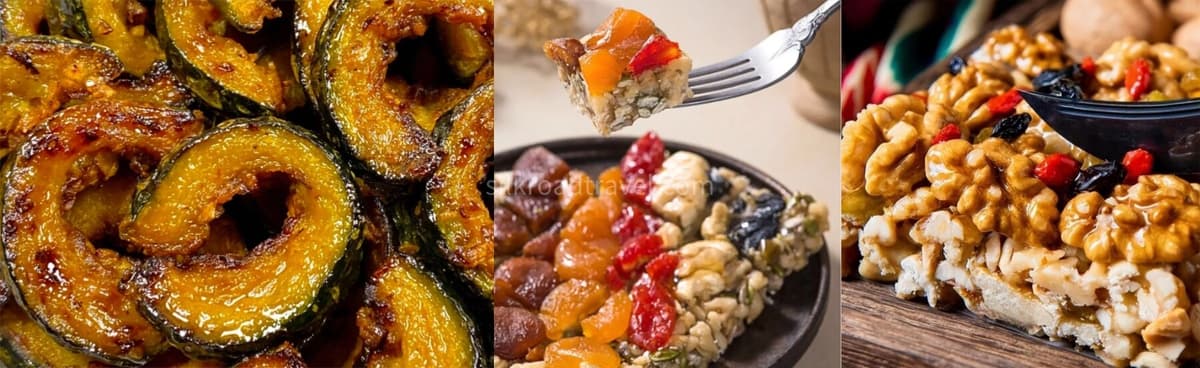
Roasted Pumpkin & Traditional Margen Sugar represent distinctive ancient folk desserts. Slow-roasted local pumpkin retains natural sweet essence with soft glutinous texture, serving as a healthy seasonal sweet treat popular in bazaars all year round. Margen sugar, with a thousand-year Silk Road heritage, is handmade with high-quality nuts, honey and grain syrup. Compact in texture, easy to carry and rich in nutrition, it was the ideal portable energy food for ancient Silk Road merchants and remains a classic handmade specialty today.
Famous Seasonal Fruits in Kashgar
Benefiting from abundant sunshine, huge day-night temperature differences and pure glacial meltwater irrigation, Kashgar produces top-tier sweet fruits renowned across China and Central Asia. Each season brings exclusive ripe fruits, forming a year-round sweet tasting journey and becoming a major highlight of Kashgar travel.
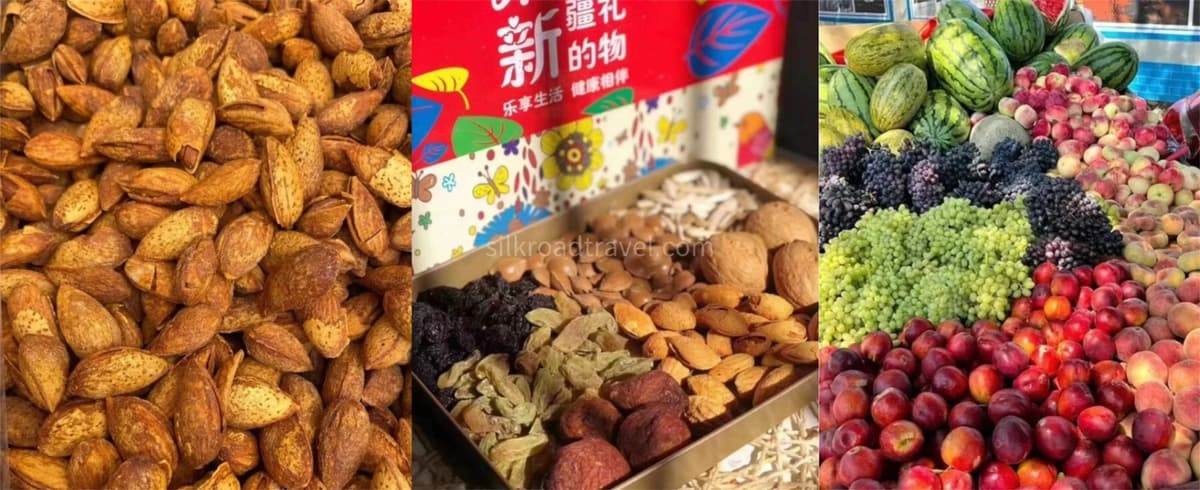
Yingjisha Saimaiti Apricot is a national geographical indication product and the most prestigious summer fruit of Kashgar. Boasting bright orange-red skin, smooth texture and plump flesh, these apricots feature extremely high sugar content and delicate juicy taste. Fresh apricots taste sweet and refreshing, while sun-dried apricots and preserved apricots retain concentrated fruit fragrance, representing premium seasonal summer gifts.
Kashgar Fig thrives in the oasis warm climate, ripening from summer to early autumn. Locally grown figs feature thin skin, plump flesh and rich natural sweetness, with soft and glutinous texture. Freshly picked figs deliver pure fruity sweetness, while sun-dried figs are richer in flavour, perfect for casual tasting and souvenir collection.
Seedless White Grapes & Hotan Jujubes are classic autumn fruits. Kashgar's seedless white grapes grow in sufficient sunlight, forming crisp, juicy and extremely sweet flesh with thin skins and no seeds. Ripening in autumn, Hotan jujubes feature thick flesh, small pits and rich natural sweetness, known for high nutritional value and portable storage, becoming popular daily snacks and specialty gifts.
Winter Melons & Seasonal Melons extend the fruit tasting experience to late autumn and winter. Local cantaloupes and honey melons grown in oasis farmlands accumulate rich sugar through long-time sunshine exposure, featuring crisp flesh and strong fruity aroma, fully embodying the unique fruit-growing advantages of Kashgar's arid oasis ecology.
Kashgar Local Festivals, Folk Performances & Cultural Experiences
As the core inheritance hub of ancient Uyghur culture and Silk Road folk customs, Kashgar preserves a complete set of traditional festivals, intangible cultural heritage performances and interactive local cultural activities. These diverse folk experiences constitute the most vivid and immersive part of Kashgar travel, perfectly complementing ancient city sightseeing, bazaar exploration and Pamir Mountains road trips. Different seasonal festivals bring unique regional atmospheres, while daily regular performances and hands-on folk projects allow in-depth contact with authentic local customs, far beyond conventional scenic sightseeing.
Major Traditional Kashgar Festivals
Kashgar's traditional folk festivals follow ethnic cultural traditions and seasonal cycles, featuring grand ritual scenes, lively song and dance gatherings and exclusive ethnic customs. Each festival shapes a distinctive cultural travel highlight of Xinjiang travel.
Eid al-Fitr (Roza Bayrami) is one of the most solemn and lively traditional festivals in Kashgar, marking the end of Ramadan. During the festival period, the whole city takes on a fresh and festive look, with residential courtyards and street alleys fully cleaned and decorated. A variety of exclusive festival desserts and handmade pastries are freshly made across every household, presenting rich and sweet local flavors. Early morning gatherings and ceremonial rituals are held around Id Kah Mosque, followed by continuous folk song and dance performances on the surrounding square. The whole area is filled with harmonious and joyful festive vibes. Traditional customs including family gatherings, visiting relatives and sharing delicacies fully display the warm and simple ethnic folk traditions of Kashgar.
Eid al-Adha (Corban Festival), another grand annual ethnic festival, inherits ancient sacrificial and gratitude traditions. The festival features unique regional customs including livestock sacrifice, charity sharing and folk banquets, interpreting the local cultural connotation of kindness and hospitality. During the festival, large-scale folk cultural activities are launched in major cultural squares and ancient city blocks. Passionate Uyghur folk dances, instrumental performances and improvised singing gatherings run through the whole day. Traditional competitions such as folk wrestling, archery and horse racing are held in suburban pastoral areas, showcasing the bold and unrestrained frontier ethnic customs. It is the best period to witness the most authentic grand ethnic ceremonies in Kashgar.
Nowruz Festival (Uyghur Spring New Year) symbolizes the arrival of spring and the renewal of all things, carrying the millennium-old folk heritage of the Uyghur people. Celebrated in early spring every year, the festival focuses on welcoming new vitality and praying for a prosperous year. A series of cultural activities including folk parades, intangible heritage displays, traditional instrumental ensemble performances and spring folk banquets are held in the ancient city. Local residents dress in exquisite traditional ethnic costumes to participate in collective celebrations, creating a strong spring cultural atmosphere exclusive to Kashgar's oasis land.
Daily Regular Folk Performances & Classic Shows
Beyond seasonal festivals, Kashgar arranges stable daily folk performances in core scenic areas, enabling immersive cultural experience at any time throughout the year. These normalized shows systematically showcase the essence of local intangible cultural heritage and Silk Road art.
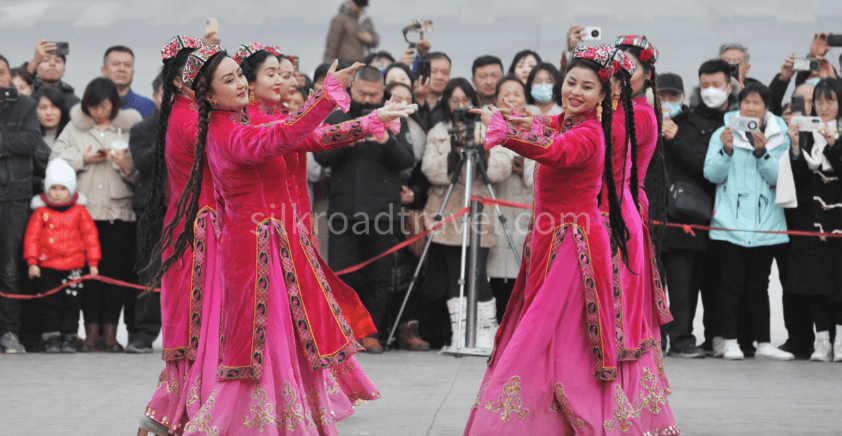
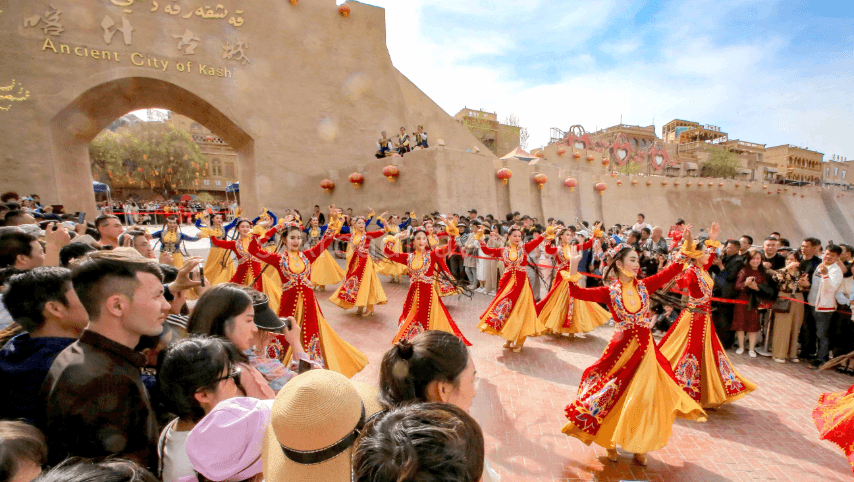
Kashgar Ancient City Opening Ceremony is a must-watch daily classic performance located at the East Gate of Kashgar Ancient City. Officially staged every morning, the ceremony integrates Silk Road historical narration, traditional Uyghur dance, folk instrumental performance and ethnic costume shows. The whole process reproduces the grand scenes of ancient Kashgar as a prosperous Silk Road transit hub, vividly presenting the integration of multi-ethnic cultures and millennium-old regional heritage. The flowing dance postures, melodic traditional music and exquisite costume details fully interpret the unique charm of Uyghur folk art, serving as the perfect opening for ancient city exploration.
Uyghur Muqam Live Performances inherit the world-class intangible cultural heritage of Kashgar. Uyghur Muqam, known as the “living fossil of Silk Road music”, combines instrumental performance, lyrical singing and rhythmic folk dance. Fixed live performances are staged in ancient city teahouses and cultural venues all year round. The magnificent melody, layered rhythm and vivid scene expression record the life customs, emotional aesthetics and historical evolution of the Uyghur people. Sitting in a century-old teahouse to enjoy authentic Muqam shows is the most elegant way to experience local traditional art.
Immersive "Meet Kashgar" Theatrical Show is a landmark indoor cultural performance in Kashgar. Different from traditional fixed-stage performances, this immersive drama breaks the boundary between stage and audience space. It restores the prosperous scenes of ancient Shule Kingdom, lively Silk Road bazaars and mysterious Pamir folk villages through panoramic scene restoration and interactive plot deduction. Integrated with dance, drama, folk music and intangible heritage display, the whole show presents the thousand-year changes of Kashgar's history, culture and folk customs in an all-round way.
Interactive Folk Cultural Experiences & Local Activities
Kashgar offers a wealth of hands-on folk experience projects, allowing deep integration with local daily life and intangible heritage craftsmanship. These participatory activities add unique interactive memories to Kashgar tours, different from simple sightseeing.
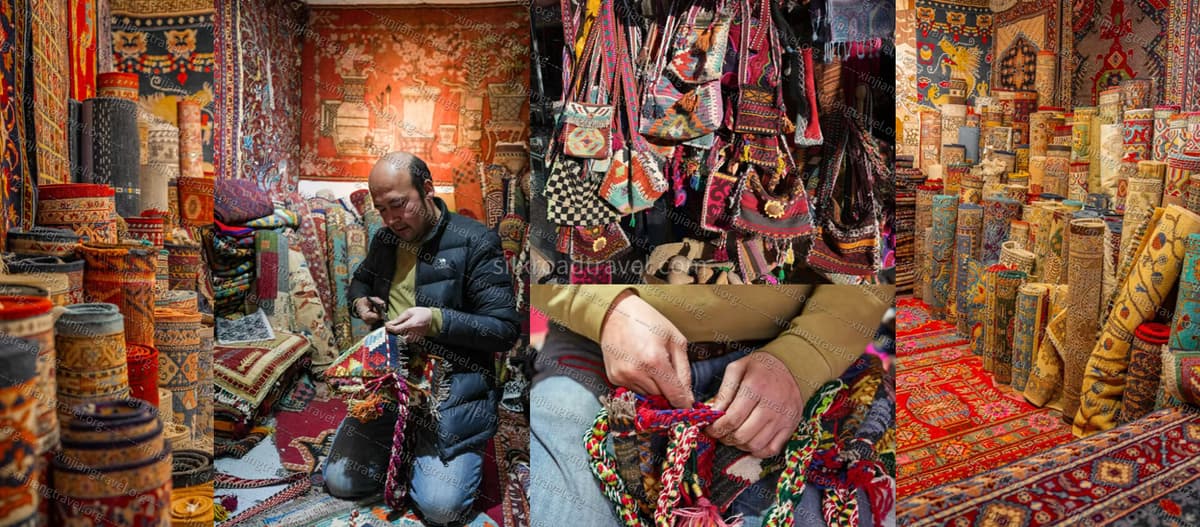
Traditional Uyghur Handicraft Experience covers multiple intangible heritage craftsmanship projects hidden in Kashgar Ancient City alleys. Professional craftsmen provide on-site guidance for traditional copper forging, Uyghur flower hat weaving, handmade wood carving and ethnic textile weaving. It is possible to observe the whole process of ancient craftsmanship and complete exclusive handmade works independently. Each handmade piece carries unique regional cultural marks, becoming precious cultural keepsakes.
Local Tea House Folk Culture Immersion is the most down-to-earth casual experience in Kashgar. Century-old teahouses scattered in the ancient city are important social spaces for local residents. In the relaxed and quiet teahouse atmosphere, it is possible to taste traditional Uyghur milk tea and handmade pastries, listen to impromptu folk instrumental performances and local old songs, and feel the slow and authentic daily life rhythm of the ancient city away from the noisy crowds.
Bazaar Folk Life Exploration centered on Upal Sunday Bazaar and Hanbazaar Night Market delivers the most lively grassroots folk experience. Wandering through the market streets, you can watch real-time handmade snack production, traditional carpet weaving and folk commodity transactions, and feel the most primitive market vitality and ethnic customs of southern Xinjiang. The rich ethnic style, lively atmosphere and diverse local goods fully interpret the inclusive and prosperous market culture of the ancient Silk Road.
Highland Nomadic Culture Experience along the Karakoram Highway complements urban folk culture. Lakeside yurt settlements in Karakul Lake provide access to authentic Kyrgyz nomadic life. It is possible to taste traditional nomadic dairy food, experience yurt living customs, and enjoy open grassland scenery and snow-capped mountain views, feeling the integrated cultural charm of oasis Uyghur customs and Pamir nomadic traditions.
Kashgar Travel Itineraries & Private & Group Tours Recommendation
Blending millennia-old Silk Road culture, diverse Uyghur folk customs, stunning high-altitude alpine landscapes, and exclusive gourmet flavors, Kashgar stands out as the most diverse and authentic travel destination in Xinjiang. Unlike conventional travel destinations with single scenic features, Kashgar delivers a perfectly balanced travel experience: the downtown area boasts living ancient city relics, intangible cultural heritage crafts, lively bazaar vibes and time-honored gourmet delicacies, while the Pamir Mountains corridor along the Karakoram Highway presents snow-capped peaks, glacial lakes, winding mountain roads and primitive nomadic customs.
To maximize the travel experience and arrange scenic spots, food and cultural activities in a logical and time-saving order, we have sorted out the most classic and practical Kashgar travel routes covering core attractions, gourmet gathering areas and characteristic folk experience sites.