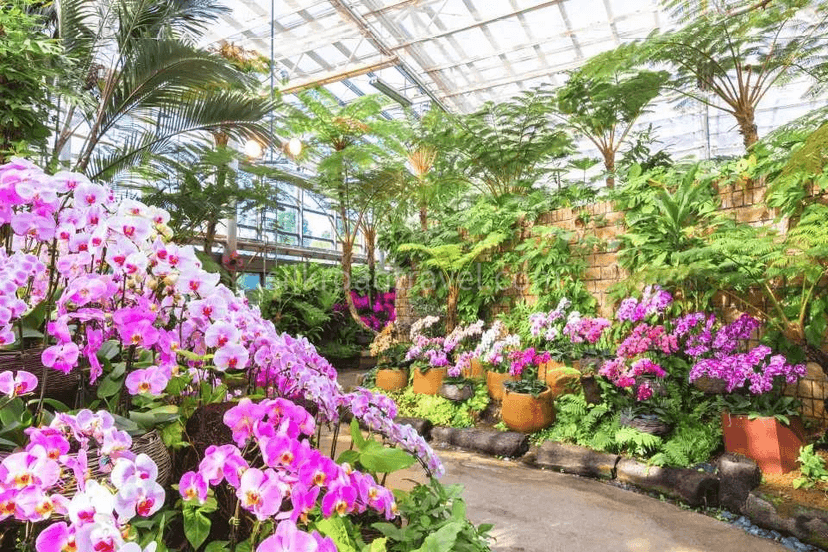



Xishuangbanna Rainforest & Dai Culture Guide
In Xishuangbanna, nature and culture have never been separate. For generations, the Dai people have lived by water and forest. Their beliefs, food, festivals, and daily life are all intertwined with this tropical rainforest. When you walk into the rainforest, you are also stepping into the spiritual world of the Dai people. And when you visit a Buddhist temple or join the Water Splashing Festival, you can smell the rainforest in the air.
The Rainforest Is Not a "Scenic Spot" – It's Part of Dai Life
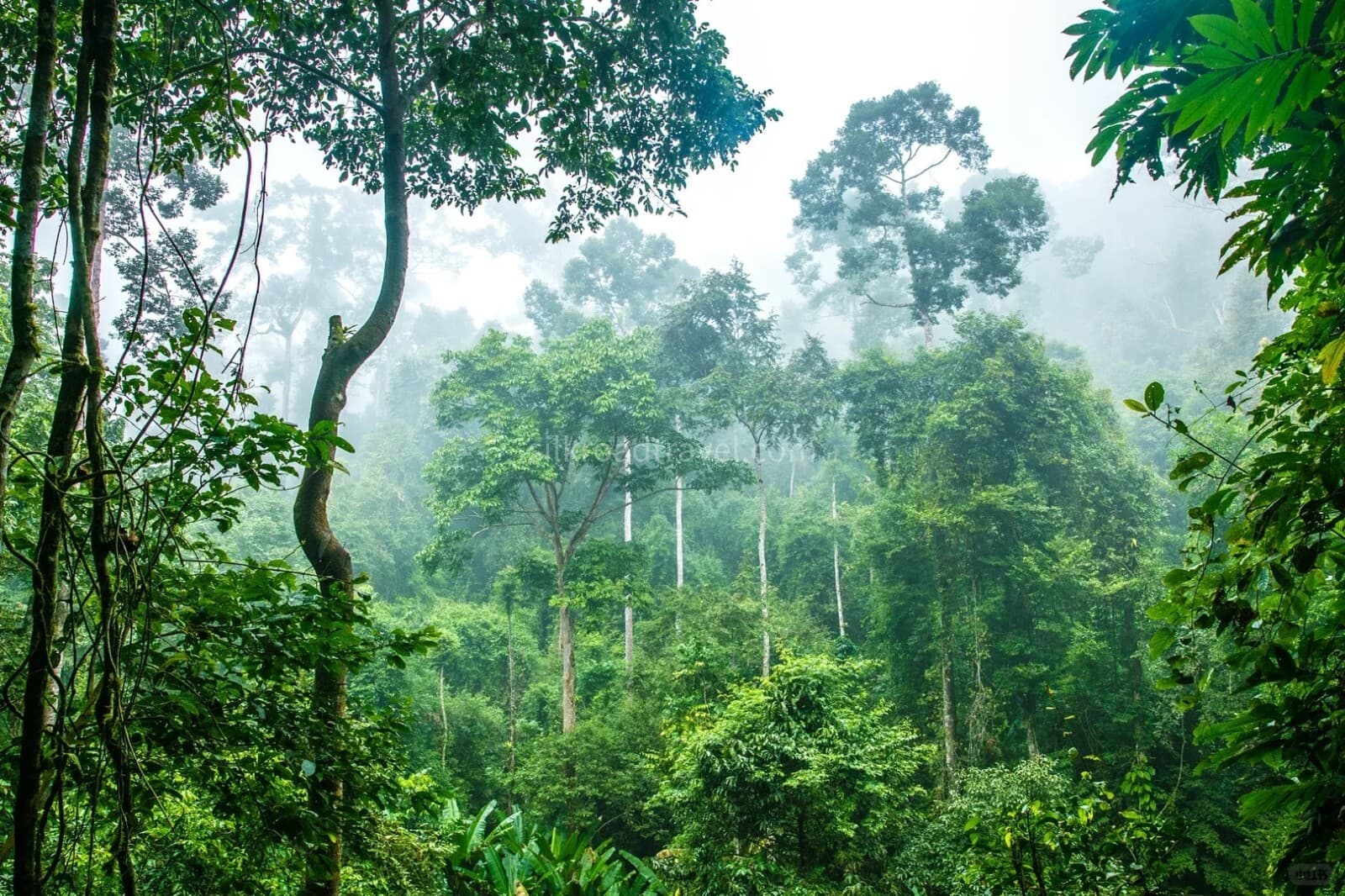
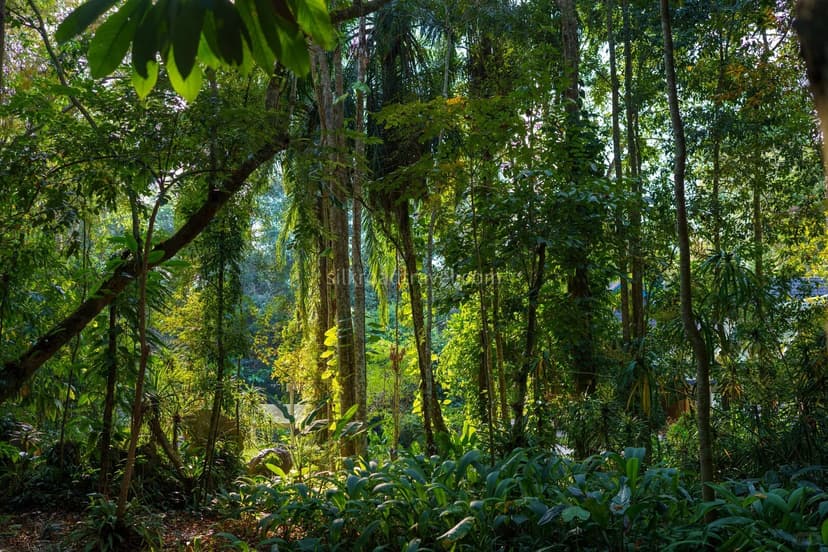
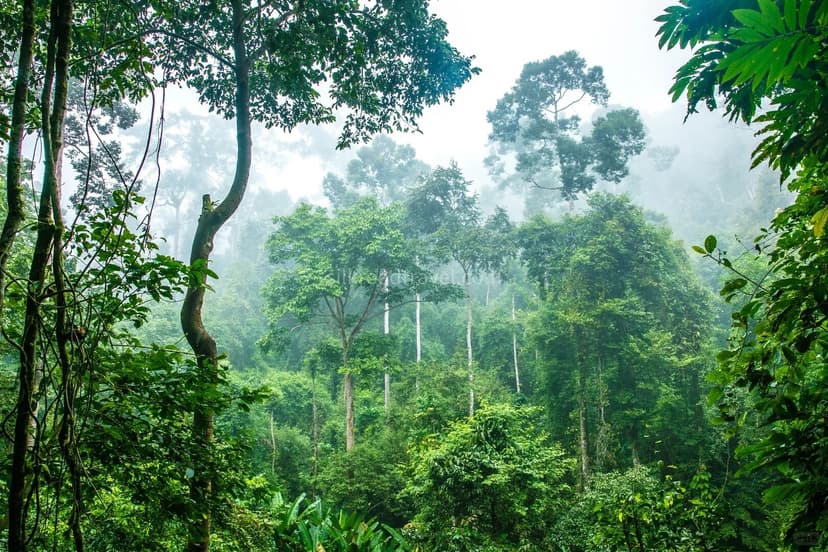
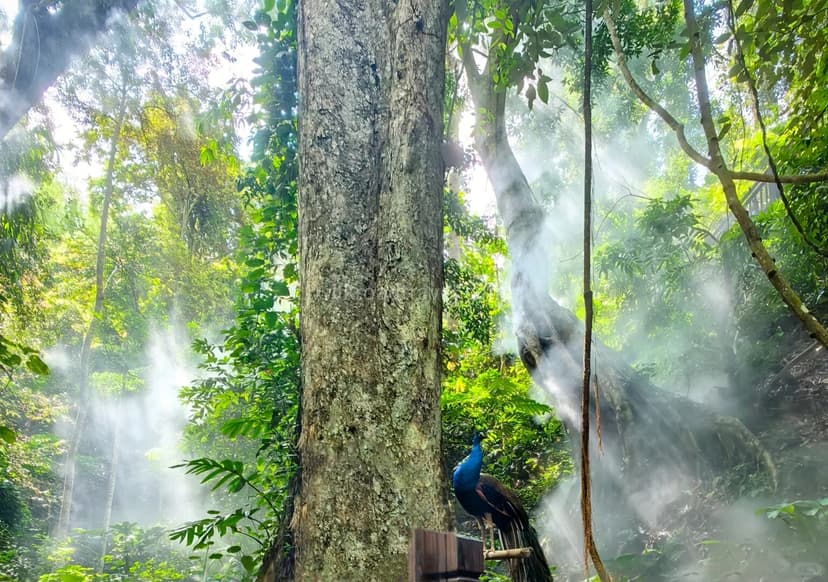
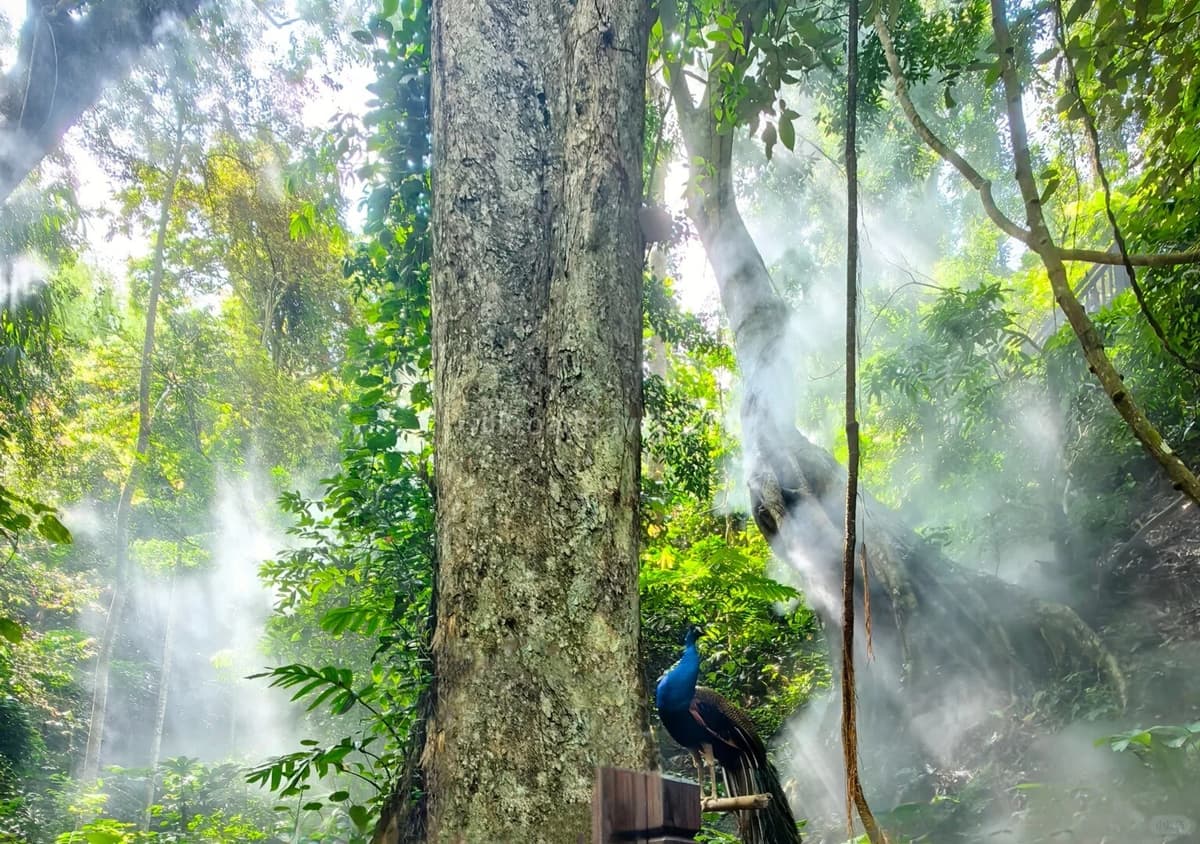
Many visitors feel awed the first time they walk into Xishuangbanna's rainforest: massive buttress roots stand like walls, vines hang from the canopy, and the air is thick with the scent of wet plants. But the Dai people don't see this forest as a "scenic area." To them, it is a source of water, medicine, building materials, and stories.
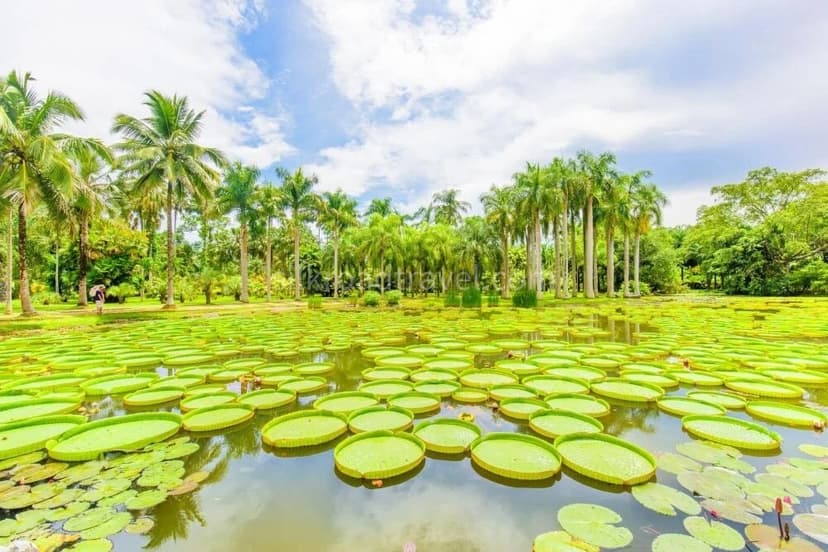
In Xishuangbanna, the three most worthwhile rainforest experiences are: the Tropical Botanical Garden (CAS) (for plant diversity), Wangtianshu Scenic Area (for the canopy walkway), and Wild Elephant Valley (for spotting Asian elephants). But the real rainforest experience often happens outside these "attractions" — a morning walk along the river near Menglun, hunting for mushrooms in the bamboo forest behind Manzhang Village after rain, or sitting on the balcony of a Dai stilt house watching the mist slowly swallow the mountain opposite.
Water and Forest in Dai Culture: Belief and Daily Life
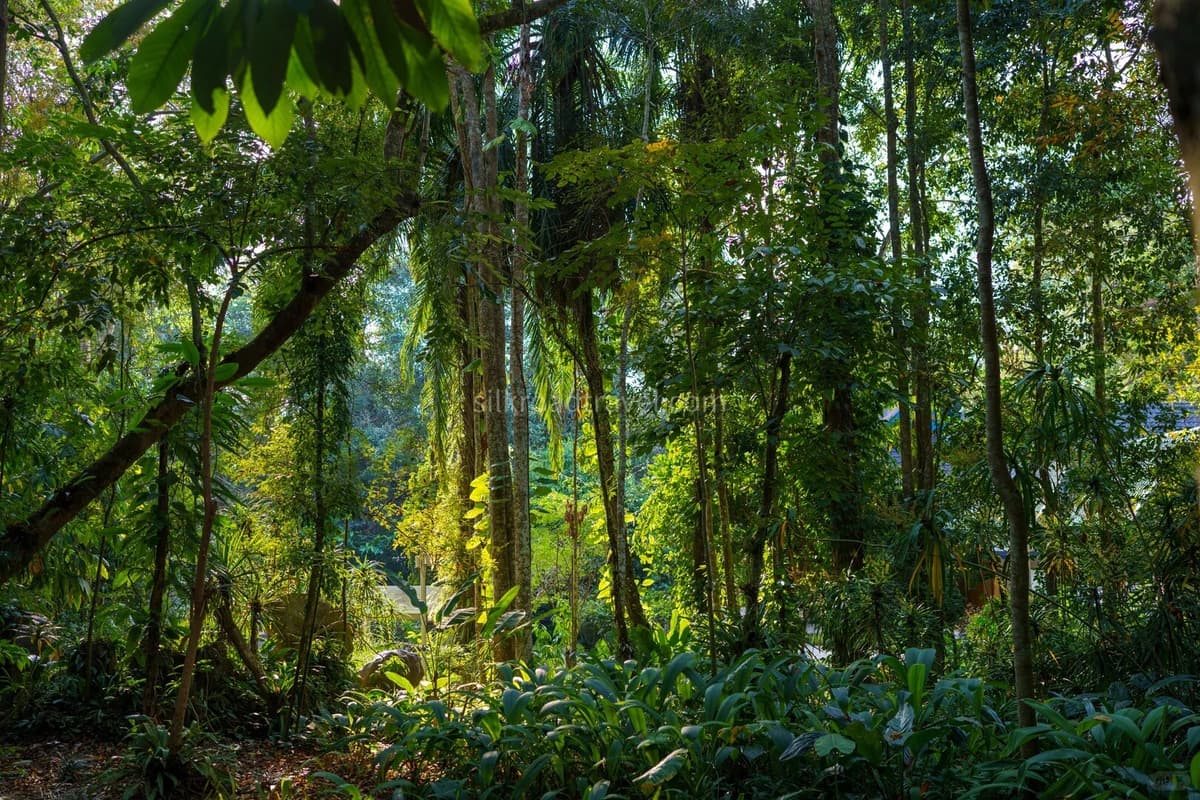
The Dai people revere water and also hold the forest in awe. After Theravada Buddhism arrived, these ancient beliefs blended with Buddhist ethics to form a unique community code: every temple must have a large tree beside it, every village must have a water source nearby, and cutting trees on a sacred mountain brings bad luck.
The most visible expression of this culture is the "Long Shan" (Dragon Mountain). Every Dai village has a protected patch of forest, usually on the hillside behind the village. Not a single tree or bush there can be touched, because that is where the ancestors' spirits reside. Long Shan often preserves the most pristine tropical vegetation. Walk in, and you'll find almost no path — not because it's inaccessible, but because no one would dare disturb it.
If you are interested in cultural anthropology, ask a local guide to take you to the edge of a Long Shan (don't enter — respect the taboo). They will tell you which tree is the village guardian, which stream is used for water-dropping ceremonies. This is not a tourist performance. It is a living tradition.
Rainforest Hiking: Easier Than You Think, But Requires Respect
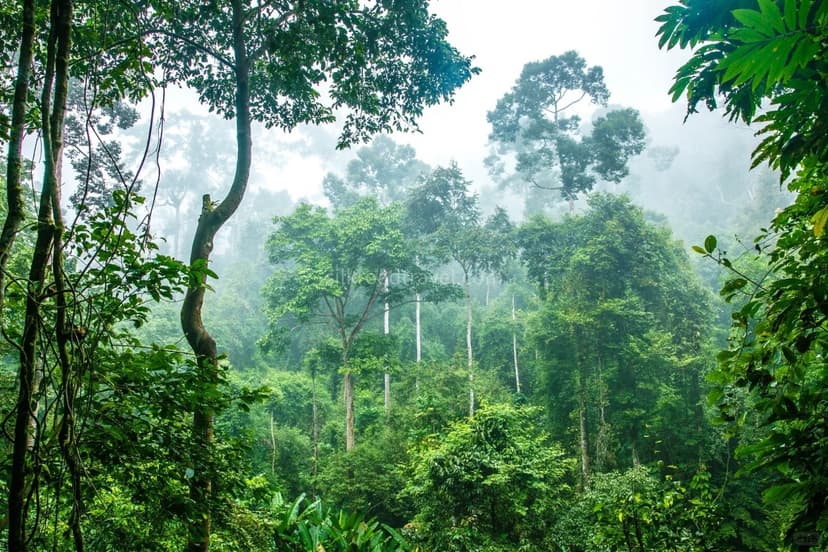
Most rainforest hiking trails in Xishuangbanna do not require professional gear. An ordinary tourist with non-slip sneakers or hiking sandals and a bottle of water can handle most established paths. The two most classic routes are:
Wangtianshu Canopy Walkway + Phillip Trail: The canopy walkway is 36 meters high and 500 meters long — about 15 minutes to walk. After coming down, take the Phillip Trail, a gentle 2 km dirt path through genuine tropical rainforest, where you can see massive buttress roots, strangler figs, and epiphytic orchids.
Wild Elephant Valley Elevated Walkway: 2.28 km long, built at canopy level. With luck, you can see wild elephants drinking below. Even without elephants, the forest's layered structure is impressive enough.
A few reminders: Go in the morning — better light, lower temperature, fewer people. Don't wear shorts — not just because of mosquitoes (though there are many), but because of thorny plants and leeches. Avoid remote dirt trails within two days after heavy rain — the paths turn to mud, and leeches are hyperactive. Carry a small packet of salt; if a leech attaches, sprinkle salt and it will drop off.
Buddhist Temples: Not Just Architecture, But the Breath of the Community
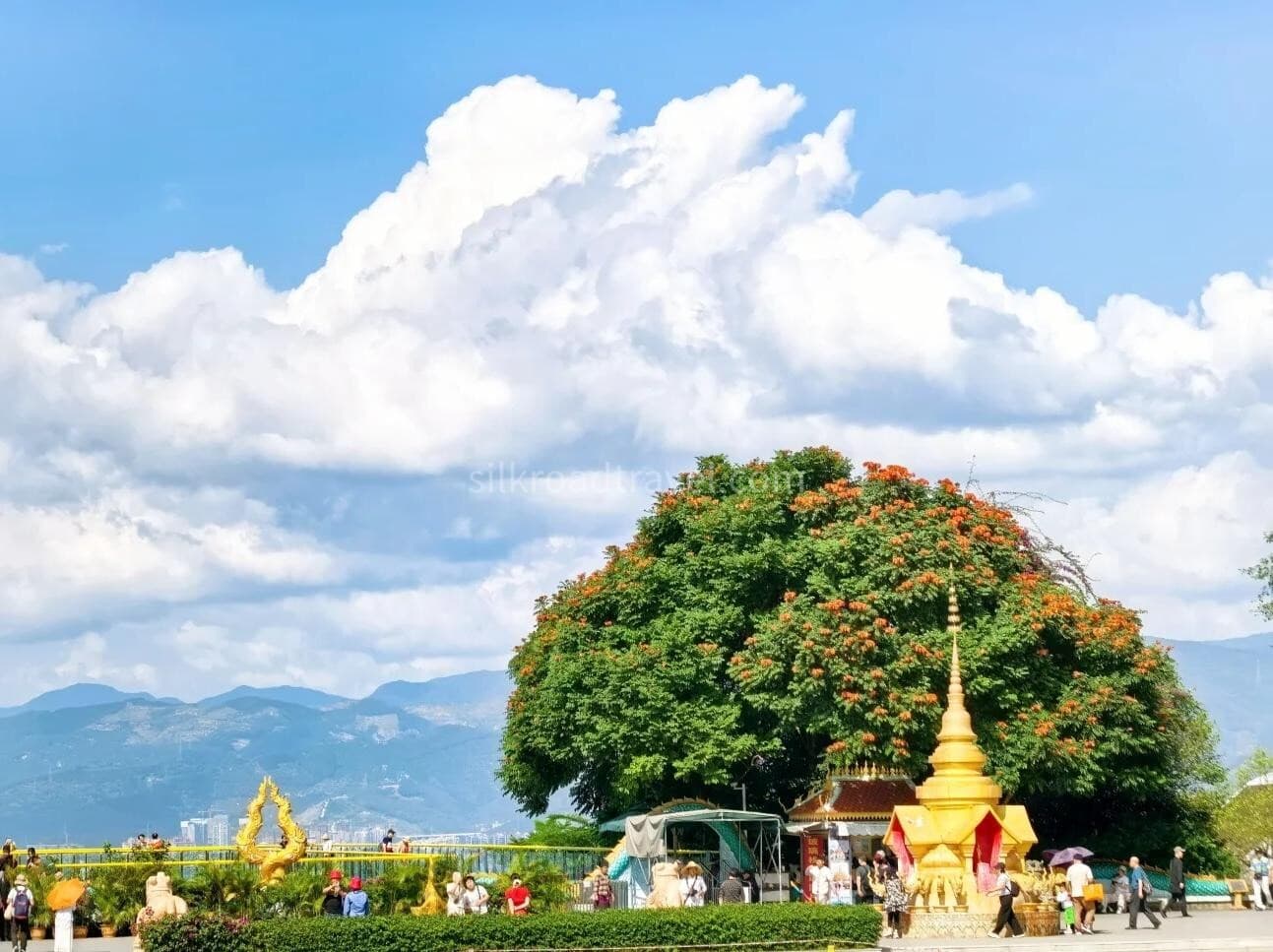
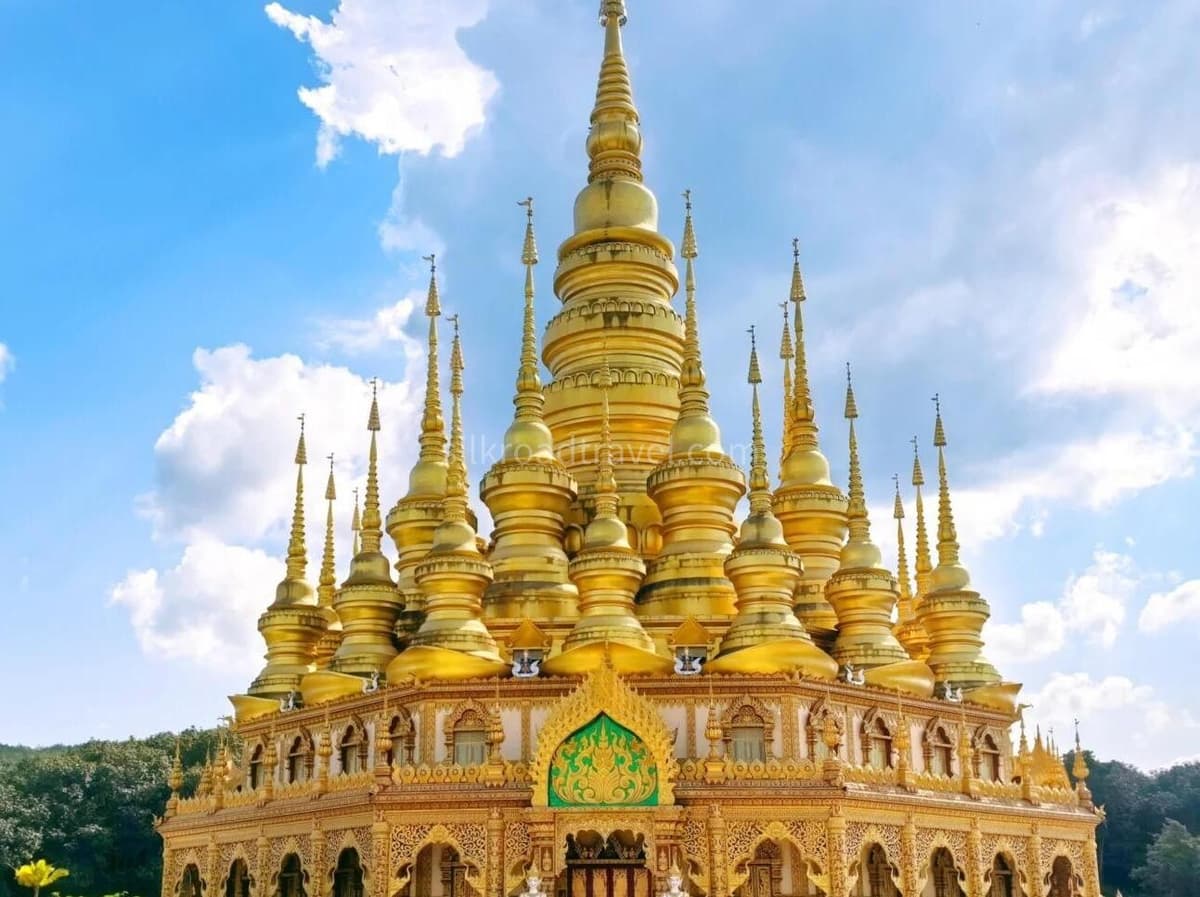
In Xishuangbanna, Buddhist temples are not built for tourists. They are where Dai people come for births, coming-of-age ceremonies, weddings, and funerals. A typical Dai temple complex includes a main hall, a pagoda, an ordination hall, monks' quarters, and a large bodhi tree.
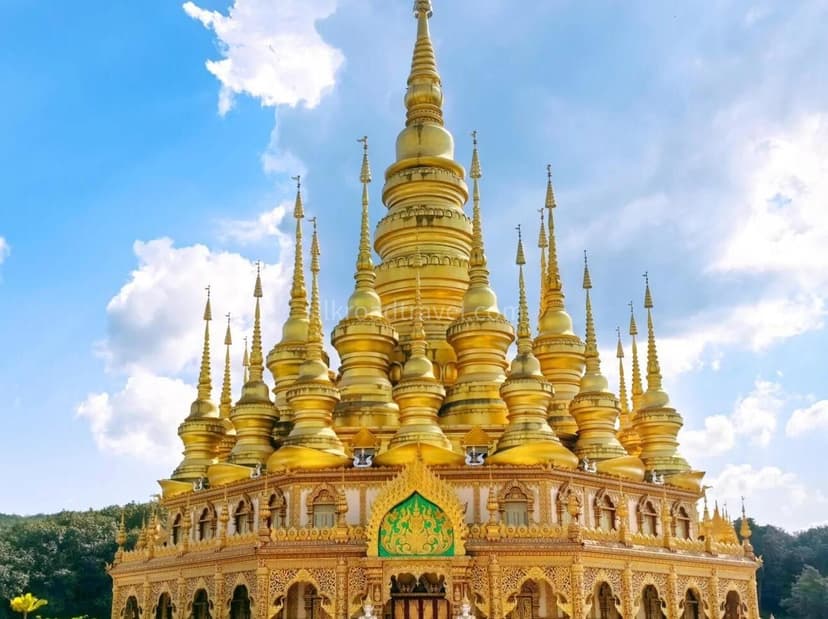
When you visit a temple, you can feel a quiet power. Zongfo Temple, next to Manting Park, is the highest-ranking temple in Xishuangbanna. The golden Buddha in the main hall is majestic, and the murals on the walls depict Jataka tales (stories of the Buddha's past lives). A quieter option is Manchunman Temple (inside Dai Ethnic Garden), first built in 583 AD. Inside, there is a bodhi tree said to have been planted by a revered monk — so thick that three people cannot wrap their arms around it.
Temple rules: Remove your shoes before entering the main hall. Do not step on the threshold. Cover your shoulders and knees. Do not laugh or talk loudly. Do not point at Buddha statues with your finger — use your whole open hand. Never touch a monk's head, and never sit higher than a monk. No flash photography.
These are not "rules made for tourists" — they are manners that locals have followed for generations. When you respect them, people will be more willing to talk with you.
The Water Splashing Festival: Throwing Out a Year's Worth of Blessings
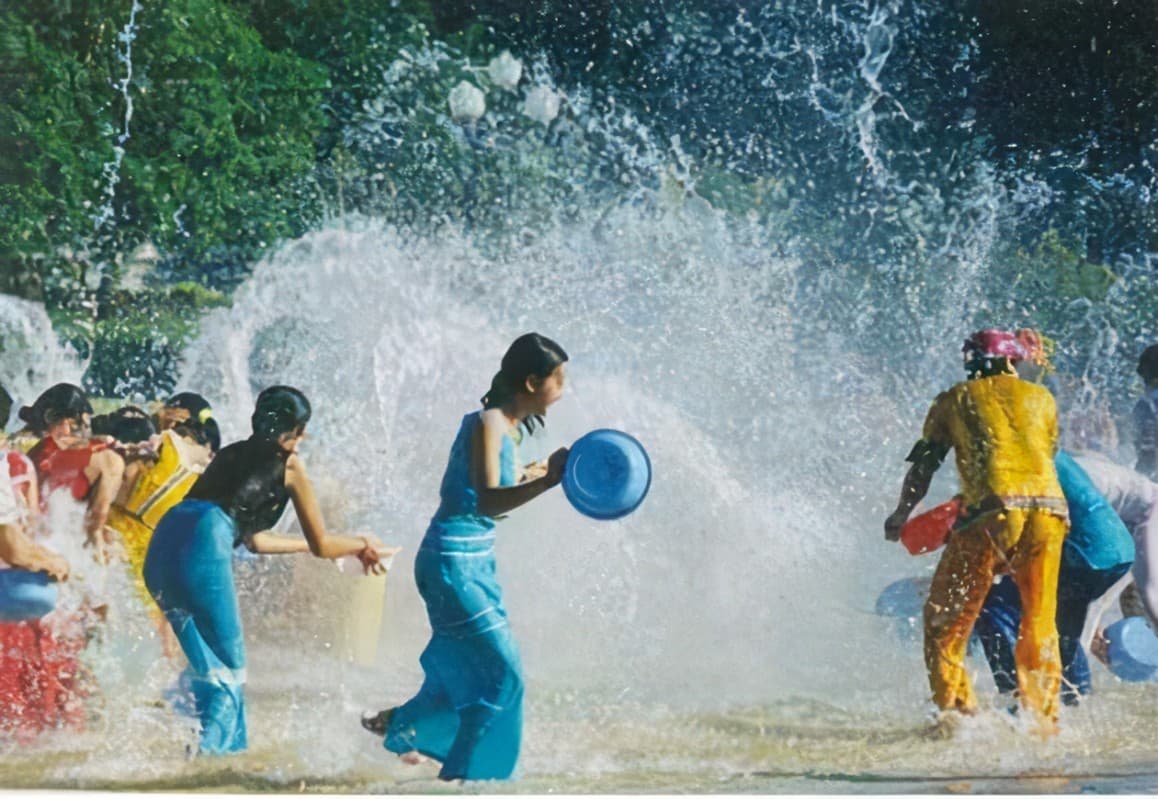
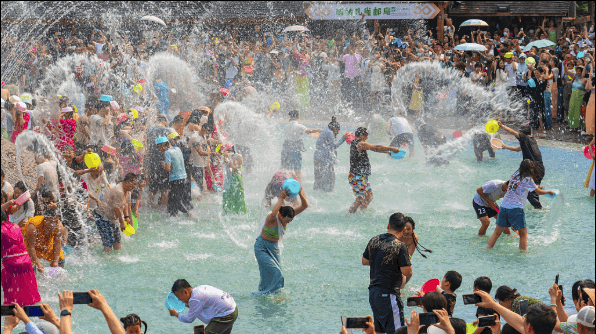
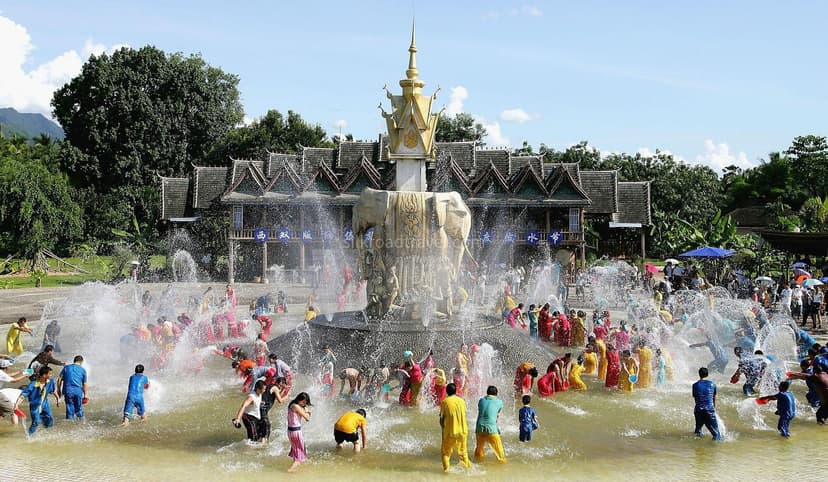
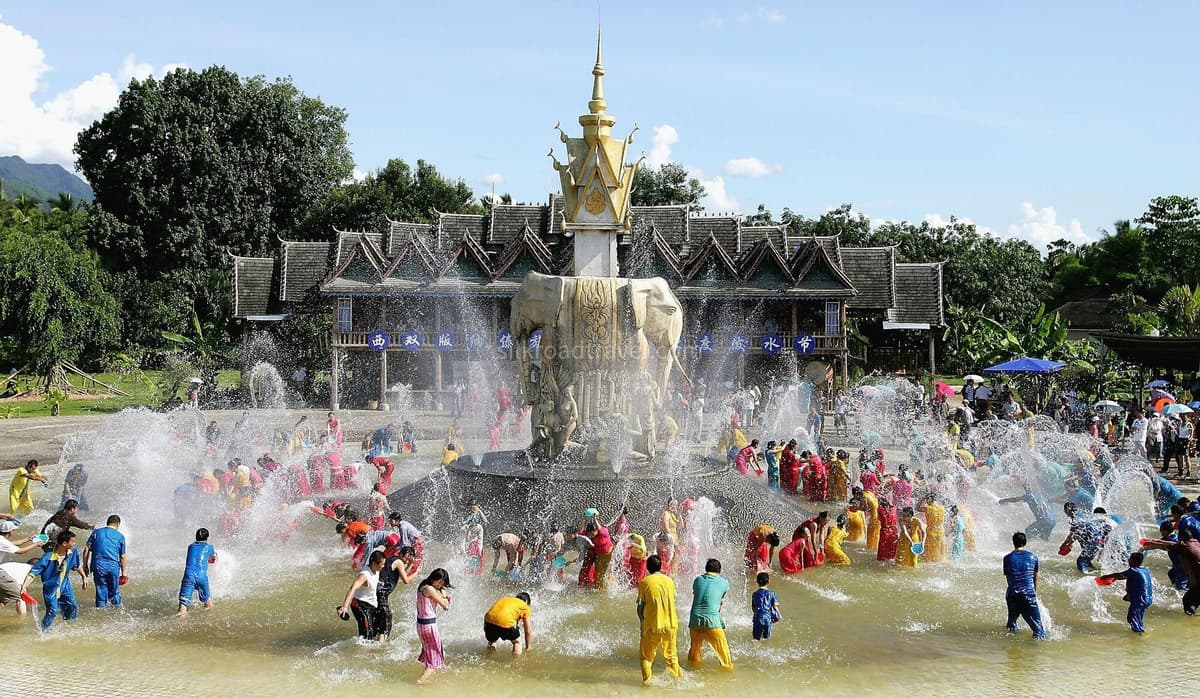
The Water Splashing Festival (called "Sangkan Bimai" in Dai language) is the Dai New Year, usually held on April 13–15. For three days, the whole of Xishuangbanna turns into a giant water battlefield. But many people don't know that the festival actually has three layers:
Day 1: Dragon boat races and sky lanterns. Head to the Lancang River in the evening for the races, then watch thousands of lanterns rise into the night sky — a breathtaking sight.
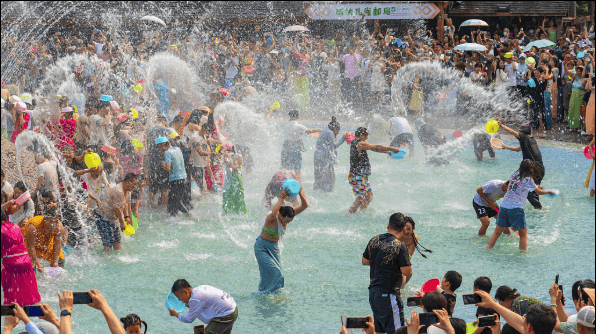
Day 2: City-wide water fight. From morning till night — buckets, water guns, pickup trucks with tanks. No one stays dry. Water, in Dai culture, symbolizes washing away misfortune and bringing good luck.
Day 3: Water-dropping ceremony and floating lanterns. People go to temples to pour water as a blessing to ancestors. In the evening, they float water lanterns on the river, sending away the troubles of the old year.
If you plan to join: Book your hotel two months in advance, and your train tickets one month in advance. Wear quick-dry clothes (no jeans or cotton T-shirts). Put your phone in a waterproof pouch. Wear goggles — water will splash into your eyes. Don't wear flip-flops — they'll get kicked off in the crowd. Most importantly, let go of adult dignity. When a stranger dumps a bucket of water on you, laugh and dump one back.
Handicraft Villages: Slow Down, Think With Your Hands
If you are tired from rainforest trails and have seen enough temples, spend half a day in Manzhang Village. It's about 30 km from downtown Jinghong. Every household masters a traditional craft: slow-wheel pottery, papermaking from mulberry bark, or palm-leaf scripture carving.
You can try a craft for ¥10–20. An elderly villager will sit beside you, teaching you in haltered Mandarin mixed with hand gestures. As you shape clay on the slow wheel, or press fresh flowers into wet paper pulp, something happens. The objects you take home mean more than any souvenir.
In Manzhang, you'll also notice another relationship between the rainforest and daily life: houses are built from bamboo and wood from the forest; drinking water comes from the mountain spring behind the village; pottery clay is dug from the riverbank. There is no clear line between "nature experience" and "culture experience" here — because they have always been the same thing.
The rainforest of Xishuangbanna will not stop growing when you leave. The Dai festivals will not end because you've gone. You are simply, at the right time, stepping into an ancient and living world.
Waiting for you in Xishuangbanna! :)