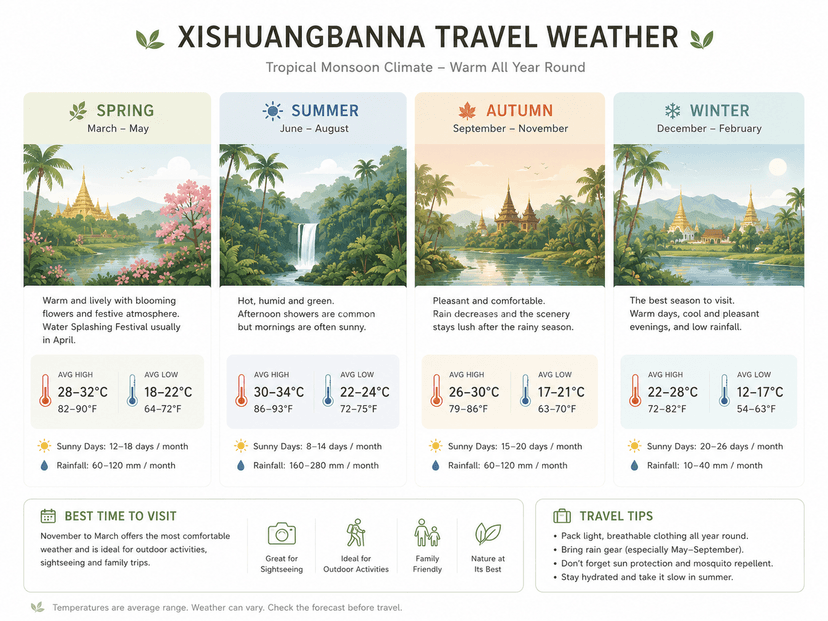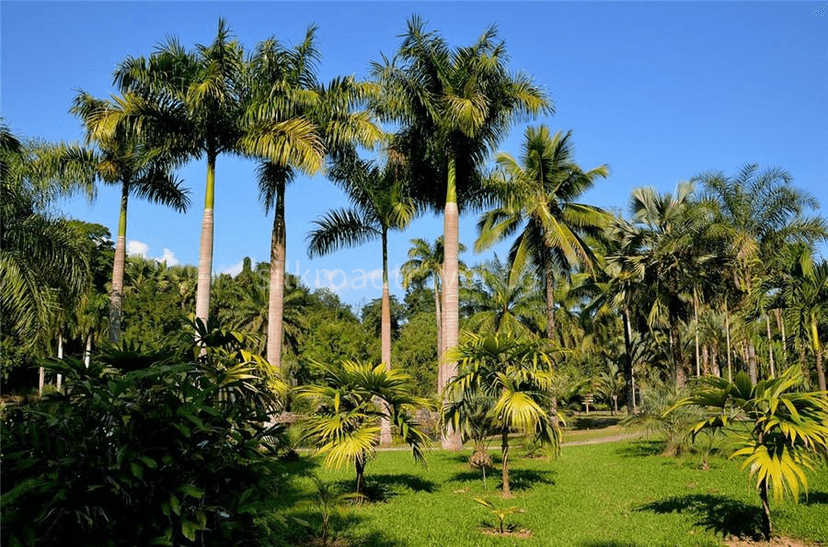

The climate in Xishuangbanna is unlike anywhere else in China. It features a typical tropical monsoon climate — warm year-round — with two distinct seasons: the dry season (November to April) and the rainy season (May to October). The dry season offers relatively low humidity and plenty of sunshine, ideal for outdoor exploration, while the rainy season brings frequent showers but also the most vibrant rainforest scenery.
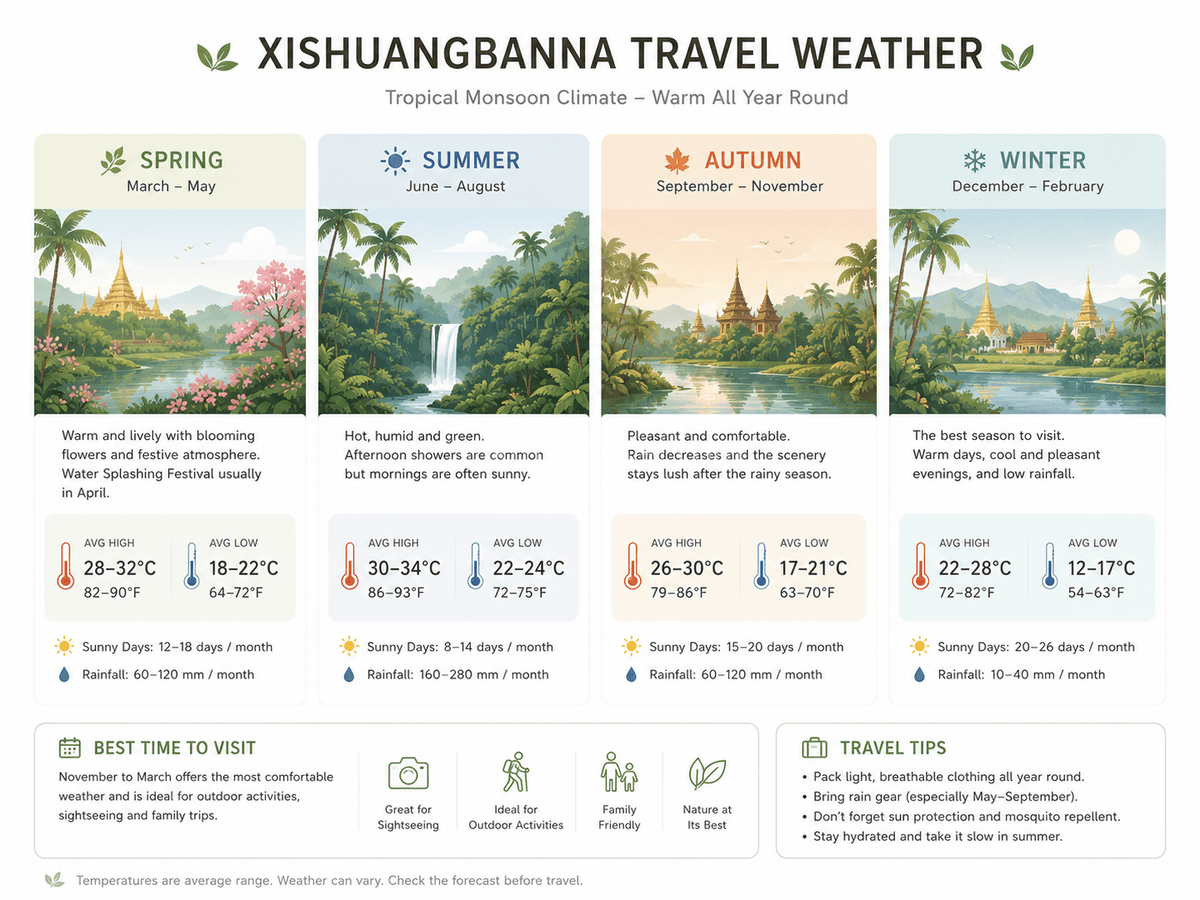
November to February: The Most Comfortable Season for Most Travelers
For many international visitors, this is the best time to visit Xishuangbanna. Daytime temperatures are usually between 22°C and 28°C, with warm sunshine during the day and cooler mornings and evenings. Compared with the humid summer months, the air feels much more comfortable, rainfall is limited, and outdoor activities become easier to enjoy.
Winter in Xishuangbanna feels very different from winter in most parts of China. Instead of cold streets and heavy coats, you will see tropical plants, open-air cafés, riverside night markets, and people wearing light clothing. Many travelers come here specifically to escape winter weather elsewhere. Rainforest walks, tea mountain trips, cycling, and photography are all more comfortable during this season.
However, because this is peak travel season, hotel prices can rise significantly during holidays such as the Chinese New Year. Popular attractions and night markets also become more crowded than usual.
March to April: Festival Atmosphere & Rising Heat
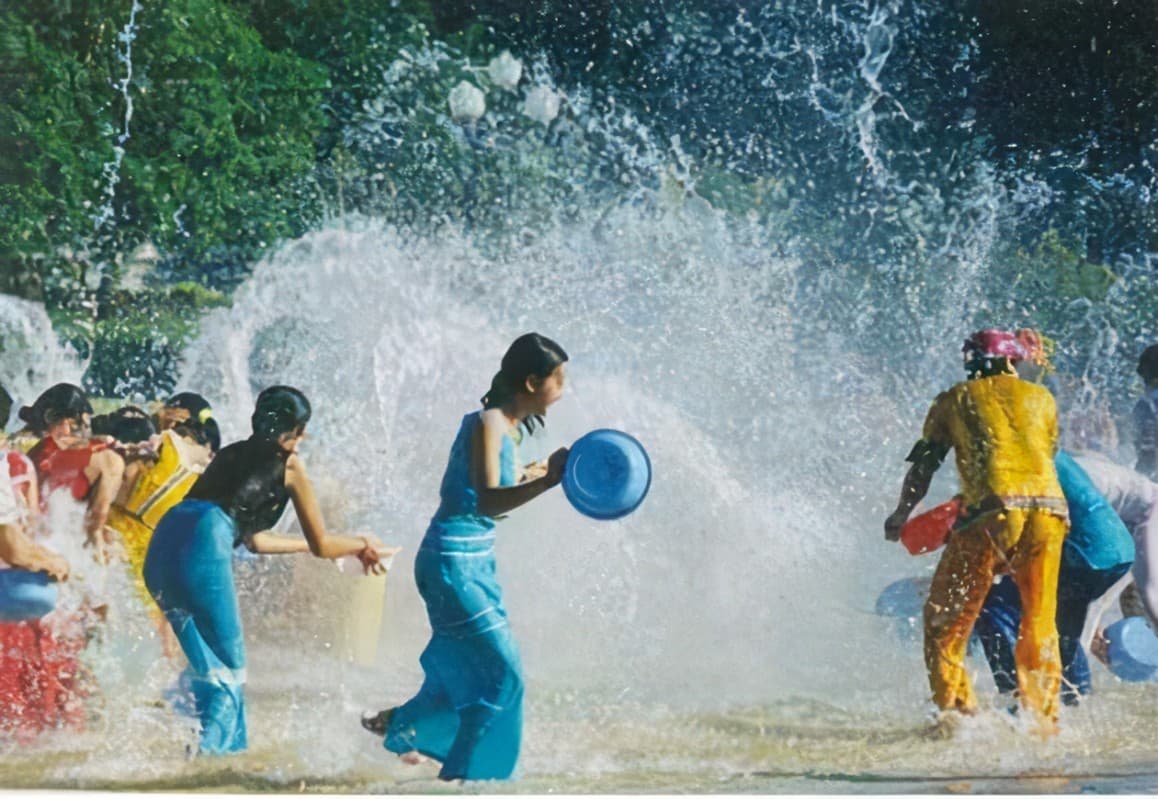
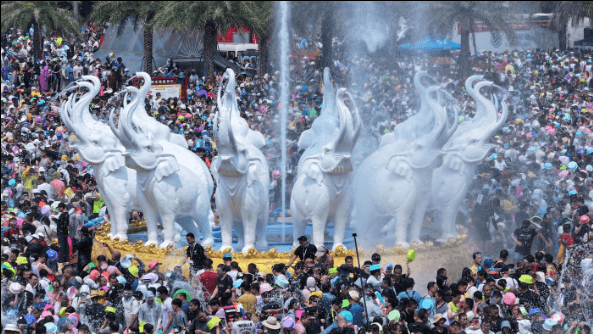
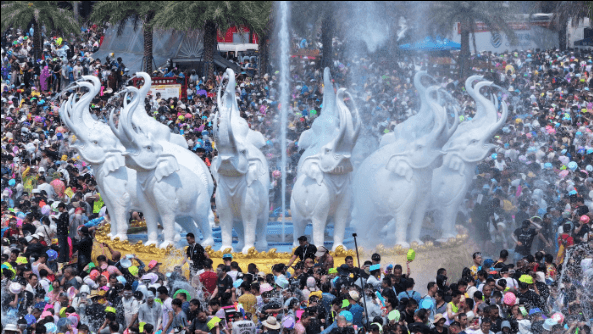
Spring is one of the liveliest times in Xishuangbanna. Temperatures begin rising quickly, and by April, the weather can already feel quite hot during the daytime. At the same time, this is also when the famous Water Splashing Festival takes place, bringing music, celebrations, cultural performances, and large-scale water activities to Jinghong and surrounding Dai villages.
For travelers, this season feels energetic and social. Streets stay busy late into the evening, night markets become even more lively, and the entire city carries a festive atmosphere. However, it is important to understand that this is also one of the busiest periods of the year. Hotels book out quickly, transportation becomes crowded, and if you join the celebrations, you should expect to get completely wet.
Lightweight clothes, waterproof bags, sandals, and flexible travel plans become especially important during this period.
May to September: The Rainforest at Its Greenest
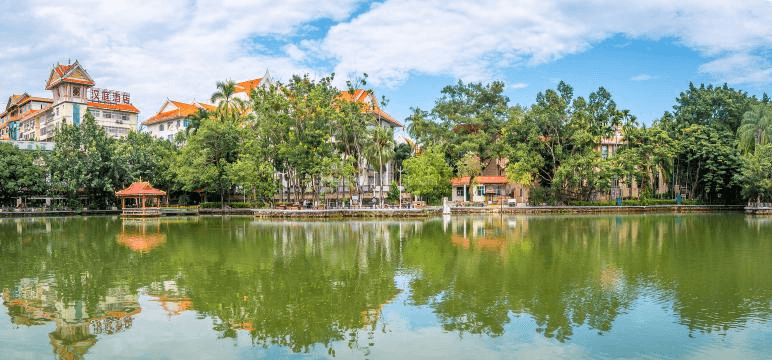
This is the rainy season, but visitors are often surprised that it does not rain continuously all day. In many cases, mornings remain bright while showers arrive later in the afternoon or evening. The biggest advantage of traveling during this period is that the rainforest becomes incredibly green and alive. Waterfalls become stronger, tropical plants grow rapidly, and the overall landscape feels much more dramatic than in the dry season.
At the same time, summer also feels much more tropical than many travelers expect. Humidity becomes very high, clothes dry slowly, and even short outdoor walks can feel tiring during the hottest part of the day. Mosquitoes also become more active after rainfall, especially near forests and rivers.
Because of this, experienced travelers usually slow down their pace in summer. Instead of trying to visit too many attractions in one day, many choose to rest during the afternoon heat, spend more time in cafés, or stay in quiet rainforest resorts outside the city.
Rain also changes the rhythm of travel in interesting ways. Sudden tropical showers can become part of the experience itself — sitting under a café roof listening to heavy rain, watching mist rise from rainforest trees, or waiting for the sky to clear before continuing your journey.
Still, visitors should understand that rain can affect transportation and outdoor activities. Forest trails may become slippery, rural roads can turn muddy, and some outdoor plans may need to change depending on weather conditions.
October: One of the Most Underrated Months to Visit
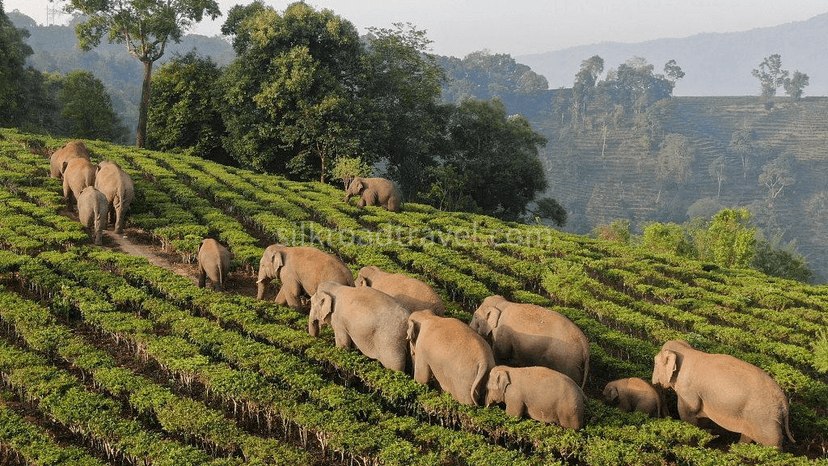
Foreign travelers often overlook October, but it can actually be one of the most balanced months to visit Xishuangbanna. Rainfall gradually decreases, temperatures become more comfortable, and the landscape remains green after the rainy season.
Compared with the busy winter season, October also feels quieter and more relaxed. Hotels are usually easier to book, prices are more stable, and many attractions feel less crowded. For travelers who prefer a slower atmosphere instead of peak-season tourism, this can be one of the best-value periods of the year.
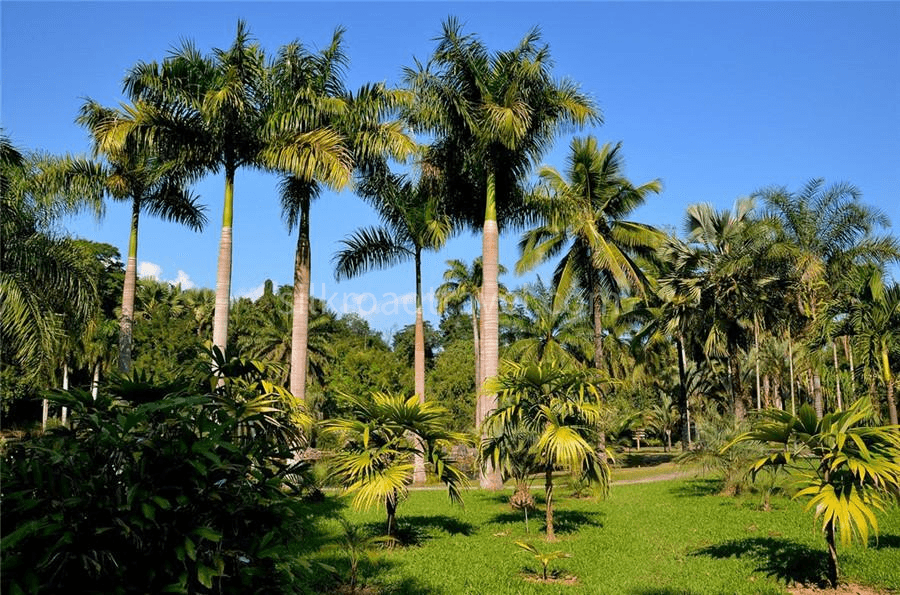
So here's the truth: there's no single "right" time to visit Xishuangbanna. November is the most comfortable. April is the most fun. July is the greenest. October is the quietest. Your job is to first figure out what kind of trip you want — and then choose the season that matches it, accepting both the good parts and the annoying parts. That way, no matter when you come, you'll feel like you made the right choice.
Waiting for you in Xishuangbanna! :)

The climate in Xishuangbanna is unlike anywhere else in China. It features a typical tropical monsoon climate — warm year-round — with two distinct seasons: the dry season (November to April) and the rainy season (May to October). The dry season offers relatively low humidity and plenty of sunshine, ideal for outdoor exploration, while the rainy season brings frequent showers but also the most vibrant rainforest scenery.

November to February: The Most Comfortable Season for Most Travelers
For many international visitors, this is the best time to visit Xishuangbanna. Daytime temperatures are usually between 22°C and 28°C, with warm sunshine during the day and cooler mornings and evenings. Compared with the humid summer months, the air feels much more comfortable, rainfall is limited, and outdoor activities become easier to enjoy.
Winter in Xishuangbanna feels very different from winter in most parts of China. Instead of cold streets and heavy coats, you will see tropical plants, open-air cafés, riverside night markets, and people wearing light clothing. Many travelers come here specifically to escape winter weather elsewhere. Rainforest walks, tea mountain trips, cycling, and photography are all more comfortable during this season.
However, because this is peak travel season, hotel prices can rise significantly during holidays such as the Chinese New Year. Popular attractions and night markets also become more crowded than usual.
March to April: Festival Atmosphere & Rising Heat
Spring is one of the liveliest times in Xishuangbanna. Temperatures begin rising quickly, and by April, the weather can already feel quite hot during the daytime. At the same time, this is also when the famous Water Splashing Festival takes place, bringing music, celebrations, cultural performances, and large-scale water activities to Jinghong and surrounding Dai villages.
For travelers, this season feels energetic and social. Streets stay busy late into the evening, night markets become even more lively, and the entire city carries a festive atmosphere. However, it is important to understand that this is also one of the busiest periods of the year. Hotels book out quickly, transportation becomes crowded, and if you join the celebrations, you should expect to get completely wet.
Lightweight clothes, waterproof bags, sandals, and flexible travel plans become especially important during this period.
May to September: The Rainforest at Its Greenest
This is the rainy season, but visitors are often surprised that it does not rain continuously all day. In many cases, mornings remain bright while showers arrive later in the afternoon or evening. The biggest advantage of traveling during this period is that the rainforest becomes incredibly green and alive. Waterfalls become stronger, tropical plants grow rapidly, and the overall landscape feels much more dramatic than in the dry season.
At the same time, summer also feels much more tropical than many travelers expect. Humidity becomes very high, clothes dry slowly, and even short outdoor walks can feel tiring during the hottest part of the day. Mosquitoes also become more active after rainfall, especially near forests and rivers.
Because of this, experienced travelers usually slow down their pace in summer. Instead of trying to visit too many attractions in one day, many choose to rest during the afternoon heat, spend more time in cafés, or stay in quiet rainforest resorts outside the city.
Rain also changes the rhythm of travel in interesting ways. Sudden tropical showers can become part of the experience itself — sitting under a café roof listening to heavy rain, watching mist rise from rainforest trees, or waiting for the sky to clear before continuing your journey.
Still, visitors should understand that rain can affect transportation and outdoor activities. Forest trails may become slippery, rural roads can turn muddy, and some outdoor plans may need to change depending on weather conditions.
October: One of the Most Underrated Months to Visit
Foreign travelers often overlook October, but it can actually be one of the most balanced months to visit Xishuangbanna. Rainfall gradually decreases, temperatures become more comfortable, and the landscape remains green after the rainy season.
Compared with the busy winter season, October also feels quieter and more relaxed. Hotels are usually easier to book, prices are more stable, and many attractions feel less crowded. For travelers who prefer a slower atmosphere instead of peak-season tourism, this can be one of the best-value periods of the year.

So here's the truth: there's no single "right" time to visit Xishuangbanna. November is the most comfortable. April is the most fun. July is the greenest. October is the quietest. Your job is to first figure out what kind of trip you want — and then choose the season that matches it, accepting both the good parts and the annoying parts. That way, no matter when you come, you'll feel like you made the right choice.
Waiting for you in Xishuangbanna! :)

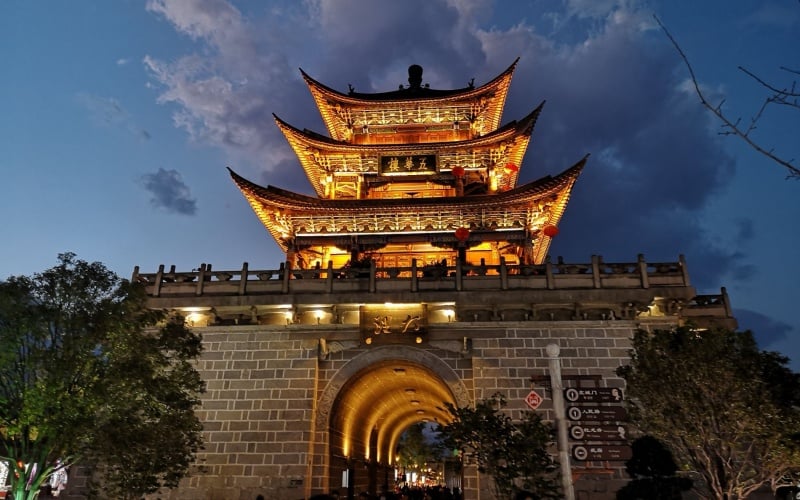
Lijiang - Tiger Leaping Gorge - Shangri-La - Shaxi - Dali
Welcome to join in this 8-day Yunnan tour to Lijiang, Shangri-La and Dali. We will go hiking at Tiger Leaping Gorge, do outdoor activities at farmhouse in Dali, and visit Dukezong, Shaxi ancient town
Live Broadcast Photos of Silk Road Tours