



Unit 731 Museum
The Unit 731 Museum in Harbin documents the Japanese army's biological warfare programme and human experimentation, preserving evidence and commemorating its victims. Located in Pingfang District, it brings together a modern exhibition building, the former unit headquarters and surviving elements of the historical site.
The visit involves sustained reading and distressing material. Give it a substantial part of the day, particularly if you want to understand both the exhibition and the place where the crimes were organised. For overseas visitors, the main practical tasks are securing the appropriate reservation, arranging any language support and allowing for the journey from central Harbin. A quiet schedule afterwards gives the material space to be considered.
Important Forewarning
This site documents crimes against humanity. Exhibits contain graphic historical accounts of biological warfare and human experimentation. It is not a recreational sightseeing stop. All visitors should prepare themselves emotionally before entering.
What Was Unit 731, and Why Does This Site Matter?
Unit 731 was part of Imperial Japan's military biological warfare programme in occupied China. Its personnel conducted human experimentation and developed methods of spreading disease as a weapon. The Harbin site was a major centre of these activities.
The history includes deliberate infection, invasive experiments and the use of people as experimental subjects without consent. These were crimes committed against human beings under military control. The museum addresses both the activities within the unit and the wider deployment of biological warfare.
The documentary record extends beyond the material held in Harbin. The United States National Archives provides access to records concerning Unit 731, biological warfare experiments and wartime attacks. Evidence is also held in Japanese civic archives and academic institutions, this is not only a Chinese historical record. Visiting the museum places that history within its physical setting. Documents explain the organisation and actions; the former headquarters and surviving site establish where part of the programme operated. The relationship between evidence and place is central to understanding the visit.
The subject also raises questions about professional responsibility. Medical knowledge, military institutions and state power were used to inflict harm. Reading the exhibits with those relationships in mind gives the visit greater depth than concentrating only on individual instruments or descriptions of experiments.
Understanding the Museum and the Former Headquarters
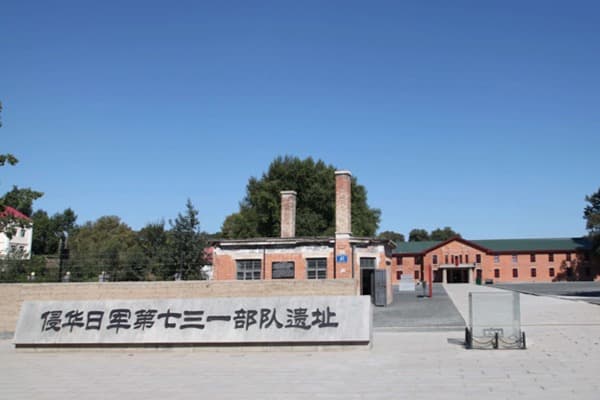
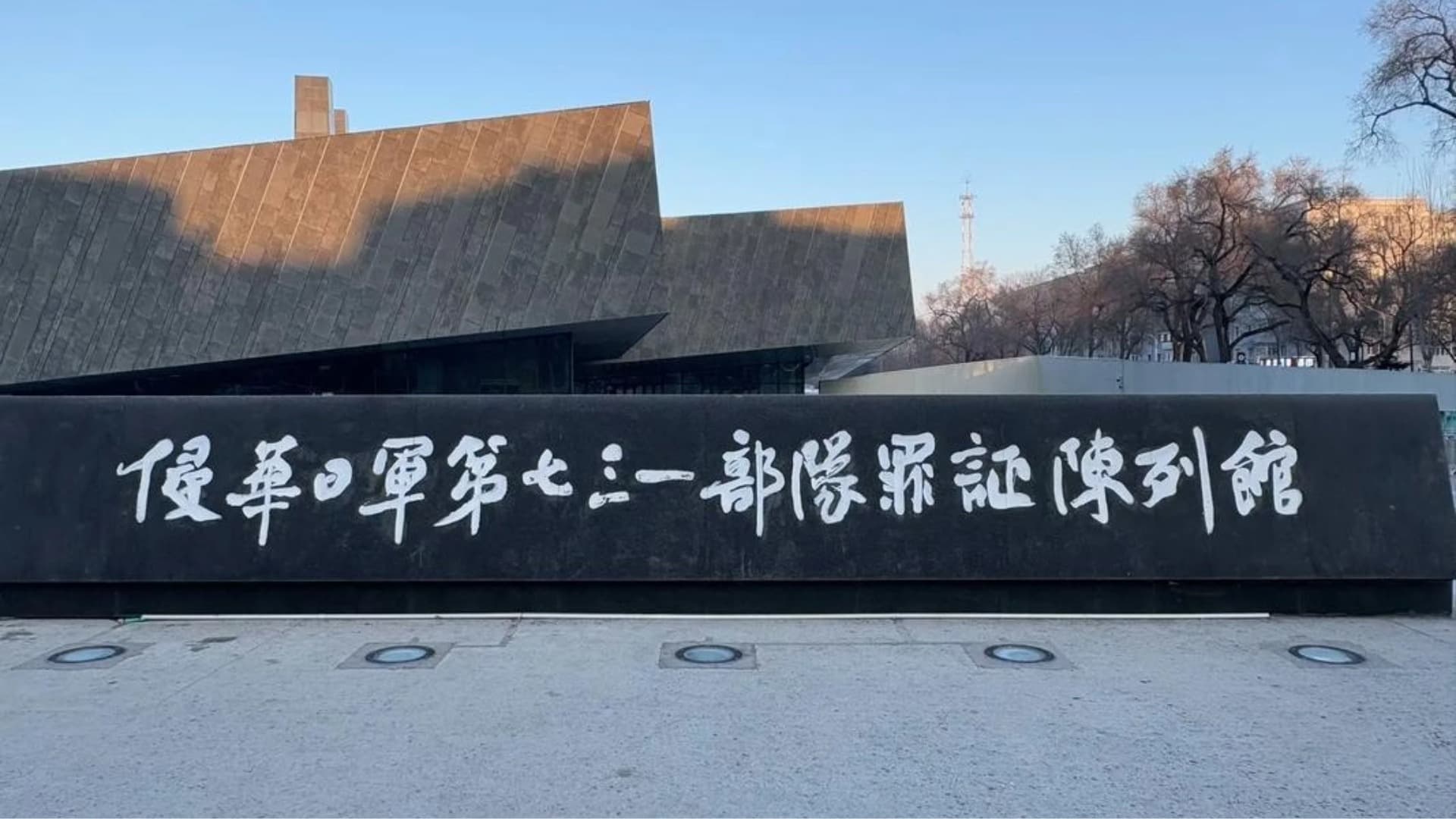
The English name Unit 731 Museum is widely used for the site. Its formal Chinese name is 侵华日军第七三一部队罪证陈列馆, commonly translated as the Exhibition Hall of Evidence of Crimes Committed by Unit 731 of the Japanese Imperial Army.
Two addresses are particularly useful when arranging a visit: the main exhibition building at 23 Xinjiang Street, and the former headquarters at 47 Xinjiang Street. Save the name of the building associated with your reservation, rather than relying on a general map pin for "731".
·Main Exhibition Building
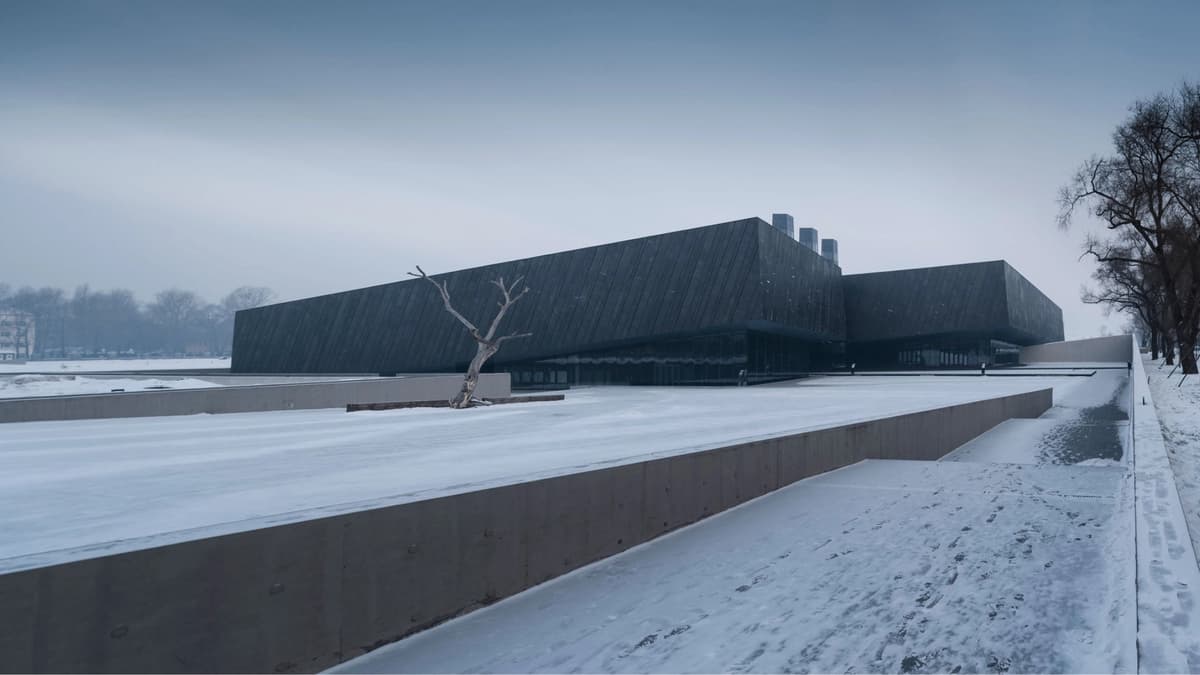
The current main museum opened in 2015. Its dark exterior was conceived with reference to a black box recording evidence, while its exhibition provides the broader historical account. Earlier public displays had occupied part of the former headquarters.
Begin here for the context needed to understand the site. The presentation introduces the biological warfare programme, the unit's organisation, human experimentation, weapons development and the destruction of evidence and subsequent investigations.
·Former Headquarters
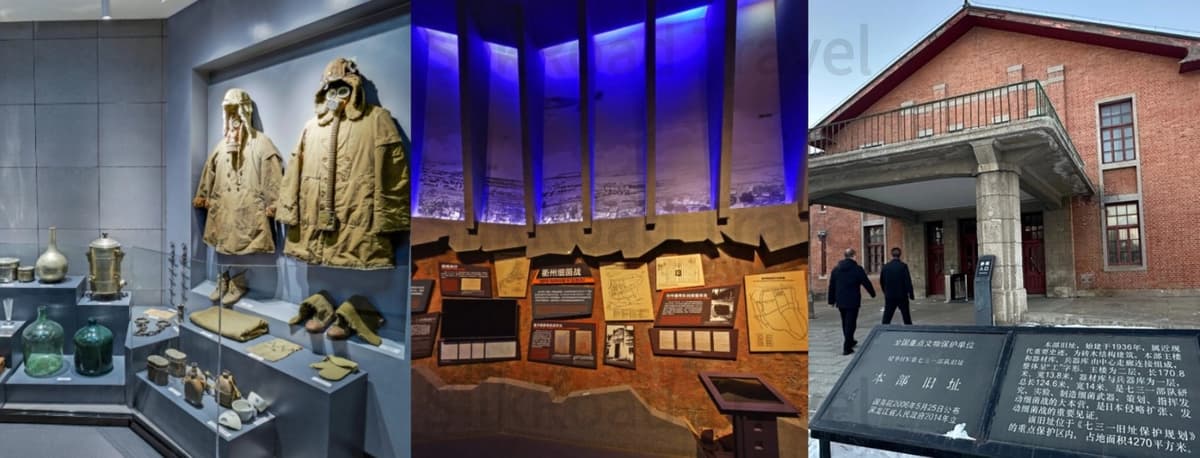
The headquarters is a surviving historical building with a different role in the visit. Its significance comes from its connection to the military organisation and the interpretation presented within that original setting.
A reopening in December 2024 introduced further documentary displays and a memorial corridor containing a wall dedicated to victims. The museum continues to develop its collections, so temporary exhibition titles should be checked against the programme for the actual visit.
·Surviving Site and Outdoor Remains
The wider historical site includes surviving structures and remains associated with the former complex. Their appearance is less immediately explanatory than a gallery display, which is why the main exhibition is the useful starting point.
Use the marked visitor route and the interpretation provided at accessible remains. The former complex occupied a larger area than the buildings used for ordinary museum admission, and a historical site plan is not a map of unrestricted visitor access.
What Will You See in the Exhibitions?
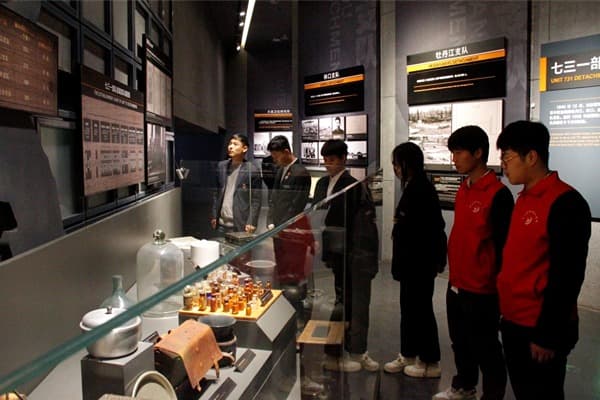
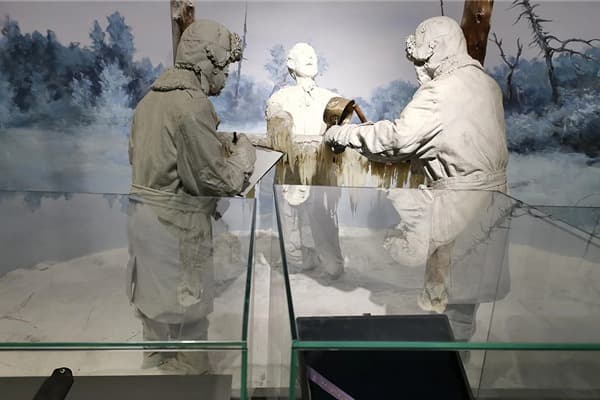
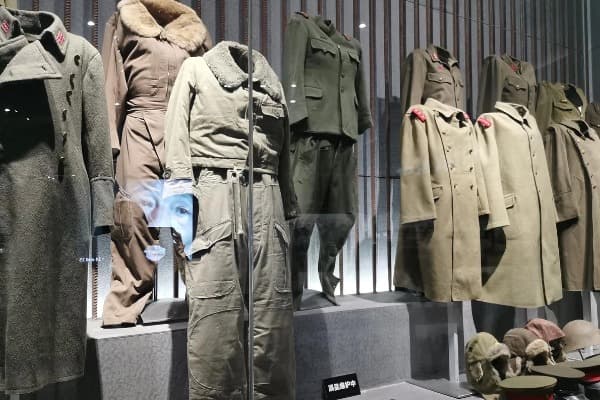
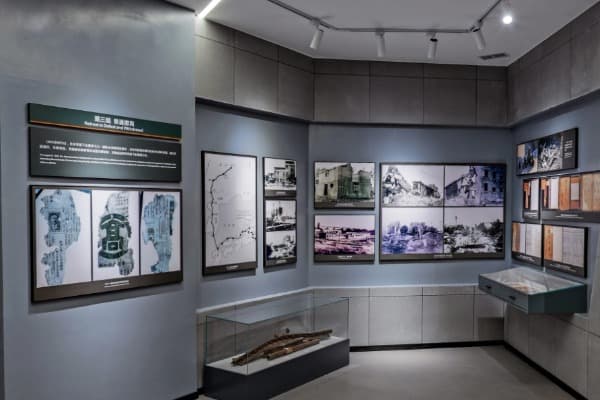
The exhibition is built around evidence: documents, photographs, objects, maps and interpretation explaining how the programme operated. Reconstructed scenes and audiovisual material are also part of the museum's documented exhibition approach.
·Organisation and Military Context
The introductory material establishes the relationship between the unit, the Japanese military and occupied territory. It helps explain how a programme involving research facilities, personnel and deployment operated beyond a single laboratory.
Spend time with the maps and organisational material. They provide the framework for the more detailed evidence that follows, particularly for readers unfamiliar with the geography and chronology of Japan's occupation of northeast China.
·Human Experimentation and Biological Warfare
The central subject is the treatment of people as experimental subjects and the development and use of biological weapons. Some displays contain disturbing images or descriptions.
Read the accompanying explanation before focusing on an object or photograph. A medical instrument or archival page has limited meaning in isolation; its significance lies in who used it, how the museum connects it to the historical record and what it reveals about the programme.
The museum's structure links experimentation with weapons development and deployment. Following that sequence helps explain how crimes inside the facilities related to harm beyond the Harbin site.
·Documents, Testimony and the Investigation of Evidence
Archives and testimony are important because parts of the original complex and its records were destroyed. The exhibition considers the recovery and interpretation of evidence as well as the events themselves.
Pay attention to the distinction between a contemporary document, later testimony, an excavated object and a reconstructed display. Each contributes differently to the historical account.
Special exhibitions have added newly collected records and objects over time. Their changing contents are a reason to consult the current exhibition notice, rather than expecting every item photographed in an older travel article to remain on display.
·Memorial Spaces
The memorial elements give individual suffering a place within a history often discussed through military organisations and scientific terminology. They deserve a slower pace than the movement between display cases.
Allow other visitors room to read and reflect. A brief stop in silence is more appropriate than treating these spaces as a backdrop for a group photograph.
How Should You Organise the Visit?
Reserve two to three hours for a considered visit to the main exhibition, and roughly three to four hours locally if you also intend to visit the former headquarters and accessible outdoor remains. These are planning allowances, with transport added separately.
Start with the main museum. Its historical sequence supplies the context for the headquarters and site remains, making the later part of the visit easier to interpret.
A useful approach is to follow the exhibition's main narrative first, then give additional time to the subjects you want to understand more closely. Trying to translate every archival page can make the visit exhausting without improving your understanding of the overall sequence.
For overseas visitors reading through translation, the longer allowance is sensible. Stop periodically to absorb what you have read instead of moving rapidly between photographs and translated captions.
If the headquarters is a priority, secure its appropriate reservation alongside the main museum arrangements. Organise the order around the booked time slots, including the move between buildings.
Eat before the visit or allow a proper break afterwards. Entering late and hungry encourages a rushed final section, precisely where the material often requires careful attention.
A late-afternoon arrival is a poor choice for a full visit. Last admission gives access to the building; it does not provide enough time to read a substantial exhibition before closing.
It is often appropriate to place Unit 731 Museum as the concluding stop of your Harbin itinerary, rather than early in your trip. Its heavy narrative requires quiet reflection afterward. Do not schedule it immediately before airport transfer or a tight train departure. Leave the rest of your day unplanned.
Admission, Reservations and Foreign Passports
Admission is free, with real-name reservations. The museum's published booking channels are its official WeChat account and the Changyou Harbin — 畅游哈尔滨 WeChat mini-programme.
The regular arrangements announced in August 2026 require booking one to seven days ahead and entering during the reserved time slot with the original identity document used for the reservation.
For a foreign-passport visitor, the unresolved detail is the booking interface: the published notice does not explain the passport field, overseas mobile-number acceptance or an alternative verification process. Resolve this before travelling to Pingfang.
A practical sequence is:
Select the intended visit date and the building or areas you want to enter.
Open the official booking channel and look for the appropriate document category.
Enter names and document details exactly as required.
If the system cannot accept the passport or telephone number, contact the museum for its current overseas-visitor procedure.
Keep the confirmed reservation and original passport together for entry.
The museum's published enquiry numbers are 0451-51747773 and 0451-51685222, available during opening hours. A hotel or travel organiser can help communicate the booking question in Chinese.
Ask one specific question: how should a visitor holding your nationality's passport reserve and enter the selected building on the chosen date? This is more productive than asking whether foreigners are "allowed", which leaves the practical process unanswered.
Some English travel pages describe passport holders entering without reservations. That arrangement is not established by the current official notice, so a confirmed entry process should be part of the travel arrangements.
Paid transport or interpretation is separate from the museum's free admission. Any commercial quotation should explain those services clearly.
Opening Days and Last Admission
The regular schedule is:
Area | Opening hours | Last admission |
Main exhibition building | Tuesday–Sunday, 09:00–17:00 | 16:00 |
Former headquarters | Tuesday–Sunday, 09:00–17:00 | 16:30 |
Monday is the regular closing day, with holiday exceptions announced by the museum. These are the arrangements published in the official notice checked on 1 November 2026.
Choose a morning slot for a visit covering both principal buildings. It provides more room for reading and for the move between them.
Holiday extensions should be treated as date-specific. An announcement opening the museum on one holiday Monday does not change the normal weekly schedule.
Getting to the Museum in Pingfang
Pingfang lies south of Harbin's central sightseeing districts. The museum therefore needs a separate journey; it does not fit naturally into a walk between Saint Sophia Cathedral and Central Street.
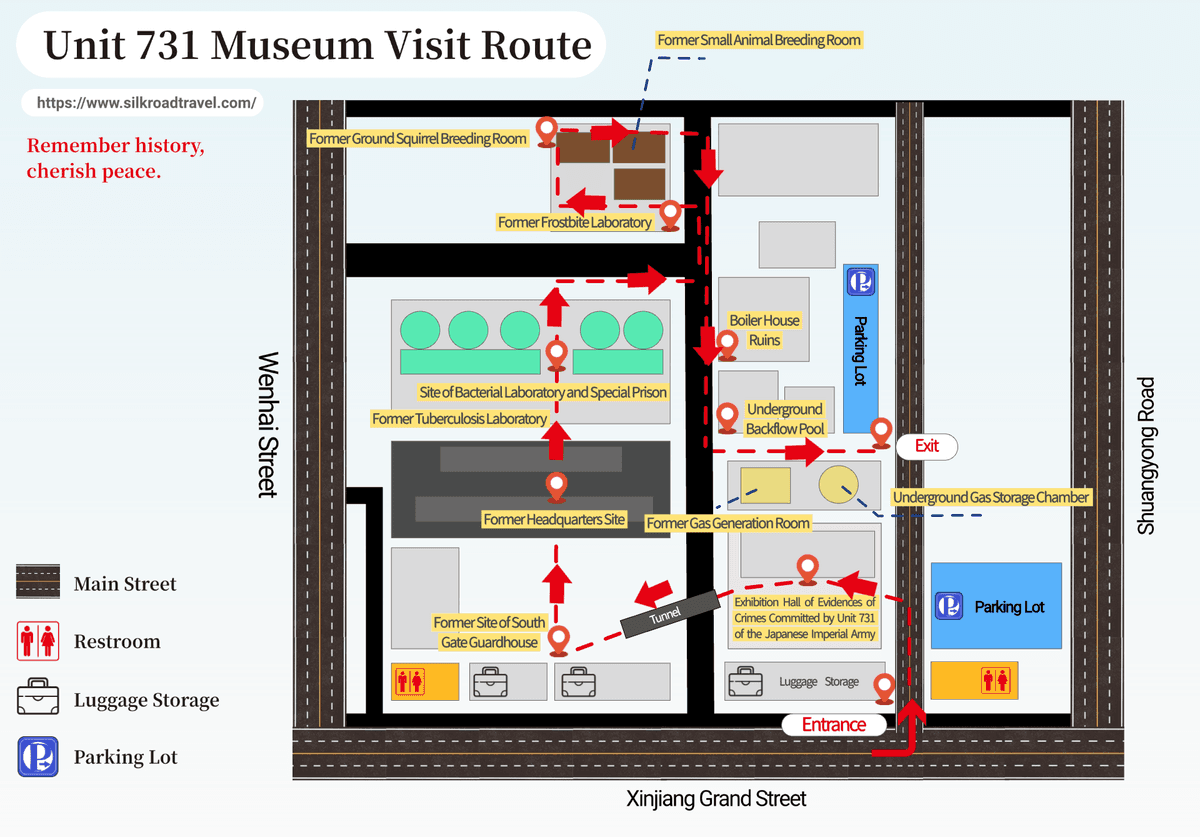
Metro Line 1 to Xinjiang Dajie station is the clearest public-transport approach. The museum directs visitors towards Exit 2 and an eastward walk. Use the main exhibition building's address for the final approach, as the headquarters and main hall have separate locations.
From the Central Street area, a typical metro journey involves Line 2 and a change to Line 1 at Museum station. Allow for the walk to your starting station, the interchange and the final walk in Pingfang rather than considering only the train journey.
A taxi or arranged vehicle is useful for a small group, visitors with limited walking stamina or those who want a direct return after the exhibition. Give the driver the Chinese name of the correct building and agree on the collection point.
Plan the visit as a substantial half-day outing from central Harbin, extending it when both buildings and more detailed reading are priorities. Avoid attaching a tight lunch reservation or airport departure immediately afterwards. Large suitcases are prohibited inside exhibition halls. Free luggage lockers are available on-site.
In winter, the outdoor parts are the journey between buildings and the accessible site remains. Keep your coat and gloves with you rather than leaving everything in a vehicle that will return only at the end. This is the map of Unit 731 Museum and recommeded visit route for you.
English Interpretation, Photography and Visitor Conduct
For an English-language visit, arrange the level of help you need before arrival. The museum has published information about QR-code audio interpretation and multilingual translation devices, but that notice does not establish a complete English audio tour or an English-speaking guide for every time slot.
Visitors confident reading translated summaries can follow the main historical sequence independently. Those seeking detailed discussion of documents should enquire about museum-authorised language support.
A private guide accompanying you around Harbin does not automatically have permission to deliver a gallery tour. The museum's published rules restrict in-gallery explanations to its authorised personnel. A travel guide can still help with transport, booking communication and historical preparation before entry.
Photography rules also require attention. The published visitor notice prohibits flash photography and video recording in exhibition halls; individual displays may carry further restrictions.
Keep phones silent and leave space in front of cases for other people to read. When recording an exhibit for later study, photograph its explanatory label only where permitted, and avoid obstructing the gallery while checking your images.
The strongest preparation is a short, reliable account of the history before the visit. Recognising the names, wartime context and purpose of the unit reduces the amount of basic orientation needed inside.
Visiting with Children and Planning a Considered Day
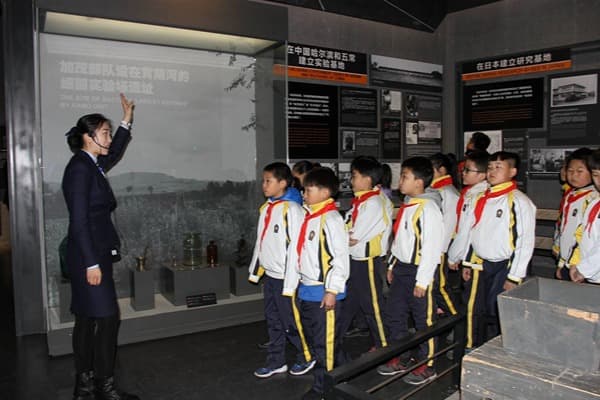
The museum contains material about human experimentation, killing and biological warfare. Parents should assess their child's readiness to encounter those subjects, including disturbing images and reconstructed scenes.
Age alone is an incomplete guide. A child who has studied the period and can discuss difficult material may respond differently from another child of the same age encountering it for the first time.
Explain the subject before entering in language appropriate to the child. Give them a clear way to say that they want to stop, and be ready to shorten the visit rather than requiring them to complete every section.
For adults, too, the material can be demanding. Leave the next part of the day lightly scheduled. Returning to the hotel or taking a quiet break gives more room for reflection than moving directly into another intensive programme.
The museum adds an important historical dimension to a Harbin visit, but it should be included because of a genuine interest in understanding this history. It is not simply an indoor substitute when the weather interrupts a leisure outing.
Travelling companions can make different choices. One person may spend longer in the documentary sections while another follows the principal narrative and waits outside the exhibition. Agree on a meeting place and time before separating.
Unit 731 Museum FAQs
·Is the museum inside the original headquarters?
The present main exhibition occupies a separate modern building. The former headquarters is another part of the historical site, with its own visitor arrangements.
·Is there an entrance fee for foreign visitors?
The museum publishes free admission with real-name reservations. Overseas visitors need an accepted passport booking and verification process rather than a special commercial admission ticket.
·Can I reserve the main museum and assume the headquarters is included?
Treat them as separate reservation choices when using the booking system. Make sure the confirmation covers the areas you intend to visit.
·Is a guide necessary?
Independent visitors can follow the principal exhibition sequence. Detailed English interpretation is a separate planning decision, and in-gallery guiding must follow the museum's authorisation rules.
·Should I visit if I know little about this history?
Yes, if you are prepared for the subject and give it adequate time. Read a short historical introduction first, then begin with the main museum's introductory sections.
·Can I bring flowers or leave tributes at the memorial wall?
Quiet, respectful tributes are permitted. Do not leave food, candles or large items. Follow on-site signage.
·Is there a rest area / café inside?
Basic restrooms and drinking water are available; there is no on-site restaurant. Please eat before your visit.
The Unit 731 Museum in Harbin documents the Japanese army's biological warfare programme and human experimentation, preserving evidence and commemorating its victims. Located in Pingfang District, it brings together a modern exhibition building, the former unit headquarters and surviving elements of the historical site.
The visit involves sustained reading and distressing material. Give it a substantial part of the day, particularly if you want to understand both the exhibition and the place where the crimes were organised. For overseas visitors, the main practical tasks are securing the appropriate reservation, arranging any language support and allowing for the journey from central Harbin. A quiet schedule afterwards gives the material space to be considered.
Important Forewarning
This site documents crimes against humanity. Exhibits contain graphic historical accounts of biological warfare and human experimentation. It is not a recreational sightseeing stop. All visitors should prepare themselves emotionally before entering.
What Was Unit 731, and Why Does This Site Matter?
Unit 731 was part of Imperial Japan's military biological warfare programme in occupied China. Its personnel conducted human experimentation and developed methods of spreading disease as a weapon. The Harbin site was a major centre of these activities.
The history includes deliberate infection, invasive experiments and the use of people as experimental subjects without consent. These were crimes committed against human beings under military control. The museum addresses both the activities within the unit and the wider deployment of biological warfare.
The documentary record extends beyond the material held in Harbin. The United States National Archives provides access to records concerning Unit 731, biological warfare experiments and wartime attacks. Evidence is also held in Japanese civic archives and academic institutions, this is not only a Chinese historical record. Visiting the museum places that history within its physical setting. Documents explain the organisation and actions; the former headquarters and surviving site establish where part of the programme operated. The relationship between evidence and place is central to understanding the visit.
The subject also raises questions about professional responsibility. Medical knowledge, military institutions and state power were used to inflict harm. Reading the exhibits with those relationships in mind gives the visit greater depth than concentrating only on individual instruments or descriptions of experiments.
Understanding the Museum and the Former Headquarters
The English name Unit 731 Museum is widely used for the site. Its formal Chinese name is 侵华日军第七三一部队罪证陈列馆, commonly translated as the Exhibition Hall of Evidence of Crimes Committed by Unit 731 of the Japanese Imperial Army.
Two addresses are particularly useful when arranging a visit: the main exhibition building at 23 Xinjiang Street, and the former headquarters at 47 Xinjiang Street. Save the name of the building associated with your reservation, rather than relying on a general map pin for "731".
·Main Exhibition Building
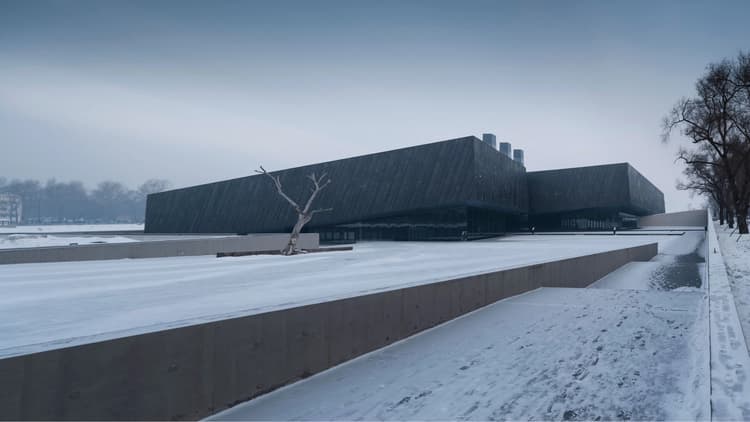
The current main museum opened in 2015. Its dark exterior was conceived with reference to a black box recording evidence, while its exhibition provides the broader historical account. Earlier public displays had occupied part of the former headquarters.
Begin here for the context needed to understand the site. The presentation introduces the biological warfare programme, the unit's organisation, human experimentation, weapons development and the destruction of evidence and subsequent investigations.
·Former Headquarters
The headquarters is a surviving historical building with a different role in the visit. Its significance comes from its connection to the military organisation and the interpretation presented within that original setting.
A reopening in December 2024 introduced further documentary displays and a memorial corridor containing a wall dedicated to victims. The museum continues to develop its collections, so temporary exhibition titles should be checked against the programme for the actual visit.
·Surviving Site and Outdoor Remains
The wider historical site includes surviving structures and remains associated with the former complex. Their appearance is less immediately explanatory than a gallery display, which is why the main exhibition is the useful starting point.
Use the marked visitor route and the interpretation provided at accessible remains. The former complex occupied a larger area than the buildings used for ordinary museum admission, and a historical site plan is not a map of unrestricted visitor access.
What Will You See in the Exhibitions?
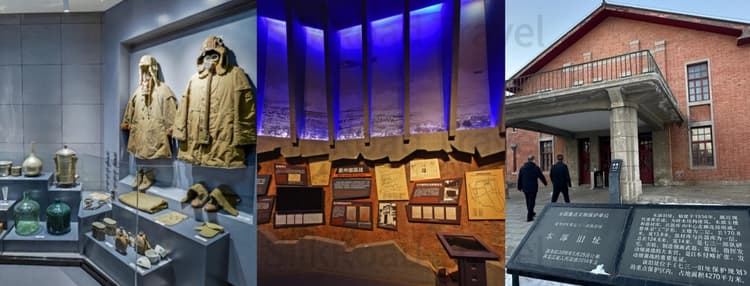
The exhibition is built around evidence: documents, photographs, objects, maps and interpretation explaining how the programme operated. Reconstructed scenes and audiovisual material are also part of the museum's documented exhibition approach.
·Organisation and Military Context
The introductory material establishes the relationship between the unit, the Japanese military and occupied territory. It helps explain how a programme involving research facilities, personnel and deployment operated beyond a single laboratory.
Spend time with the maps and organisational material. They provide the framework for the more detailed evidence that follows, particularly for readers unfamiliar with the geography and chronology of Japan's occupation of northeast China.
·Human Experimentation and Biological Warfare
The central subject is the treatment of people as experimental subjects and the development and use of biological weapons. Some displays contain disturbing images or descriptions.
Read the accompanying explanation before focusing on an object or photograph. A medical instrument or archival page has limited meaning in isolation; its significance lies in who used it, how the museum connects it to the historical record and what it reveals about the programme.
The museum's structure links experimentation with weapons development and deployment. Following that sequence helps explain how crimes inside the facilities related to harm beyond the Harbin site.
·Documents, Testimony and the Investigation of Evidence
Archives and testimony are important because parts of the original complex and its records were destroyed. The exhibition considers the recovery and interpretation of evidence as well as the events themselves.
Pay attention to the distinction between a contemporary document, later testimony, an excavated object and a reconstructed display. Each contributes differently to the historical account.
Special exhibitions have added newly collected records and objects over time. Their changing contents are a reason to consult the current exhibition notice, rather than expecting every item photographed in an older travel article to remain on display.
·Memorial Spaces
The memorial elements give individual suffering a place within a history often discussed through military organisations and scientific terminology. They deserve a slower pace than the movement between display cases.
Allow other visitors room to read and reflect. A brief stop in silence is more appropriate than treating these spaces as a backdrop for a group photograph.
How Should You Organise the Visit?
Reserve two to three hours for a considered visit to the main exhibition, and roughly three to four hours locally if you also intend to visit the former headquarters and accessible outdoor remains. These are planning allowances, with transport added separately.
Start with the main museum. Its historical sequence supplies the context for the headquarters and site remains, making the later part of the visit easier to interpret.
A useful approach is to follow the exhibition's main narrative first, then give additional time to the subjects you want to understand more closely. Trying to translate every archival page can make the visit exhausting without improving your understanding of the overall sequence.
For overseas visitors reading through translation, the longer allowance is sensible. Stop periodically to absorb what you have read instead of moving rapidly between photographs and translated captions.
If the headquarters is a priority, secure its appropriate reservation alongside the main museum arrangements. Organise the order around the booked time slots, including the move between buildings.
Eat before the visit or allow a proper break afterwards. Entering late and hungry encourages a rushed final section, precisely where the material often requires careful attention.
A late-afternoon arrival is a poor choice for a full visit. Last admission gives access to the building; it does not provide enough time to read a substantial exhibition before closing.
It is often appropriate to place Unit 731 Museum as the concluding stop of your Harbin itinerary, rather than early in your trip. Its heavy narrative requires quiet reflection afterward. Do not schedule it immediately before airport transfer or a tight train departure. Leave the rest of your day unplanned.
Admission, Reservations and Foreign Passports
Admission is free, with real-name reservations. The museum's published booking channels are its official WeChat account and the Changyou Harbin — 畅游哈尔滨 WeChat mini-programme.
The regular arrangements announced in August 2026 require booking one to seven days ahead and entering during the reserved time slot with the original identity document used for the reservation.
For a foreign-passport visitor, the unresolved detail is the booking interface: the published notice does not explain the passport field, overseas mobile-number acceptance or an alternative verification process. Resolve this before travelling to Pingfang.
A practical sequence is:
·Select the intended visit date and the building or areas you want to enter.
·Open the official booking channel and look for the appropriate document category.
·Enter names and document details exactly as required.
·If the system cannot accept the passport or telephone number, contact the museum for its current overseas-visitor procedure.
·Keep the confirmed reservation and original passport together for entry.
The museum's published enquiry numbers are 0451-51747773 and 0451-51685222, available during opening hours. A hotel or travel organiser can help communicate the booking question in Chinese.
Ask one specific question: how should a visitor holding your nationality's passport reserve and enter the selected building on the chosen date? This is more productive than asking whether foreigners are "allowed", which leaves the practical process unanswered.
Some English travel pages describe passport holders entering without reservations. That arrangement is not established by the current official notice, so a confirmed entry process should be part of the travel arrangements.
Paid transport or interpretation is separate from the museum's free admission. Any commercial quotation should explain those services clearly.
Opening Days and Last Admission
The regular schedule is:
Area | Opening hours | Last admission |
Main exhibition building | Tuesday–Sunday, 09:00–17:00 | 16:00 |
Former headquarters | Tuesday–Sunday, 09:00–17:00 | 16:30 |
Monday is the regular closing day, with holiday exceptions announced by the museum. These are the arrangements published in the official notice checked on 1 November 2026.
Choose a morning slot for a visit covering both principal buildings. It provides more room for reading and for the move between them.
Holiday extensions should be treated as date-specific. An announcement opening the museum on one holiday Monday does not change the normal weekly schedule.
Getting to the Museum in Pingfang
Pingfang lies south of Harbin's central sightseeing districts. The museum therefore needs a separate journey; it does not fit naturally into a walk between Saint Sophia Cathedral and Central Street.
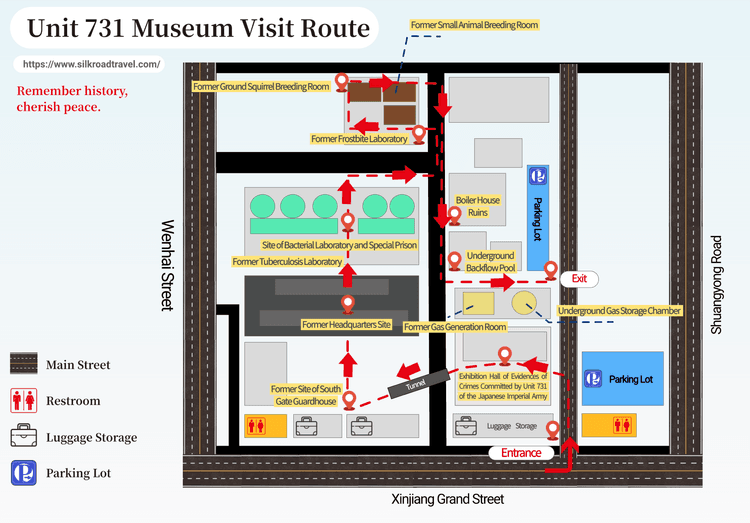
Metro Line 1 to Xinjiang Dajie station is the clearest public-transport approach. The museum directs visitors towards Exit 2 and an eastward walk. Use the main exhibition building's address for the final approach, as the headquarters and main hall have separate locations.
From the Central Street area, a typical metro journey involves Line 2 and a change to Line 1 at Museum station. Allow for the walk to your starting station, the interchange and the final walk in Pingfang rather than considering only the train journey.
A taxi or arranged vehicle is useful for a small group, visitors with limited walking stamina or those who want a direct return after the exhibition. Give the driver the Chinese name of the correct building and agree on the collection point.
Plan the visit as a substantial half-day outing from central Harbin, extending it when both buildings and more detailed reading are priorities. Avoid attaching a tight lunch reservation or airport departure immediately afterwards. Large suitcases are prohibited inside exhibition halls. Free luggage lockers are available on-site.
In winter, the outdoor parts are the journey between buildings and the accessible site remains. Keep your coat and gloves with you rather than leaving everything in a vehicle that will return only at the end. This is the map of Unit 731 Museum and recommeded visit route for you.
English Interpretation, Photography and Visitor Conduct
For an English-language visit, arrange the level of help you need before arrival. The museum has published information about QR-code audio interpretation and multilingual translation devices, but that notice does not establish a complete English audio tour or an English-speaking guide for every time slot.
Visitors confident reading translated summaries can follow the main historical sequence independently. Those seeking detailed discussion of documents should enquire about museum-authorised language support.
A private guide accompanying you around Harbin does not automatically have permission to deliver a gallery tour. The museum's published rules restrict in-gallery explanations to its authorised personnel. A travel guide can still help with transport, booking communication and historical preparation before entry.
Photography rules also require attention. The published visitor notice prohibits flash photography and video recording in exhibition halls; individual displays may carry further restrictions.
Keep phones silent and leave space in front of cases for other people to read. When recording an exhibit for later study, photograph its explanatory label only where permitted, and avoid obstructing the gallery while checking your images.
The strongest preparation is a short, reliable account of the history before the visit. Recognising the names, wartime context and purpose of the unit reduces the amount of basic orientation needed inside.
Visiting with Children and Planning a Considered Day
The museum contains material about human experimentation, killing and biological warfare. Parents should assess their child's readiness to encounter those subjects, including disturbing images and reconstructed scenes.
Age alone is an incomplete guide. A child who has studied the period and can discuss difficult material may respond differently from another child of the same age encountering it for the first time.
Explain the subject before entering in language appropriate to the child. Give them a clear way to say that they want to stop, and be ready to shorten the visit rather than requiring them to complete every section.
For adults, too, the material can be demanding. Leave the next part of the day lightly scheduled. Returning to the hotel or taking a quiet break gives more room for reflection than moving directly into another intensive programme.
The museum adds an important historical dimension to a Harbin visit, but it should be included because of a genuine interest in understanding this history. It is not simply an indoor substitute when the weather interrupts a leisure outing.
Travelling companions can make different choices. One person may spend longer in the documentary sections while another follows the principal narrative and waits outside the exhibition. Agree on a meeting place and time before separating.
Unit 731 Museum FAQs
·Is the museum inside the original headquarters?
The present main exhibition occupies a separate modern building. The former headquarters is another part of the historical site, with its own visitor arrangements.
·Is there an entrance fee for foreign visitors?
The museum publishes free admission with real-name reservations. Overseas visitors need an accepted passport booking and verification process rather than a special commercial admission ticket.
·Can I reserve the main museum and assume the headquarters is included?
Treat them as separate reservation choices when using the booking system. Make sure the confirmation covers the areas you intend to visit.
·Is a guide necessary?
Independent visitors can follow the principal exhibition sequence. Detailed English interpretation is a separate planning decision, and in-gallery guiding must follow the museum's authorisation rules.
·Should I visit if I know little about this history?
Yes, if you are prepared for the subject and give it adequate time. Read a short historical introduction first, then begin with the main museum's introductory sections.
·Can I bring flowers or leave tributes at the memorial wall?
Quiet, respectful tributes are permitted. Do not leave food, candles or large items. Follow on-site signage.
·Is there a rest area / café inside?
Basic restrooms and drinking water are available; there is no on-site restaurant. Please eat before your visit.