



Mohe: China's Far North, Beiji Village and Winter Highlights
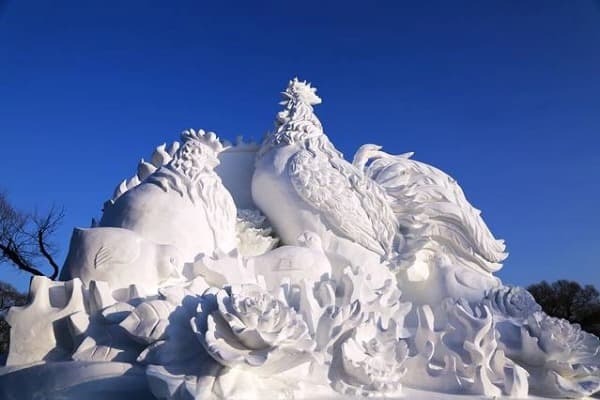
Mohe is China's northernmost county-level city, in the Greater Khingan (Daxing'anling) forest of Heilongjiang Province, facing Russia across the Heilongjiang River (the Amur internationally). Its appeal lies in the journey itself: forest roads, border villages, and snow-covered wooden yards in winter, rather than a cluster of attractions on one walkable street.

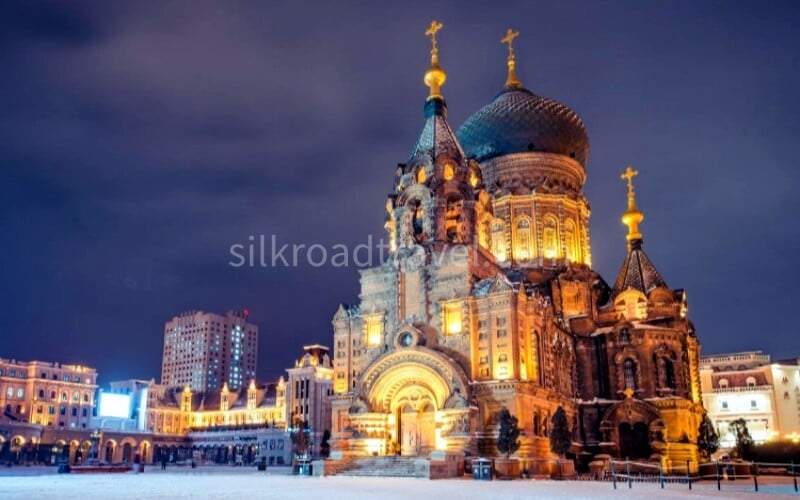
That makes Mohe a different trip from Harbin's illuminated ice buildings. Expect long driving between dispersed sights, two village bases, and landscape that unfolds gradually. Book for the villages, forest and river — not for a guaranteed aurora, and not as a day trip from Harbin.
Where Is Mohe?
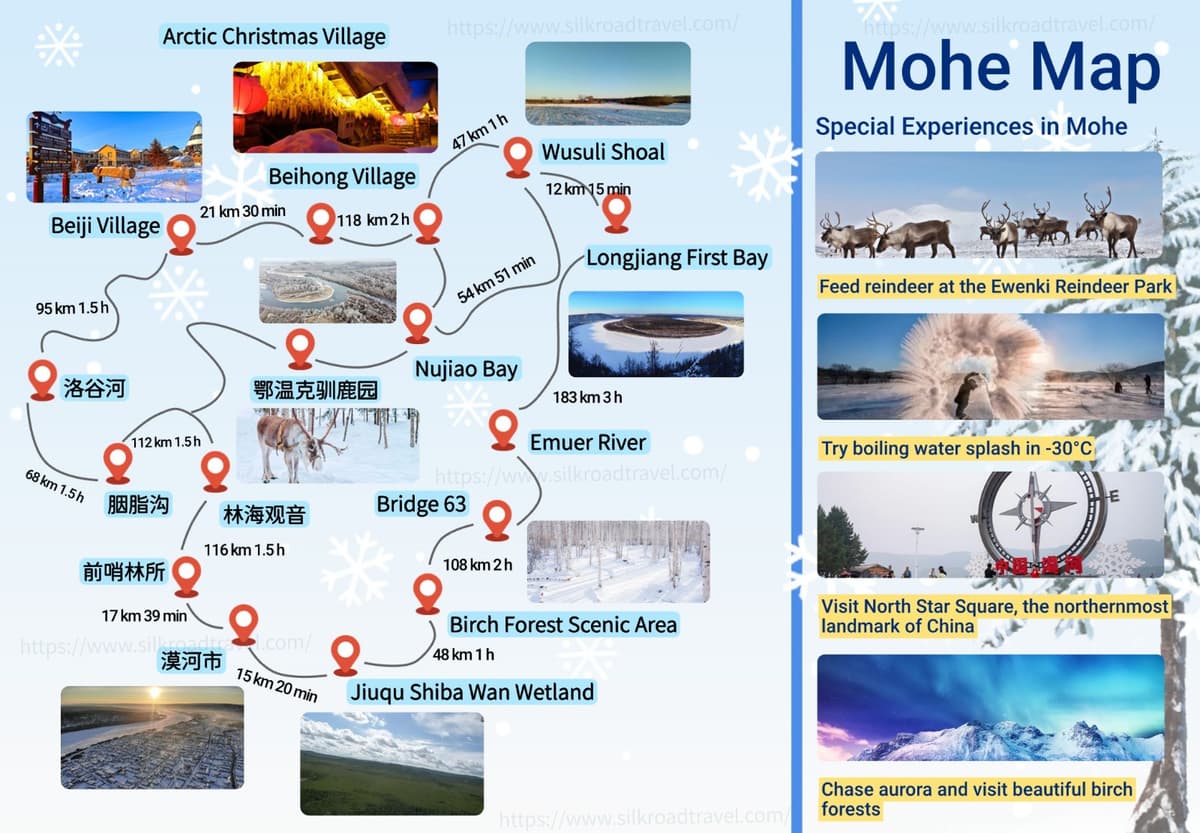
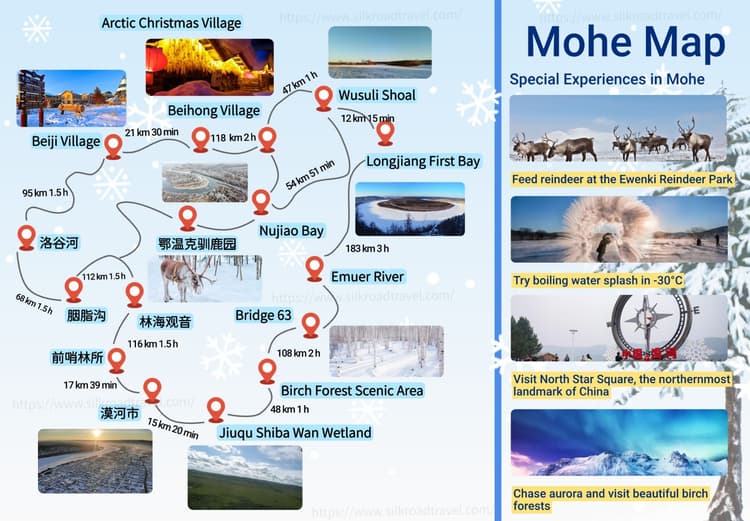
Mohe is not one town and one ticketed area; the name covers a dispersed county. On a map, read it as a loose road circuit between four nodes:
The urban centre, Xilinji (西林吉), is a transport and service base. Beiji Village (北极村) and Beihong Village (北红村) are separate settlements reached by road; neither is beside the airport or railway station.
Think of a road circuit linking town, village bases and scattered viewpoints. Establish where you will sleep before interpreting a hotel location simply as "Mohe".
Mohe Weather & Best Time to Visit
Mohe has a harsh continental monsoon climate: more than seven months sit below 0°C, the frost-free period is about 90 days, and day-night gaps can reach 10–12°C. The official city record low is about −53°C; Beiji Village has recorded −52.3°C.
Period | Typical conditions | Daylight | Suitability |
Dec–Feb (deep winter) | Avg −24°C; nights regularly −30 to −40°C; dry, light snow; roads frozen | Short day, sunrise late / sunset early | Snow villages and ice scenery; most-reported aurora window, but sightings still rare |
Mar–Apr / Nov (transition) | −20°C to +5°C; rapid swings; mixed snow and rain | Short-to-moderate | Quiet roads; no peak snow nor green forest |
May–Sep (summer) | Short, mild; July avg +20°C, highs ~25°C; rain peaks in July (~14 wet days) | Long; around the solstice Beiji Village sees a near-white-night sky (~21 h of light) | Green forest and river; comfortable walking; not polar day |
Oct (autumn) | Foliage colour, but peaks unpredictably; fast cooling and possible wet snow | Moderate | Catch colour only on a flexible, date-softened plan |
*Tips For You:
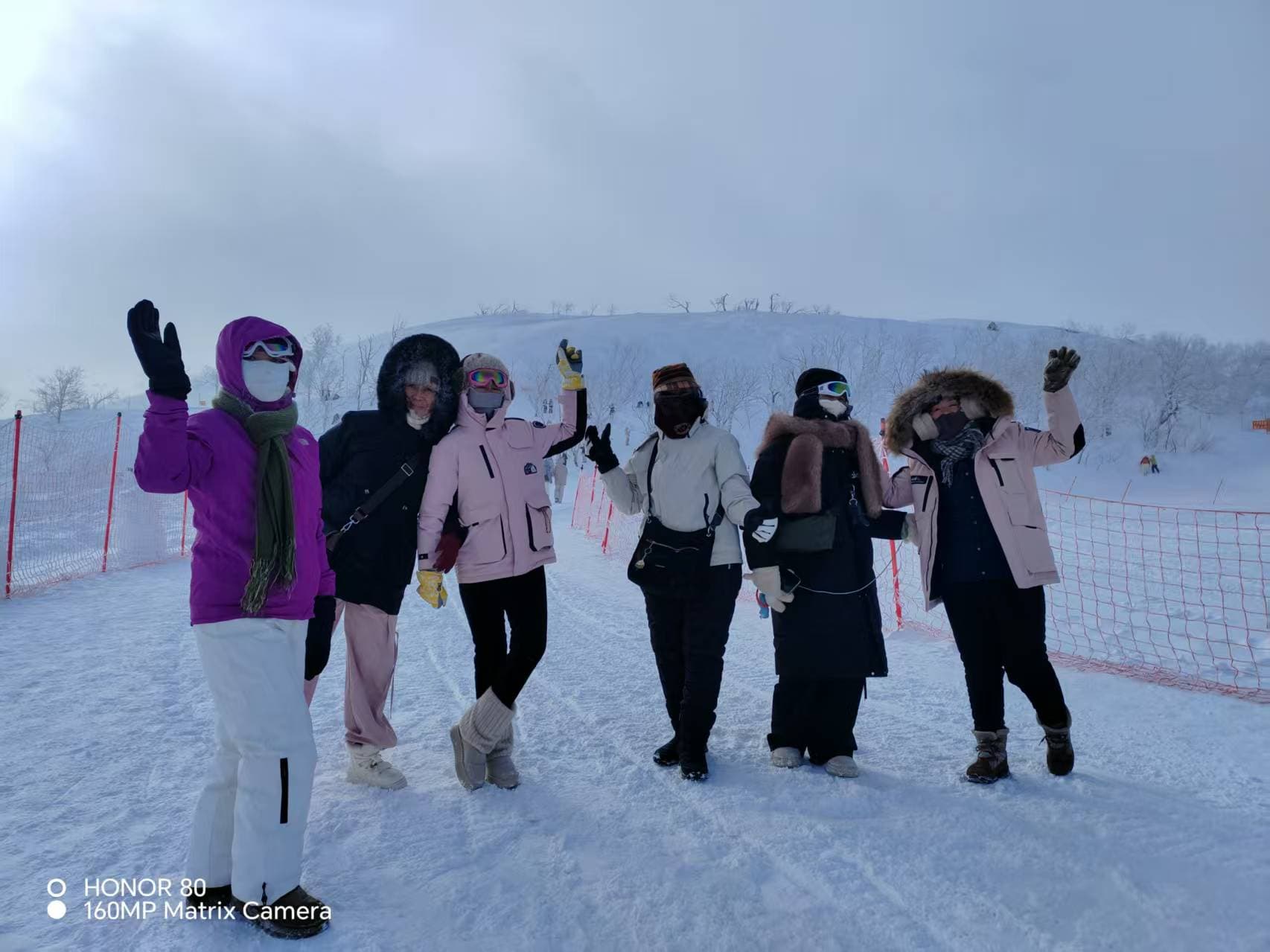
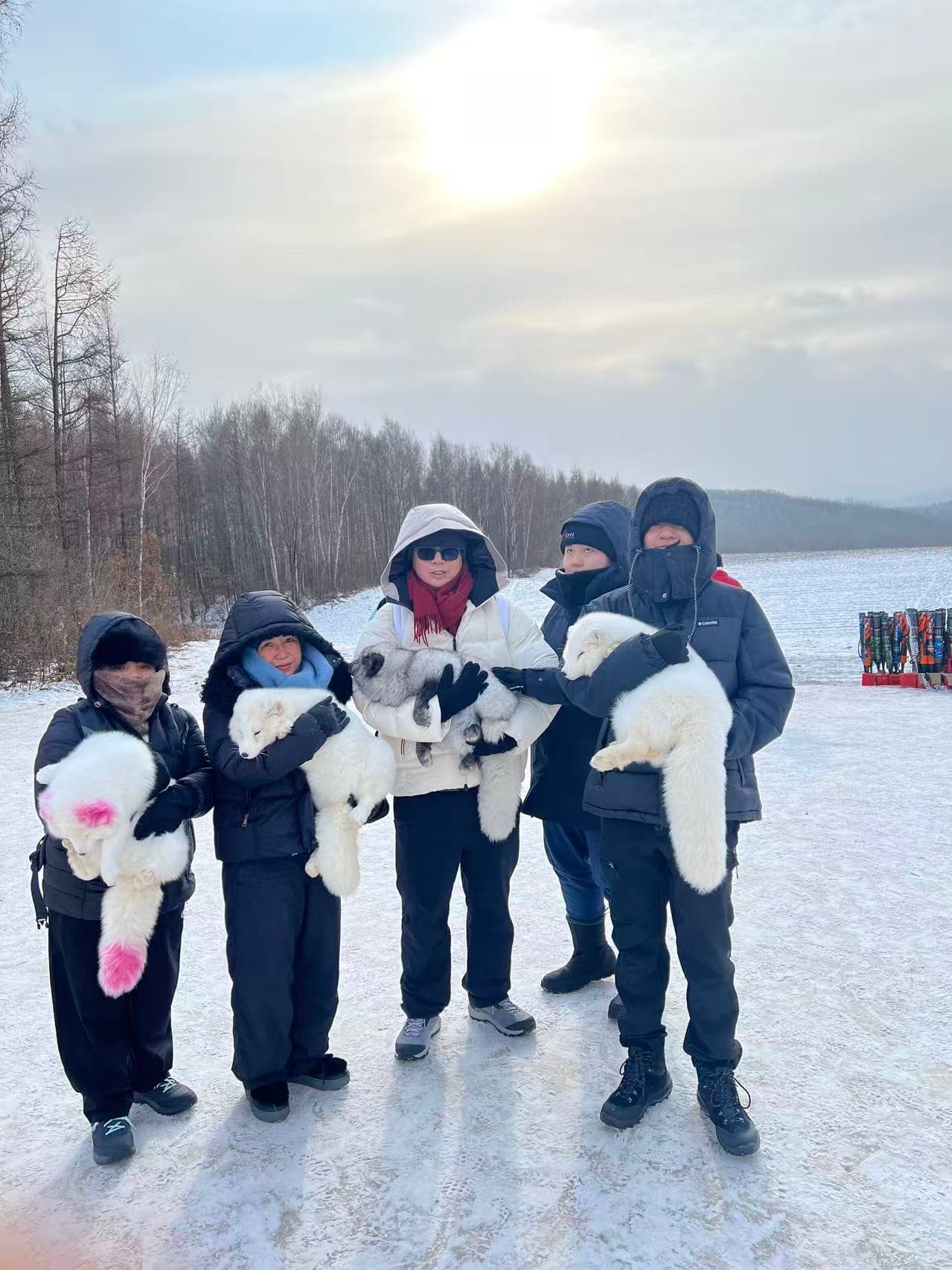
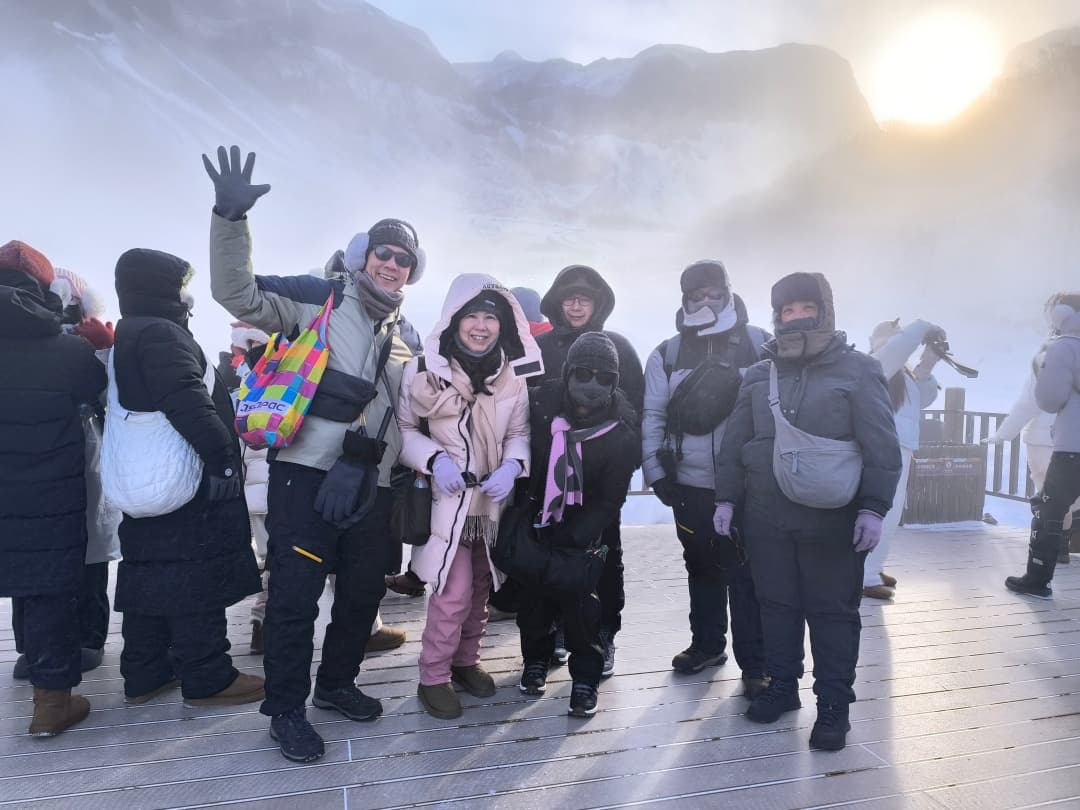
Packing by season: winter — windproof down jacket, insulated trousers, fur or wool hat, mittens (not thin gloves), thermal boots with non-slip soles, face cream and lip balm for dry frost, sunglasses for snow glare, spare camera batteries and a power bank (cold drains cells fast). Summer — layers, a fleece or windbreaker for nights, and compact rainwear.
What Makes Mohe Worth Visiting?
Outside town, a day may combine a forest drive, a village walk and a river viewpoint, with meals and indoor time between them. The route suits travellers who enjoy landscapes unfolding gradually rather than a succession of entertainment venues.
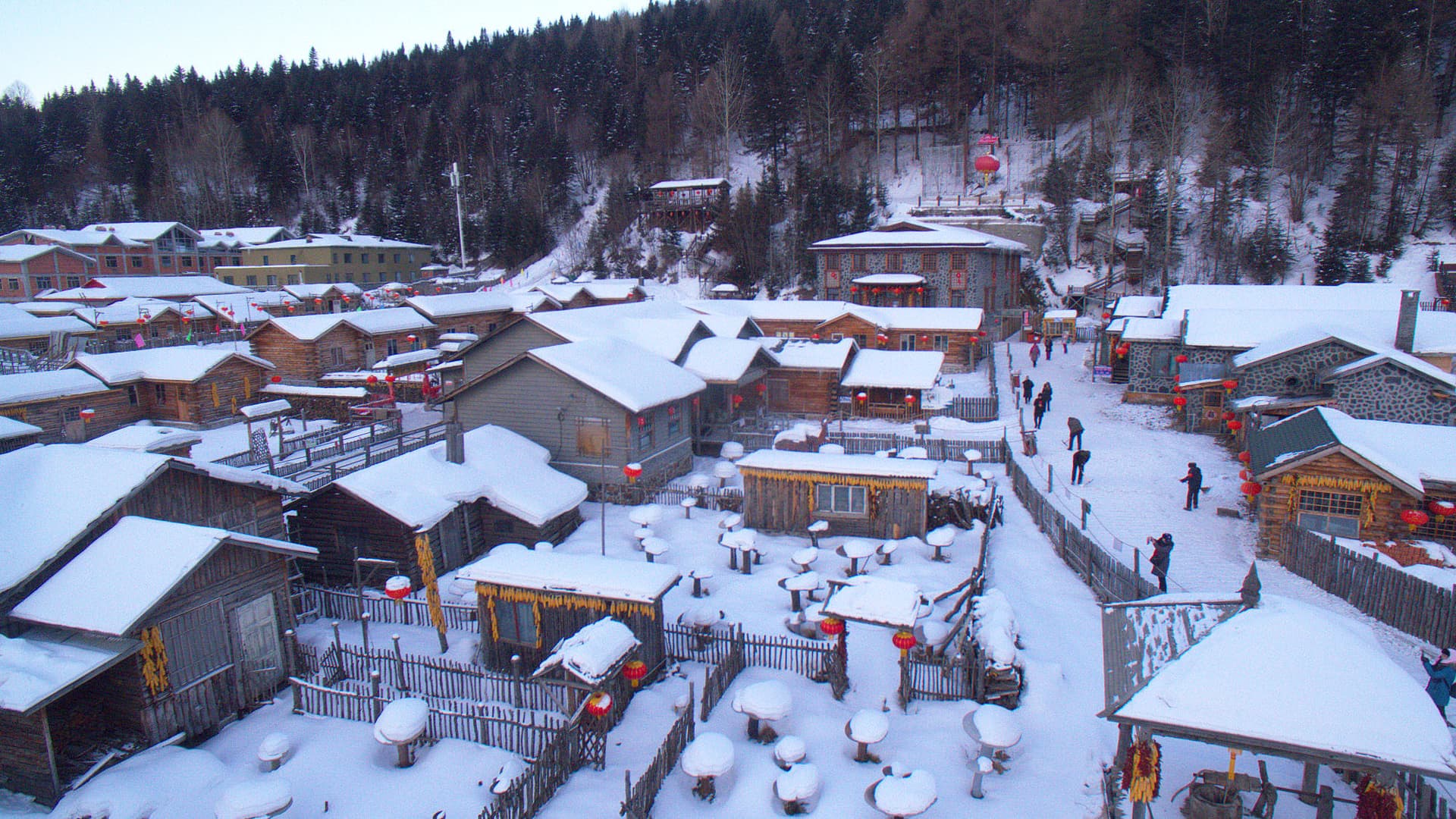
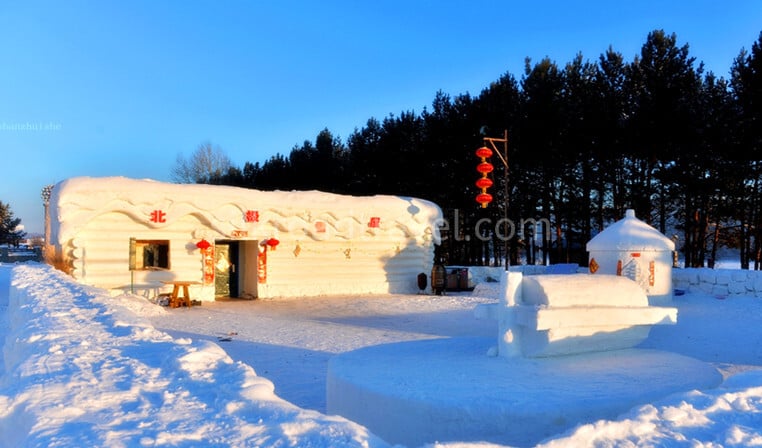
In winter, snow makes the shapes of roofs, fences and forest edges more apparent. A village evening can be as worthwhile as another distant viewpoint: there is time to see the streets after daytime visitors leave and return to your lodging without another long transfer. Staying overnight also gives you a chance to see the same surroundings in different light, without promising fresh snowfall.
The international river gives the landscape another dimension. You can look towards the opposite bank while remaining on authorised visitor routes, but the border is a managed place, not an invitation to wander onto the ice. Local settlements are working communities as well as destinations; ask before photographing people closely or entering private yards.
Choose Mohe for the villages, forest and river together. It is less rewarding if you mainly want rides, nightlife or one guaranteed natural spectacle.
Key Sights
·Beiji Village (北极村 / "Arctic Village")
The best-known visitor base, mixing lived-in homes with managed northern-theme facilities: riverfront walks, the promoted "China's northernmost post office" (postal and souvenir stop; verify opening), and north monuments that are tourism milestones rather than the geographic northernmost point itself. Staying overnight turns it from a photo stop into a place to walk unhurried. Keep the village's branding separate from the real northern-point landscape at Wusuli Shoal (below).
·Beihong Village (北红村)
A genuinely different village, not another English name for Beiji: wooden houses, open yards and a simpler riverside feel. Guesthouses already exist here, so it is not "untouched" — judge each property's heating, bathroom and meals individually rather than assuming atmosphere equals comfort. Best used as a second overnight on a longer circuit.
·Longjiang First Bend (龙江第一湾)
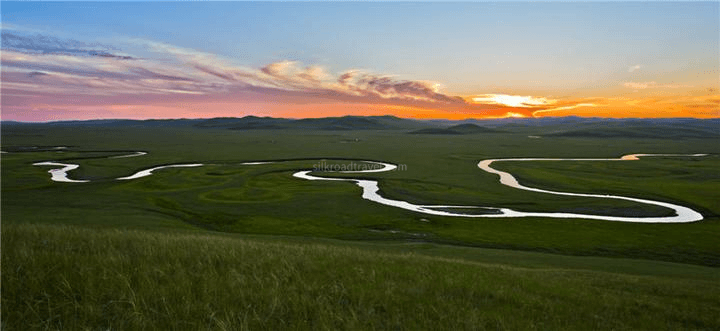
A broad horseshoe curve of the Heilongjiang River around a wooded peninsula. The payoff is an elevated panorama reached by a hillside walking route and steps — confirm the climb, open platforms and winter surface before committing half a day; visitors avoiding steps will not get the same view from the road.
·Wusuli Shoal (乌苏里浅滩) & the northern-point landscape
Associated with China's geographic northernmost point and open border-river scenery; reached by road, not on foot from a village hotel. Ask exactly which section and markers your arrangement includes — operators use "northernmost point" loosely, and it is not automatically part of a Beiji Village stay.
·Songyuan Forest Park (松苑公园, town centre)
A short forest walk within Xilinji, useful on arrival or departure days when transport leaves a gap. A town stop, not a substitute for the regional forest.
·May 6 Fire Memorial (五·六火灾纪念馆)
Covers the 1987 Greater Khingan forest fire and local history; useful context beyond snow photographs. Confirm current admission and whether English interpretation exists.
Chasing the Northern Lights in Mohe
Honest starting point
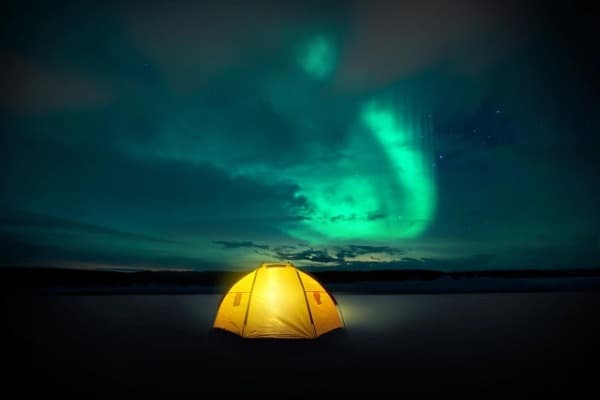
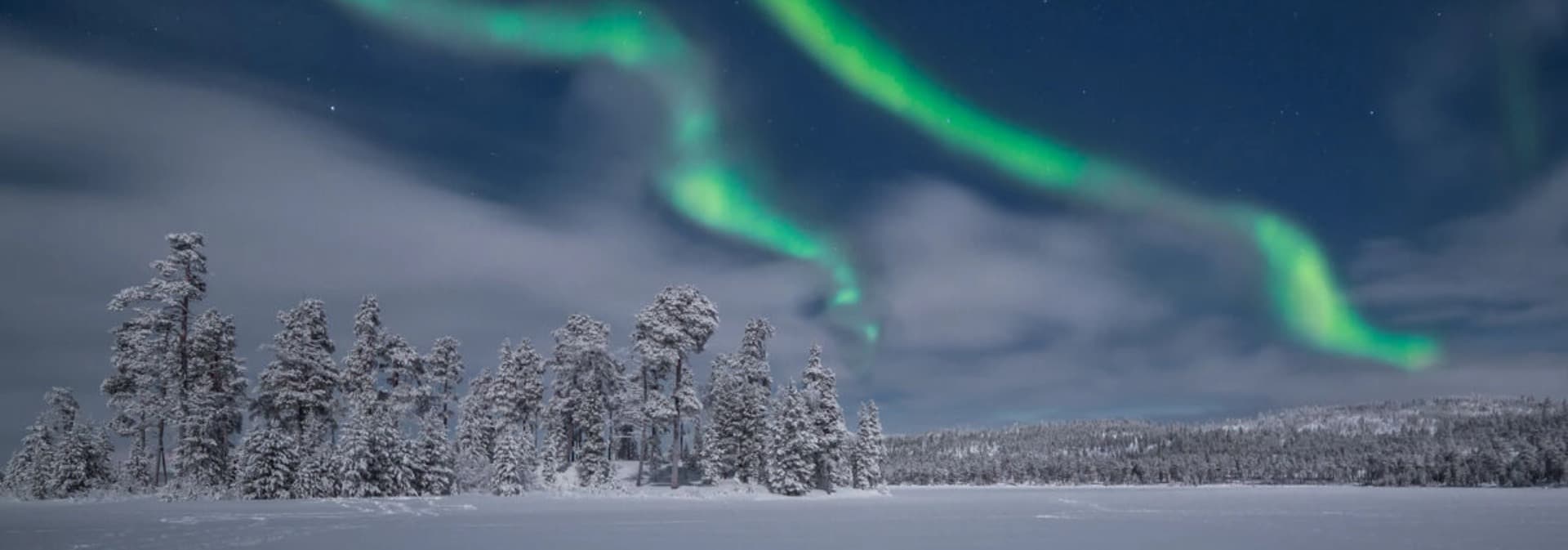
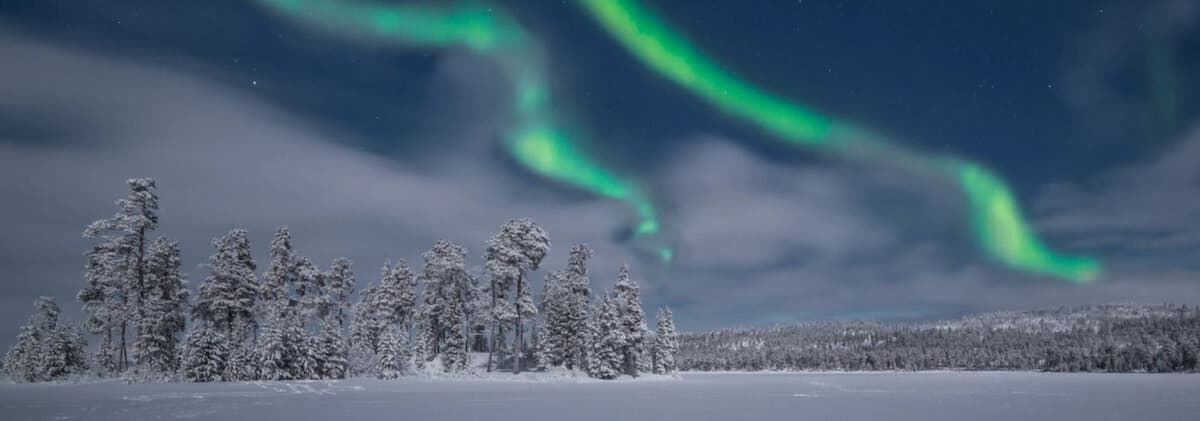
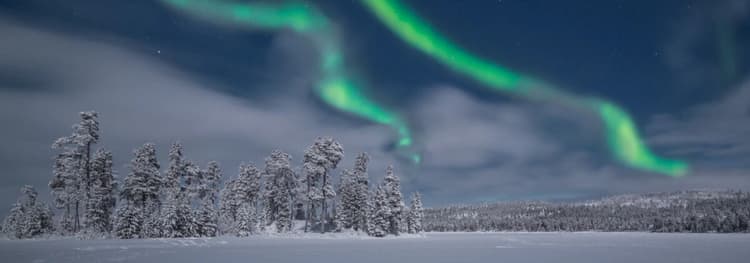
Auroras have been observed near Mohe, but the city sits at ~53°N, well south of the auroral oval. Treat a sighting as a bonus, never as the reason to book — no operator can reserve one, and winter booking alone does not produce it.
Best window
·Months: local sightings are reported September–April; most reports cluster December–February, around the equinoxes (March, September) geomagnetic activity also tends to peak.
·Hours: roughly 22:00–03:00 local time, strongest in the one or two hours around midnight.
·Conditions required together: Kp geomagnetic index at least 3 (4+ more likely), a clear cloud-free sky, a low or absent moon, and darkness away from village streetlights.
Step-by-step process
·1–3 days ahead: check the Kp forecast (NOAA Space Weather Prediction Center; apps such as Aurora Forecast) and the local cloud forecast; mark nights with Kp ≥3 and a weak moon.
·Before dark: confirm the guesthouse can wake you or return your call; charge spare batteries indoors.
·Exit fully dressed: put on every layer, hat and mittens outside only once — returning inside to retrieve something loses the sky.
·Position: stay on authorised ground away from village lights; never walk onto the frozen border river.
·Wait in warmth: between checks, return indoors; cold exposure ends the chase faster than waiting.
Photography gear
Tripod; fast wide lens f/1.4–f/2.8; ISO 1600–6400; 5–15 second exposure (shorter, 1–8 s, if the sky moves fast); shoot RAW; manual focus on a bright star.
Spare batteries kept in an inner pocket; power bank; hand warmers.
How Much Time Do You Need?
Think in complete days in Mohe and local hotel nights, then add the journeys to and from the region. A night on a sleeper train is not a night in a village guesthouse. Arrival and departure times can turn what looks like a three-day stay into much less usable sightseeing time.
With two local nights, choose one main village base and a selective route through the highlights that fit your actual arrival and departure. You may be able to include a second village visit, but it should not displace the views or walking time that motivated the trip. A late arrival requires a shorter first-day plan.
Three local nights allow a more measured circuit through both villages, river viewpoints and town. This is an editorial option, subject to transport and access, rather than a promise of every named sight.
For a slower stay, prioritise one village and remove a distant detour. Fix the route and final transfer before booking accommodation.
Getting There and Around
Mohe Gulian Airport (OHE) and Mohe Railway Station are gateways to the destination, followed by road travel to village accommodation and scenic areas. Air routes and frequencies vary by operating period; a flight appearing on a general route map is not confirmation for your winter date. There is no basis for planning this as a direct high-speed-train journey into Mohe.
Harbin is an important connection, but sleeper travel uses substantial time beyond a hotel night. Compare arrival and departure times with your days on the ground; the linked company itinerary below shows how train legs fit the overall trip.
Arrange the first transfer and travel between villages before arrival. A booked vehicle simplifies a circuit, but capacity, waiting, detours and the final drop-off must be specified.
Use public or shared transport against an actual timetable and stopping points. Leave room for winter road conditions instead of putting a distant viewpoint immediately before a fixed departure.
Staying and Eating in Mohe
Town accommodation can be useful for transport connections and local services. A village stay puts you closer to the streets and surroundings you came to see, but may involve different facilities and meal arrangements. Ask where each night is spent, not simply how many nights of "Mohe accommodation" a package includes.

Check private bathroom provision, reliable heating, bed type and the location of the room within the property. Some accommodation offers a kang, a traditional heated sleeping platform; confirm its size, bedding, access and suitability for your group. A cultural feature does not automatically make a room more comfortable for every traveller.
Food can be part of the stay, with shared Northeastern-style dishes and substantial hot meals. Ask what is available at your lodging, what needs ordering ahead and how many people a dish serves. Confirm ingredients for allergies or vegetarian requirements instead of assuming that a vegetable dish has no animal-based stock or fat.
When changing village hotels, establish where luggage stays during visits. Any storage in Harbin must be arranged separately.
Practical Visiting Information
Mohe has no single destination admission ticket, opening time or entrance address. A village scenic area, a viewpoint, a museum and an optional activity can have separate rules and charges. Ask for an itemised quotation showing admissions, internal transport, vehicle services and activities rather than comparing two unexplained "Mohe package" totals.
Carry your booking passport and confirm accommodation registration. Establish document and access requirements for specific border sites; neither a blanket special-permit claim nor unrestricted access everywhere should be assumed.
Follow photography signs and instructions around border facilities. The Mohe government's visitor notice specifically highlights the border river and winter crossing risk. Remain in authorised areas, and do not use the frozen river as a shortcut between places.
Take gloves and a hat before leaving the vehicle, and agree where to meet again. Keep the lodging address and driver's contact offline.
For winter 2026–2027, confirm seasonal access, admissions, village transport and optional snow activities. Historical tourism descriptions do not establish this season's operating programme.
Adding Mohe to a Harbin Trip
Mohe is a worthwhile extension when northern villages, forests and the border-river setting are a deliberate part of your interests. If your entire holiday allows only a few days, staying in Harbin may produce a more satisfying visit than spending much of it in long-distance transport. Do not add Mohe solely because it appears in the same provincial travel guide.
Our 7 Days Harbin and Mohe Tour provides a real starting point: arrival in Harbin, city touring and train travel to Mohe, Beihong Village, Arctic Village, a return train, further Harbin touring and departure. Its two train legs are part of the seven-day structure, not seven complete sightseeing days in the two destinations.
The product lists train tickets and accommodation, while flights into and out of Harbin and lunches and dinners are excluded. Have the quotation confirm berth class, each overnight location, local guiding and the specific scenic stops. The published sequence establishes the village combination; it does not prove that every highlight described in this destination guide is included.
Browse our Harbin tours, then share your dates, available days, group size and interest in village stays or landscape viewpoints. Mention your comfort with overnight trains and any room requirements so the proposed route can be assessed on the experience you want, without promises of auroras or special border access.
Senior Ticket Discounts for Mohe Attractions:
Most scenic spots in Mohe offer discounted admission tickets for senior visitors aged 60 and above. Valid ID (passport or ID card) must be presented on-site for verification. Some sites provide free entry for visitors aged 70 and over. Discount policies are subject to on-site updates without prior notice.
Mohe FAQ for you: Things to know before coming
Is Mohe inside the Arctic Circle?
No. It is near 53°N; the circle is 66°33′N, so there is no polar day or polar night, only long summer evenings and short winter days.
Can you guarantee northern lights in Mohe?
No. Sightings depend on Kp activity, clear sky and moon phase; book for the landscape and treat the aurora as a bonus.
Can Mohe be done as a day trip from Harbin?
No. Rail takes 15–18 hours overnight and sights are dispersed by road; plan at least two local nights.
Is Beiji Village the same as the northernmost point?
No. The village has themed north landmarks; the geographic northern-point landscape is at Wusuli Shoal, arranged separately.
What is the coldest month?
December and January, averaging around −24°C at night and dropping below −30°C; pack full windproof layering and spare charged batteries.

Mohe is China's northernmost county-level city, in the Greater Khingan (Daxing'anling) forest of Heilongjiang Province, facing Russia across the Heilongjiang River (the Amur internationally). Its appeal lies in the journey itself: forest roads, border villages, and snow-covered wooden yards in winter, rather than a cluster of attractions on one walkable street.

That makes Mohe a different trip from Harbin's illuminated ice buildings. Expect long driving between dispersed sights, two village bases, and landscape that unfolds gradually. Book for the villages, forest and river — not for a guaranteed aurora, and not as a day trip from Harbin.
Where Is Mohe?
Mohe is not one town and one ticketed area; the name covers a dispersed county. On a map, read it as a loose road circuit between four nodes:
The urban centre, Xilinji (西林吉), is a transport and service base. Beiji Village (北极村) and Beihong Village (北红村) are separate settlements reached by road; neither is beside the airport or railway station.
Think of a road circuit linking town, village bases and scattered viewpoints. Establish where you will sleep before interpreting a hotel location simply as "Mohe".
Mohe Weather & Best Time to Visit
Mohe has a harsh continental monsoon climate: more than seven months sit below 0°C, the frost-free period is about 90 days, and day-night gaps can reach 10–12°C. The official city record low is about −53°C; Beiji Village has recorded −52.3°C.
Period | Typical conditions | Daylight | Suitability |
Dec–Feb (deep winter) | Avg −24°C; nights regularly −30 to −40°C; dry, light snow; roads frozen | Short day, sunrise late / sunset early | Snow villages and ice scenery; most-reported aurora window, but sightings still rare |
Mar–Apr / Nov (transition) | −20°C to +5°C; rapid swings; mixed snow and rain | Short-to-moderate | Quiet roads; no peak snow nor green forest |
May–Sep (summer) | Short, mild; July avg +20°C, highs ~25°C; rain peaks in July (~14 wet days) | Long; around the solstice Beiji Village sees a near-white-night sky (~21 h of light) | Green forest and river; comfortable walking; not polar day |
Oct (autumn) | Foliage colour, but peaks unpredictably; fast cooling and possible wet snow | Moderate | Catch colour only on a flexible, date-softened plan |
*Tips For You:
Packing by season: winter — windproof down jacket, insulated trousers, fur or wool hat, mittens (not thin gloves), thermal boots with non-slip soles, face cream and lip balm for dry frost, sunglasses for snow glare, spare camera batteries and a power bank (cold drains cells fast). Summer — layers, a fleece or windbreaker for nights, and compact rainwear.
What Makes Mohe Worth Visiting?
Outside town, a day may combine a forest drive, a village walk and a river viewpoint, with meals and indoor time between them. The route suits travellers who enjoy landscapes unfolding gradually rather than a succession of entertainment venues.
In winter, snow makes the shapes of roofs, fences and forest edges more apparent. A village evening can be as worthwhile as another distant viewpoint: there is time to see the streets after daytime visitors leave and return to your lodging without another long transfer. Staying overnight also gives you a chance to see the same surroundings in different light, without promising fresh snowfall.
The international river gives the landscape another dimension. You can look towards the opposite bank while remaining on authorised visitor routes, but the border is a managed place, not an invitation to wander onto the ice. Local settlements are working communities as well as destinations; ask before photographing people closely or entering private yards.
Choose Mohe for the villages, forest and river together. It is less rewarding if you mainly want rides, nightlife or one guaranteed natural spectacle.
Key Sights
·Beiji Village (北极村 / "Arctic Village")
The best-known visitor base, mixing lived-in homes with managed northern-theme facilities: riverfront walks, the promoted "China's northernmost post office" (postal and souvenir stop; verify opening), and north monuments that are tourism milestones rather than the geographic northernmost point itself. Staying overnight turns it from a photo stop into a place to walk unhurried. Keep the village's branding separate from the real northern-point landscape at Wusuli Shoal (below).
·Beihong Village (北红村)
A genuinely different village, not another English name for Beiji: wooden houses, open yards and a simpler riverside feel. Guesthouses already exist here, so it is not "untouched" — judge each property's heating, bathroom and meals individually rather than assuming atmosphere equals comfort. Best used as a second overnight on a longer circuit.
·Longjiang First Bend (龙江第一湾)
A broad horseshoe curve of the Heilongjiang River around a wooded peninsula. The payoff is an elevated panorama reached by a hillside walking route and steps — confirm the climb, open platforms and winter surface before committing half a day; visitors avoiding steps will not get the same view from the road.
·Wusuli Shoal (乌苏里浅滩) & the northern-point landscape
Associated with China's geographic northernmost point and open border-river scenery; reached by road, not on foot from a village hotel. Ask exactly which section and markers your arrangement includes — operators use "northernmost point" loosely, and it is not automatically part of a Beiji Village stay.
·Songyuan Forest Park (松苑公园, town centre)
A short forest walk within Xilinji, useful on arrival or departure days when transport leaves a gap. A town stop, not a substitute for the regional forest.
·May 6 Fire Memorial (五·六火灾纪念馆)
Covers the 1987 Greater Khingan forest fire and local history; useful context beyond snow photographs. Confirm current admission and whether English interpretation exists.
Chasing the Northern Lights in Mohe
Honest starting point
Auroras have been observed near Mohe, but the city sits at ~53°N, well south of the auroral oval. Treat a sighting as a bonus, never as the reason to book — no operator can reserve one, and winter booking alone does not produce it.
Best window
·Months: local sightings are reported September–April; most reports cluster December–February, around the equinoxes (March, September) geomagnetic activity also tends to peak.
·Hours: roughly 22:00–03:00 local time, strongest in the one or two hours around midnight.
·Conditions required together: Kp geomagnetic index at least 3 (4+ more likely), a clear cloud-free sky, a low or absent moon, and darkness away from village streetlights.
Step-by-step process
·1–3 days ahead: check the Kp forecast (NOAA Space Weather Prediction Center; apps such as Aurora Forecast) and the local cloud forecast; mark nights with Kp ≥3 and a weak moon.
·Before dark: confirm the guesthouse can wake you or return your call; charge spare batteries indoors.
·Exit fully dressed: put on every layer, hat and mittens outside only once — returning inside to retrieve something loses the sky.
·Position: stay on authorised ground away from village lights; never walk onto the frozen border river.
·Wait in warmth: between checks, return indoors; cold exposure ends the chase faster than waiting.
Photography gear
Tripod; fast wide lens f/1.4–f/2.8; ISO 1600–6400; 5–15 second exposure (shorter, 1–8 s, if the sky moves fast); shoot RAW; manual focus on a bright star.
Spare batteries kept in an inner pocket; power bank; hand warmers.
How Much Time Do You Need?
Think in complete days in Mohe and local hotel nights, then add the journeys to and from the region. A night on a sleeper train is not a night in a village guesthouse. Arrival and departure times can turn what looks like a three-day stay into much less usable sightseeing time.
With two local nights, choose one main village base and a selective route through the highlights that fit your actual arrival and departure. You may be able to include a second village visit, but it should not displace the views or walking time that motivated the trip. A late arrival requires a shorter first-day plan.
Three local nights allow a more measured circuit through both villages, river viewpoints and town. This is an editorial option, subject to transport and access, rather than a promise of every named sight.
For a slower stay, prioritise one village and remove a distant detour. Fix the route and final transfer before booking accommodation.
Getting There and Around
Mohe Gulian Airport (OHE) and Mohe Railway Station are gateways to the destination, followed by road travel to village accommodation and scenic areas. Air routes and frequencies vary by operating period; a flight appearing on a general route map is not confirmation for your winter date. There is no basis for planning this as a direct high-speed-train journey into Mohe.
Harbin is an important connection, but sleeper travel uses substantial time beyond a hotel night. Compare arrival and departure times with your days on the ground; the linked company itinerary below shows how train legs fit the overall trip.
Arrange the first transfer and travel between villages before arrival. A booked vehicle simplifies a circuit, but capacity, waiting, detours and the final drop-off must be specified.
Use public or shared transport against an actual timetable and stopping points. Leave room for winter road conditions instead of putting a distant viewpoint immediately before a fixed departure.
Staying and Eating in Mohe
Town accommodation can be useful for transport connections and local services. A village stay puts you closer to the streets and surroundings you came to see, but may involve different facilities and meal arrangements. Ask where each night is spent, not simply how many nights of "Mohe accommodation" a package includes.

Check private bathroom provision, reliable heating, bed type and the location of the room within the property. Some accommodation offers a kang, a traditional heated sleeping platform; confirm its size, bedding, access and suitability for your group. A cultural feature does not automatically make a room more comfortable for every traveller.
Food can be part of the stay, with shared Northeastern-style dishes and substantial hot meals. Ask what is available at your lodging, what needs ordering ahead and how many people a dish serves. Confirm ingredients for allergies or vegetarian requirements instead of assuming that a vegetable dish has no animal-based stock or fat.
When changing village hotels, establish where luggage stays during visits. Any storage in Harbin must be arranged separately.
Practical Visiting Information
Mohe has no single destination admission ticket, opening time or entrance address. A village scenic area, a viewpoint, a museum and an optional activity can have separate rules and charges. Ask for an itemised quotation showing admissions, internal transport, vehicle services and activities rather than comparing two unexplained "Mohe package" totals.
Carry your booking passport and confirm accommodation registration. Establish document and access requirements for specific border sites; neither a blanket special-permit claim nor unrestricted access everywhere should be assumed.
Follow photography signs and instructions around border facilities. The Mohe government's visitor notice specifically highlights the border river and winter crossing risk. Remain in authorised areas, and do not use the frozen river as a shortcut between places.
Take gloves and a hat before leaving the vehicle, and agree where to meet again. Keep the lodging address and driver's contact offline.
For winter 2026–2027, confirm seasonal access, admissions, village transport and optional snow activities. Historical tourism descriptions do not establish this season's operating programme.
Adding Mohe to a Harbin Trip
Mohe is a worthwhile extension when northern villages, forests and the border-river setting are a deliberate part of your interests. If your entire holiday allows only a few days, staying in Harbin may produce a more satisfying visit than spending much of it in long-distance transport. Do not add Mohe solely because it appears in the same provincial travel guide.
Our 7 Days Harbin and Mohe Tour provides a real starting point: arrival in Harbin, city touring and train travel to Mohe, Beihong Village, Arctic Village, a return train, further Harbin touring and departure. Its two train legs are part of the seven-day structure, not seven complete sightseeing days in the two destinations.
The product lists train tickets and accommodation, while flights into and out of Harbin and lunches and dinners are excluded. Have the quotation confirm berth class, each overnight location, local guiding and the specific scenic stops. The published sequence establishes the village combination; it does not prove that every highlight described in this destination guide is included.
Browse our Harbin tours, then share your dates, available days, group size and interest in village stays or landscape viewpoints. Mention your comfort with overnight trains and any room requirements so the proposed route can be assessed on the experience you want, without promises of auroras or special border access.
Senior Ticket Discounts for Mohe Attractions:
Most scenic spots in Mohe offer discounted admission tickets for senior visitors aged 60 and above. Valid ID (passport or ID card) must be presented on-site for verification. Some sites provide free entry for visitors aged 70 and over. Discount policies are subject to on-site updates without prior notice.
Mohe FAQ for you: Things to know before coming
Is Mohe inside the Arctic Circle?
No. It is near 53°N; the circle is 66°33′N, so there is no polar day or polar night, only long summer evenings and short winter days.
Can you guarantee northern lights in Mohe?
No. Sightings depend on Kp activity, clear sky and moon phase; book for the landscape and treat the aurora as a bonus.
Can Mohe be done as a day trip from Harbin?
No. Rail takes 15–18 hours overnight and sights are dispersed by road; plan at least two local nights.
Is Beiji Village the same as the northernmost point?
No. The village has themed north landmarks; the geographic northern-point landscape is at Wusuli Shoal, arranged separately.
What is the coldest month?
December and January, averaging around −24°C at night and dropping below −30°C; pack full windproof layering and spare charged batteries.