


How to Plan Your Perfect Xinjiang Winter Holiday
Stretching across one-sixth of China’s territory, Xinjiang is the country’s ultimate “big sky” destination — a land where the Altay Mountains bury villages in champagne powder, Sayram Lake freezes into blue glass dotted with ice bubbles, and the Silk Road oasis of Kashgar glows under winter sun. While most travelers flock here between May and October, those who come between November and March discover a quieter, whiter, and often more magical side of the region: ski resorts with world-class snow, Tuvan wooden cottages straight out of a fairy tale, and major sights with a fraction of the summer crowds.
A winter journey through Xinjiang can include: China’s longest ski season, a UNESCO-candidate snow village, blue-ice lakes on the ancient Silk Road, frozen desert canyons, and steaming platters of lamb in Uyghur teahouses.
However, planning a Xinjiang winter trip is genuinely demanding. The region is enormous — Urumqi to Kashgar is roughly 1,470 km, farther than Chicago to Dallas — temperatures in the north regularly fall to -20°C or even -30°C, mountain roads close during heavy snow, and Xinjiang keeps Beijing time while the sun rises nearly two hours “late,” shortening the useful sightseeing day.
This ultimate guide explains how to plan your Xinjiang winter holiday, including the best time to go, recommended routes by duration, transportation, accommodation, food, packing, and practical winter travel tips.
Recommended Tour Itinerary
Xinjiang in Winter: Quick Facts
Coldest period: December to February (northern Xinjiang: -10°C to -30°C; Turpan and Kashgar: milder, often sunny)
Best for: Skiing (November–April), Kanas/Hemu snow scenery (December–February), Sayram Lake blue ice (late December–mid-February)
Main gateway: Urumqi Diwopu International Airport (URC)
Recommended duration: 7–10 days for most first-time winter visitors
Daylight: Roughly 09:30–19:00 under Beijing time in midwinter — plan around short days
Closed in winter: Duku Highway (June–early October only) and most grassland scenery; the Khunjerab border crossing to Pakistan also closes in winter
Why Visit Xinjiang in Winter?
Asia’s Finest “Champagne Powder” Skiing
The Altai Mountains, at 45°–47° north latitude, enjoy 170–180 days of snowfall a year with average snow depths around one meter, producing the dry, low-moisture powder snow that has made Xinjiang Asia’s fastest-emerging ski destination. The Keketohai (Koktokay) International Ski Resort near Fuyun boasts China’s longest ski season — typically from mid-October into early May — a summit at 3,100 meters, and the country’s steepest groomed run (a 71.28% “Black Diamond”). Add night skiing at Jiangjunshan (General’s Mountain) just 2 km from downtown Altay, the vast Jikepulin resort inside the Hemu–Kanas scenic area, and the convenient 5S-grade Silk Road International Ski Resort only 38 km from Urumqi, and winter Xinjiang offers terrain for every level at prices well below Japan or Europe.
A Snow Fairy Tale: Kanas and Hemu
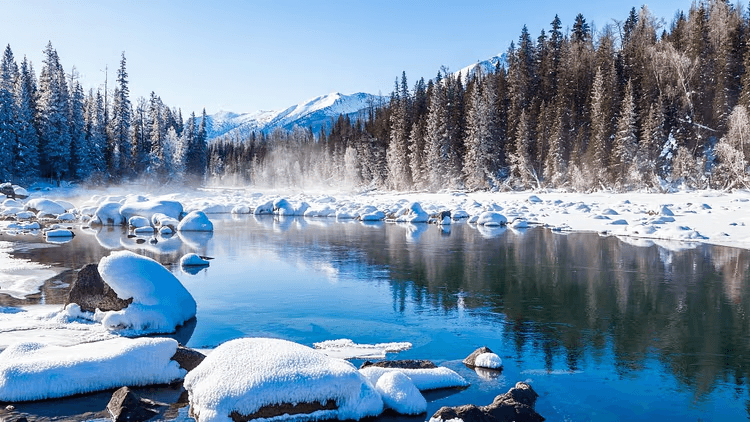
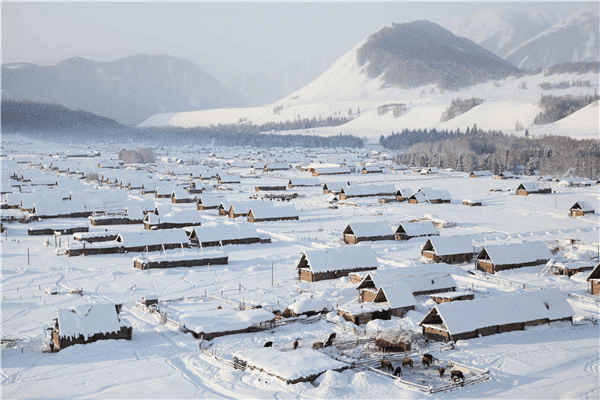
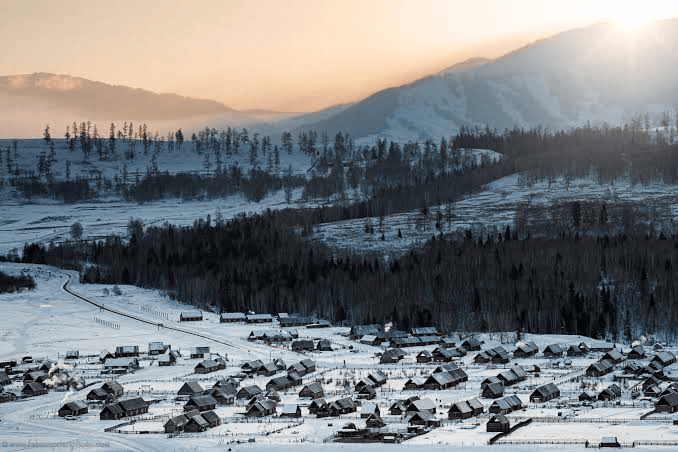
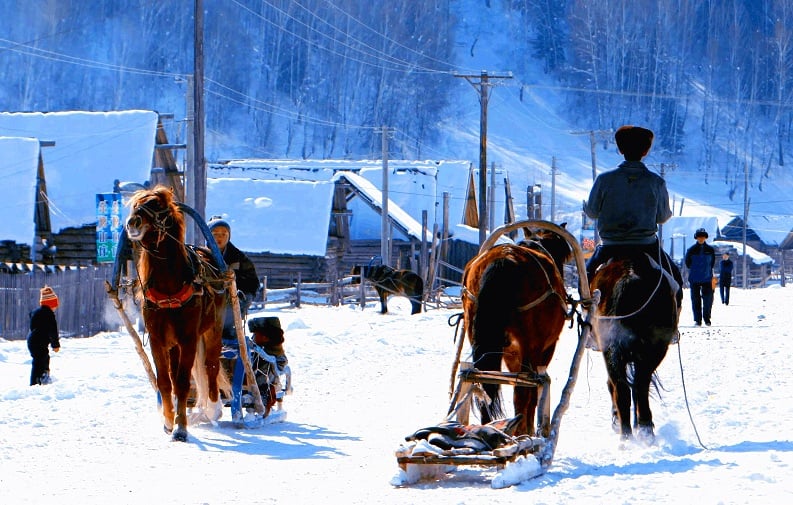
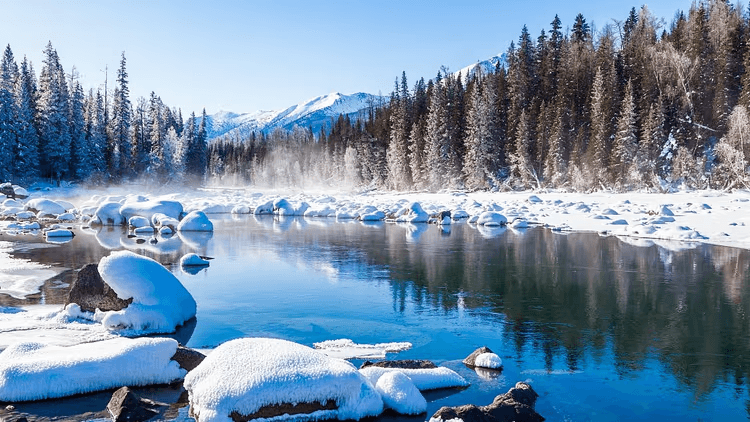
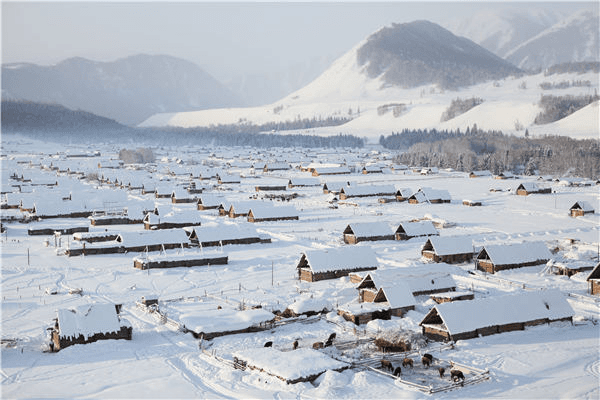
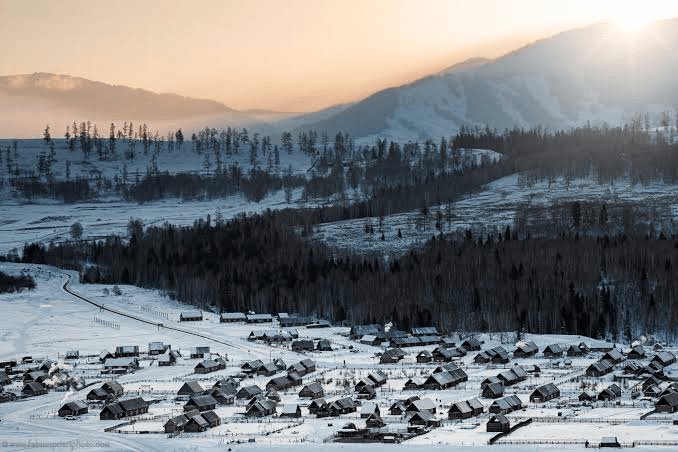
In summer, Kanas Lake — sits at 1,374 m and plunges 188.5 m deep — China’s deepest alpine freshwater lake— is famous for its color-shifting waters and lake-monster legends. In winter it becomes something rarer: a silent white amphitheater of frozen waterfalls, frost-covered spruce, and Mongolian Tuvan villages. Neighboring Hemu Village, blanketed in snow from November to March, is arguably China’s most photogenic snow village — log cabins, cooking smoke at dawn, and horse sleighs jingling through birch forest. Altay Prefecture is officially dubbed “China’s Snow Capital” (雪都), and the region claims an ancient fur-ski tradition — the Tuva people rode horsehide skis for centuries, and village races are still held today.
Blue Ice and Ice Bubbles at Sayram Lake
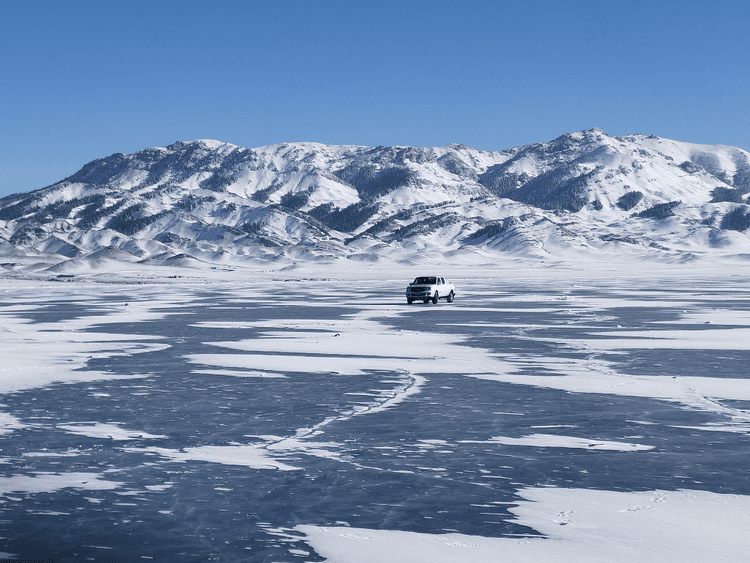
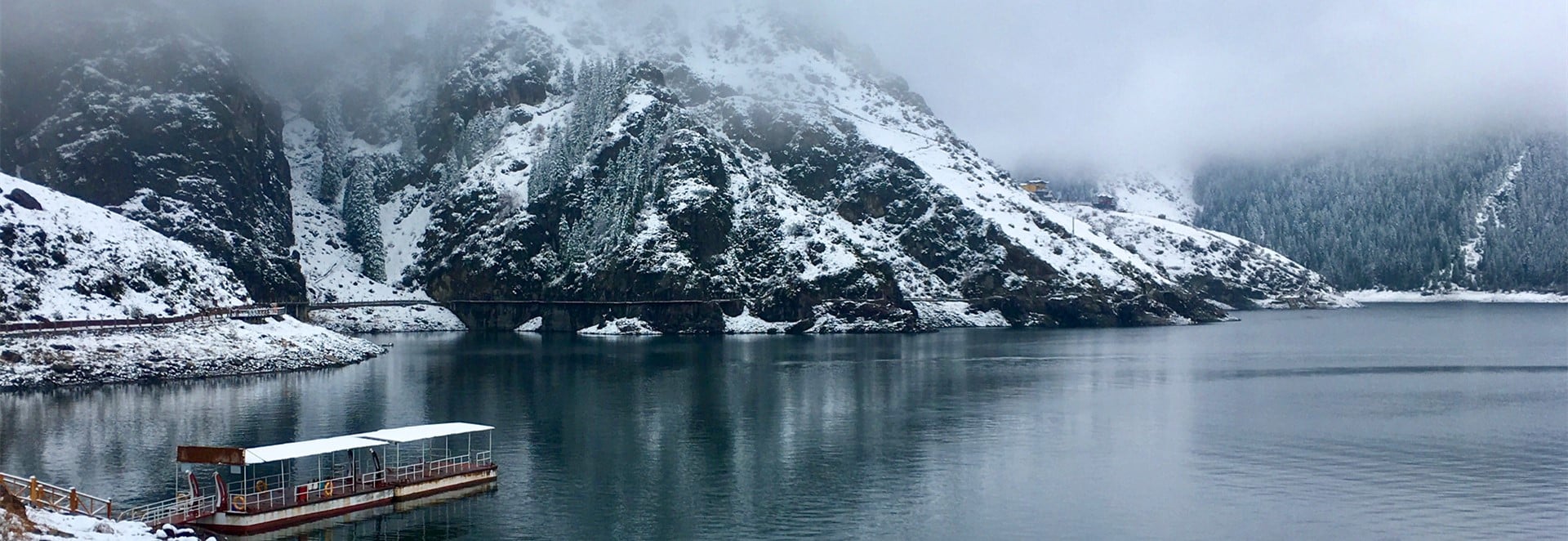
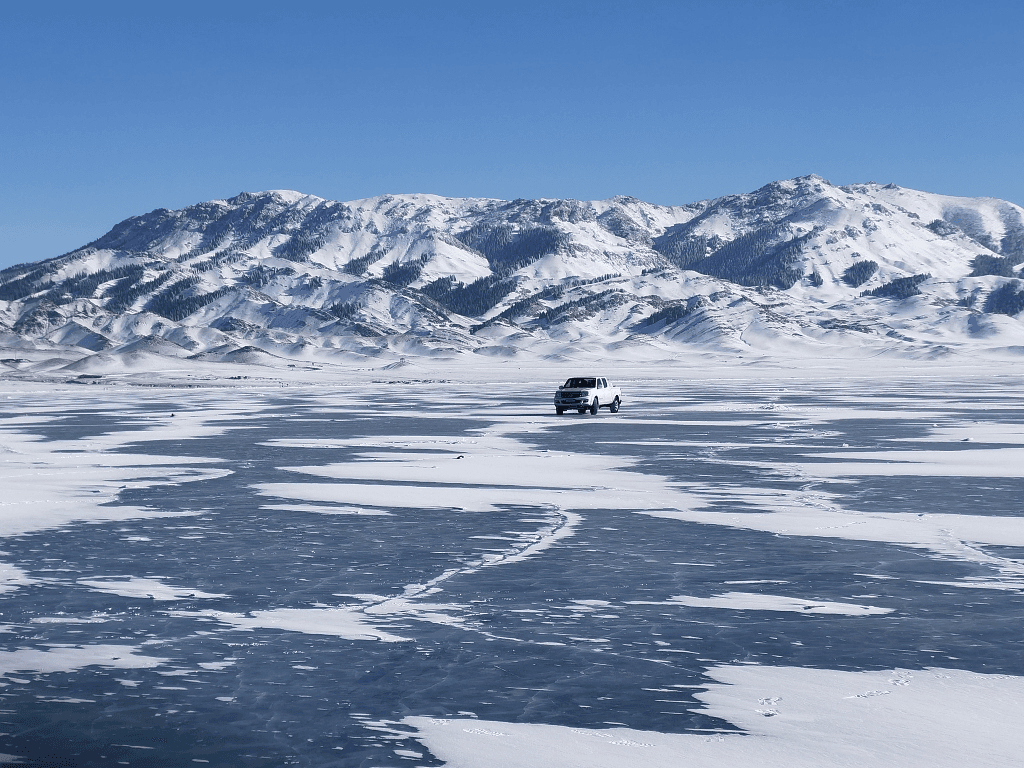
From late December to mid-February, Sayram Lake at 2,071 m freezes completely, creating Xinjiang’s signature winter spectacle: turquoise blue ice, trapped white “ice bubbles,” and dramatic ice cracks stretching beneath the Tianshan peaks— check the current policy before you go.
The Silk Road Without the Crowds
Winter strips the ancient trading cities back to their essence. In Kashgar, the old city’s lanes and the Id Kah Mosque are contemplative rather than congested, and the famed Sunday livestock market still convenes in the cold. In Turpan, “the Land of Fire,” winter delivers crisp blue skies, empty viewpoints over the Jiaohe Ancient City ruins, and pleasant sightseeing temperatures — a striking contrast to the -25°C mornings of the Altai. Urumqi’s International Grand Bazaar, meanwhile, has become a winter highlight itself, with lantern-lit night tours and ice-sculpture displays during the annual Urumqi Silk Road Ice and Snow Festival (typically December through February).
Understanding Xinjiang: Main Winter Travel Regions
Before planning, it helps to divide this vast region into five practical winter zones.
1. Urumqi: Gateway and Winter Base
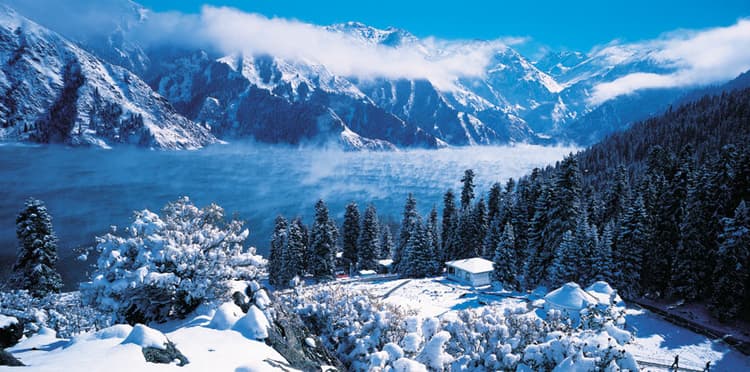
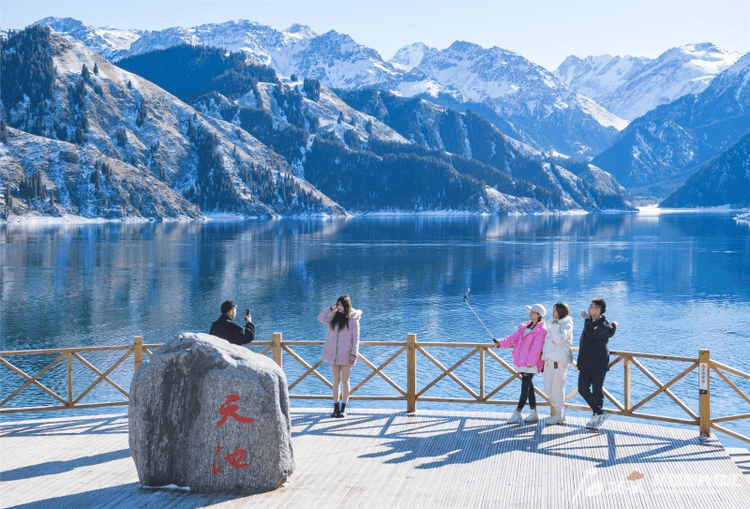
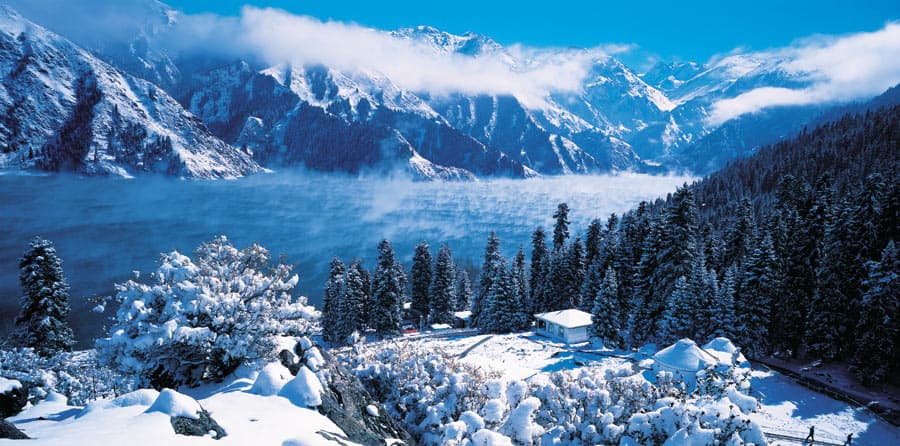
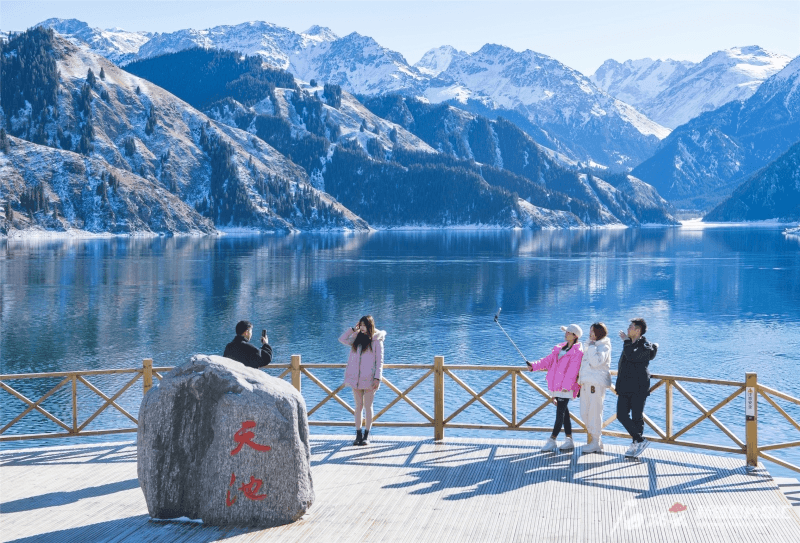
Xinjiang’s capital is best suited for transport connections, first-night arrivals, festival atmosphere, and convenient skiing. The city anchors the region’s flights and trains, and within an hour you can be on the slopes of the Silk Road Resort or photographing the frozen Tianshan Tianchi (Heavenly Lake) beneath Bogda Peak — a smaller sister resort opens at its base around December 1. The Grand Bazaar, Xinjiang Museum (home of the ancient Tarim mummies), and night-market food streets make the city worth a full day or two.
2. Altay and the Far North: China’s Snow Capital
Best suited for skiers, snow photographers, and winter-romance travelers, Altay offers three headline resorts (Jiangjunshan, Keketohai, Jikepulin), the Kanas–Hemu snow villages, and events such as the Fuhai Ulungur Lake Winter Fishing Festival each January, where vast nets are hauled from beneath the ice. Expect the coldest temperatures of your trip — and the best snow.
3. Ili and the Tianshan Corridor: Blue Ice and Swans
Best suited for landscape photographers and road-trip lovers, the Ili Valley centers on Yining, where whooper swans overwinter on unfrozen river stretches, and Sayram Lake, whose blue-ice season is the region’s crown jewel. The G30 expressway connects it to Urumqi in 5–6 hours; winter drives are straightforward in calm weather.
4. Turpan: Winter Sun in the Desert
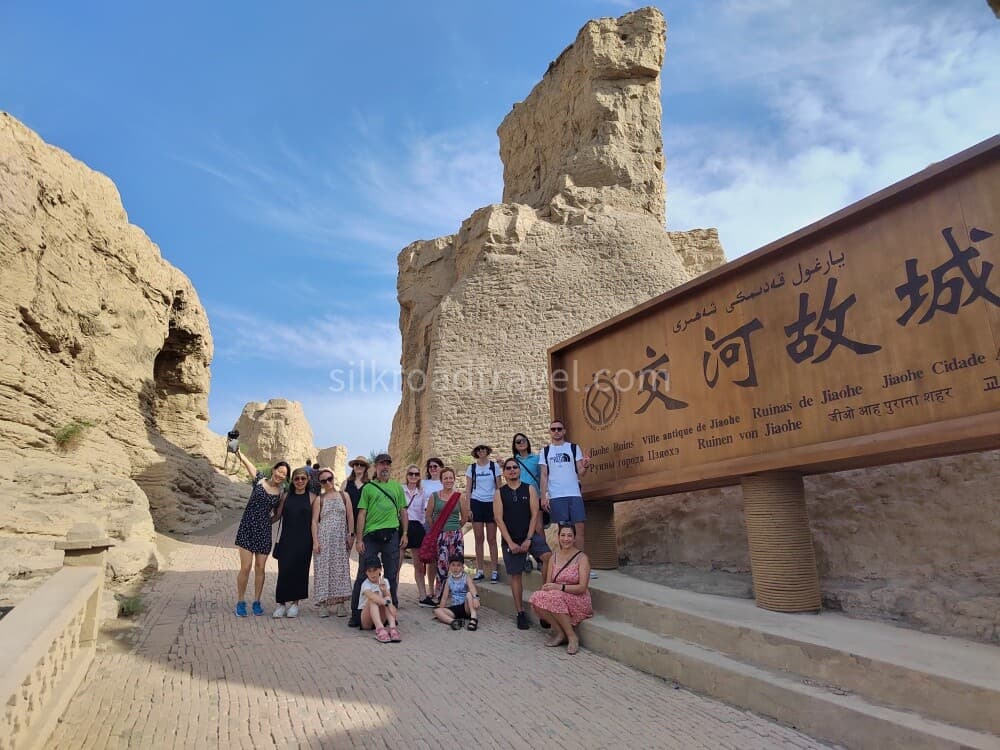
Best suited for culture lovers and anyone needing a thermal break, Turpan sits below sea level in China’s hottest basin — yet its winters are mild and sunny by Xinjiang standards. Visit the Jiaohe Ancient City (the world’s largest and oldest raw-earth city ruins), the Karez well system, and the ochre ridges of the Flaming Mountains without the summer furnace.
5. Kashgar and the Pamirs: Silk Road Culture with Snowcaps
Best suited for deep-culture travelers, Kashgar pairs the atmospheric old city and apak-hoja-era architecture with a possible winter extension up the Karakoram Highway to Karakul Lake (3,600 m) and Tashkurgan, where frozen lakes mirror 7,500-m Muztagh Ata. Note the altitude and the Khunjerab closure; the highway itself remains drivable in calm conditions.
When Is the Best Time for a Xinjiang Winter Holiday?
November: Early-season value. Ski areas open one by one; snow scenery is building; crowds are minimal. Kanas and Hemu turn wintry mid-month.
December–February (peak magic): Deep snow in Altay, the Urumqi Ice and Snow Festival, full blue-ice season at Sayram Lake, and the Grand Bazaar at its most festive. Also the coldest window — dress for -30°C.
March: Quiet, longer days, and excellent late-season spring skiing at Keketohai; Sayram Lake begins to thaw into dramatic broken-ice scenes.
Chinese New Year note: Resorts and snow villages are lively and atmospheric but book out weeks ahead; expect peak pricing around the holiday.
Two timing truths: First, Xinjiang keeps Beijing time but lives on local solar time, so midwinter daylight runs roughly 09:30–19:00 — start early and expect long, starry evenings. Second, heavy snow can close mountain roads for a day or two; build one buffer day into any Kanas itinerary.
How Many Days Do You Need for a Xinjiang Winter Tour?
Road distances in Xinjiang dwarf those of other Chinese regions — Urumqi to Sayram Lake takes about 6 hours, Urumqi to Altay is best flown, and Kashgar deserves its own flight. A well-designed winter itinerary should balance:
Transfer time (fly between regions whenever possible)
Snow and ice scenery
Skiing or village time
Warm-up stops in Turpan or Kashgar
Generally, the recommended duration is:
4–5 days: Urumqi essentials + Silk Road Resort skiing
6–8 days: The classic Altay snow-country loop
9–10 days: Blue-ice lakes and winter sun (Urumqi + Sayram + Turpan)
12+ days: Grand winter loop including Kashgar and the Pamirs
4–5 Days: Urumqi Essentials
Ideal for travelers adding Xinjiang onto a larger China itinerary, focusing on easy logistics and one taste of the famous powder.
Suggested Route
Day 1: Arrive Urumqi — International Grand Bazaar, evening food street
Day 2: Silk Road International Ski Resort (or Tianshan Tianchi + its ski area)
Day 3: Frozen Tianshan Tianchi day trip; return via the city’s ice-festival displays
Day 4: Xinjiang Museum, Uyghur medicine street, high-speed train to Turpan if time allows
Day 5: Departure from Urumqi
6–8 Days: The Classic Altay Snow Loop
For most first-time winter visitors, 6–8 days is ideal, combining ski-town energy, the Kanas–Hemu fairy-tale villages, and one night-ski session.
Suggested Route: Urumqi → Altay → Jiangjunshan → Hemu → Kanas → Urumqi
Day 1: Arrive Urumqi; Grand Bazaar night tour
Day 2: Fly (or overnight train) to Altay; warm-up ski at Jiangjunshan, sunset over the slopes
Day 3: Drive to Hemu Village (approx. 3–4 hours in winter); snowfield sunset, guesthouse stove and milk tea
Day 4: Hemu dawn photos, horse sleigh ride; ski or sightsee at Jikepulin; transfer to Kanas area
Day 5: Kanas Lake winter day — frozen waterfall, Fish-Viewing Platform views, Tuvan old village
Day 6: Return to Altay or Burqin; optional Keketohai ski day (from Fuyun)
Day 7: Fly back to Urumqi; departure or city extension
9–10 Days: Icy Lakes and Winter Sun
Adding Ili’s blue-ice lake and Turpan’s desert warmth gives a complete picture of winter Xinjiang’s contrasts.
Suggested Route: Urumqi → Tianchi → Sayram Lake → Yining → Turpan → Urumqi
Day 1: Arrive Urumqi
Day 2: Silk Road Resort ski day
Day 3: Drive the G30 to Sayram Lake (approx. 5–6 hours); first blue-ice walk at sunset
Day 4: Full Sayram Lake morning — ice bubbles and cracks; continue to Yining; swans on the river
Day 5: Kazanqi folk quarter and lavender-themed cafes; return toward Urumqi (or overnight train)
Day 6: Turpan — Jiaohe Ancient City, Karez wells
Day 7: Flaming Mountains, grape-valley winter brunch; high-speed train back (~1 hour)
Day 8: Urumqi museum and bazaar
Day 9–10: Optional Kanas add-on by air, or departure
12+ Days: Grand Winter Loop with Kashgar
Travelers with more time can add the southern Silk Road for the full arc of cultures.
Suggested Route: Urumqi → Turpan → (fly) Kashgar → Karakul Lake → Tashkurgan → (fly) Urumqi → Altay → Kanas/Hemu
Highlights of this extended route:
Kashgar Old City: Kiln-red lanes, the Id Kah Mosque, craftsmen’s workshops, and the Sunday livestock market — one of Central Asia’s oldest animal bazaars
Karakul Lake & Tashkurgan: A frozen sapphire at 3,600 m beneath Muztagh Ata; spend two nights to acclimatize and watch light move across the Pamirs
Kanas & Hemu: Finish on the region’s snowiest high note, with a final ski day at Jiangjunshan before flying home
Recommended Xinjiang Winter Routes by Travel Style
Route 1: Powder Ski Week — 5–7 days
Best for: Skiers and snowboarders, value hunters
Route: Urumqi → Silk Road Resort → fly Altay → Jiangjunshan (+ Keketohai) → Urumqi
Experience: Night skiing, sunset pistes, China’s deepest dry powder, Silk Road après-ski
Route 2: Snow Village and Photography — 6–8 days
Best for: Photographers, honeymooners, slow travelers
Route: Urumqi → fly Altay → Hemu (2 nights) → Kanas (1–2 nights) → Urumqi
Experience: Dawn smoke over log cabins, horse sleighs, frozen waterfalls, star-filled skies
Route 3: Blue Ice and Tianshan Winter — 6–8 days
Best for: Landscape lovers, road-trip fans
Route: Urumqi → Tianchi → Sayram Lake → Yining → Urumqi
Experience: Ice bubbles and blue glass, swan riverbanks, Kazakh homestays
Route 4: Silk Road Culture in Winter — 7–9 days
Best for: History and food travelers
Route: Urumqi → Turpan → (fly) Kashgar → Karakul Lake → Urumqi
Experience: Empty UNESCO-grade ruins, teahouse afternoons, Pamir snow peaks
Route 5: The Complete Winter — 12–14 days
Best for: Repeat China visitors, slow travelers
Route: All of the above, connected by three smart flights
Experience: Skiing, blue ice, desert sun, and Silk Road cities in one seamless loop
How to Choose Between Different Xinjiang Winter Routes?
Choose Altay (Kanas/Hemu) if you want:
China’s most famous snow village scenery
The deepest, driest powder in Asia
A fairy-tale winter at prices far below Hokkaido
Choose Sayram Lake & Ili if you want:
Blue ice, ice bubbles, and Tianshan panoramas
A classic winter road trip from Urumqi
Swan-filled riverbanks and Kazakh hospitality
Choose Turpan if you want:
Winter sunshine and +0°C comfort
Ancient desert cities without the heat
An easy one-day escape from Urumqi
Choose Kashgar & the Pamirs if you want:
The deepest cultural experience on the Silk Road
Frozen high-altitude lakes beneath 7,500-m peaks
Livestock-market color and Uyghur craft traditions
Choose Urumqi-based touring if you want:
Minimal transfers with maximum comfort
Festival ice-and-snow atmosphere and night skiing
Short, family-friendly winter days
Transportation in Xinjiang in Winter
Flying to Xinjiang
The main gateway is Urumqi Diwopu International Airport (URC), with direct flights from Beijing, Shanghai, Chengdu, Chongqing, Xi’an, Guangzhou, and international connections across Central Asia. Within Xinjiang, winter travelers should fly long legs: Urumqi–Altay (~1.5 hours), Urumqi–Kashgar (~2 hours), and Urumqi–Yining (~1.5 hours) all save entire driving days. Burqin Kanas Airport has limited seasonal service; Altay Airport is the reliable winter gateway to the snow villages.
Trains in Winter
Xinjiang’s rail network is a winter ally. The overnight sleeper from Urumqi to Altay (about 9.5-13 hours, evening departure, morning arrival) doubles as a hotel room, and the scenic Urumqi–Fuyun “ice and snow” sleeper serves Keketohai skiers. The Lanzhou–Xinjiang high-speed line connects Urumqi eastward to Xi’an and Lanzhou, and Urumqi–Turpan high-speed trains take about one hour — the easiest excursion in the region. Kashgar is reachable by train in roughly 24 hours, but most winter visitors fly.
Getting Between Major Destinations
Route | Recommended Transport | Approximate Time |
Urumqi → Tianshan Tianchi | Private car / tour bus | 1.5–2 hrs |
Urumqi → Turpan | High-speed train + car | ~1 hr + 30 min |
Urumqi → Sayram Lake | Private car (G30 expressway) | 5–6 hrs |
Urumqi → Altay | Flight / overnight sleeper train | ~1.5 hrs / ~12 hrs |
Altay → Hemu → Kanas | Private 4x4 with winter driver | 3–4 hrs (per leg) |
Urumqi → Kashgar | Flight (train ~24 hrs) | ~2 hrs |
Kashgar → Karakul Lake | Private car (Karakoram Hwy) | 3.5–4.5 hrs |
Why Private Transportation Is Recommended in Winter
Although flights and trains connect the main cities, the destinations that make a winter trip memorable — Hemu’s snow lanes, Sayram’s ring road, Kanas gate, and the Karakoram Highway — demand a vehicle and a driver who reads mountain weather. A private 4x4 with an experienced local driver offers flexibility for light-chasing photographers, roadside safety when temperatures plunge, and the difference between a white-knuckle transfer and a serene snow-country drive. For Kanas and Hemu especially, many roads require winter tires and local route knowledge; self-driving is possible but rarely worth the stress in deep winter.
Accommodation Guide for Your Xinjiang Winter Tour
Because winter comfort depends on heating and location far more than star ratings, book with winter conditions in mind — and confirm that smaller properties can host international guests before you reserve.
Where to Stay in Urumqi
City center / Grand Bazaar area: Best for first-night arrival, dining, and festival access
Near Diwopu Airport or the railway station: Best for early ski-day starts or late arrivals
Where to Stay in Altay City
Downtown hotels: Practical base with easy Jiangjunshan access; many offer slope shuttles
Ski-in locations at Jiangjunshan: Unbeatable for night-skiing sessions and sunset runs
Where to Stay in Kanas & Hemu
Inside Hemu Village: Atmospheric Tuvan log cabins with stoves and home-cooked dinners — book early for Chinese New Year
Kanas gate area (Jiadengyu) or in-park lodges: Saves cold morning transfers into the park
Confirm heating and hot water — quality varies widely in snow villages
Where to Stay at Sayram Lake & Ili
Lakeside cabins at Sayram: Rare sunrise-over-blue-ice access; limited winter inventory
Yining city: The widest hotel choice, swan riverbanks, and Kazanqi old-quarter evenings
Where to Stay in Turpan
City-center hotels: Practical, warm, and close to the night market
Vineyard guesthouses: Charming in the off-season; verify winter operation
Where to Stay in Kashgar
Inside or beside the old city: Rooftop views, dawn light on kiln-red walls, and walkable teahouse evenings
Near the Id Kah Mosque: Central for the Sunday market rush
Xinjiang Winter Food Guide: What to Eat
Xinjiang’s cuisine is built for cold weather — roasted meats, hand-pulled noodles, and buttery tea — and winter is when these dishes taste best.
Roasted Whole Lamb (烤全羊)
The celebratory centerpiece; whole lamb roasted over wood fire, best shared at a long table after a day in the snow.
Big Plate Chicken (大盘鸡 / Dapanji)
Braised chicken with potatoes and peppers over belt noodles — the definitive cold-weather plate, from Urumqi diners to roadside kitchens.
Lamb Kebabs and Nang (烤肉 & 馕)
Charcoal-grilled cumin lamb skewers with blistered nang bread straight from the tandoor; the classic Altay street dinner.
Baked Buns (烤包子 / Samsa)
Tandoor-crisped parcels of lamb and onion — the perfect pocket warmer as much as a snack.
Hand Pilaf (抓饭 / Polo)
Golden rice with lamb, carrot, and raisins; Kashgar’s midday staple.
Hot Pot and Grilled Cold-Water Fish
Urumqi’s winter tables revolve around bubbling hot pot, while Altay specializes in grilled cold-water fish from the Irtysh — smoky, sweet, and beloved après-ski.
Milk Tea and Dried Fruits
Kazakh buttered milk tea in Hemu, endless platters of raisins, walnuts, and dried apricots — Xinjiang’s orchards preserved for winter.
Xinjiang Winter Packing Guide
Xinjiang’s winter cold is extreme and bone-dry — “the cold of the north is a dry blade” — so packing smart makes or breaks the trip.
Clothing (Layering for -30°C)
Base layer: Merino or synthetic thermals, top and bottom (avoid cotton — it stays damp)
Mid layer: Fleece or light down; add a heavy 800-fill down parka for Altay and Sayram
Outer layer: Windproof, insulated snow pants and a hooded down jacket with storm cuffs
Extremities: Fleece-lined beanie, balaclava, glove liners plus insulated mittens, wool socks, and battery or chemical hand/toe warmers — buy plenty locally, they’re cheap
Footwear (The Single Most Important Item)
Bring insulated, waterproof, high-traction winter boots rated to at least -25°C. Hemu’s snowy lanes, Kanas boardwalks, and Sayram’s lake ice are slippery all day; ordinary sneakers are the most common cause of visitor miseries. Micro-spikes are a worthwhile add-on for photographers.
Skin & Sun Protection
l SPF 50+ sunscreen — UV reflects off snow and is intense at altitude
l Lip balm, heavy moisturizer, and saline nasal spray for the arid air
l UV-protective sunglasses or ski goggles for snow glare
Electronics & Camera Care
l Spare batteries kept warm inside your coat — cold drains them within an hour
l A power bank (kept insulated) and offline maps downloaded in advance
l A thermos; hotel hot water is free and constant
l Let camera gear acclimatize inside a sealed bag when moving between extreme cold and warm rooms to prevent condensation
Common Mistakes When Planning a Xinjiang Winter Trip
Mistake 1: Underestimating Distances
Xinjiang is the size of a large European country. Cramming Urumqi, Kanas, Sayram, Turpan, and Kashgar into one week produces a blur of transfers. A realistic pace is one anchor destination per two days, with flights between regions.
Mistake 2: Underestimating the Cold
Visitors who pack “winter clothes” built for Beijing or Shanghai suffer at -30°C. In Altay you need expedition-grade down, windproof pants, and full face coverage — or you’ll spend the trip indoors.
Mistake 3: Planning Summer Attractions in Winter
The Duku Highway, Nalati and Karajun grasslands, and most canyons are closed or dormant from November to May. Design around ski areas, snow villages, blue-ice lakes, and desert cities instead.
Mistake 4: Ignoring Short Daylight Hours
With sunrise near 09:30–10:00 in Beijing time, losing a morning costs half a day. Schedule dawn shoots the night before, and keep evenings flexible for transfers.
Mistake 5: Not Booking Kanas/Hemu and Festival-Period Rooms Early
Snow-village cabins are few, and Chinese New Year sees them vanish weeks in advance. Reserve lodging and inter-regional flights the moment your dates are fixed.
Mistake 6: Expecting the Weather to Cooperate
Heavy snow can close Kanas roads for a day; Sayram’s clearest ice often follows calm, very cold nights. Build one buffer day, and check road conditions with your driver each evening.
Mistake 7: Disrespecting Local Etiquette
In mosques and homes, dress modestly and ask before photographing people, especially in the livestock market and village interiors. Accept tea when it is offered — refusing it abruptly reads as cold as the weather.
How to Choose Your Perfect Xinjiang Winter Route
If This Is Your First Winter Visit to Xinjiang
Recommended: Urumqi + Altay (Jiangjunshan ski) + Hemu + Kanas
Duration: 6–8 days
Why: Delivers the three headline experiences — powder skiing, snow villages, and night-ski sunsets — with straightforward logistics via Altay airport.
If You Are a Skier or Snowboarder
Recommended: Urumqi (Silk Road Resort) + Altay (Jiangjunshan) + Fuyun (Keketohai)
Duration: 5–8 days
Why: Night skiing, sunset pistes, China’s longest season, and terrain from 9.7-km cruisers to 71%-gradient blacks.
If You Are a Photographer
Recommended: Hemu + Kanas + Sayram Lake (+ Karakul for the ambitious)
Duration: 8–10 days
Why: Dawn smoke, frozen waterfalls, ice bubbles, and snowcapped Pamir peaks — Xinjiang is winter’s greatest photo studio.
If You Love Culture and Food
Recommended: Urumqi + Turpan + Kashgar (+ Sunday livestock market)
Duration: 7–9 days
Why: Mild winter sun, empty ancient cities, teahouse afternoons, and the Silk Road’s best tables.
If You Have Limited Time (4–5 Days)
Recommended: Urumqi + Silk Road Resort + Tianchi or Turpan
Why: Everything within 2 hours of the capital, with minimal transit stress and one proper taste of the powder.
If You Are Combining Xinjiang with Other Winter Destinations
Recommended: Enter via Urumqi, add Harbin’s Ice and Snow World or Dunhuang’s desert quiet
Why: Well-connected winter air corridors make a two-city snow journey seamless.
Xinjiang Winter Travel FAQ
Is Xinjiang worth visiting in winter?
Yes — winter is when Xinjiang’s skiing, snow villages, and blue-ice lakes outshine more famous (and more crowded) destinations, with lower prices and cleaner sightlines.
How cold does it really get?
Northern Xinjiang regularly sees -20°C to -30°C from December to February; Urumqi hovers around -10°C to -20°C, while Turpan and Kashgar often bask in sunny, near- or sub-zero comfort.
Is Kanas open in winter?
Yes. The park and Hemu Village welcome winter visitors with reduced tickets (recent seasons around ¥50–100; verify current rates). Roads stay open most days but can close briefly during heavy snowfall — travel with a local winter driver.
Do I need a private guide or driver?
For Kanas, Hemu, Sayram, and the Karakoram Highway, a private vehicle with an experienced winter driver is strongly recommended for safety, flexibility, and photo stops.
What should I wear for -30°C?
A full layering system: thermal base layers, fleece and heavy down, insulated snow pants and boots, balaclava, thick gloves, and hand/toe warmers. Focus protection on face, hands, and feet.
Can I visit the Pamirs in winter?
Yes — Karakul Lake and Tashkurgan are drivable in calm weather and spectacular under snow, though the Khunjerab border to Pakistan closes in winter and altitude (3,100–3,600 m) demands a slow pace.
Final Thoughts: How to Plan the Perfect Xinjiang Winter Holiday
Xinjiang in winter is less a checklist than a series of contrasts: carving champagne powder at noon and thawing over hot pot at night; standing on silent blue ice at Sayram while the Tianshan hold their breath; sipping milk tea in a Hemu log cabin as snow keeps falling outside. The best journey is less about racing between sights and more about choosing experiences that match your spirit — a first ski run under the Altai sunset, dawn smoke rising from Tuvan chimneys, or the call to prayer settling over a hushed Kashgar lane.
For first-time winter visitors, the classic Urumqi → Altay → Hemu → Kanas loop offers an ideal introduction, while adding Sayram’s blue ice, Turpan’s winter sun, and Kashgar’s old city reveals the fuller, more soulful range of China’s wildest region that most travelers never see.
With the right pacing, the right layers, and a healthy respect for mountain weather, a Xinjiang winter holiday will quietly become one of the most memorable chapters of your China journey.
Plan Your Xinjiang Winter Holiday with Silk Road Travel
Planning a winter trip to Xinjiang involves a fair amount of practical detail — winter road conditions around Kanas, blue-ice timing at Sayram Lake, ski-pass and cabin reservations, altitude planning for the Pamirs, and choosing the right regions to match your interests. If you’d prefer to leave these arrangements to someone familiar with the region, Silk Road Travel can help.
We are a China-based travel agency offering customized private tours across Xinjiang and other regions of China. Our consultants can assist with:
l Designing a winter itinerary based on your available time, interests, and cold-weather comfort
l Booking flights, overnight sleeper trains, ski passes, and snow-village accommodation
l Arranging private 4x4 transportation with experienced winter drivers
l Providing English-speaking guides where needed
l Offering on-trip support through weather changes and road closures
There is no charge for an initial itinerary draft, and you are welcome to adjust the plan until it suits you.
If you have questions about Xinjiang winter travel, or would like a customized itinerary quote, feel free to get in touch:
Silk Road Travel
Email: info@silkroadtravel.com
Phone / WhatsApp: +86 15909912575