

How Did the Silk Road Get Its Name?
The term "Silk Road" was first used in the first volume of China, published in 1877 by the German geographer Baron Ferdinand von Richthofen. As for its meaning, this widely accepted term has undergone a long process of development and evolution.
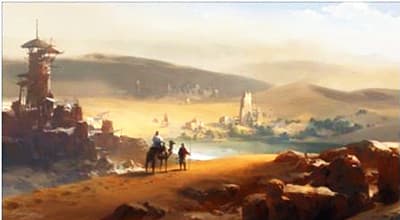
With the continuous development of field research and archaeological excavations in modern times, scholars have come to regard the Silk Road as a general term for the routes connecting the ancient civilizations of Eurasia. It is not limited to one or several land trade routes. Instead, it refers to a worldwide network of land and maritime routes that facilitated the exchange of silk and other goods across Eurasia, connecting Central Asia, Western Asia, India, Europe, and North Africa. How does this differ from Richthofen's original concept, and to what extent? We can explore his original understanding through his writings, examining his initial definition of the "Silk Road," its geographical scope, and the subsequent spread of the term.
Recommended Silk Road Tours:
10 Days Silk Road Tour: Xi'an to Urumqi
8 Days Adventure Tour to Qinghai&Gansu
14 Days Fascinating Maritime Silk Road to Xi'an Dunhuang and Xinjiang
Ancient East-West Trade Routes Described by Marinus and Ptolemy
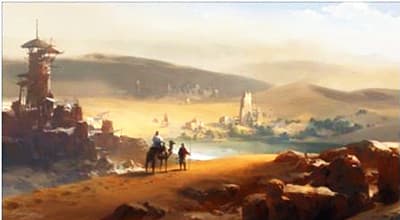
The term "Silk Road" first appeared in the first volume of China. Richthofen identified the existence of an ancient "Silk Road" based on the accounts of some Macedonian merchants. The Roman geographer Marinus of Tyre was mentioned in the Geography written by another ancient geographer, Ptolemy, who cited a route to the Far East known as the route to the "Seres".
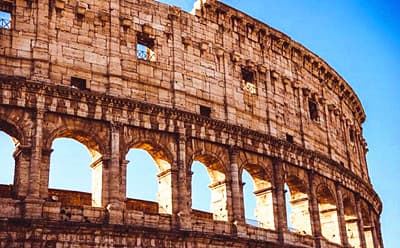
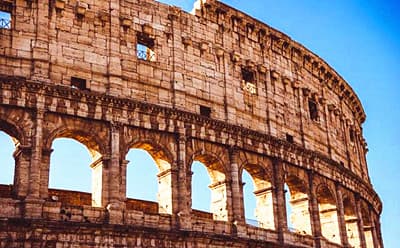
The Colosseum in Rome
According to Marinus' original records, travelers started from the "Islands of the Blessed" (usually identified with the Western Canary Islands today) and traveled from west to east, eventually reaching a ferry near the Euphrates River at Hierapolis. They then continued to a place called the "Stone Tower." Finally, the entire journey to the easternmost region, known as "Sera," took about seven months. Sera was considered the capital of Seres.
Marinus' works became an important basis for Ptolemy's geographical descriptions at the time and provided valuable historical data for Richthofen as he attempted to reconstruct this ancient east-west trade route on a modern map. Multiple trade routes formed a network across Eurasia and played an equally important role in the westward transportation of silk.
Naming and Use of the "Silk Road"
The records of Marinus and Ptolemy led Richthofen to recognize the existence of a trade route across the Eurasian continent that connected the Han Empire and the Roman Empire, which stood at opposite ends of Eurasia from the late 2nd century BC to the middle of the 3rd century AD. However, the question remains: why did Richthofen create this name when ancient writers had never referred to the "Silk Road"? How unique was silk in Richthofen's eyes, and what did it mean?
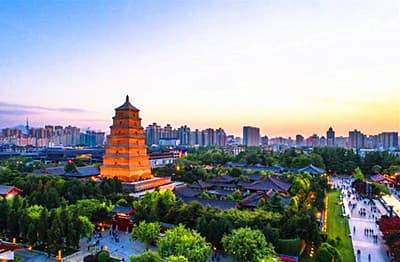
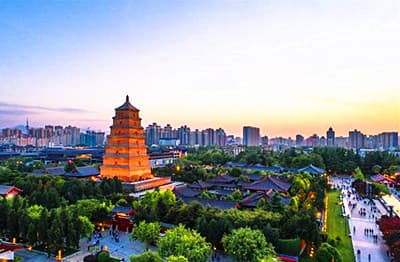
Ancient Capital Xi'an
Silk was not only an important export from ancient China but also had a profound influence on East-West exchange. After Zhang Qian traveled through the Western Regions, some silk was transported to India through the Shu region (today's Sichuan Province and surrounding areas). The success of Zhang Qian's mission to the Western Regions promoted the spread of silk to Central Asia.
In this favorable trading environment, Chinese silk passed through multiple stages of trade before eventually reaching the Mediterranean coast, where it became a luxury enjoyed by Roman nobles and intellectuals. For people in the Western world, silk was one of the most important associations with the land of Seres. The name "Silk Road" has long been consistent with Western perceptions and images of the Far East.
The silk trade brought not only an exchange of goods but also the more important exchange of ideas and economic and cultural influences. Stories and accounts of silk and the land of Seres helped broaden the horizons of the Romans and overcome the limitations imposed by geographical distance. Richthofen regarded silk as one of the first important factors that enabled the Western world to establish contact with and develop an understanding of China, supporting exchanges between East and West for centuries.
The Succession and Further Study of the "Silk Road"
Although Richthofen himself was cautious in his use of the term "Silk Road," his hesitation did not prevent the concept from gaining attention. After Richthofen died in the autumn of 1905, another German geographer, Hermann, published a monograph titled The Ancient Silk Road between China and Syria in 1910, which helped make the term "Silk Road" more widely known. In 1938, Hermann published another monograph, The Ancient Silk Kingdom and Tibet. He limited his research to the period between 114 BC and AD 127, focusing on what he described as the period when ancient peoples directly engaged in the silk trade, particularly during the Han Dynasty in China.
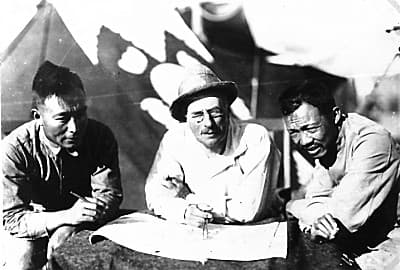
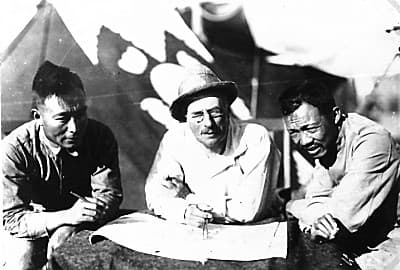
Sven Hedin and the Chinese Leader of the Northwest Scientific Expedition
It can be said that Hermann's research represented both an inheritance of and a challenge to Richthofen's work. His publications, which used the title "Silk Road" and focused on the subject of the ancient silk trade, also attracted the attention of the Western geographical community at the time.
Another scholar who made significant contributions to the spread of the concept of the "Silk Road" was the famous Swedish explorer Sven Hedin. Hedin went to Berlin to study in 1889 and became one of Richthofen's distinguished students. Richthofen closely followed Hedin's expeditions in the Tarim Basin until his death. Judging from their correspondence, Richthofen showed considerable appreciation and encouragement for Hedin's fieldwork, especially his mapping achievements.
Folke Bergman, a colleague who participated in the Sino-Swedish Expedition in China from 1926 to 1935, used the term "Silk Road" more extensively in the first volume of the seven-volume Xinjiang Archaeological Report, published in 1939. He acknowledged that Richthofen was the originator of the term, but believed that "Silk Road" should be understood as a plural concept referring to the ancient commercial routes connecting China and the West.
The plural form "Silk Roads" was also used by the famous classicist A. H. Warmington. In his 1928 book The Commerce between the Roman Empire and India, he used the term "silk-routes" to refer to the maritime and overland trade routes connecting East and West, without providing a detailed explanation. Although the monographs mentioned above were related in various ways to the "Silk Road," they did not immediately accelerate the spread of the concept. It was not until the 1960s that the term began to spread more widely through translations and the mass media, eventually reaching China, Japan, and other parts of Asia by the 1970s.
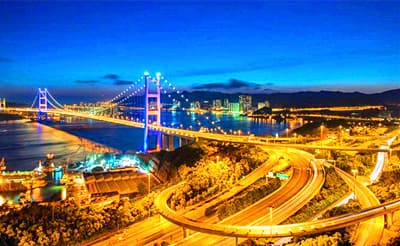
The Belt and Road Development Strategy
Scholars involved in Silk Road research generally recognize Richthofen's pioneering contribution. However, the meaning of the term "Silk Road" has since expanded far beyond Richthofen's original concept in terms of geographical scope, historical period, and meaning. The concept of the "Silk Road" is no longer limited to the Han Dynasty. It can be traced back to the Qin period and extended through the Ming and Qing dynasties into modern times. It is no longer limited to a specific route but has developed into a network of maritime and overland routes spanning Eurasia and North Africa.
With the launch of the Belt and Road Initiative in recent years, the study of the Silk Road has also gained important practical significance. These ancient trade routes provide an important historical foundation for lasting friendship between China and the countries along the routes. Today, this historical legacy is helping promote more comprehensive and in-depth cooperation between China and these countries in political, economic, cultural, and other fields.