

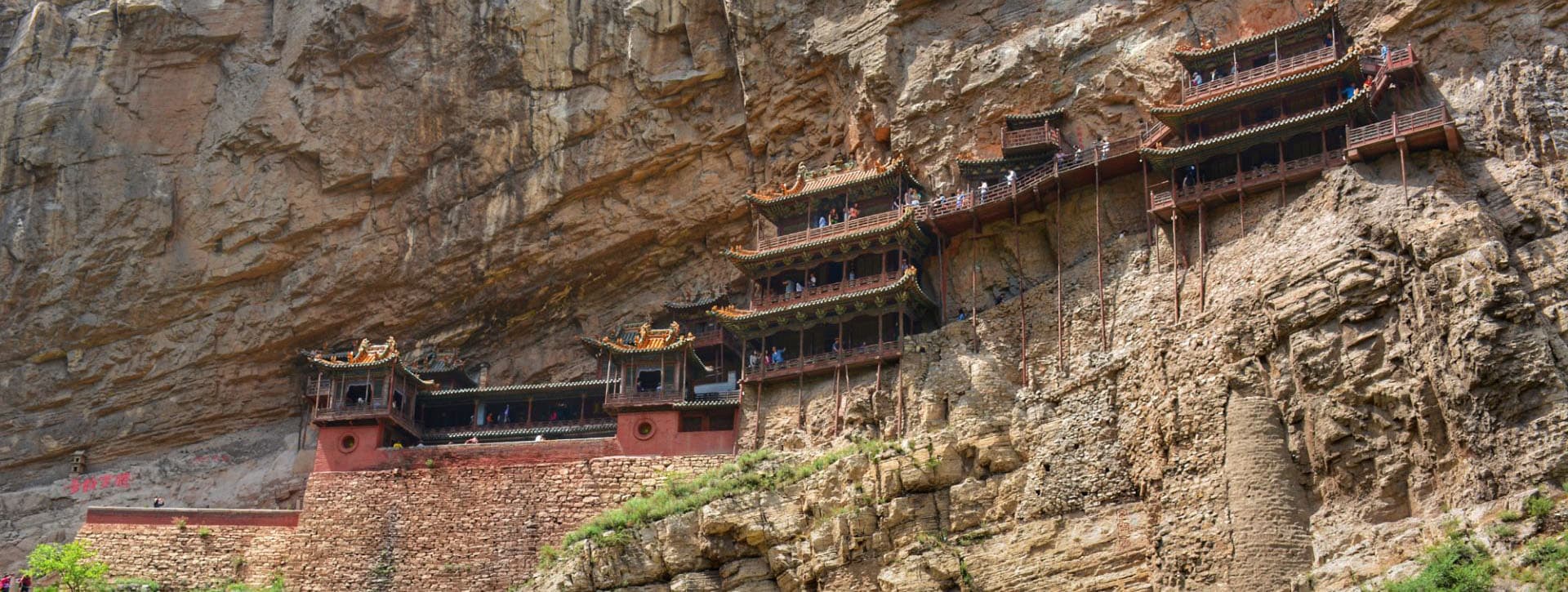

The Hanging Temple Scenic Spot
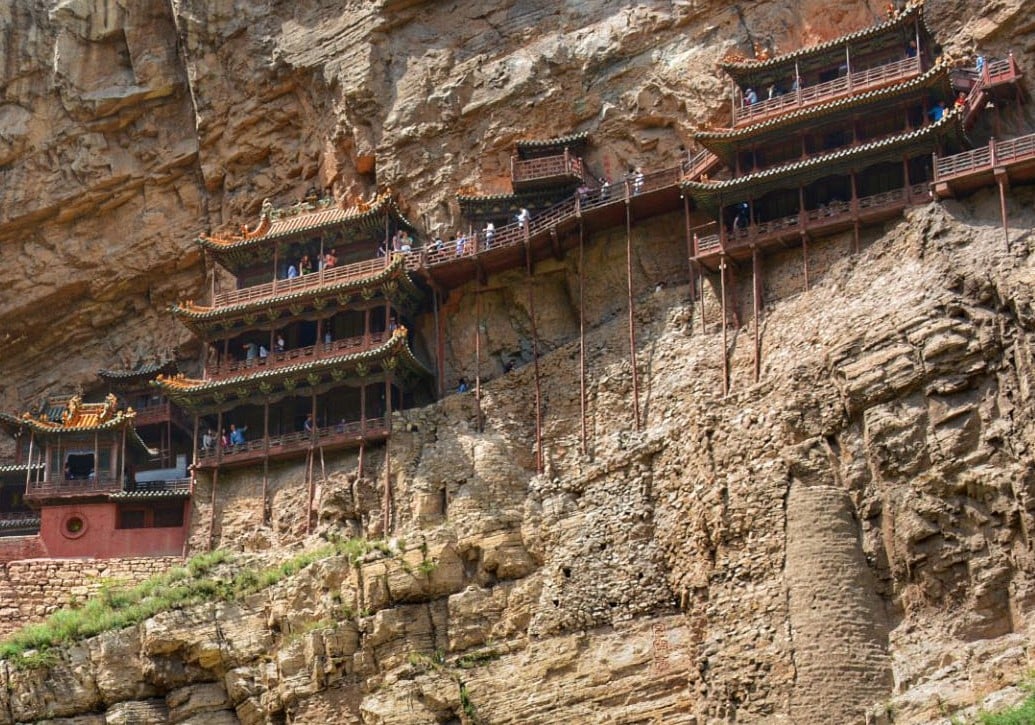
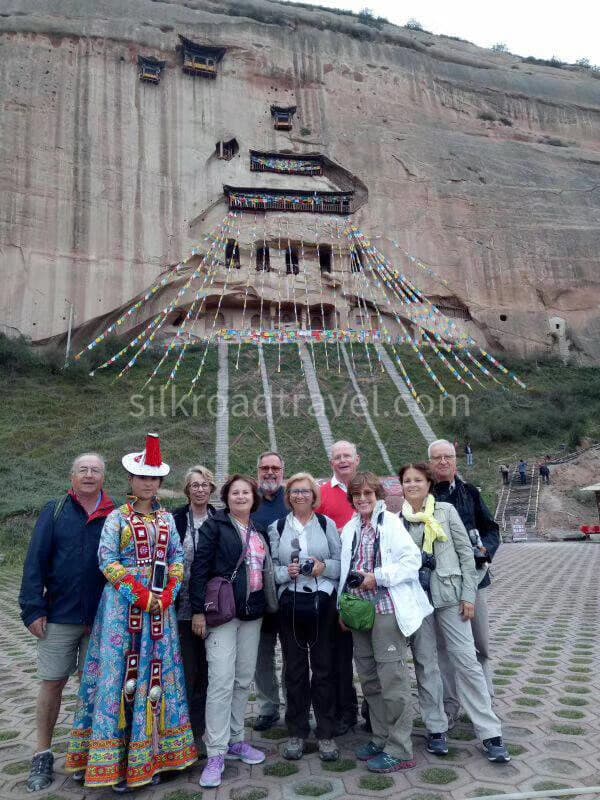
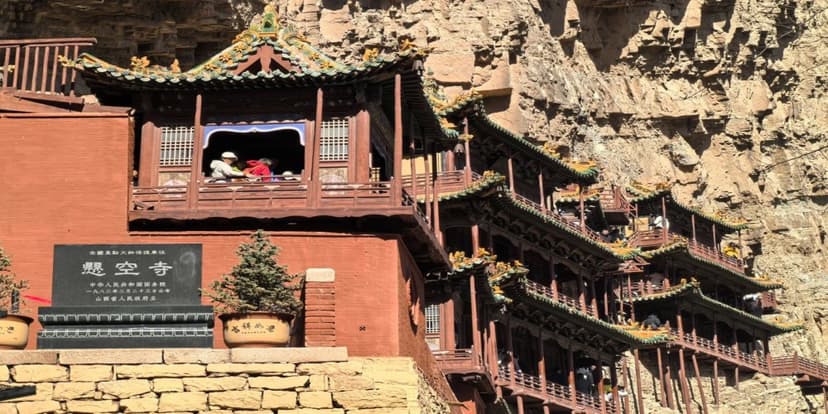
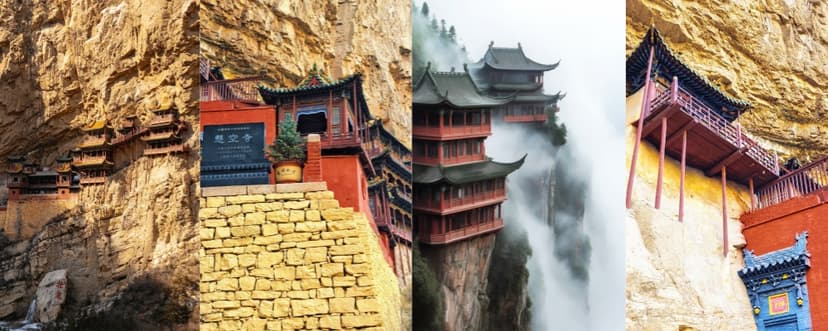
The Hanging Temple Scenic Area is not only a national AAAA-level tourist attraction but also a key cultural relics protection unit across the country. The temple, originally named "Hangingge," later adopted the moniker "Hanging Temple" due to its precarious perch on a cliff and the homophonic nature of "xuan" (悬) and "Xuan" (玄). Founded in the late Northern Wei Dynasty (491 AD), the Hanging Temple boasts a history spanning over 1,500 years and stands as a unique temple that integrates Buddhism, Taoism, and Confucianism. Its architecture is highly distinctive, renowned for its precipitous position that seems to hang over an abyss. The temple complex follows a layout resembling "one courtyard with two pavilions," stretching approximately 32 meters in length and encompassing 40 pavilions and halls.
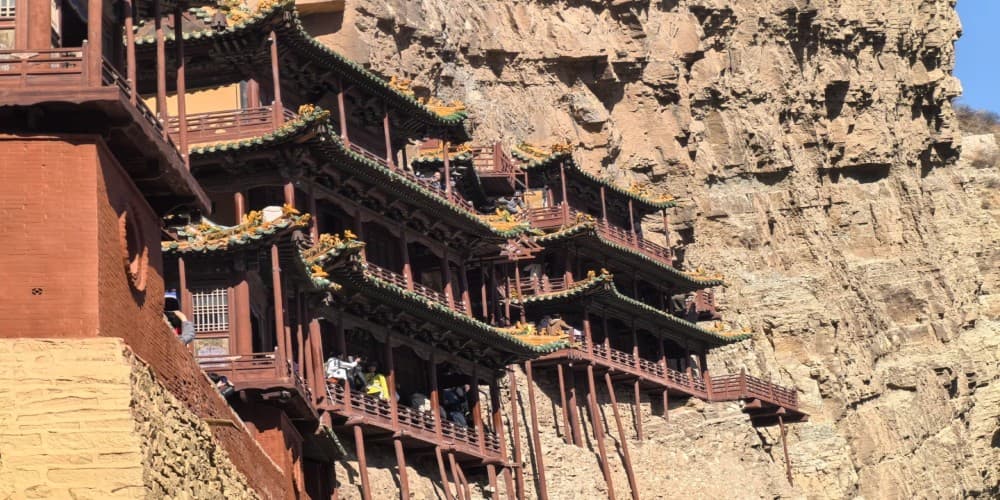
The Hanging Temple
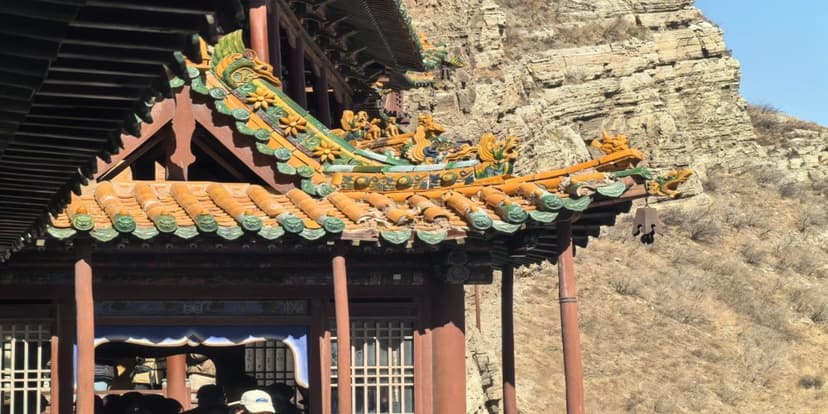
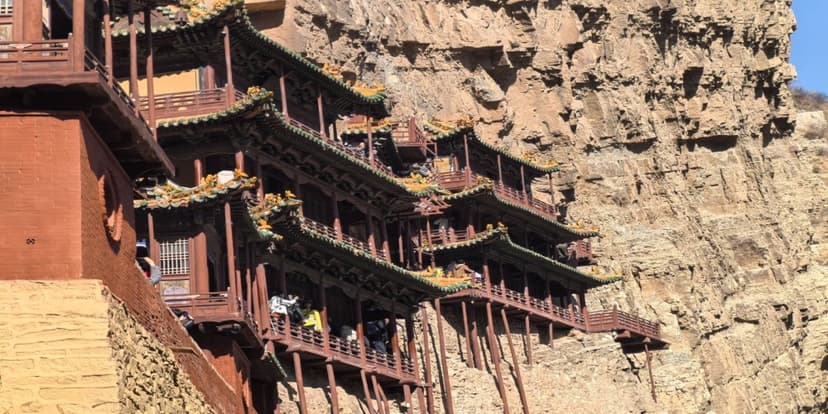
The architectural structure of the Hanging Temple is also unique, featuring single eaves, double eaves, and triple eaves on its roofs. The structural components include raised beam structures and flat roof structures. The overall appearance is constructed and layered, creating a sense of caves within buildings and buildings within caves. In terms of mechanical principles, the Hanging Temple is supported by semi-inserted crossbeams, which rely on the support of the rock. The verandas, railings, upper and lower beams, and columns are closely connected to form a wooden frame structure. This design not only enhances the earthquake resistance but also demonstrates the wisdom and skills of ancient craftsmen. Furthermore, the Hanging Temple cleverly utilizes the natural state of the cliffs to arrange and construct various parts of the temple, integrating the layout and forms of traditional temple architecture into a three-dimensional space.
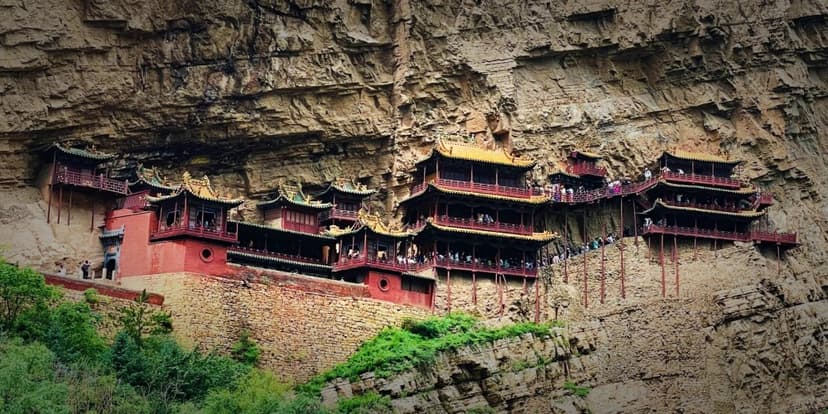
The Hanging Temple houses statues and deities representing Buddhism, Taoism, and Confucianism, embodying the inclusivity of Chinese culture. Visitors to the Hanging Temple can admire its unique architectural style and rich historical and cultural heritage. Meanwhile, the Hengshan Mountain scenic area, where the Hanging Temple is located, boasts beautiful scenery, allowing tourists to enjoy the natural beauty of Hengshan Mountain while exploring the Hanging Temple.
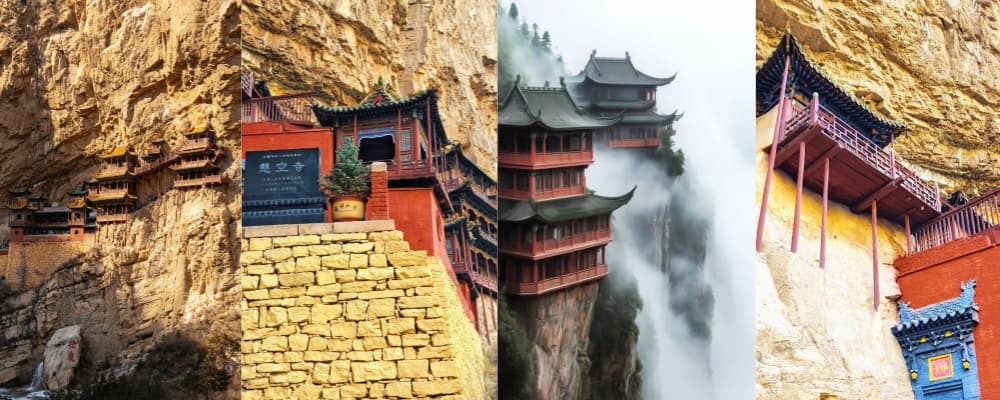
The Engineering Secret
Stand beneath the temple and look up. Your eye will naturally follow the slim vertical poles to the walkways above. They look like the obvious load-bearers. They are not. The temple's true support comes from a series of massive horizontal beams — whole tree trunks — driven deep into the cliff rock. The builders cut square sockets into the sandstone, inserted the beams, and then built the platforms outward from them. Most of the temple's weight is transferred horizontally into the mountain, not vertically onto the poles. The visible poles are secondary; many were added centuries later, not for structural reasons, but for psychological ones. The builders knew that a person standing on a cliff-edge walkway feels safer when they can see something — anything — underneath them.
This beam-into-rock technique, combined with the canyon's natural protection from the worst storms, is why the temple has survived 1,500 years of earthquakes that toppled heavier structures on solid ground. The temple moves with the mountain, not against it.
The Climb: What It Really Feels Like
Climbing the Hanging Temple is not a casual stroll. It is a slow, single-file journey through a structure that feels barely there.
You walk up a steep stone staircase to a narrow wooden gate. Beyond it, the walkways are shoulder-width at most. The railings reach only to your knees. You move in one direction only — there is no overtaking, no turning back. The boards creak under your feet, and between the gaps in the floorboards, you can see the canyon floor fifty metres below. The wind funnels through the gorge and tugs at your clothes.
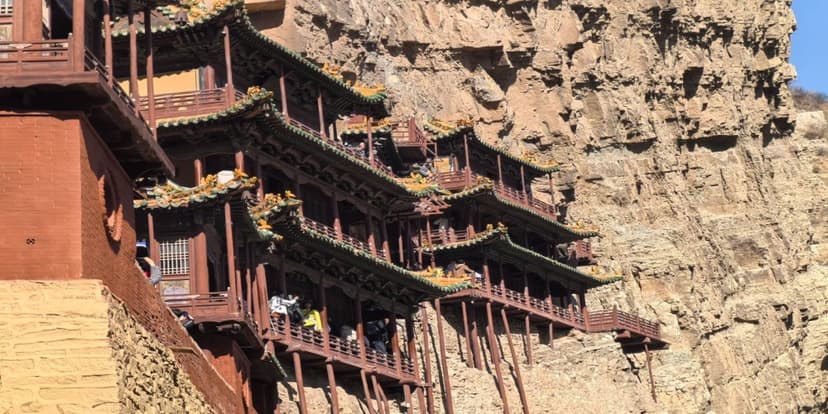
The circuit takes you through a series of small halls linked by open-air bridges. Each hall is tiny — large enough for three or four people at most — and dedicated to a different deity. Buddhist, Taoist, and Confucian shrines sit side by side. The sculptures inside are painted and weathered, some wearing the softened expressions of centuries-old devotion.
The highest section is the most exposed. Here the cliff leans slightly outward, and you feel — genuinely — as if you are standing on air. For many visitors, this is the most thrilling moment of their entire trip to Shanxi.
If you have a serious fear of heights, think carefully before buying the climbing ticket. The ¥15 ground-level experience is not a compromise. It is a different, equally valid way to see the temple — and from below, you can actually appreciate the full sweep of its impossible geometry.
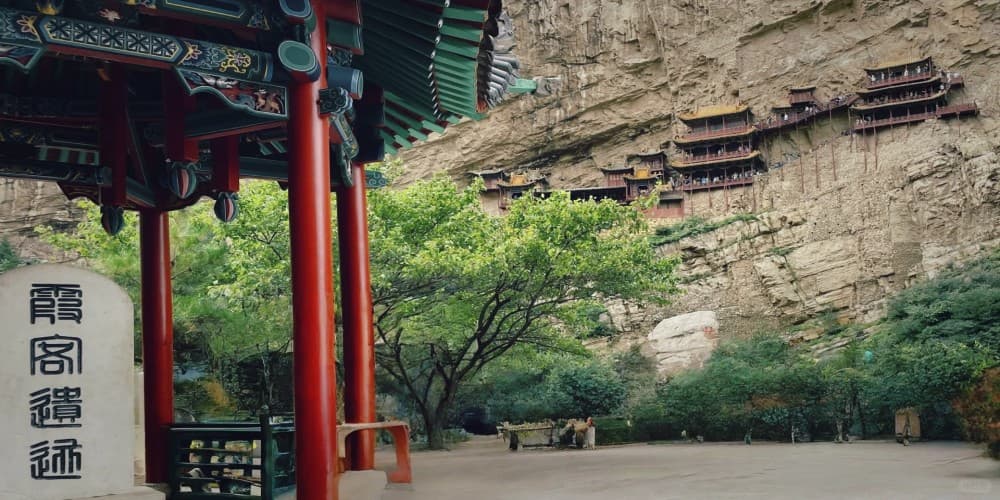
The Hanging Temple
Practical tips
Tickets: ¥15 entry only, ¥100 climb only, ¥115 combined. Climbing tickets are limited daily — arrive at 8:00 or pre-book.
Open: 8:00–17:00 (winter) / 18:00 (summer).
Time: 1–1.5 hours.
Tip: Combine with the Yingxian Wooden Pagoda on the same day. Queues peak 10:00–14:00.
The Hanging Temple Scenic Area is not only a national AAAA-level tourist attraction but also a key cultural relics protection unit across the country. The temple, originally named "Hangingge," later adopted the moniker "Hanging Temple" due to its precarious perch on a cliff and the homophonic nature of "xuan" (悬) and "Xuan" (玄). Founded in the late Northern Wei Dynasty (491 AD), the Hanging Temple boasts a history spanning over 1,500 years and stands as a unique temple that integrates Buddhism, Taoism, and Confucianism. Its architecture is highly distinctive, renowned for its precipitous position that seems to hang over an abyss. The temple complex follows a layout resembling "one courtyard with two pavilions," stretching approximately 32 meters in length and encompassing 40 pavilions and halls.
The Hanging Temple
The architectural structure of the Hanging Temple is also unique, featuring single eaves, double eaves, and triple eaves on its roofs. The structural components include raised beam structures and flat roof structures. The overall appearance is constructed and layered, creating a sense of caves within buildings and buildings within caves. In terms of mechanical principles, the Hanging Temple is supported by semi-inserted crossbeams, which rely on the support of the rock. The verandas, railings, upper and lower beams, and columns are closely connected to form a wooden frame structure. This design not only enhances the earthquake resistance but also demonstrates the wisdom and skills of ancient craftsmen. Furthermore, the Hanging Temple cleverly utilizes the natural state of the cliffs to arrange and construct various parts of the temple, integrating the layout and forms of traditional temple architecture into a three-dimensional space.
The Hanging Temple houses statues and deities representing Buddhism, Taoism, and Confucianism, embodying the inclusivity of Chinese culture. Visitors to the Hanging Temple can admire its unique architectural style and rich historical and cultural heritage. Meanwhile, the Hengshan Mountain scenic area, where the Hanging Temple is located, boasts beautiful scenery, allowing tourists to enjoy the natural beauty of Hengshan Mountain while exploring the Hanging Temple.
The Engineering Secret
Stand beneath the temple and look up. Your eye will naturally follow the slim vertical poles to the walkways above. They look like the obvious load-bearers. They are not. The temple's true support comes from a series of massive horizontal beams — whole tree trunks — driven deep into the cliff rock. The builders cut square sockets into the sandstone, inserted the beams, and then built the platforms outward from them. Most of the temple's weight is transferred horizontally into the mountain, not vertically onto the poles. The visible poles are secondary; many were added centuries later, not for structural reasons, but for psychological ones. The builders knew that a person standing on a cliff-edge walkway feels safer when they can see something — anything — underneath them.
This beam-into-rock technique, combined with the canyon's natural protection from the worst storms, is why the temple has survived 1,500 years of earthquakes that toppled heavier structures on solid ground. The temple moves with the mountain, not against it.
The Climb: What It Really Feels Like
Climbing the Hanging Temple is not a casual stroll. It is a slow, single-file journey through a structure that feels barely there.
You walk up a steep stone staircase to a narrow wooden gate. Beyond it, the walkways are shoulder-width at most. The railings reach only to your knees. You move in one direction only — there is no overtaking, no turning back. The boards creak under your feet, and between the gaps in the floorboards, you can see the canyon floor fifty metres below. The wind funnels through the gorge and tugs at your clothes.
The circuit takes you through a series of small halls linked by open-air bridges. Each hall is tiny — large enough for three or four people at most — and dedicated to a different deity. Buddhist, Taoist, and Confucian shrines sit side by side. The sculptures inside are painted and weathered, some wearing the softened expressions of centuries-old devotion.
The highest section is the most exposed. Here the cliff leans slightly outward, and you feel — genuinely — as if you are standing on air. For many visitors, this is the most thrilling moment of their entire trip to Shanxi.
If you have a serious fear of heights, think carefully before buying the climbing ticket. The ¥15 ground-level experience is not a compromise. It is a different, equally valid way to see the temple — and from below, you can actually appreciate the full sweep of its impossible geometry.
The Hanging Temple
Practical tips
Tickets: ¥15 entry only, ¥100 climb only, ¥115 combined. Climbing tickets are limited daily — arrive at 8:00 or pre-book.
Open: 8:00–17:00 (winter) / 18:00 (summer).
Time: 1–1.5 hours.
Tip: Combine with the Yingxian Wooden Pagoda on the same day. Queues peak 10:00–14:00.