

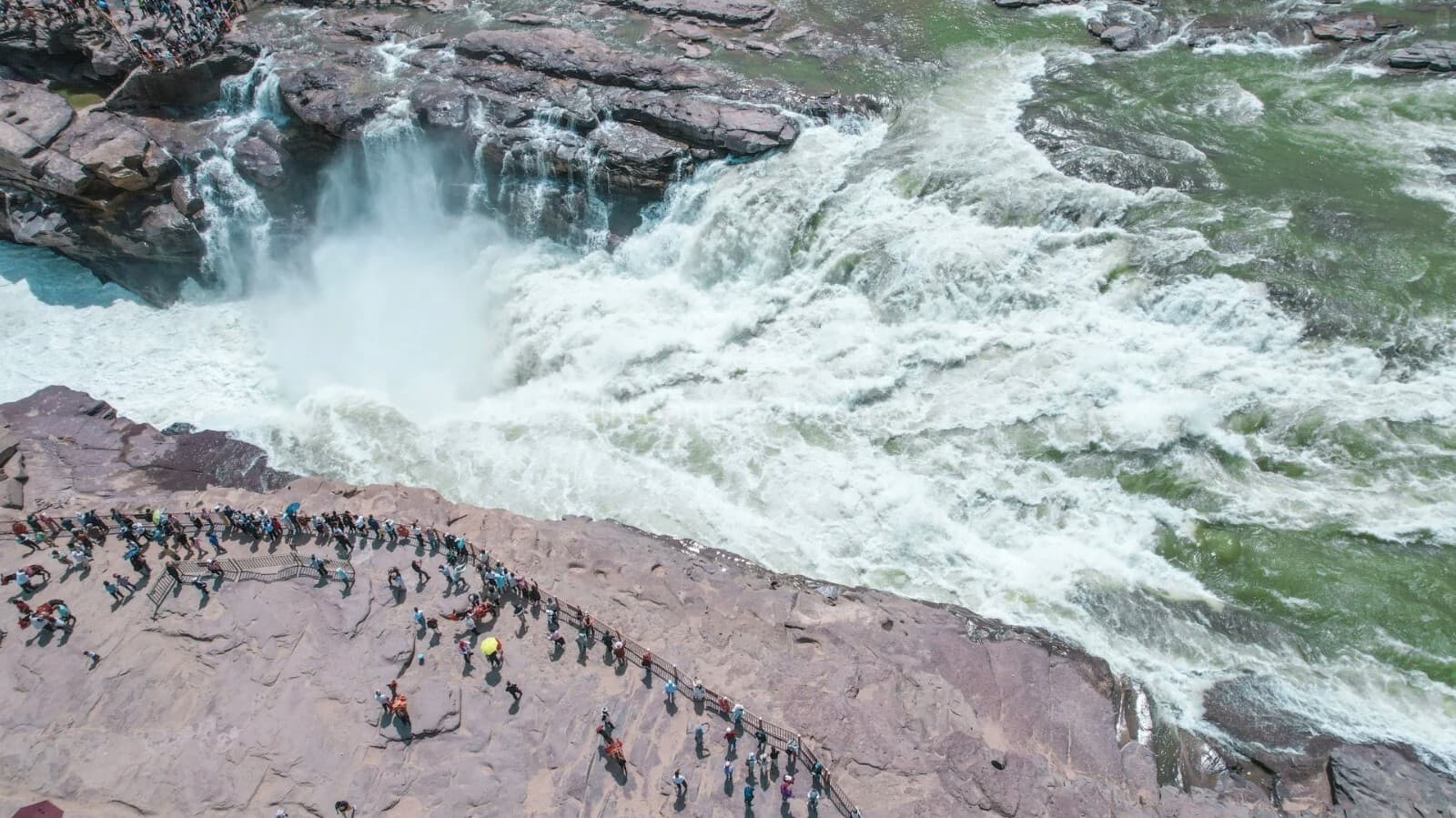

The Hukou Waterfalls of Yellow River
This is your complete, visitor-tested travel guide to Hukou Waterfall — China's mightiest cataract and the only yellow waterfall on Earth. Whether you are planning a day trip from Xi'an, a Shanxi road trip detour, or a pilgrimage to the spiritual heart of the Yellow River, this guide will walk you through everything you need to know: which side of the river gives you the best view, what to see beyond the main cascade, when the waterfall is at its most thunderous, how to get there from the major cities, and which nearby historic sites are worth adding to your itinerary.
The Hukou Waterfall
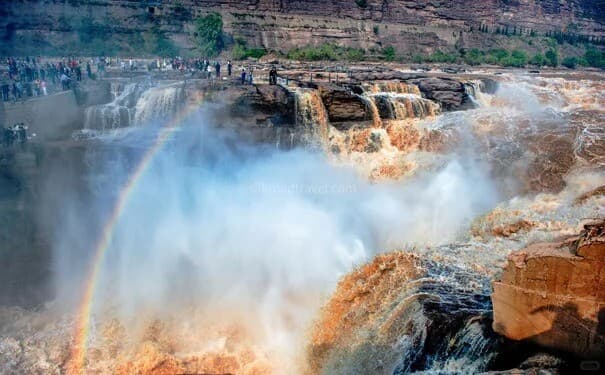
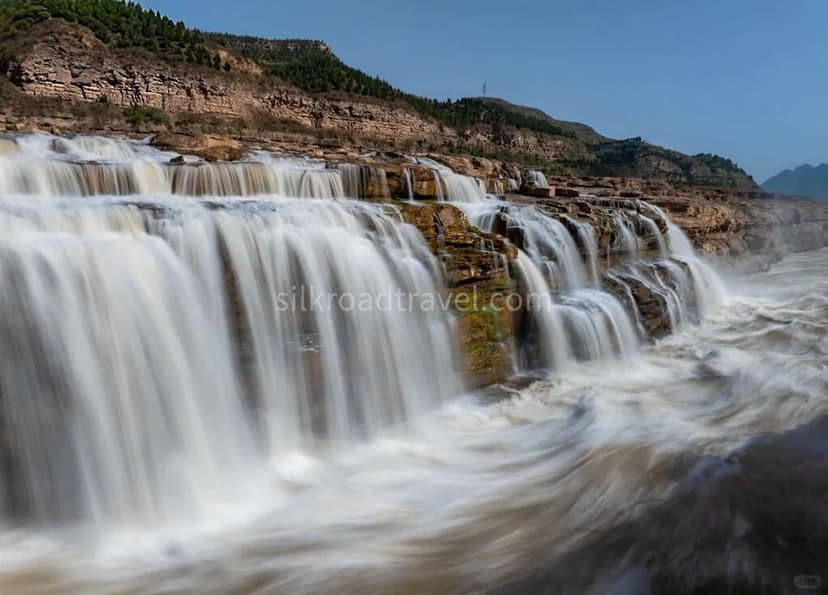
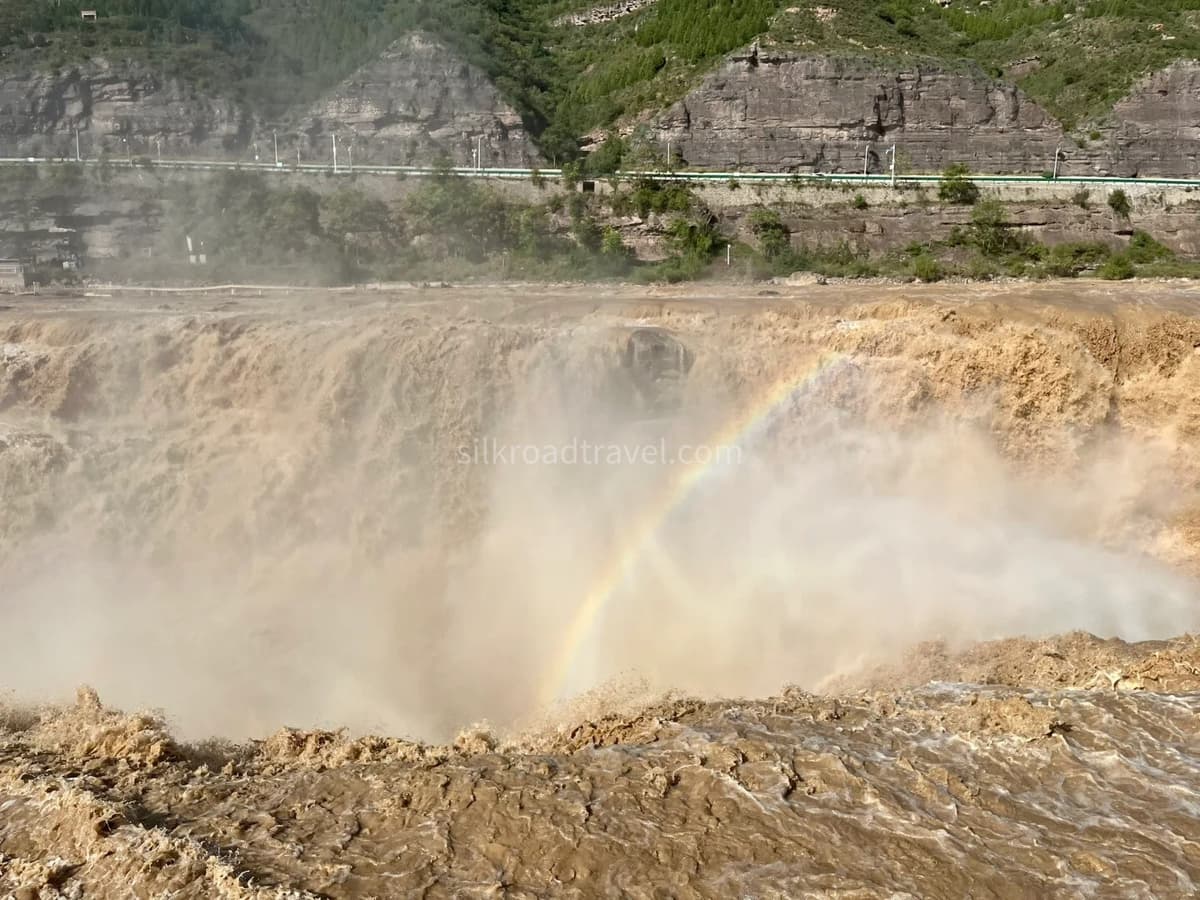
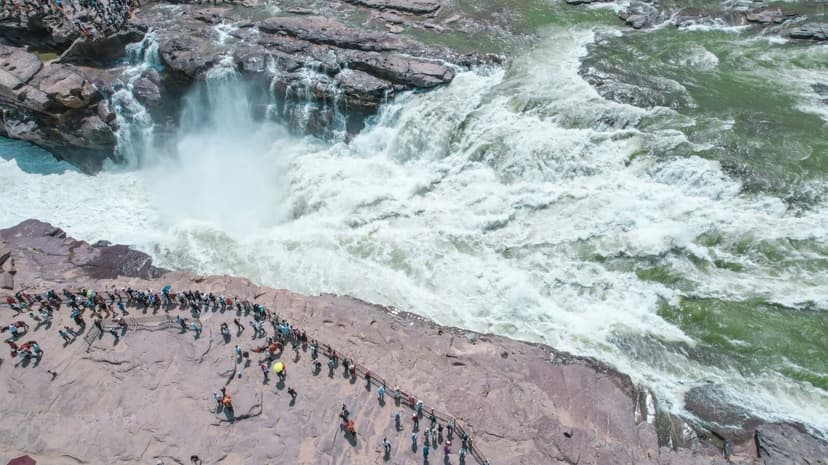
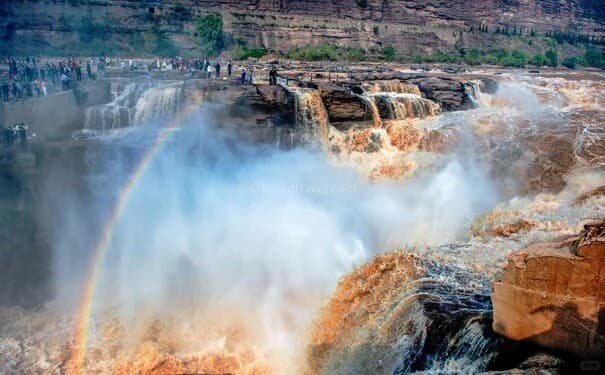
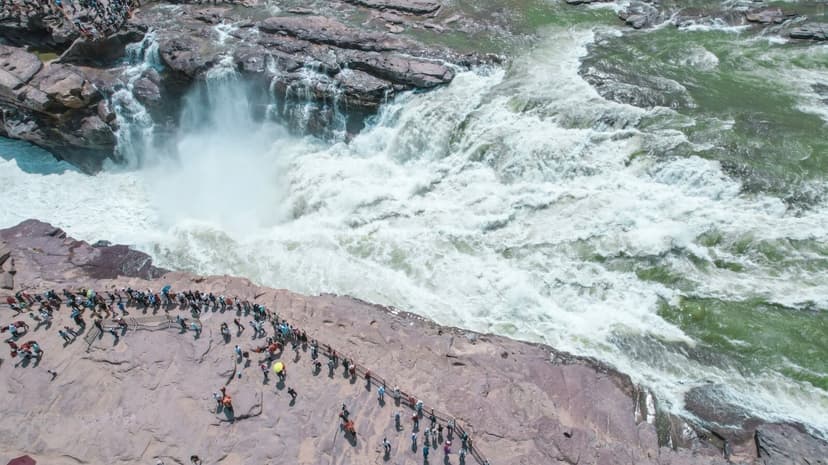
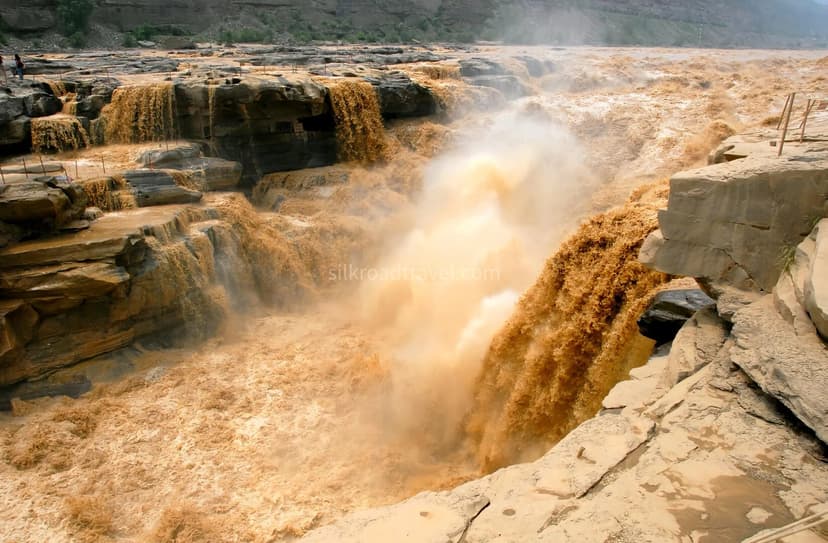
Hukou Waterfall straddles the border between Shanxi's Jixian County and Shaanxi's Yichuan County, roughly halfway along the Yellow River's journey through the Jin-Shaan Grand Canyon. It is a national 5A scenic spot and the largest yellow waterfall in the world. The name Hukou means "kettle mouth" — and standing at the edge of the main cascade, you will understand why. The Yellow River, which flows wide and deceptively calm upstream, is suddenly pinched from 300 metres across into a slot barely 50 metres wide. The entire river plunges over a 30-metre drop into a deep stone trough, churning like water boiling in a giant pot. The sound hits you before the sight does — a low, steady thunder that vibrates in your chest. Then you see the spray, a permanent cloud of golden mist that rises from the chasm and soaks everything within a hundred metres. On sunny mornings, that mist catches the light and throws rainbows across the gorge. Locals call this "smoke rising from the riverbed and a rainbow bridge reaching the sky" — and it is not poetic exaggeration. It happens almost daily in the right season.
Things to Do
Long Cave (Observatory Cave):
This is the experience that sets the Shanxi side apart. The Dragon Cave is a natural stone grotto carved into the cliff beside the waterfall. A narrow staircase leads you down, below the level of the river, to an opening right at the base of the falls. From here, you look up — and the entire cascade is above you, roaring down, golden water against blue sky. The view is almost entirely vertical. The spray is heavy, the noise is overwhelming, and the feeling is unlike anything else at Hukou. "The waters of the Yellow River pour down from heaven" — was not written specifically about this cave, but standing here, it feels like it was. An additional ¥20 ticket is required and must be purchased at the cave entrance. It is not always open — high water levels in summer or icy conditions in winter may close it. Check at the visitor centre when you arrive.
The Hukou Waterfall
Guanbao Platform:
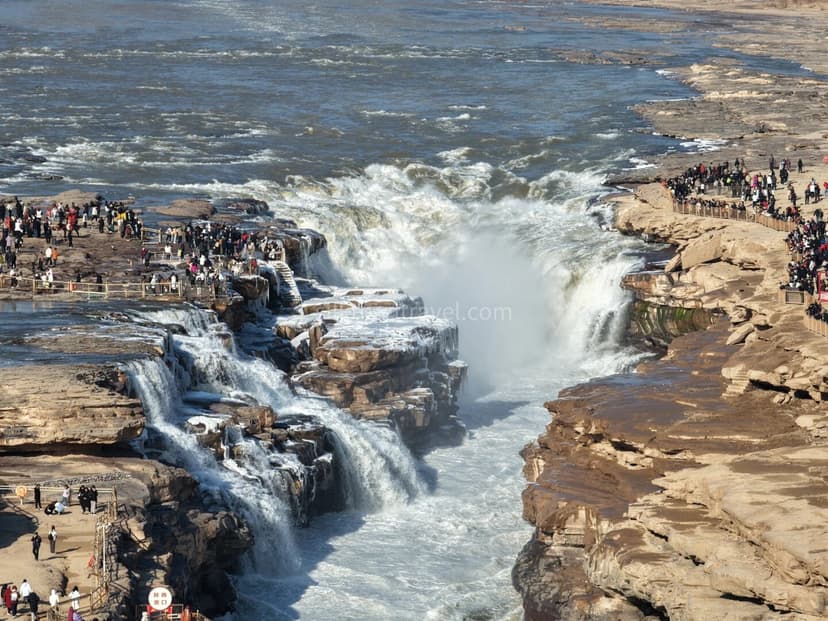
Located on the Shanxi side of the Hukou Falls, it provides a panoramic viewing angle. Standing on the Guanbao Platform, you can see the full view of the falls and feel its vastness and grandeur. Especially during the spring and autumn seasons, when the falls have ample water and a surging momentum, standing on the Guanbao Platform allows you to deeply experience the powerful and majestic atmosphere of the falls.
The Hukou Waterfall
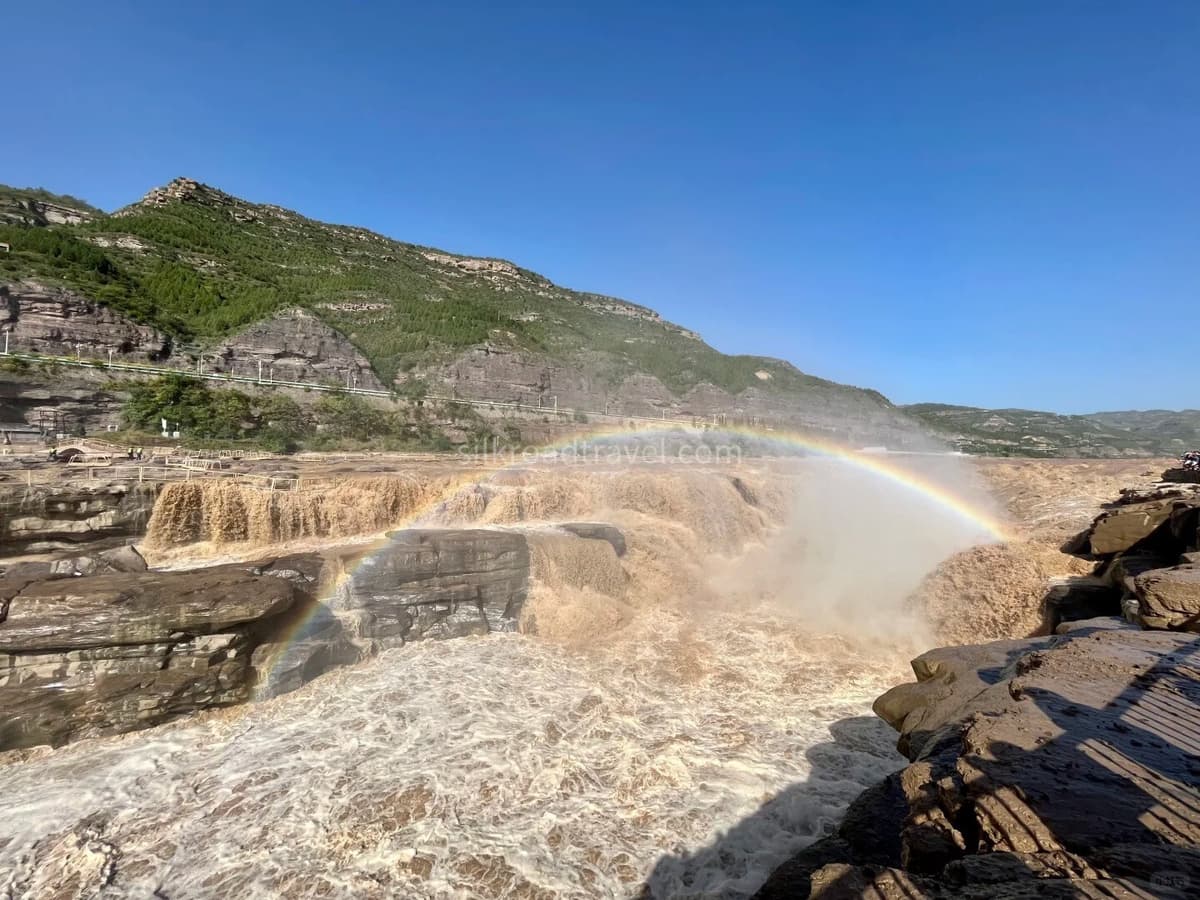
Look at the Rainbow in the Water
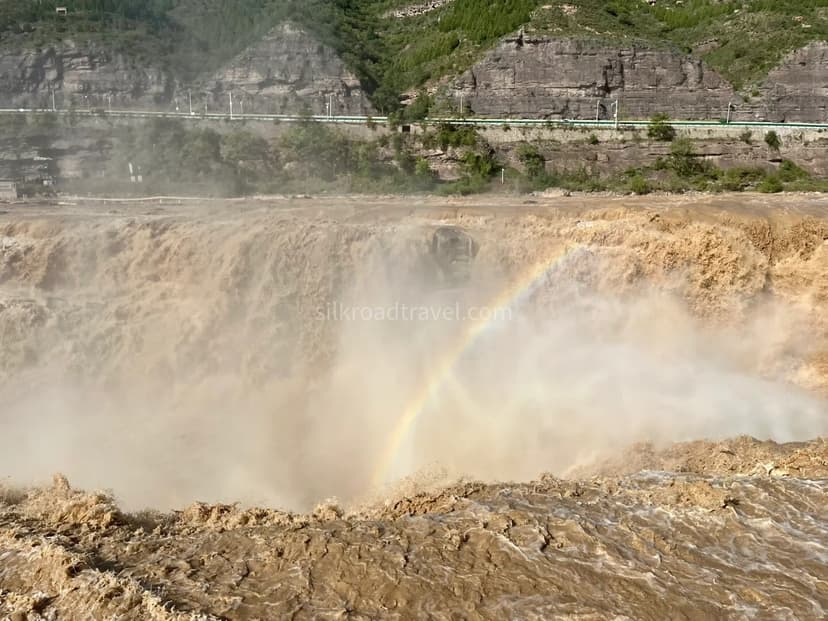
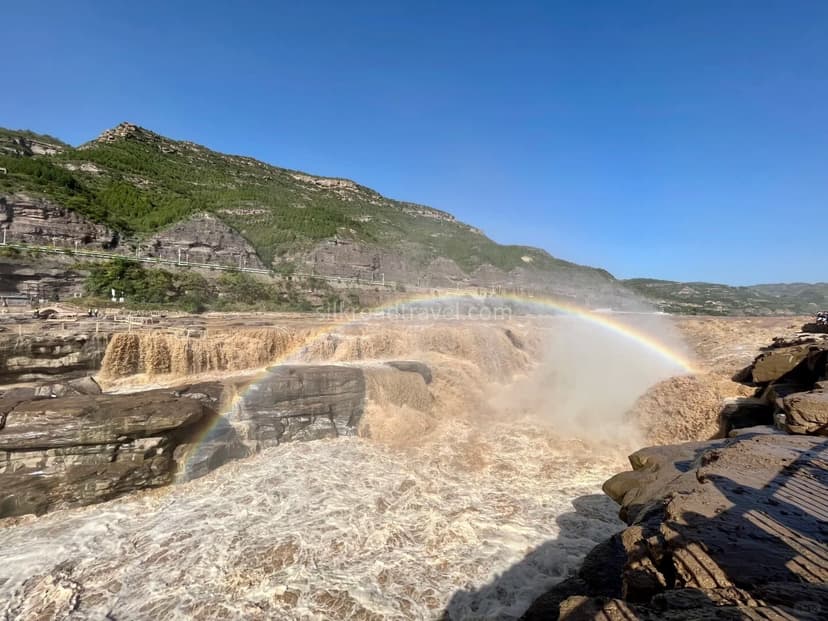
The rainbow in the water is one of the eight wonders of Hukou Waterfall, exhibiting the amazing combination of water and light in nature. When the Yellow River water flows through the Hukou, water mist rises. Under the sun's radiation, these water mists form various beautiful rainbows. The formation of a rainbow in the water is closely related to the unique terrain and climatic conditions of the Hukou Waterfall. The Hukou Waterfall is located in the Qin-Jin Grand Canyon, with cliffs on both banks and a narrow river mouth resembling a kettle. Here, the Yellow River water is restricted by the terrain, resulting in an increased flow rate and impact force, thus creating a spectacular waterfall scene. In the spring and autumn seasons, with moderate water volume, suitable temperature, and oblique sunlight, these conditions together contribute to the emergence of a rainbow in the water. For many years, countless tourists have come here to witness this wonderful scene of a rainbow in the water. They stop to watch and take photos on the shore of the waterfall, capturing this beautiful scenery forever in their hearts.
The Rainbow in the water
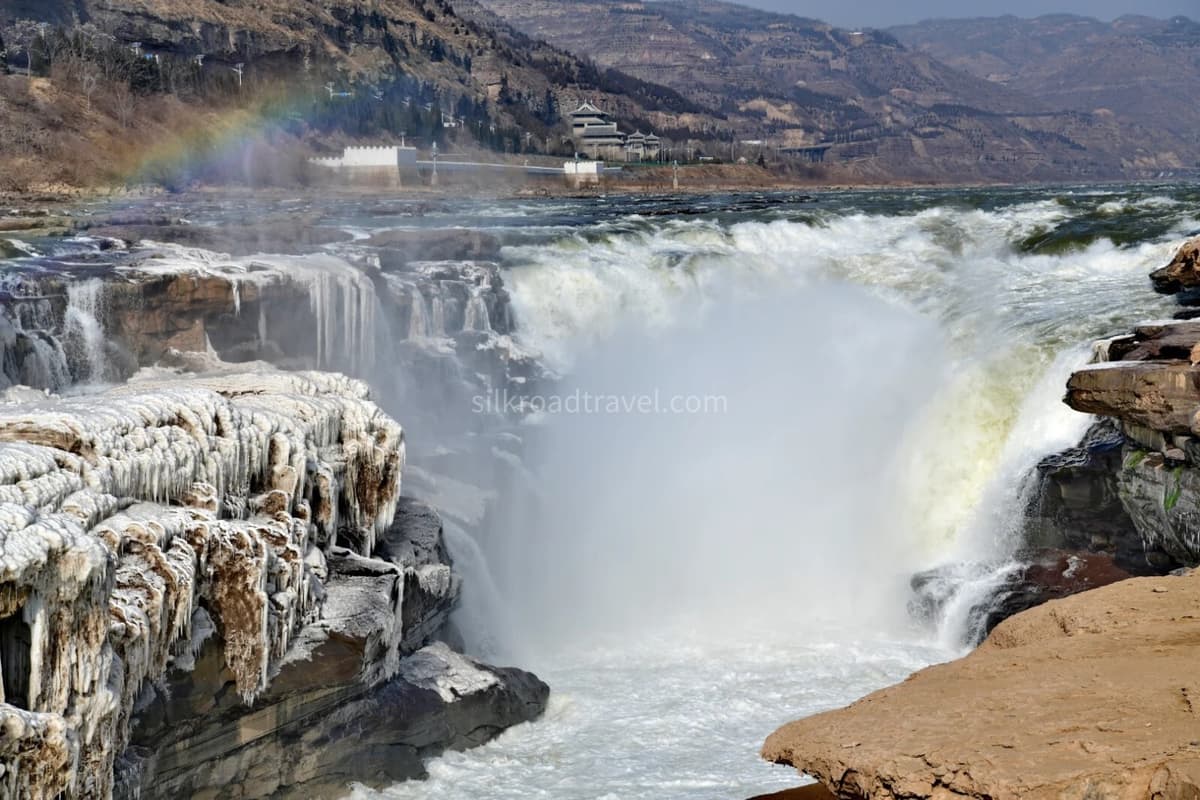
Watch Yellow River Ice Bridge
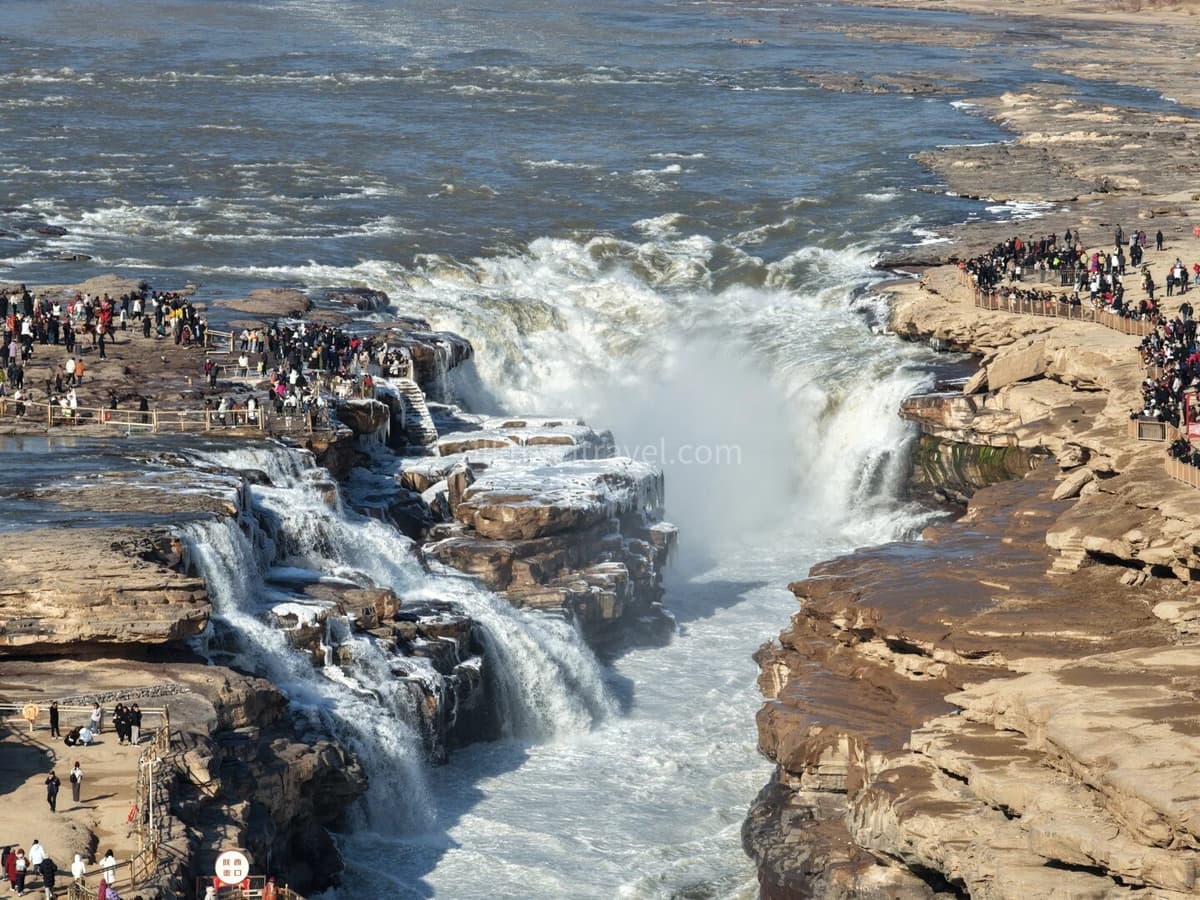
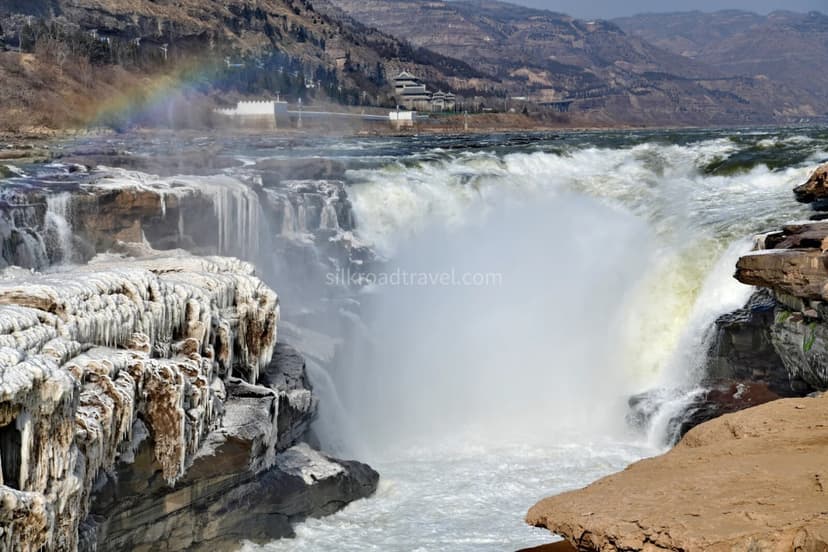
The Yellow River Ice Bridge is a unique winter landscape, exhibiting the amazing combination of water and ice in nature. When winter comes and the temperature plunges, the surface of the Yellow River begins to freeze, gradually forming a thick layer of ice. In the Hukou Falls area, due to the turbulent water flow, the interaction between the ice layer and the water creates a natural ice bridge connecting both banks. These ice bridges not only vary in shape but are also sturdy and durable, able to bear a certain weight. Walking on the ice bridge allows one to appreciate the unique scenery of the Hukou Falls in winter.
The Yellow River Ice Bridge
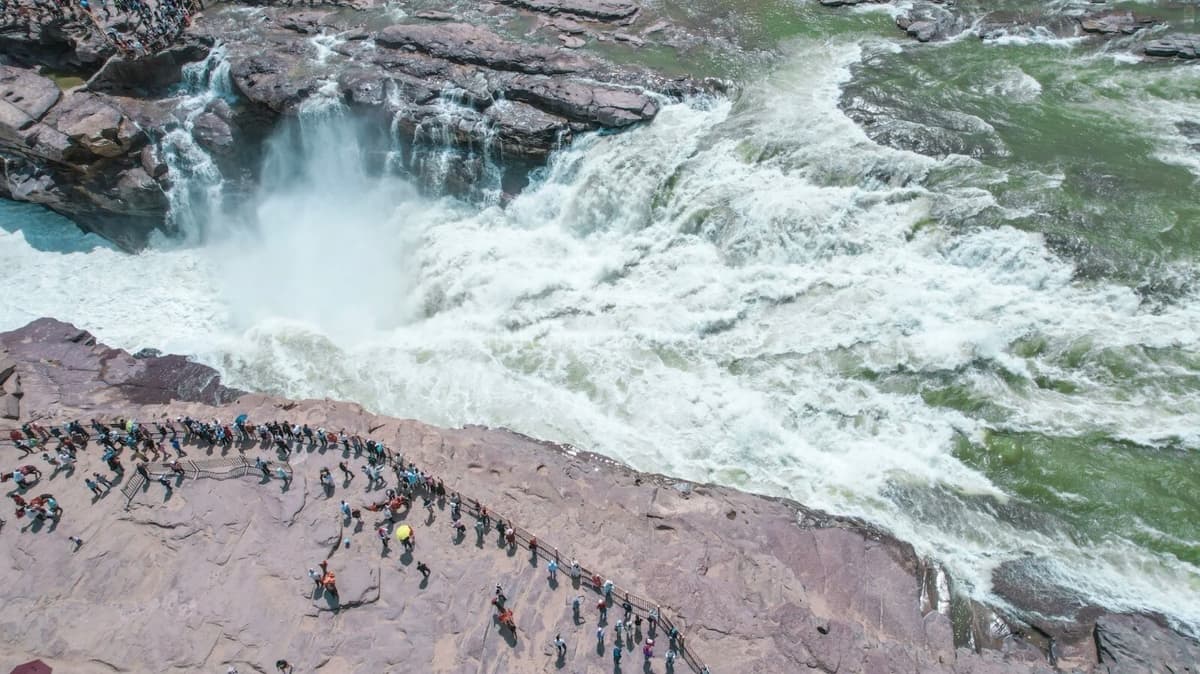
Watch Ten-mile Dragon Channel
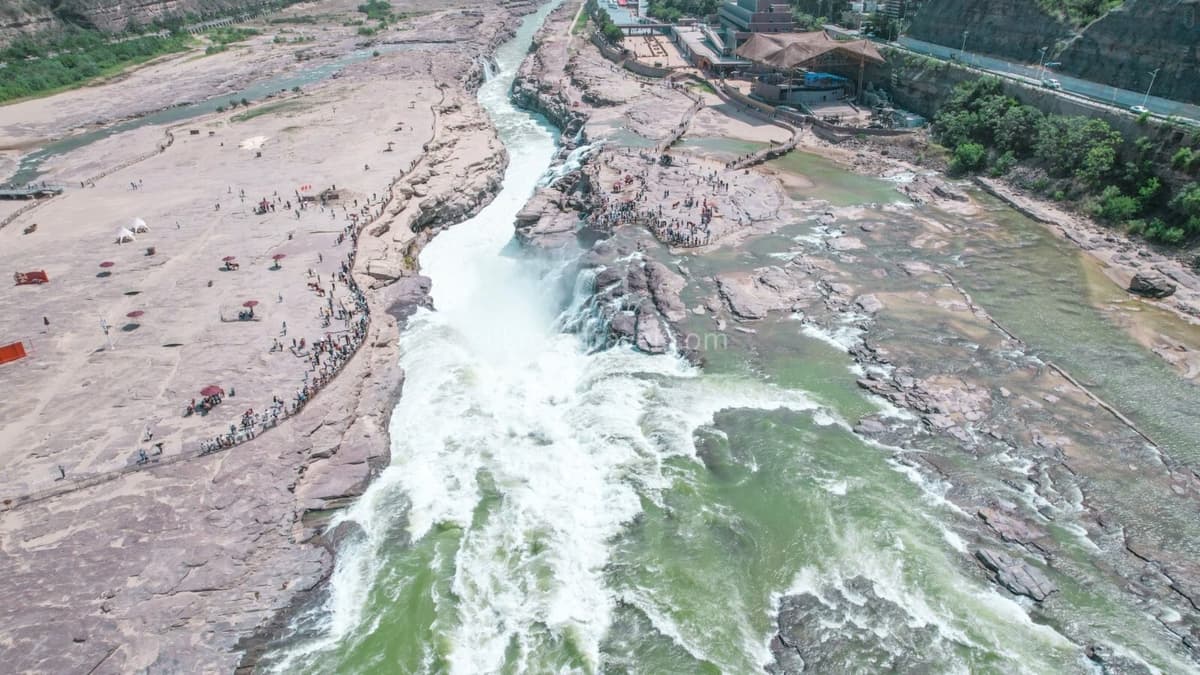
The Ten-mile Dragon Channel is located downstream of the Hukou Waterfall and is a deep channel formed by the Yellow River water after flowing through the Hukou. It is named Ten-mile Dragon Channel because of the legend that a dragon dug it out. The distance from Hukou to Mengmen is about five kilometers. At the bottom of this box-shaped canyon, which is about 400 meters wide, the Yellow River water has cut through and formed this deep channel. The channel is approximately 30 to 50 meters wide and 10 to 20 meters deep. The Ten-mile Dragon Channel is deep and narrow, resembling the shape of a dragon's ridge. The water flows rapidly and loudly, and the walls of the channel are steep, while the bottom is hard and solid. During non-flood periods, the riverbank is wide and flat, almost allowing vehicles to travel on it. This unique geological condition makes it possible for “ships to sail on dry land”.
The Hukou Waterfall
Best Time to Visit — Four Seasons, Four Different Waterfalls
Hukou does not look the same twice. The waterfall changes dramatically with the seasons, and each window offers something worth travelling for. Here is what to expect.
Spring (April–May): The Peach Blossom Flood
This is one of Hukou's two golden windows. As winter ice upstream melts, the river surges with cold, clear snowmelt that meets the early spring warmth. The volume jumps — the waterfall can spread to 50 metres or more across — and along the riverbanks, wild peach trees burst into pink blossom. The contrast between delicate flowers and roaring brown water is strange and beautiful. This phenomenon is called the "March Peach Blossom Flood", though it actually peaks from late March through April. Expect temperatures between 10°C and 22°C. Dress in layers — mornings are chilly in the gorge, but the sun is strong by midday. Photographers should aim for late morning, when rainbows frequently arc across the spray.
Summer (June–August): Thunder Season
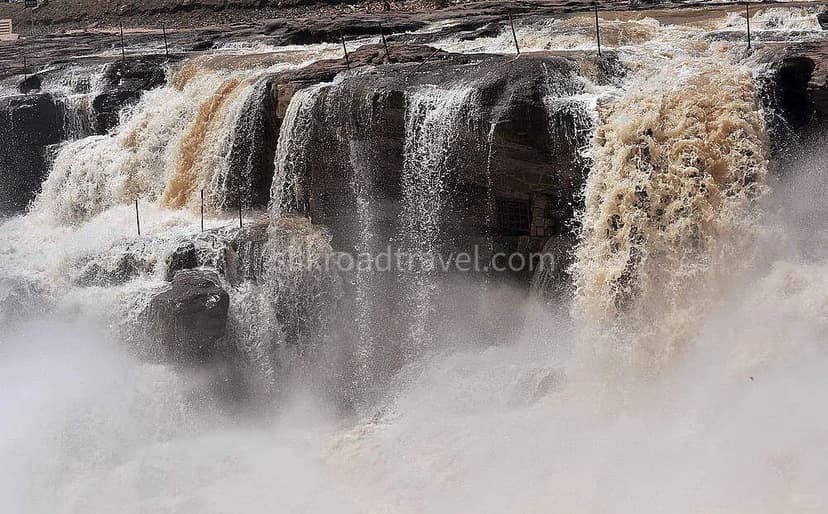
Summer is when Hukou shows its raw power. Rain swells the upper Yellow River, and the waterfall can expand to 300 metres wide — the main and side cascades merge into a single, continuous wall of water. The sound is deafening, the mist so thick it drenches you within seconds, even from the viewing platform. This is the season of the "Thunder from a Clear Sky" — the roar echoing down the gorge like an approaching storm on a cloudless day.
But summer has trade-offs. The water turns a dense, muddy brown from suspended silt. High water can force the temporary closure of low-lying viewing areas, especially on the Shaanxi side. Afternoon thunderstorms are common. If you come in summer, wear waterproof clothing — not just a light rain jacket, but something that can handle being hosed down — and bring a waterproof cover for your phone and camera. Temperatures range from 20°C to 32°C, and the humidity from the spray makes it feel stickier than the dry Shanxi air elsewhere.
Autumn (September–October): The Golden Season
This is the other golden window, and for many visitors, the single best time to come. The summer rains have passed, leaving the river full but no longer violent. The water clears slightly, taking on a rich amber tone. The air turns crisp, the sky a sharp autumn blue, and the surrounding hillsides ignite with red and gold foliage — the famous "Danxia Reflects Autumn" of the Loess Plateau. Rainbow probability is at its highest — on a clear morning between 10:00 and 15:00, the chance exceeds 70%. This is also when the "Smoke from the Riverbed" effect is most visible: the mist rising from the falls catches the low autumn light and looks exactly like smoke billowing from the canyon floor. Temperatures hover comfortably between 10°C and 22°C. The National Day holiday (October 1–7) brings intense crowds — avoid that week if you can, and aim for mid-to-late September or mid-October instead.
Winter (December–February): Ice Falls and Frozen Thunder
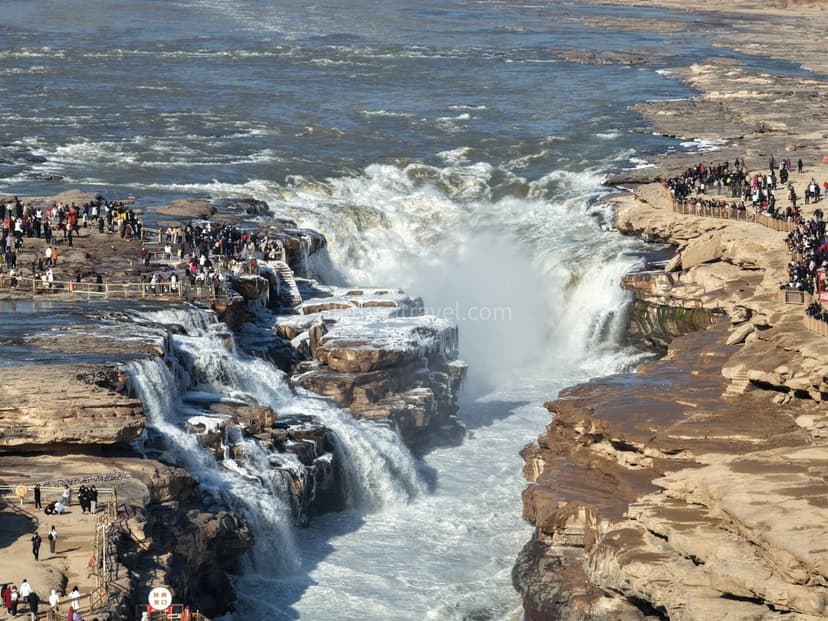
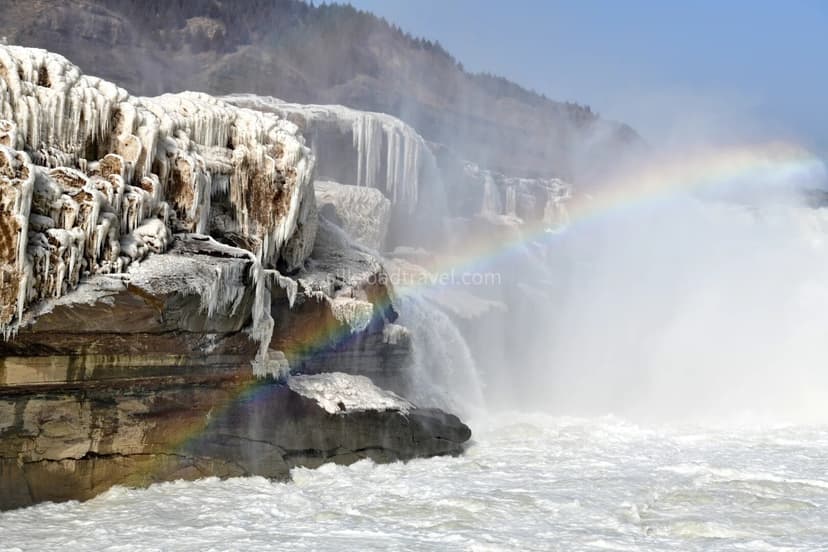
Winter transforms Hukou into something otherworldly. The main cascade continues to flow, but its edges freeze into massive blue-white ice columns that hang from the cliff like frozen organ pipes. The mist thrown up by the falls freezes on contact with the rock walls, building up layer by layer into spectacular ice formations — icicles the size of trees, entire sections of the riverbank glazed in thick ice. On the coldest days (usually January to early February), parts of the river surface freeze over, and you may see ice bridges forming downstream. The crowds vanish, the ticket price drops (the Shanxi side is ¥80 in off-peak), and you can stand alone before the frozen falls in a silence broken only by the muffled roar beneath the ice.
The trade-off: temperatures can drop to -15°C or lower. The wind through the gorge is punishing. Dress in your warmest gear — thermal underwear, thick down, gloves, scarf, and a hat that covers your ears. The paths can be icy; wear shoes with excellent grip. Some facilities and food stalls may be closed. But if you are the kind of traveller who values atmosphere over comfort, winter Hukou is unforgettable.
Tickets, Hours & Practical Basics
The two sides operate independently, with their own ticket systems.
Shanxi Side (Linfen Jixian)
Peak season (April 1 — October 31): ¥100 per adult. Off-peak (November 1 — March 31): ¥80. The shuttle bus is ¥20 round trip and is essentially mandatory — private cars park at the visitor centre. Students, seniors (60+), and children (6–18) receive half-price tickets. Children under 6 or under 1.2 metres tall, seniors over 70, active military, and visitors with disabilities enter free. Opening hours: peak season 7:00–18:00, off-peak 8:00—17:00, with a transitional period (October 8–31) from 7:30–17:30. The Dragon Cave (龙洞) costs an additional ¥20, worth every jiao.
Shaanxi Side (Yan'an Yichuan)
Peak season adult ticket: ¥100. Off-peak: ¥90. Shuttle bus: ¥40 round trip. The same discount and free-entry policies apply. Opening hours: April 1 — October 7, 7:00—18:30; October 8 — March 31, 8:00—17:30. The live Yellow River Cantata performance is free with entry (typically 11:00 and 15:00 daily in peak season). Helicopter tours are extra.
Practical Tips
What to wear and bring: The spray at Hukou is not a light mist — it is a drenching. Even on a clear day, you will get wet standing at the best viewing spots. Wear a proper waterproof jacket, not a flimsy windbreaker. Your shoes will get wet, and the paths are slippery — waterproof, non-slip hiking shoes are essential. Bring a waterproof cover for your phone and camera, or a simple zip-lock bag. In spring and autumn, wear layers — the gorge is cold in the morning but warms quickly. In summer, add sunscreen and sunglasses. In winter, thermal underwear, a thick down coat, gloves, a scarf, and a hat that covers your ears are the minimum. Anti-slip ice grips for your shoes are available at the entrance for about ¥20 in winter — buy them.
Language: English signage at Hukou is limited. The main ticket offices and visitor centres have some, but smaller attractions like Kenanpo and Renzu Mountain have none. Download a translation app with a camera function before your trip — it will read menus, signs, and ticket information for you.
Payments: Alipay and WeChat Pay are accepted everywhere. Carry a small amount of cash (¥200–300) for roadside stalls and smaller sites where digital payment may not work.
Safety: Hukou is very safe in terms of crime. The real dangers are physical. The rocks near the waterfall are permanently wet and extremely slippery. Stay behind the railings at all times — do not climb over for a better photo. In summer, watch for sudden water-level rises. In winter, watch for ice on the paths. Wear your sturdiest shoes and pay attention to where you step.
Booking: During peak seasons — especially National Day (October 1–7), Labor Day (May 1–5), and autumn weekends — tickets can sell out. Book online 1–3 days ahead through the official WeChat mini-program or a travel platform. Real-name registration is required; bring your passport.
The Hukou Waterfall
Hukou Waterfall is not beautiful in the way a mountain lake is beautiful. It is not serene, it is not gentle, and it will not wait for you to find the right angle. It is a river losing its temper — and that is exactly why you should go. Stand close enough to feel the spray on your face and the thunder in your ribs. Walk the Dragon Trough in the quiet downstream. Let the Yellow River remind you, for a few minutes, that not everything in the world is designed for human comfort. Some things still exist on their own terms. Hukou is one of them.
We have been crafting unforgettable Shanxi journeys for international travellers for over 20 years, and Hukou is one of those places our guests talk about long after they have gone home. If you want a trip that handles the logistics — the private car, the ticket bookings, the best time of day to arrive — so you can focus entirely on the experience, we are here to help.
Waiting for you at the Yellow River! :)
This is your complete, visitor-tested travel guide to Hukou Waterfall — China's mightiest cataract and the only yellow waterfall on Earth. Whether you are planning a day trip from Xi'an, a Shanxi road trip detour, or a pilgrimage to the spiritual heart of the Yellow River, this guide will walk you through everything you need to know: which side of the river gives you the best view, what to see beyond the main cascade, when the waterfall is at its most thunderous, how to get there from the major cities, and which nearby historic sites are worth adding to your itinerary.
The Hukou Waterfall
Hukou Waterfall straddles the border between Shanxi's Jixian County and Shaanxi's Yichuan County, roughly halfway along the Yellow River's journey through the Jin-Shaan Grand Canyon. It is a national 5A scenic spot and the largest yellow waterfall in the world. The name Hukou means "kettle mouth" — and standing at the edge of the main cascade, you will understand why. The Yellow River, which flows wide and deceptively calm upstream, is suddenly pinched from 300 metres across into a slot barely 50 metres wide. The entire river plunges over a 30-metre drop into a deep stone trough, churning like water boiling in a giant pot. The sound hits you before the sight does — a low, steady thunder that vibrates in your chest. Then you see the spray, a permanent cloud of golden mist that rises from the chasm and soaks everything within a hundred metres. On sunny mornings, that mist catches the light and throws rainbows across the gorge. Locals call this "smoke rising from the riverbed and a rainbow bridge reaching the sky" — and it is not poetic exaggeration. It happens almost daily in the right season.
Things to Do
Long Cave (Observatory Cave):
This is the experience that sets the Shanxi side apart. The Dragon Cave is a natural stone grotto carved into the cliff beside the waterfall. A narrow staircase leads you down, below the level of the river, to an opening right at the base of the falls. From here, you look up — and the entire cascade is above you, roaring down, golden water against blue sky. The view is almost entirely vertical. The spray is heavy, the noise is overwhelming, and the feeling is unlike anything else at Hukou. "The waters of the Yellow River pour down from heaven" — was not written specifically about this cave, but standing here, it feels like it was. An additional ¥20 ticket is required and must be purchased at the cave entrance. It is not always open — high water levels in summer or icy conditions in winter may close it. Check at the visitor centre when you arrive.
The Hukou Waterfall
Guanbao Platform:
Located on the Shanxi side of the Hukou Falls, it provides a panoramic viewing angle. Standing on the Guanbao Platform, you can see the full view of the falls and feel its vastness and grandeur. Especially during the spring and autumn seasons, when the falls have ample water and a surging momentum, standing on the Guanbao Platform allows you to deeply experience the powerful and majestic atmosphere of the falls.
The Hukou Waterfall
Look at the Rainbow in the Water
The rainbow in the water is one of the eight wonders of Hukou Waterfall, exhibiting the amazing combination of water and light in nature. When the Yellow River water flows through the Hukou, water mist rises. Under the sun's radiation, these water mists form various beautiful rainbows. The formation of a rainbow in the water is closely related to the unique terrain and climatic conditions of the Hukou Waterfall. The Hukou Waterfall is located in the Qin-Jin Grand Canyon, with cliffs on both banks and a narrow river mouth resembling a kettle. Here, the Yellow River water is restricted by the terrain, resulting in an increased flow rate and impact force, thus creating a spectacular waterfall scene. In the spring and autumn seasons, with moderate water volume, suitable temperature, and oblique sunlight, these conditions together contribute to the emergence of a rainbow in the water. For many years, countless tourists have come here to witness this wonderful scene of a rainbow in the water. They stop to watch and take photos on the shore of the waterfall, capturing this beautiful scenery forever in their hearts.
The Rainbow in the Water
Watch Yellow River Ice Bridge
The Yellow River Ice Bridge is a unique winter landscape, exhibiting the amazing combination of water and ice in nature. When winter comes and the temperature plunges, the surface of the Yellow River begins to freeze, gradually forming a thick layer of ice. In the Hukou Falls area, due to the turbulent water flow, the interaction between the ice layer and the water creates a natural ice bridge connecting both banks. These ice bridges not only vary in shape but are also sturdy and durable, able to bear a certain weight. Walking on the ice bridge allows one to appreciate the unique scenery of the Hukou Falls in winter.
The Yellow River Ice Bridge
Watch Ten-mile Dragon Channel
The Ten-mile Dragon Channel is located downstream of the Hukou Waterfall and is a deep channel formed by the Yellow River water after flowing through the Hukou. It is named Ten-mile Dragon Channel because of the legend that a dragon dug it out. The distance from Hukou to Mengmen is about five kilometers. At the bottom of this box-shaped canyon, which is about 400 meters wide, the Yellow River water has cut through and formed this deep channel. The channel is approximately 30 to 50 meters wide and 10 to 20 meters deep. The Ten-Li Dragon Channel is deep and narrow, resembling the shape of a dragon's ridge. The water flows rapidly and loudly, and the walls of the channel are steep, while the bottom is hard and solid. During non-flood periods, the riverbank is wide and flat, almost allowing vehicles to travel on it. This unique geological condition makes it possible for “ships to sail on dry land”.
The Hukou Waterfall
Best Time to Visit — Four Seasons, Four Different Waterfalls
Hukou does not look the same twice. The waterfall changes dramatically with the seasons, and each window offers something worth travelling for. Here is what to expect.
Spring (April–May): The Peach Blossom Flood
This is one of Hukou's two golden windows. As winter ice upstream melts, the river surges with cold, clear snowmelt that meets the early spring warmth. The volume jumps — the waterfall can spread to 50 metres or more across — and along the riverbanks, wild peach trees burst into pink blossom. The contrast between delicate flowers and roaring brown water is strange and beautiful. This phenomenon is called the "March Peach Blossom Flood", though it actually peaks from late March through April. Expect temperatures between 10°C and 22°C. Dress in layers — mornings are chilly in the gorge, but the sun is strong by midday. Photographers should aim for late morning, when rainbows frequently arc across the spray.
Summer (June–August): Thunder Season
Summer is when Hukou shows its raw power. Rain swells the upper Yellow River, and the waterfall can expand to 300 metres wide — the main and side cascades merge into a single, continuous wall of water. The sound is deafening, the mist so thick it drenches you within seconds, even from the viewing platform. This is the season of the "Thunder from a Clear Sky" — the roar echoing down the gorge like an approaching storm on a cloudless day.
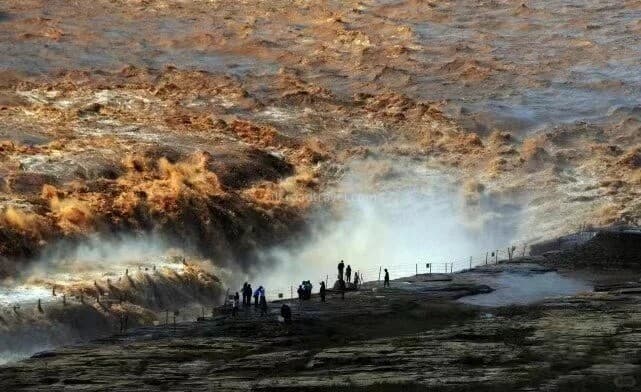
But summer has trade-offs. The water turns a dense, muddy brown from suspended silt. High water can force the temporary closure of low-lying viewing areas, especially on the Shaanxi side. Afternoon thunderstorms are common. If you come in summer, wear waterproof clothing — not just a light rain jacket, but something that can handle being hosed down — and bring a waterproof cover for your phone and camera. Temperatures range from 20°C to 32°C, and the humidity from the spray makes it feel stickier than the dry Shanxi air elsewhere.
Autumn (September–October): The Golden Season
This is the other golden window, and for many visitors, the single best time to come. The summer rains have passed, leaving the river full but no longer violent. The water clears slightly, taking on a rich amber tone. The air turns crisp, the sky a sharp autumn blue, and the surrounding hillsides ignite with red and gold foliage — the famous "Danxia Reflects Autumn" of the Loess Plateau. Rainbow probability is at its highest — on a clear morning between 10:00 and 15:00, the chance exceeds 70%. This is also when the "Smoke from the Riverbed" effect is most visible: the mist rising from the falls catches the low autumn light and looks exactly like smoke billowing from the canyon floor. Temperatures hover comfortably between 10°C and 22°C. The National Day holiday (October 1–7) brings intense crowds — avoid that week if you can, and aim for mid-to-late September or mid-October instead.
Winter (December–February): Ice Falls and Frozen Thunder
Winter transforms Hukou into something otherworldly. The main cascade continues to flow, but its edges freeze into massive blue-white ice columns that hang from the cliff like frozen organ pipes. The mist thrown up by the falls freezes on contact with the rock walls, building up layer by layer into spectacular ice formations — icicles the size of trees, entire sections of the riverbank glazed in thick ice. On the coldest days (usually January to early February), parts of the river surface freeze over, and you may see ice bridges forming downstream. The crowds vanish, the ticket price drops (the Shanxi side is ¥80 in off-peak), and you can stand alone before the frozen falls in a silence broken only by the muffled roar beneath the ice.
The trade-off: temperatures can drop to -15°C or lower. The wind through the gorge is punishing. Dress in your warmest gear — thermal underwear, thick down, gloves, scarf, and a hat that covers your ears. The paths can be icy; wear shoes with excellent grip. Some facilities and food stalls may be closed. But if you are the kind of traveller who values atmosphere over comfort, winter Hukou is unforgettable.
Tickets, Hours & Practical Basics
The two sides operate independently, with their own ticket systems.
Shanxi Side (Linfen Jixian)
Peak season (April 1 — October 31): ¥100 per adult. Off-peak (November 1 — March 31): ¥80. The shuttle bus is ¥20 round trip and is essentially mandatory — private cars park at the visitor centre. Students, seniors (60+), and children (6–18) receive half-price tickets. Children under 6 or under 1.2 metres tall, seniors over 70, active military, and visitors with disabilities enter free. Opening hours: peak season 7:00–18:00, off-peak 8:00—17:00, with a transitional period (October 8–31) from 7:30–17:30. The Dragon Cave (龙洞) costs an additional ¥20, worth every jiao.
Shaanxi Side (Yan'an Yichuan)
Peak season adult ticket: ¥100. Off-peak: ¥90. Shuttle bus: ¥40 round trip. The same discount and free-entry policies apply. Opening hours: April 1 — October 7, 7:00—18:30; October 8 — March 31, 8:00—17:30. The live Yellow River Cantata performance is free with entry (typically 11:00 and 15:00 daily in peak season). Helicopter tours are extra.
Practical Tips
What to wear and bring: The spray at Hukou is not a light mist — it is a drenching. Even on a clear day, you will get wet standing at the best viewing spots. Wear a proper waterproof jacket, not a flimsy windbreaker. Your shoes will get wet, and the paths are slippery — waterproof, non-slip hiking shoes are essential. Bring a waterproof cover for your phone and camera, or a simple zip-lock bag. In spring and autumn, wear layers — the gorge is cold in the morning but warms quickly. In summer, add sunscreen and sunglasses. In winter, thermal underwear, a thick down coat, gloves, a scarf, and a hat that covers your ears are the minimum. Anti-slip ice grips for your shoes are available at the entrance for about ¥20 in winter — buy them.
Language: English signage at Hukou is limited. The main ticket offices and visitor centres have some, but smaller attractions like Kenanpo and Renzu Mountain have none. Download a translation app with a camera function before your trip — it will read menus, signs, and ticket information for you.
Payments: Alipay and WeChat Pay are accepted everywhere. Carry a small amount of cash (¥200–300) for roadside stalls and smaller sites where digital payment may not work.
Safety: Hukou is very safe in terms of crime. The real dangers are physical. The rocks near the waterfall are permanently wet and extremely slippery. Stay behind the railings at all times — do not climb over for a better photo. In summer, watch for sudden water-level rises. In winter, watch for ice on the paths. Wear your sturdiest shoes and pay attention to where you step.
Booking: During peak seasons — especially National Day (October 1–7), Labor Day (May 1–5), and autumn weekends — tickets can sell out. Book online 1–3 days ahead through the official WeChat mini-program or a travel platform. Real-name registration is required; bring your passport.
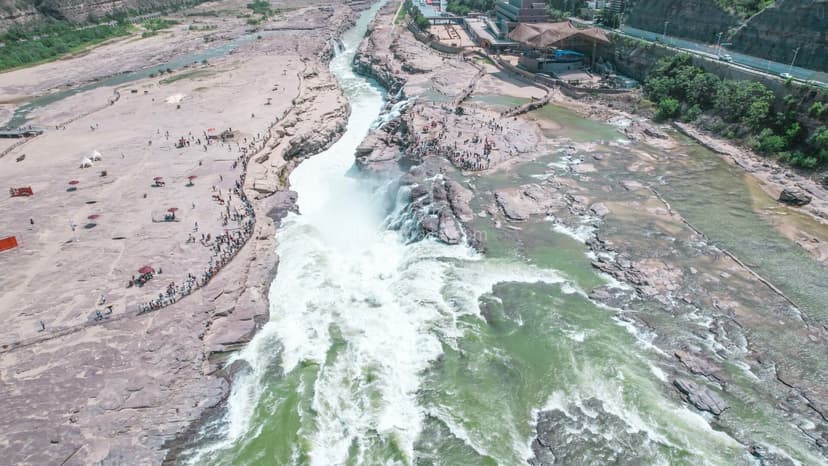
Hukou Waterfall is not beautiful in the way a mountain lake is beautiful. It is not serene, it is not gentle, and it will not wait for you to find the right angle. It is a river losing its temper — and that is exactly why you should go. Stand close enough to feel the spray on your face and the thunder in your ribs. Walk the Dragon Trough in the quiet downstream. Let the Yellow River remind you, for a few minutes, that not everything in the world is designed for human comfort. Some things still exist on their own terms. Hukou is one of them.
We have been crafting unforgettable Shanxi journeys for international travellers for over 20 years, and Hukou is one of those places our guests talk about long after they have gone home. If you want a trip that handles the logistics — the private car, the ticket bookings, the best time of day to arrive — so you can focus entirely on the experience, we are here to help.
Waiting for you at the Yellow River! :)