
Pingyao Ancient City
A Living Museum of Ming and Qing Merchant Glory
Imagine stepping into a perfectly preserved Ming and Qing dynasty town where time seems to have slowed down. Pingyao Ancient City is one of China's best-kept secrets and a UNESCO World Cultural Heritage site. As one of the most complete ancient county cities remaining in China, it offers you a real feeling of what life was like during the golden age of Shanxi merchants (Jin Merchants) who once controlled much of China's banking and trade.
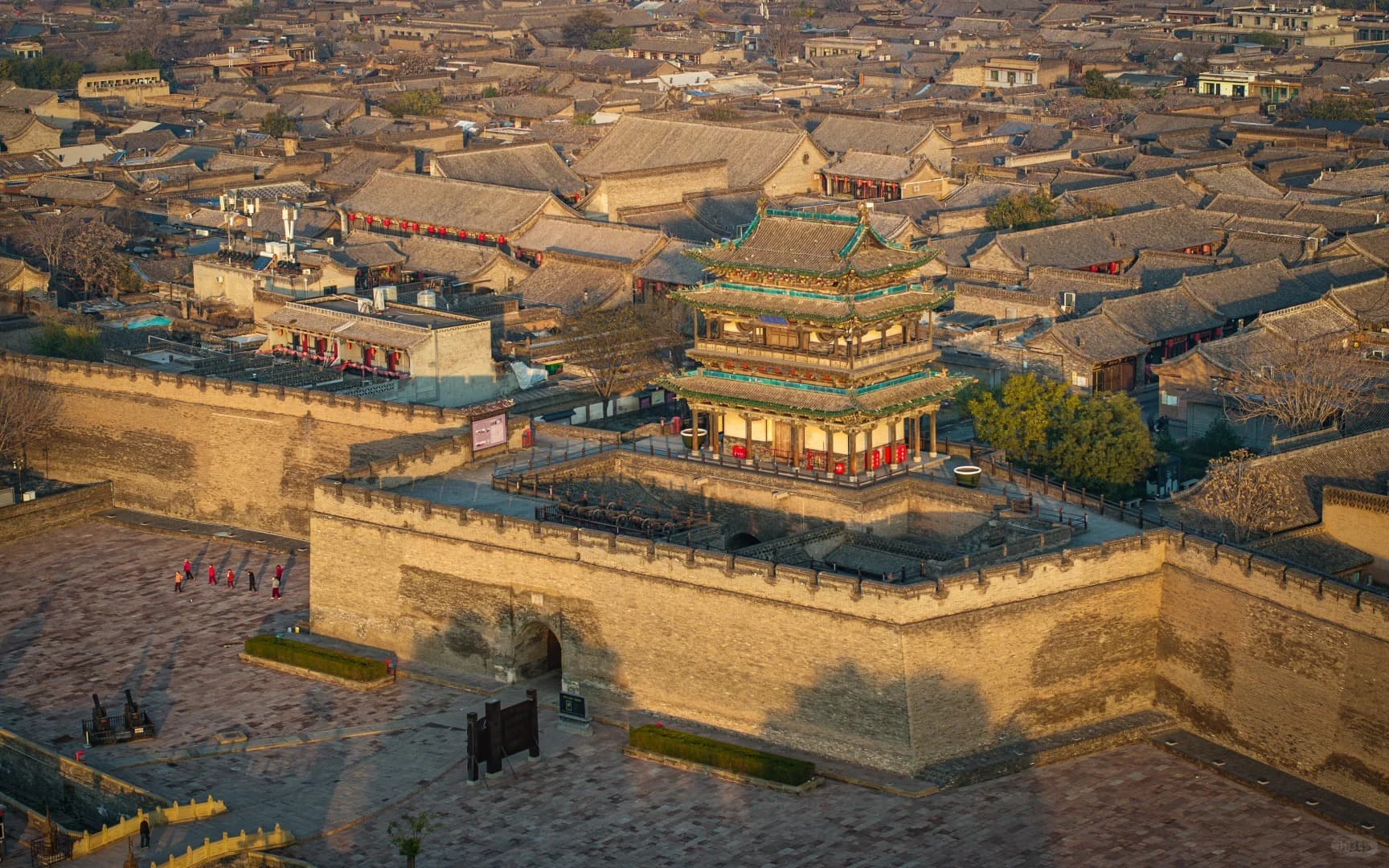
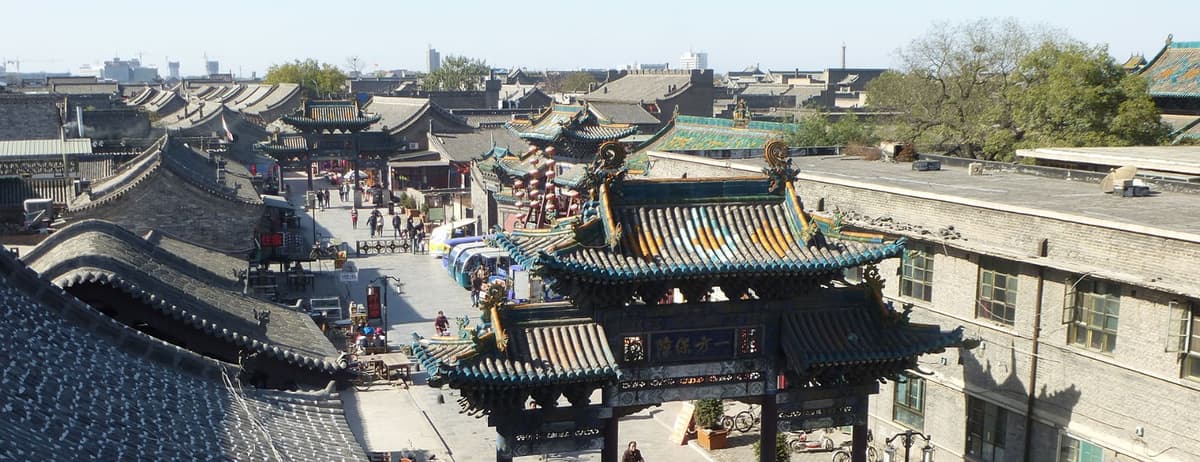
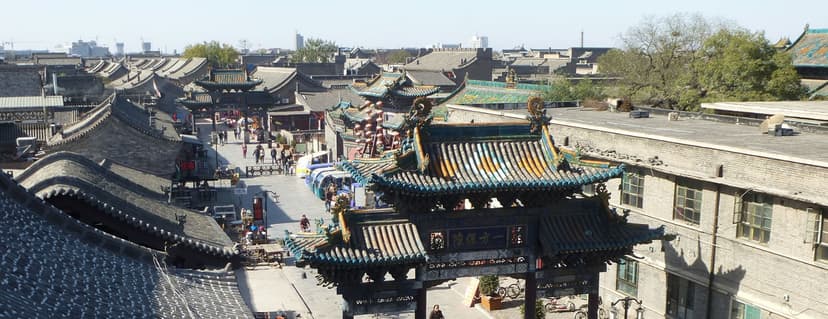
Walking along the gray-brick streets lined with traditional shops, old courtyard houses, and ancient temples, you will feel like you have traveled back 300–600 years. The city walls, narrow alleys, and wooden shop signs create an authentic atmosphere that is hard to find in many other tourist places. Whether you love history, photography, or simply want a peaceful cultural escape, Pingyao welcomes you warmly.
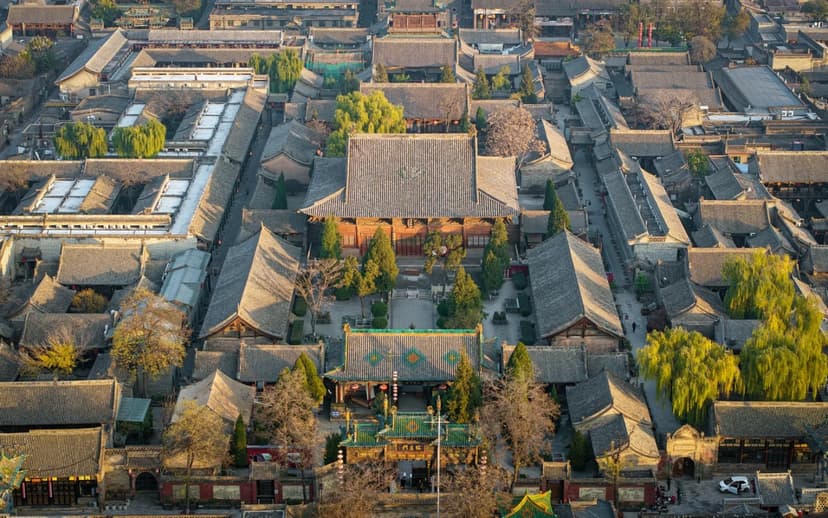
It is an ideal destination for first-time visitors to Shanxi, families, couples, and solo travelers. Most people find 1 full day enough for the highlights, but we recommend 2 days to enjoy it slowly, including evening lantern lights and local experiences. You will leave with beautiful photos, great stories, and a deeper understanding of traditional Chinese culture.
Content›Tickets — What You Need to Know |
Tickets — What You Need to Know
The ancient city streets are free to walk around.
Combo Ticket (Recommended): 125 RMB per adult (valid for 3 days). It includes access to 22 major attractions inside the city (such as the City Wall, Rishengchang Draft Bank, County Government Office, etc.).
Validity: The pass is valid for three days from the first time you scan it at any attraction. Each of the 22 included attractions can only be visited once per pass — the system records each entry, so you cannot use the same pass to visit the City Wall twice. Plan your route so you do not accidentally scan in somewhere you only meant to pass by.
Discounts: Usually 65 RMB for students, children (under 1.2m free), and seniors with a valid ID. Bring your passport.
Opening Hours: The ancient city is open 24 hours. Most ticketed attractions are open 8:00–18:00 (March–November) or until 17:30 in winter.
Where to buy: You can buy the pass in several ways: through the official Pingyao Ancient City WeChat mini-program, on major Chinese travel platforms like Ctrip or Meituan, or in person at ticket offices near the main gates. Real-name registration is required — you must present your passport when purchasing and when scanning in at your first attraction. The system links the pass to your identity, so keep your passport with you at all attractions. Foreign credit cards are not accepted at on-site ticket offices, so online purchase (which accepts international cards) or paying a friend via WeChat/Alipay is the easiest route. If you must buy in person with cash, bring enough Chinese yuan.
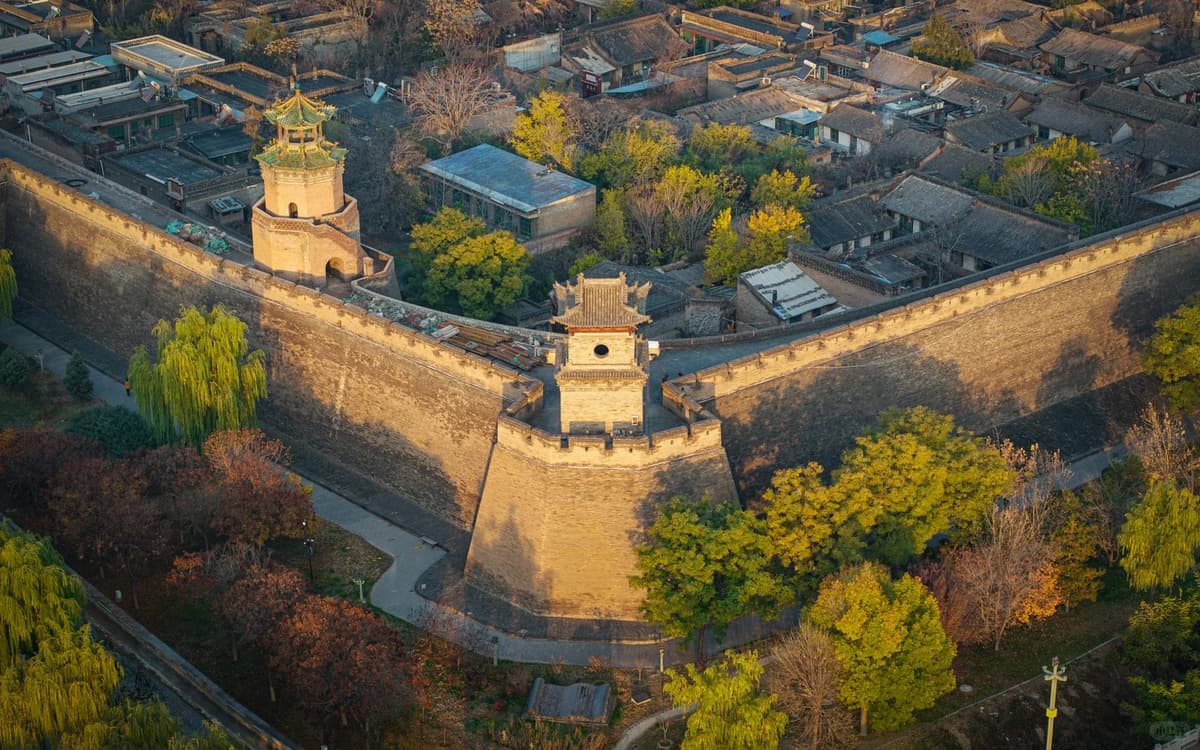
Golden Seasons: Spring (April–May) & Autumn (September–October)
These are the ideal months. Temperatures range from 10 to 25°C — comfortable for walking the city wall and exploring courtyards. The sky is clear blue, and the light is excellent for photography. Spring brings fresh green to the old trees; autumn turns the leaves golden against grey-brick walls.
Important: Avoid the two "Golden Weeks" if possible — Labor Day (May 1–5) and National Day (Oct 1–7). During these periods, the ancient streets become packed, accommodation prices double or triple, and queues are long everywhere. If you must visit during these dates, book at least one month ahead.
Summer (June–August)
Hot (up to 35°C) but dry, not humid. Midday can be uncomfortable for outdoor exploring.
Best way: go out early, retreat to your guesthouse for a nap during the hottest hours, and head out again after 4 p.m. Summer evenings are lovely — lanterns, cool breezes, street food stalls firing up.
Winter (November–March)
Cold ( -10 to 5°C) and very dry. Snow falls a few times each winter, and the ancient city dusted with white is stunning. Streets are empty, ticket lines vanish. Winter is also comfort-food season — lamb hot pot and steaming noodle soup taste best in the cold. Pack thermal underwear, a thick down coat, and moisturizer.
Most Common Route: Fly to Taiyuan + High-Speed Train
1. Fly into Taiyuan Wusu International Airport (太原武宿国际机场, TYN).
2. Taxi to Taiyuan South Railway Station (太原南站) — about 20 min, ~¥30.
3. High-speed train to Pingyao Ancient City Station (平遥古城站) — about 30 min, ~¥28.5 for second class. Trains depart every 30–60 minutes.
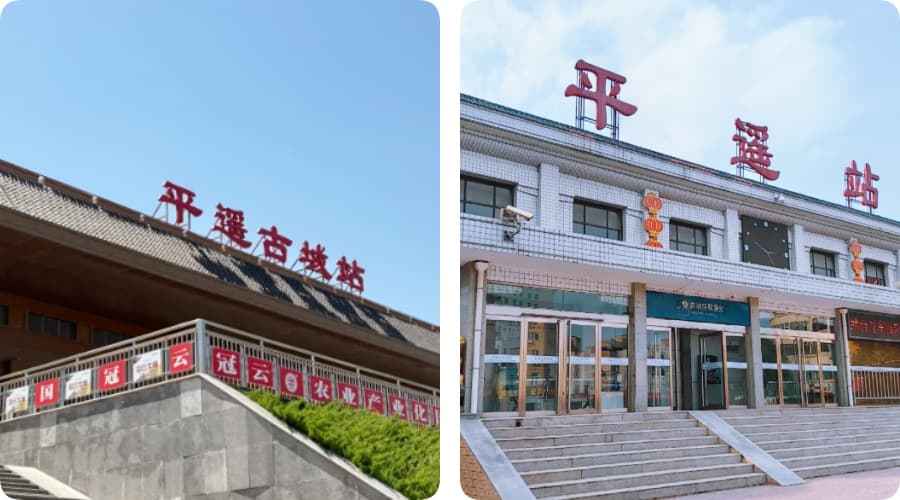
Two Train Stations — Don't Get Them Confused!
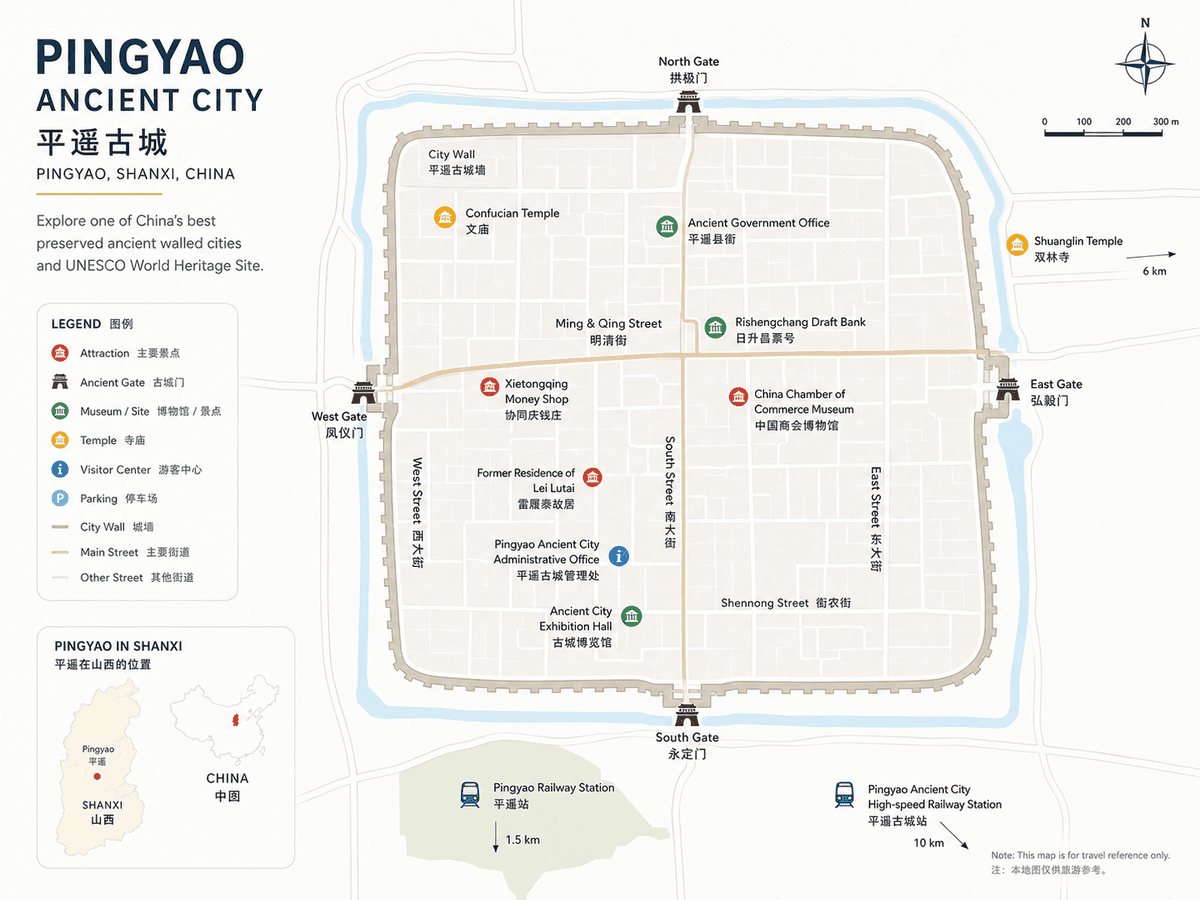
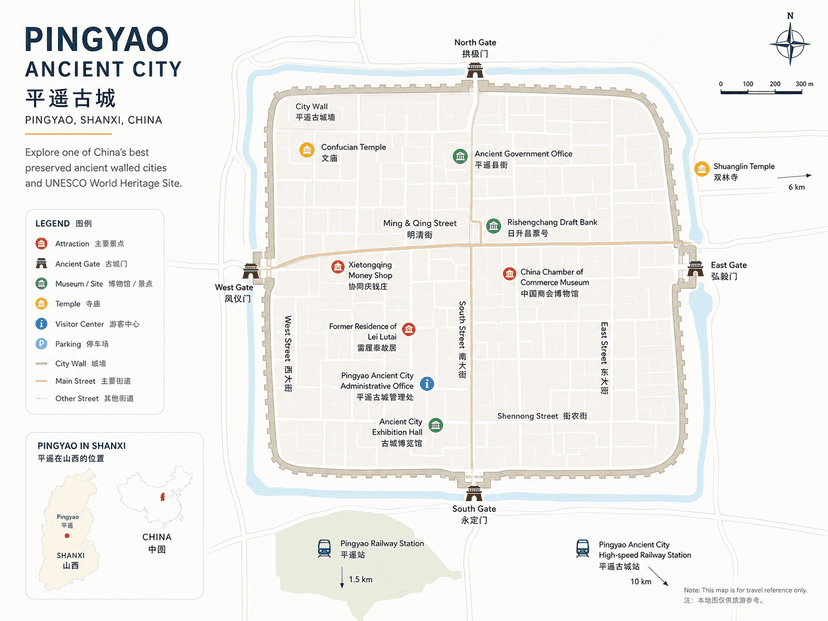
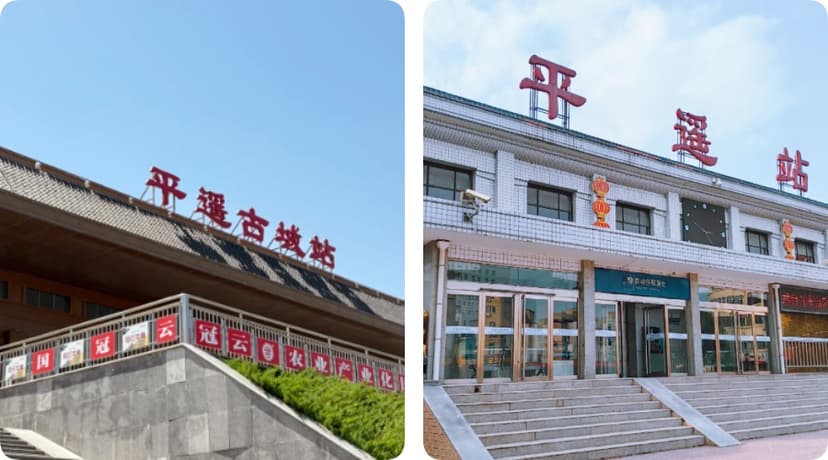
Pingyao Ancient City Station (平遥古城站): High-speed trains. ~10 km from the city. Taxi to the old city: 15–20 min, ¥20–30. Or Bus 108 for ¥1.
Pingyao Station (平遥站): Regular trains. Only ~1 km from the old city. Walk to the West Gate (下西门) in 10–15 minutes — no taxi needed.
Key tip for foreign visitors: Before departing, ask your guesthouse to send you their name and address written in Chinese characters. Show this to the taxi driver at the station. Most drivers do not speak English.
Alternative Routes: Direct Flights to Datong or Yuncheng
If Taiyuan does not fit your route, consider flying directly into Datong Yungang Airport (大同云冈机场) in northern Shanxi or Yuncheng Guangong Airport (运城关公机场) in the south. Datong is about 3.5 hours from Pingyao by high-speed train, and Yuncheng is about 2 hours. Both cities are worth visiting in their own right — Datong for the Yungang Grottoes and Hanging Temple, Yuncheng for the Guandi Temple and Yongle Palace — so you can build a north-to-south or south-to-north Shanxi itinerary that naturally includes Pingyao in the middle. This works especially well if you plan to explore Shanxi beyond just Pingyao, which, given the riches of the province, you absolutely should.
Getting to Pingyao from Beijing or Xi'an
Pingyao sits neatly between two of China's most popular destinations. From Beijing, direct high-speed trains to Pingyao Ancient City Station take about 3.5 to 4 hours and cost around ¥180–220 for a second-class seat. This means you can leave Beijing in the morning and be walking through the ancient city gates by early afternoon. From Xi'an, high-speed trains also take about 3 to 3.5 hours and cost around ¥150. Both routes make Pingyao a logical and easy stop on a longer China itinerary. Travelers often combine Beijing–Pingyao–Xi'an into a single overland journey, with the fast trains doing all the heavy lifting. If you are planning such a trip, book your train tickets a week or two ahead, especially on weekends and around holidays.
Key Attractions — What to See & Photo Spots
The Ancient City Wall (古城墙)
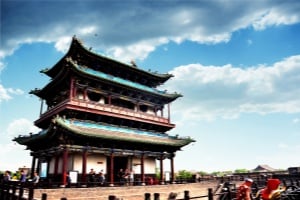
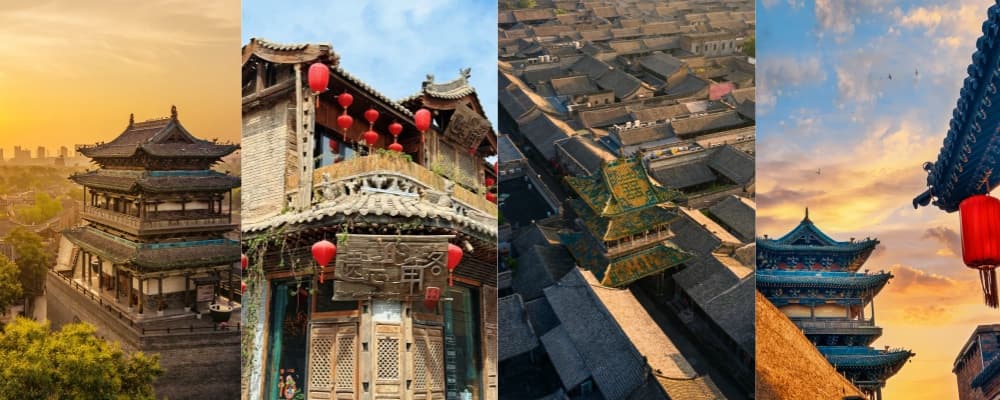
The wall is Pingyao's crown. Built in 1370 during the Ming dynasty, it stretches 6.4 km around the entire old city, with 72 watchtowers and 3,000 battlements. Walking or cycling on top gives you the best views in town — grey-tiled rooftops stretching to the horizon, the lanes you just walked through now visible as a tidy grid below. The best access point is Yingxun Gate (迎薰门), the South Gate, especially around sunset when the red lanterns glow, and the light turns golden. Bike rental is available at certain sections — cycling the full loop is unforgettable. Allow 1.5–2 hours to walk the full circuit, or about an hour by bike.
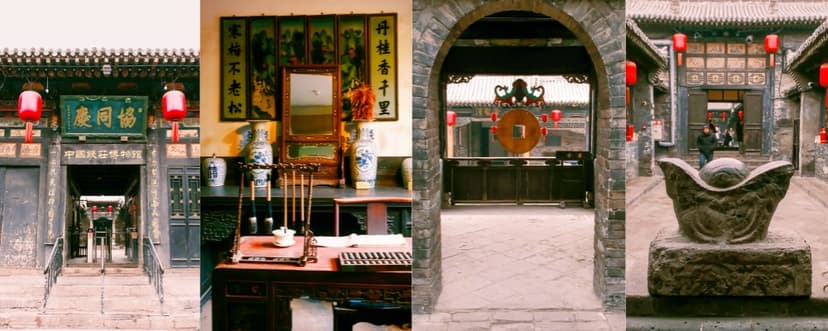
Rishengchang Draft Bank (日升昌票号)
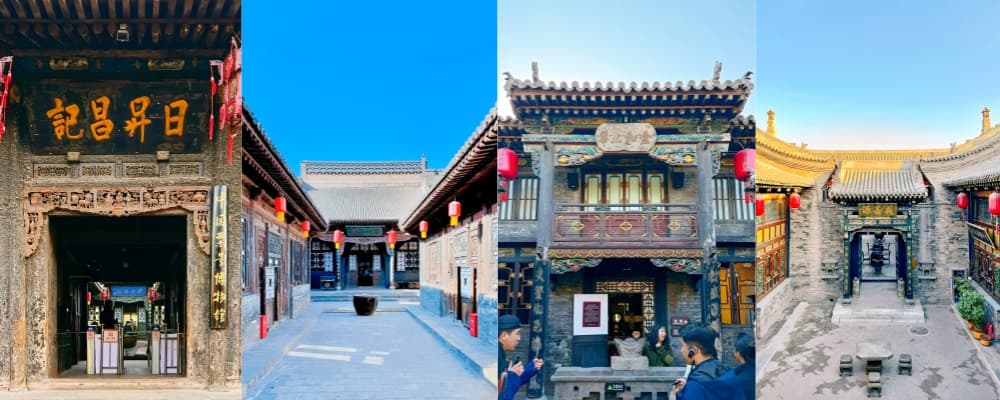
Known as "China's First Bank," Rishengchang was founded in 1823 and pioneered the draft system that let merchants move silver safely across the empire without carrying physical coins. The modest courtyard hides a revolutionary idea. Look for the old wooden counter with abacuses, wax figures of clerks in Qing robes, and the original draft notes under glass. It takes about 30–45 minutes to explore.
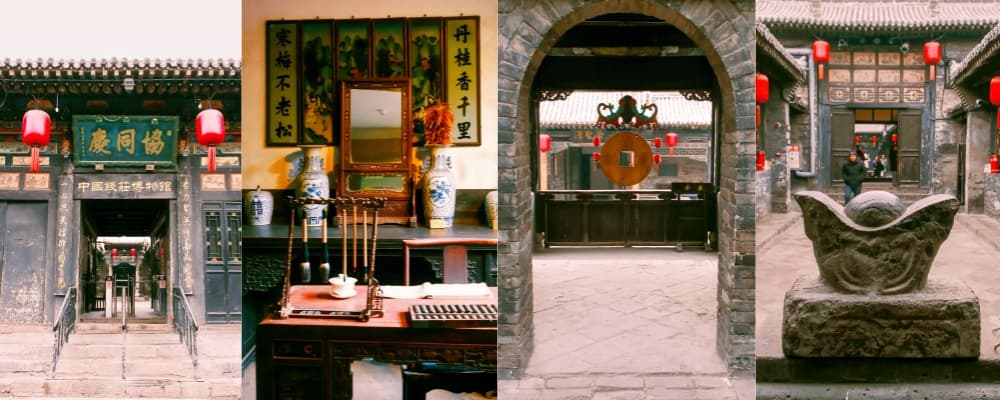
Photo tip: the main hall's counter, with its row of abacuses and the light falling through latticed windows, looks like a still from a period film.
Xie Tong Qing Bank & Underground Vault (协同庆票号·地下金库)
Xie Tong Qing's highlight is underground. Beneath the banking halls lies a labyrinthine gold vault, reached through narrow stone passages. At its heart sits the "Divine Dragon Pillar" (神龙宝柱), marking the city's geomantic center. The vault is dramatically lit and genuinely atmospheric — you can sense the weight of the silver that once filled these chambers. The visit takes about 40 minutes. Combine with Rishengchang; they are a short walk apart and together tell the full story of Pingyao's banking empire.
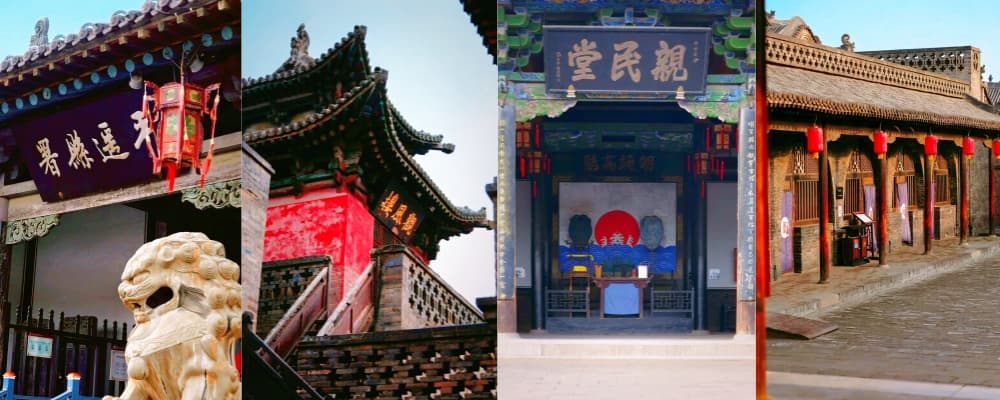
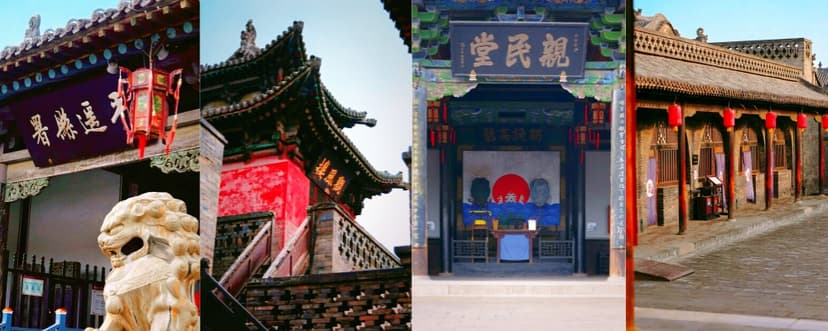
Pingyao County Yamen (平遥县衙)
The best-preserved ancient county government office in China. You can walk through the grand courtroom, the magistrate's private quarters, the jail (with its chilling contrast between "light" and "heavy" cells), and a quiet back garden. The must-see: live court trial reenactments held daily at 9:30, 11:00, and 15:30. Each show is about 15 minutes, with costumed actors playing a magistrate and bickering plaintiffs. It is performed in Chinese, but the slapstick humor and physical comedy transcend language. Arrive 10 minutes early to get a good spot. Allow 1–1.5 hours total.
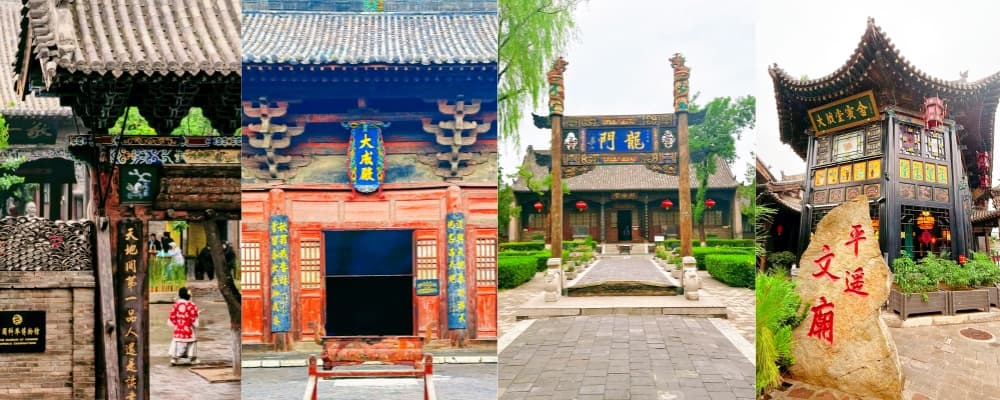
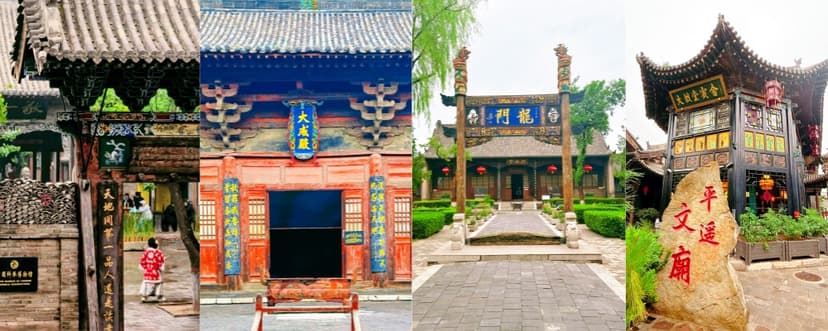
Wenmiao Confucian Temple (文庙)
China's oldest surviving Confucian temple, with a main hall dating back to the Jin dynasty (800+ years old). The temple is serene and spacious. The highlight is the Imperial Examination Exhibition — you can see the only surviving original zhuangyuan (top scholar) exam paper in China, a scroll of impossibly neat calligraphy written under high-stakes conditions. Allow 45 minutes to 1 hour. Good for a quiet moment after the busier streets.
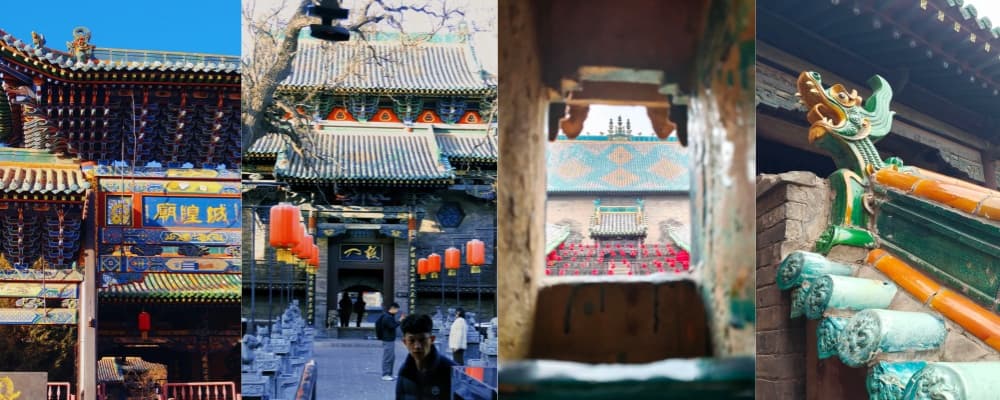
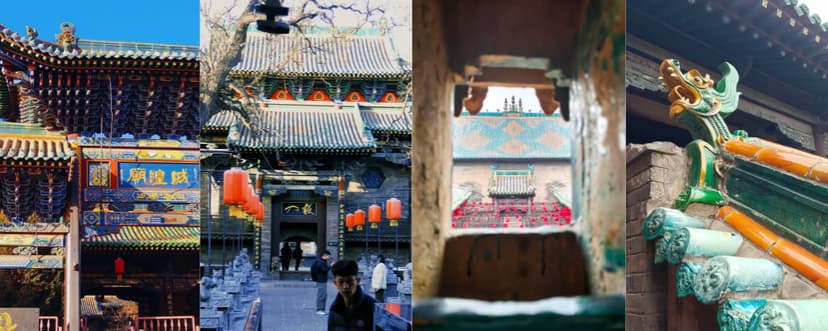
City God Temple (城隍庙)
A uniquely structured Daoist temple — a "temple within a temple" that also houses the God of Wealth and the Kitchen God. The vivid (and slightly fearsome) statues of underworld judges and demons are especially striking. Allow 30–45 minutes. Best visited in daylight if the demon statues make you uneasy.
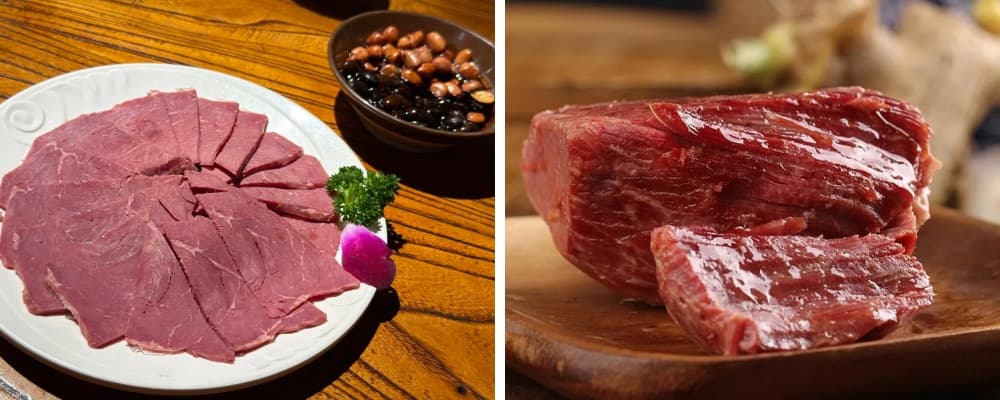
Pingyao Beef (平遥牛肉) – The Signature Dish
This is the one thing you must eat. Pingyao beef is seasoned with salt and spices, then slow-braised until tender enough to pull apart by hand. The best way to eat it is from a street-side stall: choose a chunk, the vendor slices it thickly, and you eat it with your fingers, dipped in aged vinegar and chili flakes. It is salty, deeply savory, and surprisingly addictive. Look for dedicated beef shops along South Street — the ones with whole cuts hanging in the window. Expect to pay around ¥30–50 for a generous portion.
Wantuo (碗托) – Savory Jelly
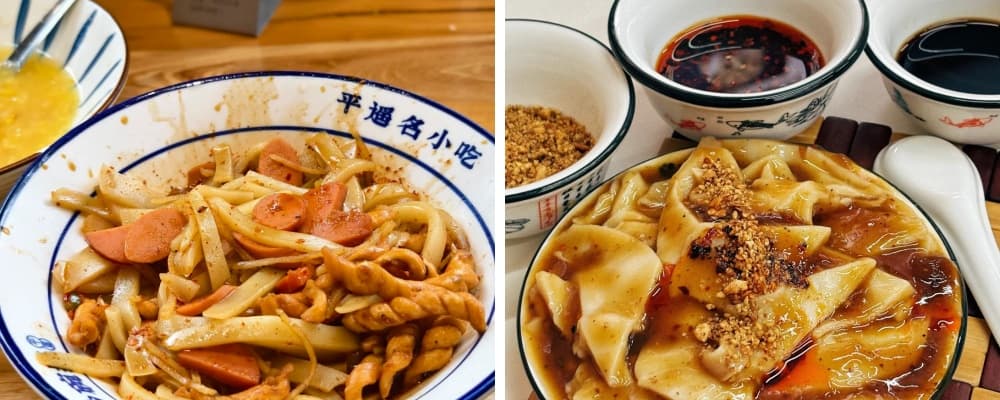
Wantuo is a jiggly, savory jelly made from wheat flour, served two ways: cold with chili oil, minced garlic, and vinegar (refreshing in summer), or hot and stir-fried with bean sprouts and sausage (hearty in winter). It has a slippery, slightly chewy texture — strange at first, then comforting. Dong Ji Fried Wantuo (董记炒碗托) near the County Yamen is the local favorite, a no-frills spot where the wok never stops.
Kaolaolao (莜面栲栳栳) – Oat Spirals
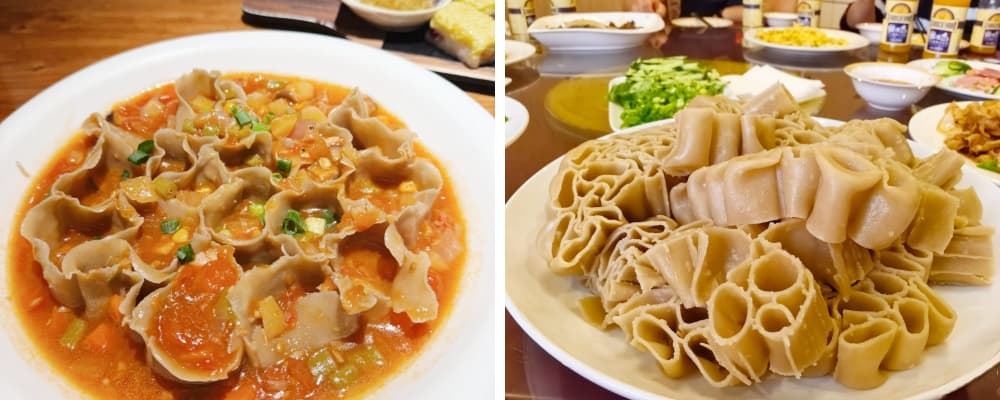
These little oat-flour spirals are a Shanxi staple. Steamed in a bamboo basket and served with a bowl of rich mutton sauce for dipping, or stir-fried with beef and peppers. The texture is firm and nutty, and the shape is pure fun — like tiny rolled-up crepes. Kaolaolao appears on nearly every restaurant menu. A plate is usually ¥25–40. It is also one of the best choices for vegetarians (ask for a mushroom or tomato sauce instead of mutton).
Aged Vinegar Ice Cream (老陈醋冰淇淋) – The Wild Card
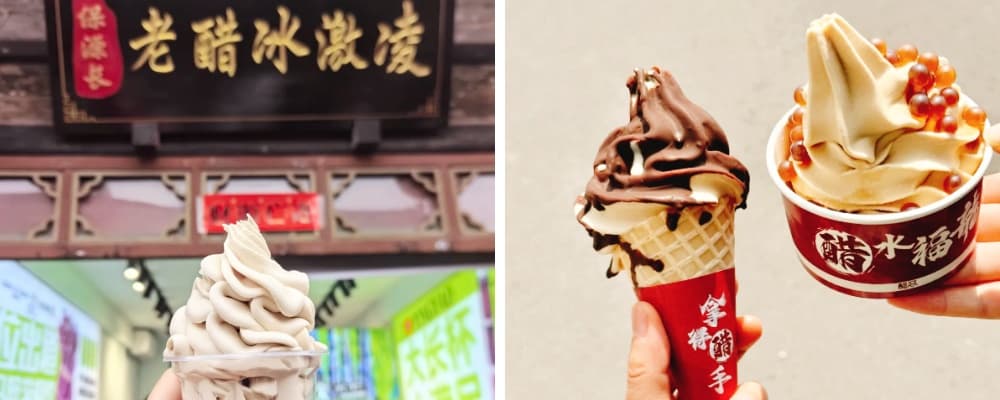
It sounds like a dare, but it works. Dark, tangy, malty, and sweet, the vinegar notes cut through the creaminess in a genuinely refreshing way. You will find it at stalls along the main tourist streets — a small cup costs around ¥10–15. Try it after a heavy meal; it cleanses the palate and gives you a story to tell.
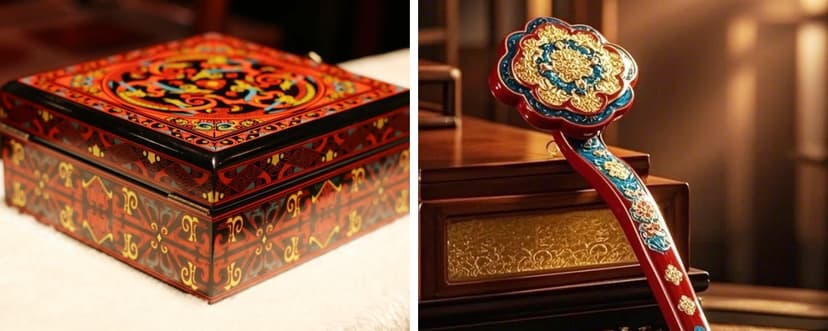
Hand-Polished Lacquerware (推光漆器)
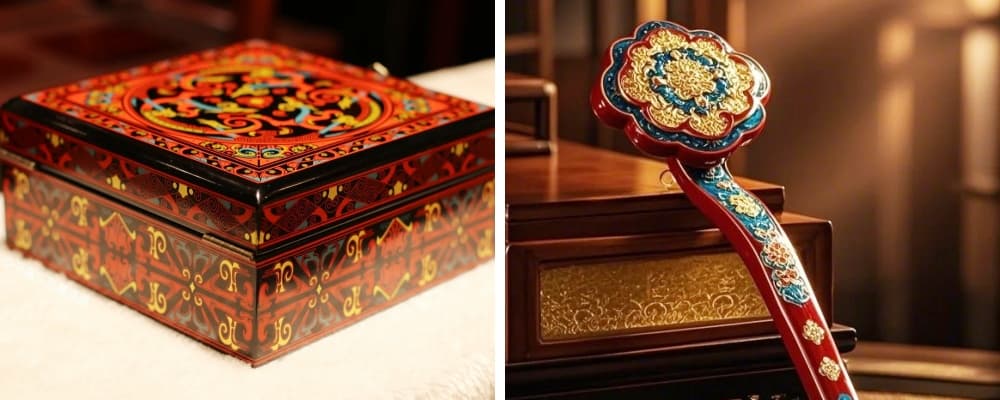
Pingyao's most famous craft. Artisans layer lacquer onto wood or bronze, then polish it by hand until it glows like glass. Common items include jewelry boxes, mirrors, trays, and small screens. The designs — flowers, birds, mythical beasts — are intricate and deeply Chinese. Buy from established shops, not street stalls where quality can be dubious. A small jewelry box starts around ¥100–200. The shop assistants can usually pack it safely for travel. Avoid cheap knockoffs by looking for the distinct depth and smoothness of genuine hand-polished pieces.
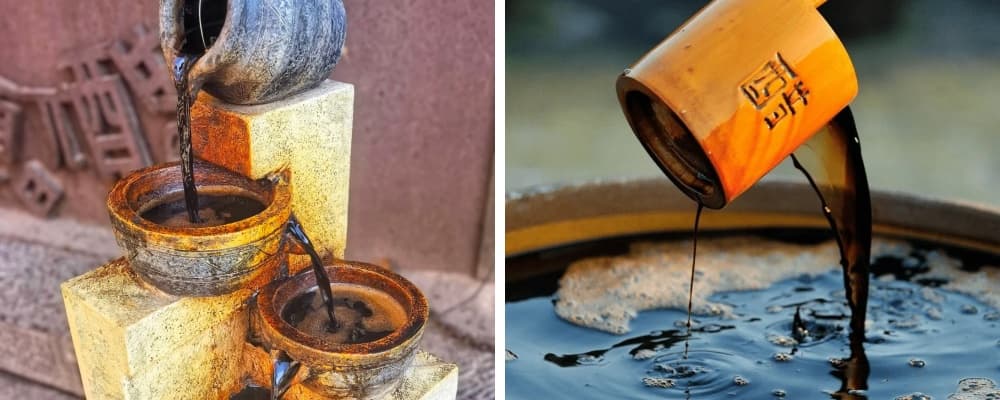
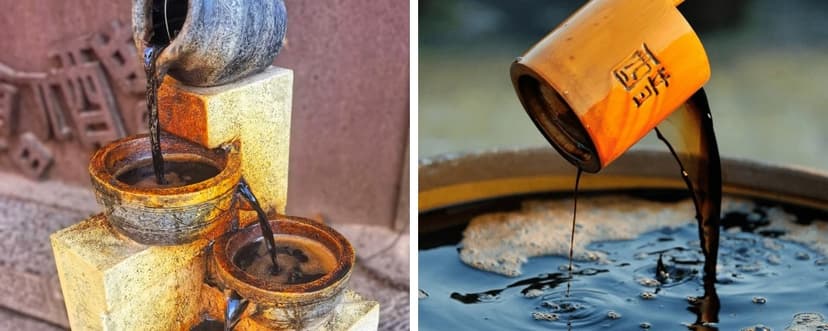
Aged Shanxi Vinegar (山西老陈醋)
Take home a bottle of the malty, complex black vinegar that defines Shanxi cooking. Shops along South Street offer tastings — you can sample different ages and varieties. Buy from specialty vinegar shops rather than generic souvenir stores. A good bottle costs ¥20–50, depending on age. Check airline carry-on rules: vinegar is liquid, so pack it in your checked luggage. Some shops sell small gift boxes that are well-padded for travel.
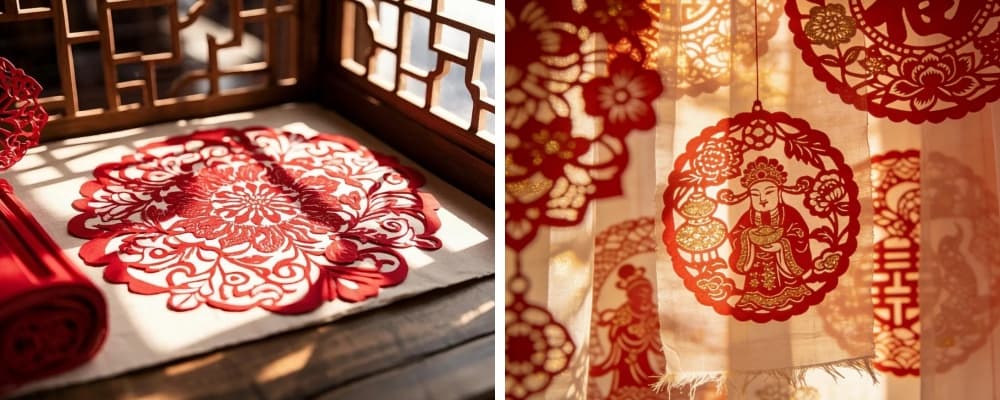
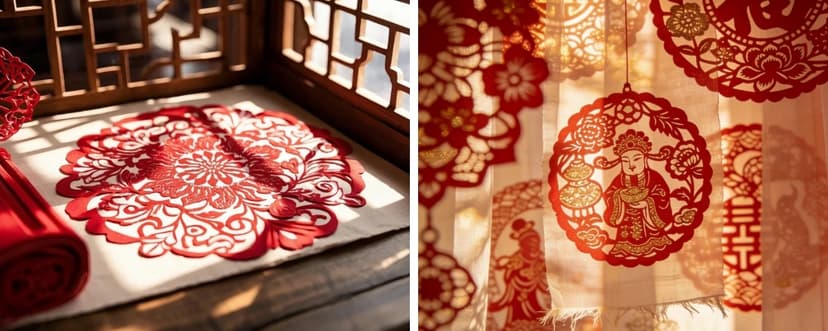
Paper Cutting (剪纸)
Intricate red paper cutouts featuring Chinese zodiac animals, auspicious characters, and folk scenes. They are tiny, lightweight, and cost almost nothing — perfect for stuffing into a backpack. A set of small pieces might cost ¥10–30. Larger, framed pieces are more expensive but make great wall art. You will see artisans cutting them by hand in small shops; buying directly from them supports the craft. Press them flat in a book to keep them from crumpling in transit.
Nearby Attractions – Beyond the Ancient City Walls
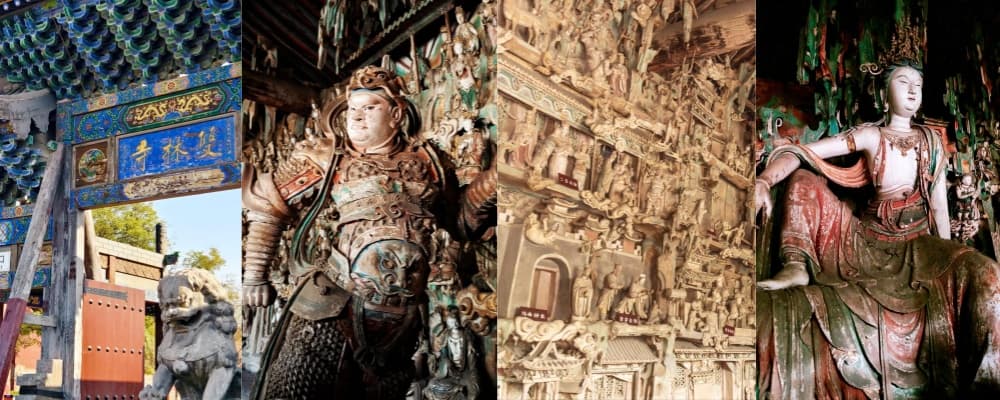
Shuanglin Temple (双林寺) – China's Hidden Sistine Chapel of Sculpture
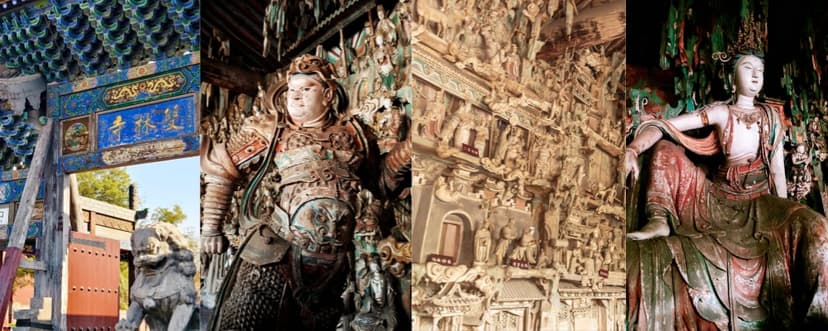
Shuanglin Temple looks modest from the outside — a quiet compound of grey-brick halls surrounded by cornfields. Step inside, and you enter one of the world's greatest collections of painted clay sculpture. Over 2,000 figures dating from the Song to Ming dynasties fill its halls, ranging from towering 3-metre guardians to delicate 30-centimetre figures tucked into wall niches. Art historians often call it the "Oriental Treasure House of Painted Sculpture." If the ancient city shows you how people lived, Shuanglin shows you what they believed — and the breathtaking skill with which they expressed it.
Hall of the Heavenly Kings (天王殿): Four colossal guardian warriors stand outside the hall, each nearly 3 metres tall, their faces contorted in protective fury. The sheer physical presence is startling — you feel small, and that is the point.
Hall of the Arhats (罗汉殿): Eighteen life-sized arhats, each with a completely distinct face and personality. One in particular — the seated figure with a tilted head and a bemused expression — looks like he just heard a joke he is not sure he should laugh at. It is a level of psychological realism rare in pre-modern art anywhere.
Hall of a Thousand Buddhas (千佛殿): The centrepiece is a serene Guanyin sitting in the "water-moon" pose. To her left stands Weituo (韦陀), a guardian deity portrayed in a twisting, weight-shifting stance with ribbons flowing as if caught mid-motion. Many visitors consider this single figure the finest polychrome sculpture in China. The walls around him are crowded with hundreds of suspended miniature figures, all leaning forward as if straining to hear a sermon.
Practical info
Ticket: ¥35/person. Not included in the Ancient City Pass.
Getting there: About 6 km southwest of Pingyao Ancient City. Take Bus 108 (¥1) or a taxi (about 6 minutes, ¥15–20). If taking a taxi, ask your guesthouse to write "双林寺" for the driver.
Time needed: 1–1.5 hours.
Photography note: No flash or tripods inside the halls. Some halls prohibit photography entirely — follow the signs. The dim lighting is intentional, protecting the pigments.
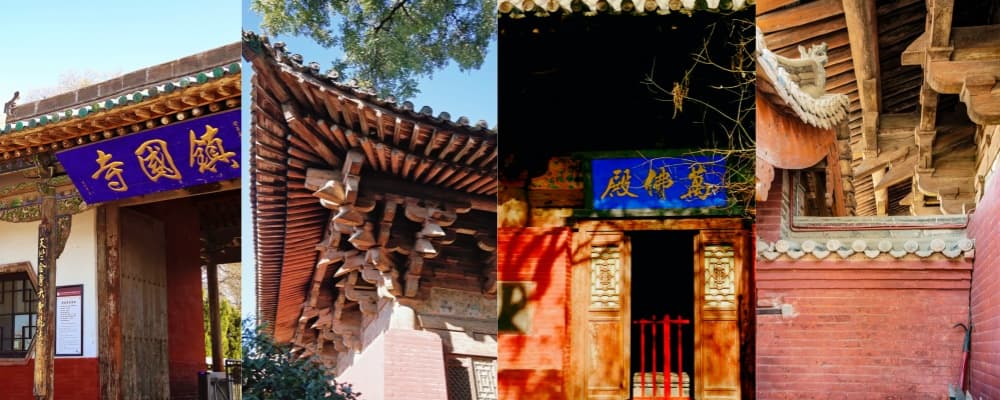
Zhenguo Temple (镇国寺) – A Wooden Miracle from 963 AD
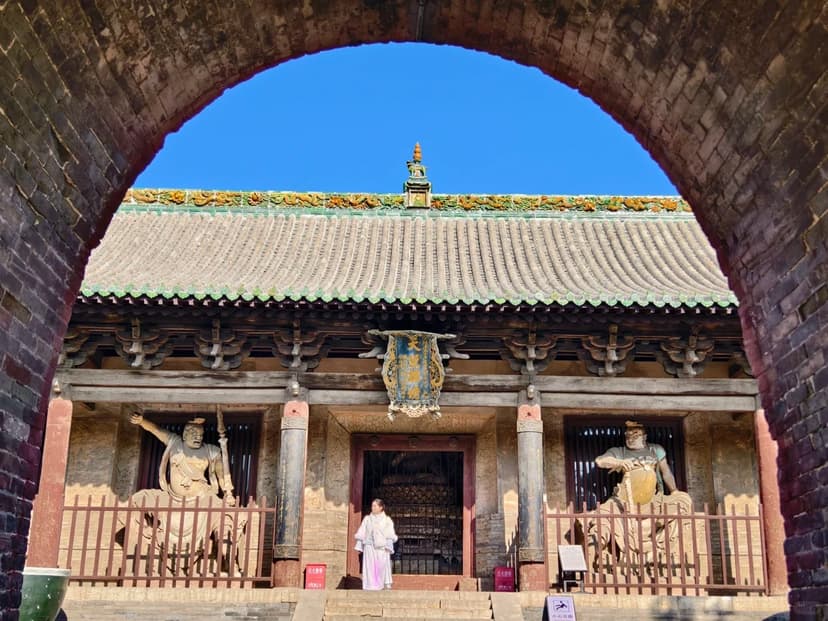
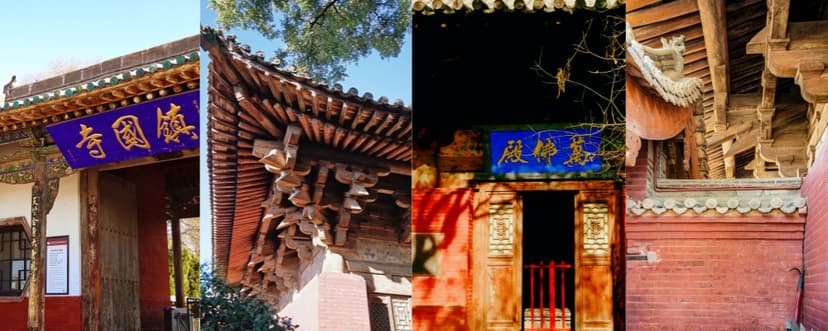
If Shuanglin is about sculpture, Zhenguo is about architecture — and silence. Its Ten-Thousand Buddha Hall (万佛殿), built in 963 AD during the turbulent Five Dynasties period, is one of only six surviving timber structures in China from that era. The dougong brackets under its eaves are colossal — nearly half the height of the entire wall — and arranged in complex layers that distribute weight so efficiently the building has survived over a thousand years of earthquakes. Inside, 11 painted clay figures from the same period are the only surviving Five Dynasties temple sculptures outside the Mogao Caves at Dunhuang. This place receives far fewer visitors than Shuanglin. You may well be the only person there. Standing in a courtyard with a building that has watched a millennium go by, with nothing but the sound of wind in old pines, is a rare kind of peace.
Ten-Thousand Buddha Hall exterior: Spend time just looking at the dougong — those massive, layered wooden brackets are the signature of early Chinese architecture. They are not decorative; they are the entire structural system, and you can see exactly how they work from the outside.
Interior sculptures: The 11 figures are more austere and less theatrical than Shuanglin's Ming-dynasty pieces, reflecting an earlier, Tang-influenced aesthetic. The central Buddha and flanking bodhisattvas have a calm, weighty dignity.
The courtyard: Half the experience is the atmosphere — old cypress trees, a worn stone stele, and absolute quiet.
Practical info
Ticket: ¥25/person. Not included in the Ancient City Pass.
Getting there: About 13 km northeast of Pingyao Ancient City. Bus 209 runs there, or take a taxi (about 20 minutes, ¥30–40). The temple is harder to reach by bus than Shuanglin — a taxi or arranged car is the easier choice.
Time needed: 45 minutes to 1 hour.
Combine with Shuanglin: The two temples are in opposite directions, so you cannot walk between them. A half-day taxi tour covering both costs roughly ¥100–150 round trip — ask your guesthouse to arrange a driver.
Pingyao may be compact, but its magic is never drowned out by the crowds. Even on a busy weekend, a quiet side alley, an early morning stroll on the city wall, or a cup of tea with a courtyard guesthouse owner can make the whole ancient city feel like it belongs only to you. You do not need to fight for a view here — you just need to know when to slow down and where to look.
If you want every corner of this 2,800-year-old city to reveal its story, a reliable travel partner makes all the difference. We have been crafting unforgettable Shanxi journeys for international travelers for over 20 years, with 98% five-star reviews on TripAdvisor.
From securing your Encore Pingyao tickets to arranging a private car for a sunset temple visit, we handle the details so you can simply soak it all in. We will provide the best service and a fair price to guarantee you a Pingyao holiday that feels less like sightseeing and more like stepping into a living history.
Waiting for you in Pingyao! :)
A Living Museum of Ming and Qing Merchant Glory
Imagine stepping into a perfectly preserved Ming and Qing dynasty town where time seems to have slowed down. Pingyao Ancient City is one of China's best-kept secrets and a UNESCO World Cultural Heritage site. As one of the most complete ancient county cities remaining in China, it offers you a real feeling of what life was like during the golden age of Shanxi merchants (Jin Merchants) who once controlled much of China's banking and trade.
Walking along the gray-brick streets lined with traditional shops, old courtyard houses, and ancient temples, you will feel like you have traveled back 300–600 years. The city walls, narrow alleys, and wooden shop signs create an authentic atmosphere that is hard to find in many other tourist places. Whether you love history, photography, or simply want a peaceful cultural escape, Pingyao welcomes you warmly.
It is an ideal destination for first-time visitors to Shanxi, families, couples, and solo travelers. Most people find 1 full day enough for the highlights, but we recommend 2 days to enjoy it slowly, including evening lantern lights and local experiences. You will leave with beautiful photos, great stories, and a deeper understanding of traditional Chinese culture.
Content›Tickets — What You Need to Know |
Tickets — What You Need to Know
The ancient city streets are free to walk around.
Combo Ticket (Recommended): 125 RMB per adult (valid for 3 days). It includes access to 22 major attractions inside the city (such as the City Wall, Rishengchang Draft Bank, County Government Office, etc.).
Validity: The pass is valid for three days from the first time you scan it at any attraction. Each of the 22 included attractions can only be visited once per pass — the system records each entry, so you cannot use the same pass to visit the City Wall twice. Plan your route so you do not accidentally scan in somewhere you only meant to pass by.
Discounts: Usually 65 RMB for students, children (under 1.2m free), and seniors with a valid ID. Bring your passport.
Opening Hours: The ancient city is open 24 hours. Most ticketed attractions are open 8:00–18:00 (March–November) or until 17:30 in winter.
Where to buy: You can buy the pass in several ways: through the official Pingyao Ancient City WeChat mini-program, on major Chinese travel platforms like Ctrip or Meituan, or in person at ticket offices near the main gates. Real-name registration is required — you must present your passport when purchasing and when scanning in at your first attraction. The system links the pass to your identity, so keep your passport with you at all attractions. Foreign credit cards are not accepted at on-site ticket offices, so online purchase (which accepts international cards) or paying a friend via WeChat/Alipay is the easiest route. If you must buy in person with cash, bring enough Chinese yuan.
Golden Seasons: Spring (April–May) & Autumn (September–October)
These are the ideal months. Temperatures range from 10 to 25°C — comfortable for walking the city wall and exploring courtyards. The sky is clear blue, and the light is excellent for photography. Spring brings fresh green to the old trees; autumn turns the leaves golden against grey-brick walls.
Important: Avoid the two "Golden Weeks" if possible — Labor Day (May 1–5) and National Day (Oct 1–7). During these periods, the ancient streets become packed, accommodation prices double or triple, and queues are long everywhere. If you must visit during these dates, book at least one month ahead.
Summer (June–August)
Hot (up to 35°C) but dry, not humid. Midday can be uncomfortable for outdoor exploring.
Best way: go out early, retreat to your guesthouse for a nap during the hottest hours, and head out again after 4 p.m. Summer evenings are lovely — lanterns, cool breezes, street food stalls firing up.
Winter (November–March)
Cold ( -10 to 5°C) and very dry. Snow falls a few times each winter, and the ancient city dusted with white is stunning. Streets are empty, ticket lines vanish. Winter is also comfort-food season — lamb hot pot and steaming noodle soup taste best in the cold. Pack thermal underwear, a thick down coat, and moisturizer.
Most Common Route: Fly to Taiyuan + High-Speed Train
1. Fly into Taiyuan Wusu International Airport (太原武宿国际机场, TYN).
2. Taxi to Taiyuan South Railway Station (太原南站) — about 20 min, ~¥30.
3. High-speed train to Pingyao Ancient City Station (平遥古城站) — about 30 min, ~¥28.5 for second class. Trains depart every 30–60 minutes.
Two Train Stations — Don't Get Them Confused!
Pingyao Ancient City Station (平遥古城站): High-speed trains. ~10 km from the city. Taxi to the old city: 15–20 min, ¥20–30. Or Bus 108 for ¥1.
Pingyao Station (平遥站): Regular trains. Only ~1 km from the old city. Walk to the West Gate (下西门) in 10–15 minutes — no taxi needed.
Key tip for foreign visitors: Before departing, ask your guesthouse to send you their name and address written in Chinese characters. Show this to the taxi driver at the station. Most drivers do not speak English.
Alternative Routes: Direct Flights to Datong or Yuncheng
If Taiyuan does not fit your route, consider flying directly into Datong Yungang Airport (大同云冈机场) in northern Shanxi or Yuncheng Guangong Airport (运城关公机场) in the south. Datong is about 3.5 hours from Pingyao by high-speed train, and Yuncheng is about 2 hours. Both cities are worth visiting in their own right — Datong for the Yungang Grottoes and Hanging Temple, Yuncheng for the Guandi Temple and Yongle Palace — so you can build a north-to-south or south-to-north Shanxi itinerary that naturally includes Pingyao in the middle. This works especially well if you plan to explore Shanxi beyond just Pingyao, which, given the riches of the province, you absolutely should.
Getting to Pingyao from Beijing or Xi'an
Pingyao sits neatly between two of China's most popular destinations. From Beijing, direct high-speed trains to Pingyao Ancient City Station take about 3.5 to 4 hours and cost around ¥180–220 for a second-class seat. This means you can leave Beijing in the morning and be walking through the ancient city gates by early afternoon. From Xi'an, high-speed trains also take about 3 to 3.5 hours and cost around ¥150. Both routes make Pingyao a logical and easy stop on a longer China itinerary. Travelers often combine Beijing–Pingyao–Xi'an into a single overland journey, with the fast trains doing all the heavy lifting. If you are planning such a trip, book your train tickets a week or two ahead, especially on weekends and around holidays.
Key Attractions — What to See & Photo Spots
The Ancient City Wall (古城墙)
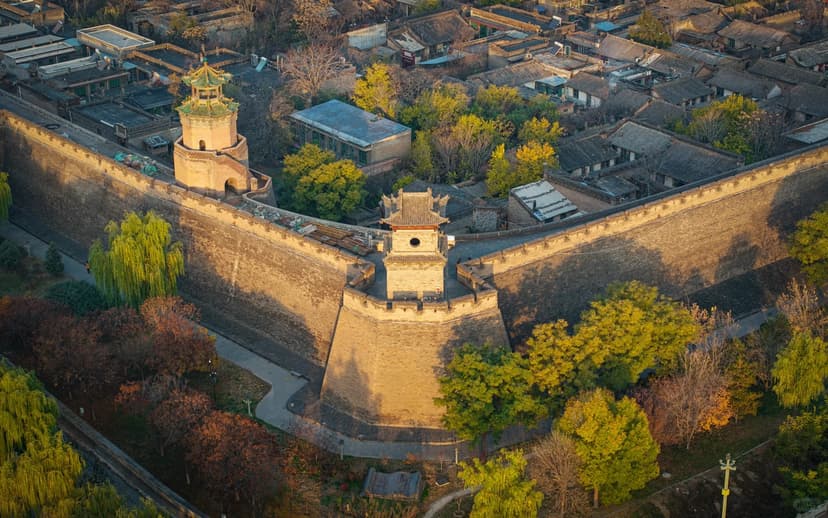
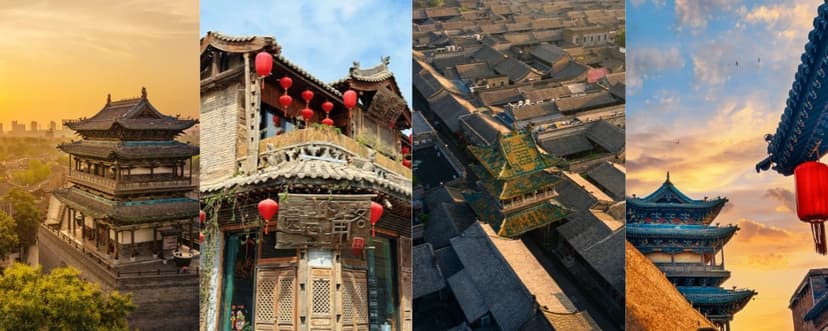
The wall is Pingyao's crown. Built in 1370 during the Ming dynasty, it stretches 6.4 km around the entire old city, with 72 watchtowers and 3,000 battlements. Walking or cycling on top gives you the best views in town — grey-tiled rooftops stretching to the horizon, the lanes you just walked through now visible as a tidy grid below. The best access point is Yingxun Gate (迎薰门), the South Gate, especially around sunset when the red lanterns glow, and the light turns golden. Bike rental is available at certain sections — cycling the full loop is unforgettable. Allow 1.5–2 hours to walk the full circuit, or about an hour by bike.
Rishengchang Draft Bank (日升昌票号)
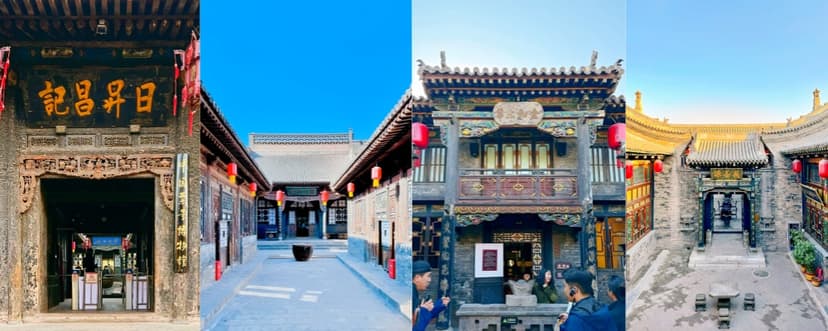
Known as "China's First Bank," Rishengchang was founded in 1823 and pioneered the draft system that let merchants move silver safely across the empire without carrying physical coins. The modest courtyard hides a revolutionary idea. Look for the old wooden counter with abacuses, wax figures of clerks in Qing robes, and the original draft notes under glass. It takes about 30–45 minutes to explore.
Photo tip: the main hall's counter, with its row of abacuses and the light falling through latticed windows, looks like a still from a period film.
Xie Tong Qing Bank & Underground Vault (协同庆票号·地下金库)
Xie Tong Qing's highlight is underground. Beneath the banking halls lies a labyrinthine gold vault, reached through narrow stone passages. At its heart sits the "Divine Dragon Pillar" (神龙宝柱), marking the city's geomantic center. The vault is dramatically lit and genuinely atmospheric — you can sense the weight of the silver that once filled these chambers. The visit takes about 40 minutes. Combine with Rishengchang; they are a short walk apart and together tell the full story of Pingyao's banking empire.
Pingyao County Yamen (平遥县衙)
The best-preserved ancient county government office in China. You can walk through the grand courtroom, the magistrate's private quarters, the jail (with its chilling contrast between "light" and "heavy" cells), and a quiet back garden. The must-see: live court trial reenactments held daily at 9:30, 11:00, and 15:30. Each show is about 15 minutes, with costumed actors playing a magistrate and bickering plaintiffs. It is performed in Chinese, but the slapstick humor and physical comedy transcend language. Arrive 10 minutes early to get a good spot. Allow 1–1.5 hours total.
Wenmiao Confucian Temple (文庙)
China's oldest surviving Confucian temple, with a main hall dating back to the Jin dynasty (800+ years old). The temple is serene and spacious. The highlight is the Imperial Examination Exhibition — you can see the only surviving original zhuangyuan (top scholar) exam paper in China, a scroll of impossibly neat calligraphy written under high-stakes conditions. Allow 45 minutes to 1 hour. Good for a quiet moment after the busier streets.
City God Temple (城隍庙)
A uniquely structured Daoist temple — a "temple within a temple" that also houses the God of Wealth and the Kitchen God. The vivid (and slightly fearsome) statues of underworld judges and demons are especially striking. Allow 30–45 minutes. Best visited in daylight if the demon statues make you uneasy.
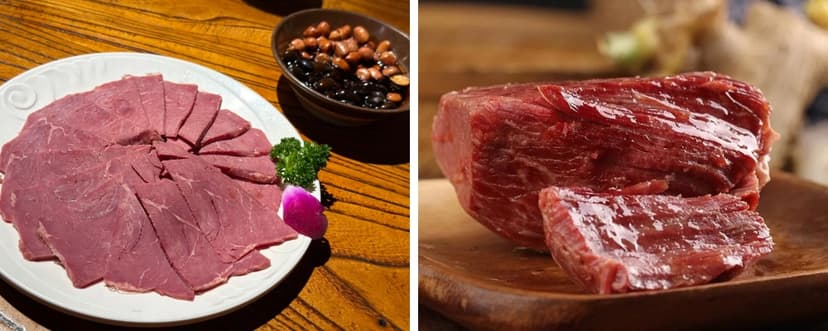
Pingyao Beef (平遥牛肉) – The Signature Dish
This is the one thing you must eat. Pingyao beef is seasoned with salt and spices, then slow-braised until tender enough to pull apart by hand. The best way to eat it is from a street-side stall: choose a chunk, the vendor slices it thickly, and you eat it with your fingers, dipped in aged vinegar and chili flakes. It is salty, deeply savory, and surprisingly addictive. Look for dedicated beef shops along South Street — the ones with whole cuts hanging in the window. Expect to pay around ¥30–50 for a generous portion.
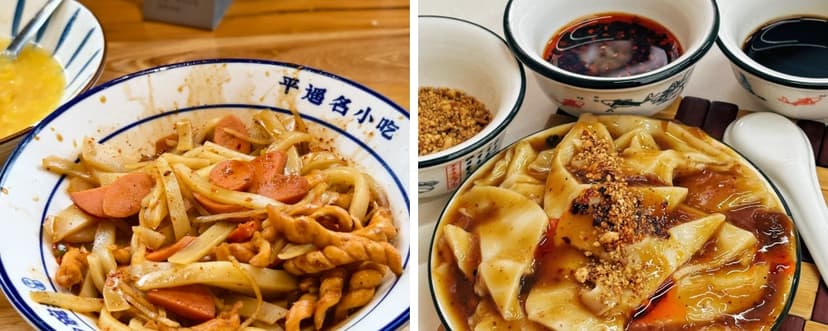
Wantuo (碗托) – Savory Jelly
Wantuo is a jiggly, savory jelly made from wheat flour, served two ways: cold with chili oil, minced garlic, and vinegar (refreshing in summer), or hot and stir-fried with bean sprouts and sausage (hearty in winter). It has a slippery, slightly chewy texture — strange at first, then comforting. Dong Ji Fried Wantuo (董记炒碗托) near the County Yamen is the local favorite, a no-frills spot where the wok never stops.
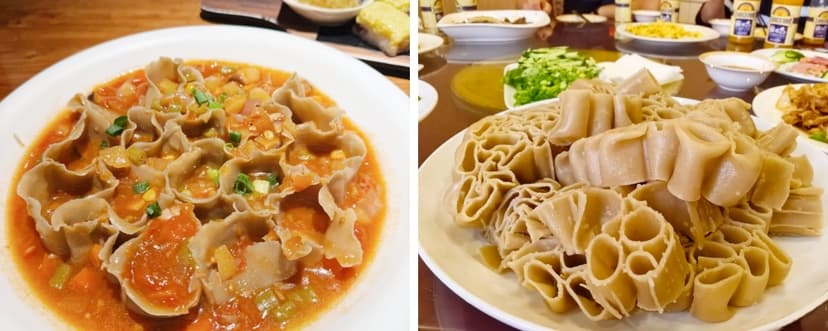
Kaolaolao (莜面栲栳栳) – Oat Spirals
These little oat-flour spirals are a Shanxi staple. Steamed in a bamboo basket and served with a bowl of rich mutton sauce for dipping, or stir-fried with beef and peppers. The texture is firm and nutty, and the shape is pure fun — like tiny rolled-up crepes. Kaolaolao appears on nearly every restaurant menu. A plate is usually ¥25–40. It is also one of the best choices for vegetarians (ask for a mushroom or tomato sauce instead of mutton).
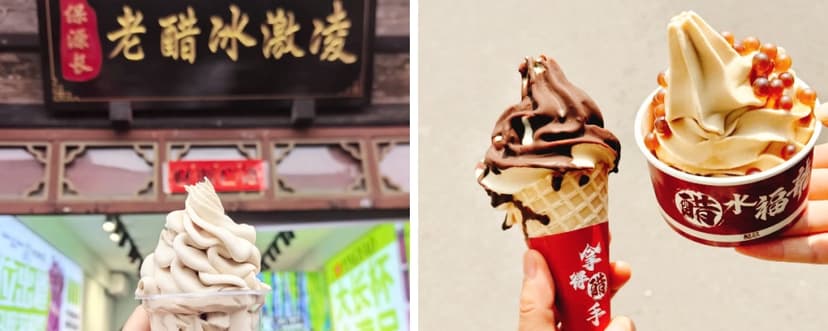
Aged Vinegar Ice Cream (老陈醋冰淇淋) – The Wild Card
It sounds like a dare, but it works. Dark, tangy, malty, and sweet, the vinegar notes cut through the creaminess in a genuinely refreshing way. You will find it at stalls along the main tourist streets — a small cup costs around ¥10–15. Try it after a heavy meal; it cleanses the palate and gives you a story to tell.
Hand-Polished Lacquerware (推光漆器)
Pingyao's most famous craft. Artisans layer lacquer onto wood or bronze, then polish it by hand until it glows like glass. Common items include jewelry boxes, mirrors, trays, and small screens. The designs — flowers, birds, mythical beasts — are intricate and deeply Chinese. Buy from established shops, not street stalls where quality can be dubious. A small jewelry box starts around ¥100–200. The shop assistants can usually pack it safely for travel. Avoid cheap knockoffs by looking for the distinct depth and smoothness of genuine hand-polished pieces.
Aged Shanxi Vinegar (山西老陈醋)
Take home a bottle of the malty, complex black vinegar that defines Shanxi cooking. Shops along South Street offer tastings — you can sample different ages and varieties. Buy from specialty vinegar shops rather than generic souvenir stores. A good bottle costs ¥20–50, depending on age. Check airline carry-on rules: vinegar is liquid, so pack it in your checked luggage. Some shops sell small gift boxes that are well-padded for travel.
Paper Cutting (剪纸)
Intricate red paper cutouts featuring Chinese zodiac animals, auspicious characters, and folk scenes. They are tiny, lightweight, and cost almost nothing — perfect for stuffing into a backpack. A set of small pieces might cost ¥10–30. Larger, framed pieces are more expensive but make great wall art. You will see artisans cutting them by hand in small shops; buying directly from them supports the craft. Press them flat in a book to keep them from crumpling in transit.
Nearby Attractions – Beyond the Ancient City Walls
Shuanglin Temple (双林寺) – China's Hidden Sistine Chapel of Sculpture
Shuanglin Temple looks modest from the outside — a quiet compound of grey-brick halls surrounded by cornfields. Step inside, and you enter one of the world's greatest collections of painted clay sculpture. Over 2,000 figures dating from the Song to Ming dynasties fill its halls, ranging from towering 3-metre guardians to delicate 30-centimetre figures tucked into wall niches. Art historians often call it the "Oriental Treasure House of Painted Sculpture." If the ancient city shows you how people lived, Shuanglin shows you what they believed — and the breathtaking skill with which they expressed it.
Hall of the Heavenly Kings (天王殿): Four colossal guardian warriors stand outside the hall, each nearly 3 metres tall, their faces contorted in protective fury. The sheer physical presence is startling — you feel small, and that is the point.
Hall of the Arhats (罗汉殿): Eighteen life-sized arhats, each with a completely distinct face and personality. One in particular — the seated figure with a tilted head and a bemused expression — looks like he just heard a joke he is not sure he should laugh at. It is a level of psychological realism rare in pre-modern art anywhere.
Hall of a Thousand Buddhas (千佛殿): The centrepiece is a serene Guanyin sitting in the "water-moon" pose. To her left stands Weituo (韦陀), a guardian deity portrayed in a twisting, weight-shifting stance with ribbons flowing as if caught mid-motion. Many visitors consider this single figure the finest polychrome sculpture in China. The walls around him are crowded with hundreds of suspended miniature figures, all leaning forward as if straining to hear a sermon.
Practical info
Ticket: ¥35/person. Not included in the Ancient City Pass.
Getting there: About 6 km southwest of Pingyao Ancient City. Take Bus 108 (¥1) or a taxi (about 6 minutes, ¥15–20). If taking a taxi, ask your guesthouse to write "双林寺" for the driver.
Time needed: 1–1.5 hours.
Photography note: No flash or tripods inside the halls. Some halls prohibit photography entirely — follow the signs. The dim lighting is intentional, protecting the pigments.
Zhenguo Temple (镇国寺) – A Wooden Miracle from 963 AD
If Shuanglin is about sculpture, Zhenguo is about architecture — and silence. Its Ten-Thousand Buddha Hall (万佛殿), built in 963 AD during the turbulent Five Dynasties period, is one of only six surviving timber structures in China from that era. The dougong brackets under its eaves are colossal — nearly half the height of the entire wall — and arranged in complex layers that distribute weight so efficiently the building has survived over a thousand years of earthquakes. Inside, 11 painted clay figures from the same period are the only surviving Five Dynasties temple sculptures outside the Mogao Caves at Dunhuang. This place receives far fewer visitors than Shuanglin. You may well be the only person there. Standing in a courtyard with a building that has watched a millennium go by, with nothing but the sound of wind in old pines, is a rare kind of peace.
Ten-Thousand Buddha Hall exterior: Spend time just looking at the dougong — those massive, layered wooden brackets are the signature of early Chinese architecture. They are not decorative; they are the entire structural system, and you can see exactly how they work from the outside.
Interior sculptures: The 11 figures are more austere and less theatrical than Shuanglin's Ming-dynasty pieces, reflecting an earlier, Tang-influenced aesthetic. The central Buddha and flanking bodhisattvas have a calm, weighty dignity.
The courtyard: Half the experience is the atmosphere — old cypress trees, a worn stone stele, and absolute quiet.
Practical info
Ticket: ¥25/person. Not included in the Ancient City Pass.
Getting there: About 13 km northeast of Pingyao Ancient City. Bus 209 runs there, or take a taxi (about 20 minutes, ¥30–40). The temple is harder to reach by bus than Shuanglin — a taxi or arranged car is the easier choice.
Time needed: 45 minutes to 1 hour.
Combine with Shuanglin: The two temples are in opposite directions, so you cannot walk between them. A half-day taxi tour covering both costs roughly ¥100–150 round trip — ask your guesthouse to arrange a driver.
Pingyao may be compact, but its magic is never drowned out by the crowds. Even on a busy weekend, a quiet side alley, an early morning stroll on the city wall, or a cup of tea with a courtyard guesthouse owner can make the whole ancient city feel like it belongs only to you. You do not need to fight for a view here — you just need to know when to slow down and where to look.
If you want every corner of this 2,800-year-old city to reveal its story, a reliable travel partner makes all the difference. We have been crafting unforgettable Shanxi journeys for international travelers for over 20 years, with 98% five-star reviews on TripAdvisor.
From securing your Encore Pingyao tickets to arranging a private car for a sunset temple visit, we handle the details so you can simply soak it all in. We will provide the best service and a fair price to guarantee you a Pingyao holiday that feels less like sightseeing and more like stepping into a living history.
Waiting for you in Pingyao! :)