



Saint Sophia Cathedral, Harbin: What to See and How to Visit
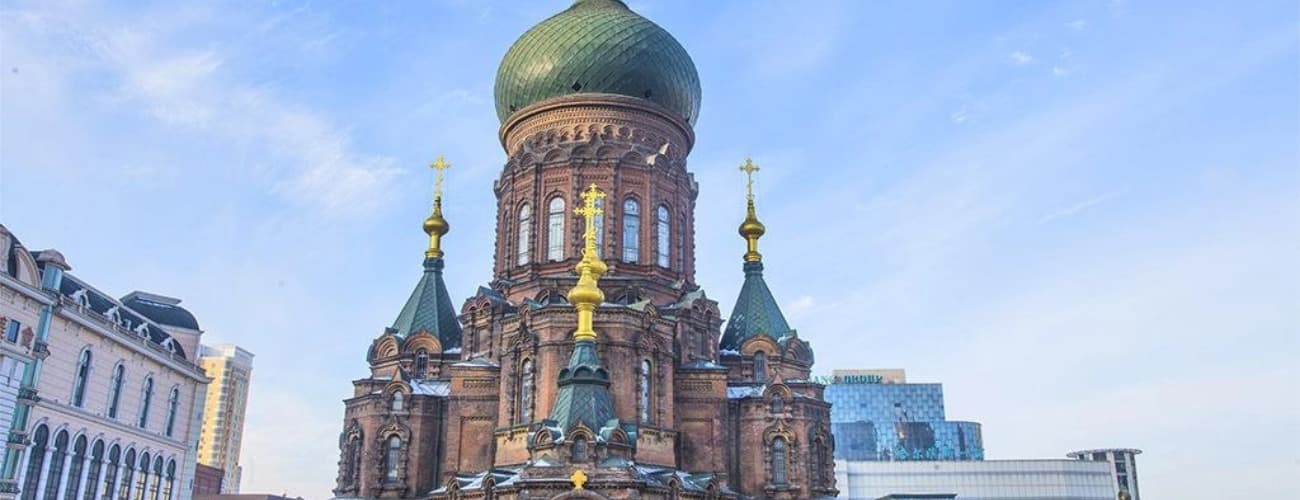
Saint Sophia Cathedral brings together several features that make Harbin's architecture distinctive: a green onion-shaped dome, richly patterned red brickwork and a history connected with the city's early twentieth-century development. Standing in an open square in Daoli District, it is easy to include in a walk through the historic centre.
For a first visit, start with the exterior and add the interior if architecture, wall paintings or the building's history interest you. Daylight reveals the masonry and changing proportions as you walk around; evening illumination gives the dome and arches a different presence against the sky.
Known also as St Sophia Cathedral, the former Orthodox church now serves a cultural and visitor function. Its square, indoor displays and music programmes offer different experiences, so choose the part that interests you before fitting it into your day.
What Makes Saint Sophia Cathedral Worth Visiting?
Saint Sophia is particularly rewarding because you can appreciate it at two scales. From across the square, the dome, bell tower and smaller roofs form a recognisable skyline. Closer to the walls, the interest shifts to recessed windows, brick arches and the layers of masonry around doors and rooflines.
Walk around the building rather than stopping at the first frontal view. Different angles reveal how its lower sections support the central dome, while the surrounding open space gives you room to step back and compare the façades. A modest change of position often produces a more interesting photograph than simply moving closer.
The cathedral also offers a useful introduction to Harbin's historic centre. Its religious architecture contrasts with the commercial buildings of Central Street and the Chinese Baroque façades of Lao Daowai. Seeing these different settings helps explain why the city cannot be summed up by a single architectural influence.
For visitors with limited time, the exterior is a satisfying stop in its own right. Those interested in conservation and historic interiors will gain more by going inside. Families can keep the visit compact, using the square as an architectural stop before a meal rather than turning it into a lengthy history lesson.
What Does Its Architecture Reveal About Harbin?
The first Saint Sophia church was built in 1907. Reconstruction began in 1923, and the present building was completed in 1932. These dates matter because the substantial brick cathedral seen today represents a later stage of development, rather than the original early structure. Its Byzantine-style design reflects its Orthodox religious origins.
The building belongs to the period when railway development, migration and commerce were reshaping Harbin. Its story provides one way into that wider history, while the surrounding shopping streets show how the district continues to function as part of a Chinese city.
The Green Dome and Red-Brick Exterior
The central dome draws the eye upwards, but the supporting structure deserves equal attention. Look at the contrast between the rounded dome and the more angular roof sections below it. The smaller architectural elements make the central feature appear more prominent.
The red brickwork is especially readable in daylight. Around windows and entrances, changes in depth create shadows that help define the façade. These details are easy to miss in a photograph taken from far away, so leave time for a closer look after capturing the overall building.
The colour relationship is part of its appeal: green roofing above warm brick, set against a pale winter sky or the deeper blue of a clear evening. Snow adds another layer to the scene when it settles on ledges and roofs.
The Bell Tower and Arched Details
The bell tower helps distinguish the entrance side from other views. Move off the central axis to see how the tower relates to the dome behind it; from some angles, the building feels taller and more layered than it does in a straight-on photograph.
Repeated arches link the larger architectural forms to smaller doors and windows. You do not need specialist knowledge to enjoy these details. Comparing the shapes and noticing where brick projects or recedes is enough to make the visit more engaging.
Can You Go Inside Saint Sophia Cathedral?
Yes: the interior reopened after conservation work in December 2025. It offers a closer encounter with the historic space, restored wall paintings and interpretation of the cathedral's past. The current cultural use also includes music programming, with admission arrangements tied to the visitor operation.
Sophia Square
The square is the simplest way to experience the cathedral. Exterior sightseeing is free, and you can choose a short photographic stop or a more leisurely circuit of the building.
Begin far enough away to see the full silhouette, then approach the walls for architectural details. This order works well for visitors arriving with a camera or phone: take the broad view first, then concentrate on features that would otherwise disappear in the overall composition.
The square is also part of a busy central district. People cross it, meet friends and stop for photographs, so it feels like an urban public space rather than an isolated monument.
The Interior and Restored Murals
The interior reopened on 6 December 2025 following mural conservation. The accompanying exhibition was refreshed with text, photographs and video explaining the cathedral's history and its place in the city.
Go inside if you want to understand the volume of the building and see the surviving decorative surfaces at closer range. The contrast with the exterior is the main attraction: outside, you read the silhouette and masonry; inside, you experience the height, enclosing walls and painted decoration.
A good visit leaves room to look upwards and move slowly through the permitted areas. Trying to read every panel is less useful if you have little time or the available interpretation does not match your language needs. Focus on the building itself and the parts of its history that interest you.
Music and Cultural Programmes
Music has become part of the cathedral's cultural presentation. For travellers who enjoy live performance, a scheduled programme can give the interior visit a clear focus.
Choose an advertised session for your date and fit the surrounding walk around it. The ticket description should identify the programme, admission period and any seating arrangements. This is more useful than arriving at an arbitrary time expecting a concert to begin.
Travellers interested mainly in architecture can keep their visit centred on the space and displays. Music is an additional reason to enter, rather than the only way to appreciate the interior.
Is It Better to Visit by Day or at Night?
Choose daylight for architectural detail and evening for the illuminated exterior. If your hotel is nearby, two short visits can work better than waiting outside for the light to change.
Daytime
Daylight makes the brickwork, roof shapes and decorative details easier to distinguish. It is the strongest choice for a first visit if you want to understand the building rather than take only a night photograph.
Overcast weather can be helpful for portraits, producing softer light on faces and less contrast between bright sky and shaded walls. On a clear day, try more than one side of the square instead of photographing straight into the sun.
For a phone photograph, step back until the dome fits comfortably in the frame. Keeping the phone closer to level reduces the appearance of walls leaning backwards. Leave a little space around the building rather than pressing its highest point against the edge of the picture.
Dusk and Evening
At dusk, the remaining sky colour can balance the illuminated building. Later, the contrast becomes stronger, with the cathedral standing out more sharply against the dark background.
Lighting follows the scenic area's operating arrangements, separately from sunset and interior admission. Plan an evening walk around dinner, then use the actual lighting conditions on arrival rather than building the outing around a promised minute.
For photographs of people, choose a position with some light on the face. A brightly lit cathedral behind a person standing in darkness can leave the subject almost invisible. Take a few photographs, put your gloves back on and continue the walk; there is little value in spending the whole evening adjusting the same composition.
How Much Time Do You Need, and What Does Entry Include?
For most first-time visitors, 30–45 minutes is a useful allowance for the exterior, while an exterior-and-interior visit deserves roughly 60–90 minutes, excluding a substantial queue or a scheduled programme. These are suggested sightseeing allowances, not official visit durations.
Visit | Suggested allowance | What to prioritise |
Square and exterior | 30–45 minutes | Overall view, a circuit of the building and photographs |
Exterior and interior | 60–90 minutes | Architecture, wall paintings and selected displays |
Visit with a music programme | Above allowance plus the advertised programme | Plan the surrounding walk around the session |
The square and indoor admission are separate. Your interior purchase should show what is included, particularly when a music programme forms part of the offer.
The operator's reopening announcement identified Meituan, Douyin and an entrance QR code as purchasing channels. Search using 索菲亚景区, the scenic area's Chinese name. For a foreign-passport booking, use a channel that explicitly accepts your document type and retain the booking confirmation with your passport details.
At the time of research on 29 October 2026, a complete official 2026–2027 winter tariff and programme schedule had not been verified. For a flexible exterior visit, no advance ticket purchase is needed. For an interior visit built around music, settle the session and ticket inclusion first, then organise lunch or the next attraction around it.
Opening hours have changed between seasons. A March 2026 operator-sourced notice listed the interior from 08:30 to 17:00, shorter than the preceding winter schedule; those hours should not be carried forward as the new winter timetable.
Families and older travellers should have the relevant identity documents available when asking about concessions. The practical question is which ticket applies to that visitor and what evidence the sales channel accepts.
How Do You Get There from Central Street or Your Hotel?
Saint Sophia Cathedral stands in Daoli District, in the historic centre south of the Songhua River. For navigation, use 圣索菲亚教堂 or 索菲亚景区 and select the cathedral square.
From Central Street, walking is a sensible choice when you are already exploring its southern or middle sections. The street is long, so a walking estimate from its riverfront end describes a different journey. Set the route from your actual café, hotel or street junction.
Shangzhi Dajie Station on Metro Line 2 is a useful approach, followed by a street-level walk to the square. It is not an entrance directly beneath the cathedral. For travellers already near Central Street, walking may involve less effort than reaching a station, descending to the platform and emerging elsewhere.
A taxi or arranged transfer suits visitors carrying luggage or trying to reduce time outdoors. Set the destination to the square and agree on a roadside drop-off point; the final approach is on foot. For collection afterwards, save the exact meeting point rather than asking the driver to meet "at the cathedral", where several sides of the square could fit that description.
If you are staying in Songbei, treat this as part of a south-bank outing. Combine the journey with Central Street and a meal, rather than crossing the river solely for a brief photograph.
What Can You Visit Nearby?
Saint Sophia works particularly well as the opening stop in a city walk. Start with the building while you are fresh, then move towards food and the commercial streets. The riverfront can become the final section for those who want a longer outing.
·Daoli Market
Daoli Market, 道里菜市场, gives the visit a different texture: prepared food, local shopping and the activity of a central market. It is a useful place to browse after the square, particularly if you want a small snack before continuing.
Choose food by what you can identify and comfortably eat, rather than ordering several unfamiliar items at once. Ask whether the price is per item, portion or weight. A market snack suits a short break; a seated restaurant is the better choice when your group needs a proper rest.
The market also helps balance the architectural visit. You move from a preserved landmark into an everyday commercial setting, which gives a more rounded impression of central Harbin.
·Central Street
Central Street, 中央大街, offers a broader collection of historic commercial façades. Where Saint Sophia concentrates attention on one building, the pedestrian street rewards looking along a succession of shopfronts, upper storeys and corners.
For a short outing, choose one section and a place for lunch. You do not need to walk the entire street to enjoy it. Travellers interested in architecture can spend longer examining the upper floors, while others may prefer the shops, cafés and food stops.
A practical half-day plan is the cathedral in the morning, followed by the market or a seated lunch, then a selected stretch of Central Street. This leaves the afternoon available for another part of the city.
·The Songhua River Waterfront
Continuing towards the northern end of Central Street brings you to the Flood Control Memorial Tower and the south-bank waterfront. The change from enclosed streets to the broad river view makes this a satisfying conclusion to a longer walk.
Add the river when your group still wants time outdoors. In winter, it is also the easiest section to shorten because the open waterfront can feel more exposed than the commercial streets. Arrange a collection point near the end of your chosen route so you can finish without retracing it.
What Changes in Winter?
Winter changes the pace of a visit more than its basic structure. The cathedral remains an architectural stop, while snow, shorter daylight and evening illumination influence how long you spend outside and what you photograph.
Put gloves, a hat and your camera or phone where they are easy to reach before leaving the vehicle. Around the square, look for cleared walking surfaces and take particular care where snow has melted near entrances. Stop walking before looking up for a photograph.
A seated meal after the visit is especially useful if another outdoor attraction follows. It gives everyone time to warm up and makes it easier to judge how much of Central Street or the waterfront to include.
In warmer months, the same route can expand naturally. Longer daylight supports slower architectural walks and more time at the river. Fresh snowfall is a bonus for winter photographs; the cathedral's shape, colour and street setting remain the reasons to visit throughout the year.
Saint Sophia Cathedral FAQs
·Is Saint Sophia Cathedral still used for regular religious services?
Its present visitor role is as a historic and cultural venue. Plan your visit around architecture, interior displays and advertised cultural programmes rather than a regular worship schedule.
·Do you need an interior ticket to photograph the cathedral?
No. You can photograph the exterior from the public square without purchasing indoor admission. Inside, follow the photography instructions displayed for the exhibition or programme.
·Is it a practical stop on your arrival day?
Yes, particularly when you are staying in central Daoli. After checking in and eating, a short exterior visit is easy to fit into an otherwise light day; an indoor programme needs a firmer arrival time.
·Can you visit the square after the interior closes?
An evening exterior visit can work separately from indoor admission. Use the scenic area's current lighting schedule to choose the time, especially if photography is your main purpose.
Include Saint Sophia in Your Harbin Visit
Silk Road Travel's 3 Days Harbin City Tour places Saint Sophia and Central Street on the same day as Sun Island and Ice and Snow World. It suits visitors who want concentrated sightseeing; travellers who prefer a longer architectural walk or indoor programme should discuss spreading those visits across more time.
For a broader winter holiday, the 5 Days Harbin Winter Tour with Yabuli Skiing combines mountain activities with city highlights that include Sophia Square. Share your dates, arrival time and interest in the interior so the cathedral visit can be fitted around the rest of your journey.