



Siberian Tiger Park : 2026-2027 Harbin & Heilongjiang Travel
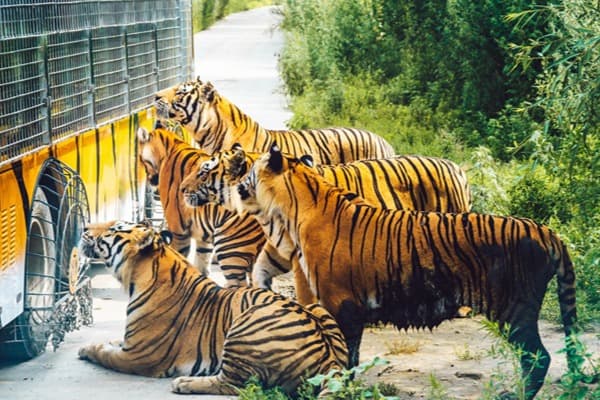
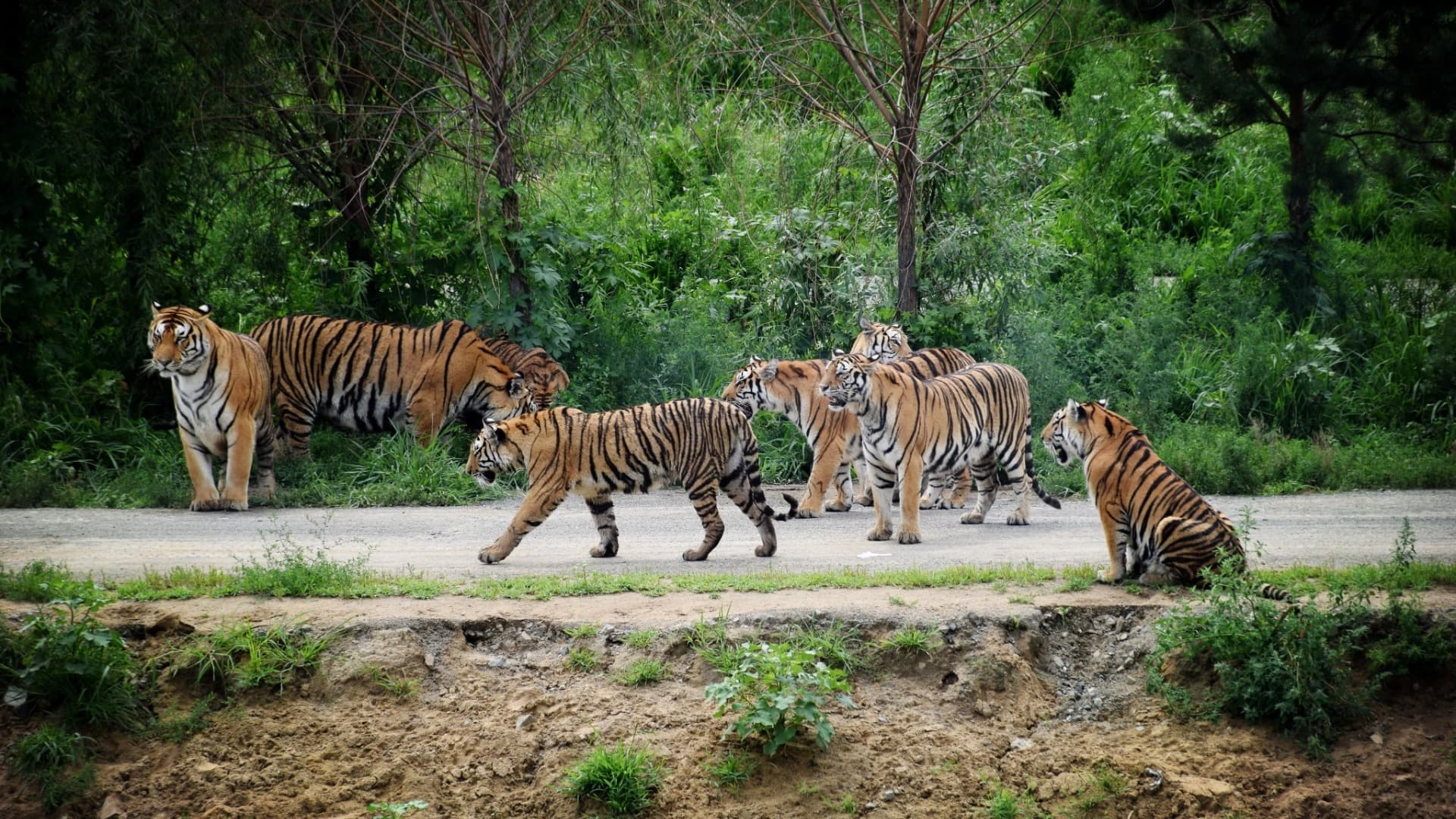
Siberian Tiger Park in Harbin is a captive breeding and visitor facility where the main attraction is observing tigers from sightseeing vehicles travelling through large enclosures. Walking areas extend the visit beyond the vehicle circuit, with further animal displays and interpretation.
The park lies north of the Songhua River, making it a practical addition to a day in Songbei. It particularly suits visitors interested in large cats, although the feeding-based experiences deserve consideration before booking. Choose the standard sightseeing vehicle for an observation-focused visit, or investigate the feeding-window option if that interaction interests you. Allow time for boarding, the vehicle circuit and the walking section, rather than treating the advertised ride as the whole visit.
What Is Siberian Tiger Park Like?
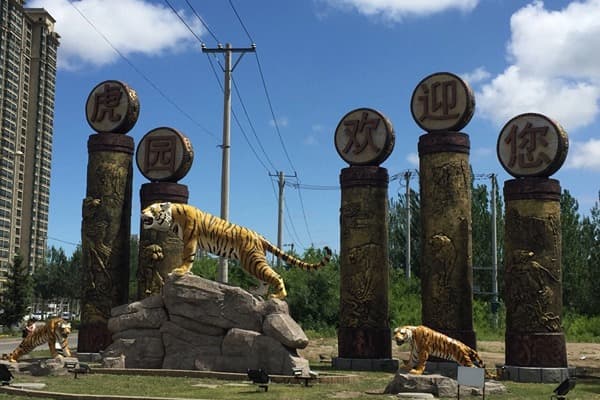
The attraction commonly called Siberian Tiger Park is Heilongjiang Northeast Tiger Forest Park, or Heilongjiang Dongbeihu Linyuan(东北虎林园) in Chinese. Its location is in Harbin's Songbei District, on the north side of the Songhua River.
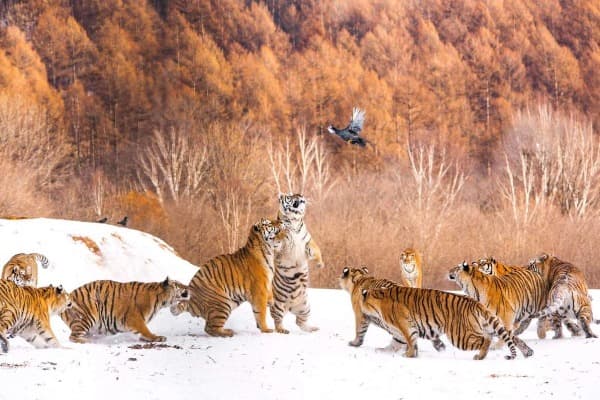
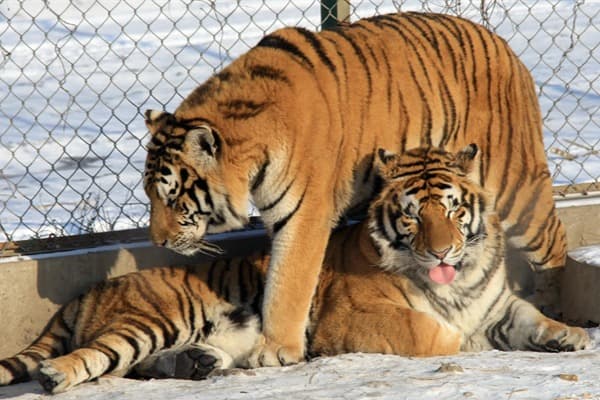
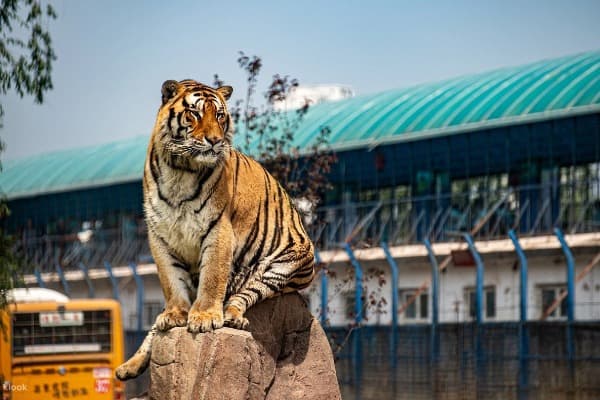
The Siberian tiger, also known as the Amur tiger, is the principal animal associated with the park. The facility has a breeding role, and reporting based on information from its staff identifies it as a breeding-resource base associated with the Northeast China Tiger and Leopard National Park. The public visit takes place within a managed captive environment.
Beyond its conservation and breeding role, the park stands out as a highly family-friendly wildlife attraction in Harbin, well suited for travellers visiting with children of all ages. Rigorous safety measures are built into every part of the visitor experience: fully enclosed sightseeing buses for the free-range tiger enclosures, sturdy protective barriers along all walking exhibits, and staff stationed across the site to ensure a secure environment for young guests.
Alongside its flagship Siberian (Amur) tiger population, the park hosts a wide range of other mammal species — from rare big cats to gentle interactive animals — delivering a varied, engaging outing rather than a single-species display. Supervised feeding interactions, up-close tiger cub viewing and multiple scenic vantage points also create abundant photo opportunities, making it a memorable, fun-filled stop for family winter or summer itineraries.
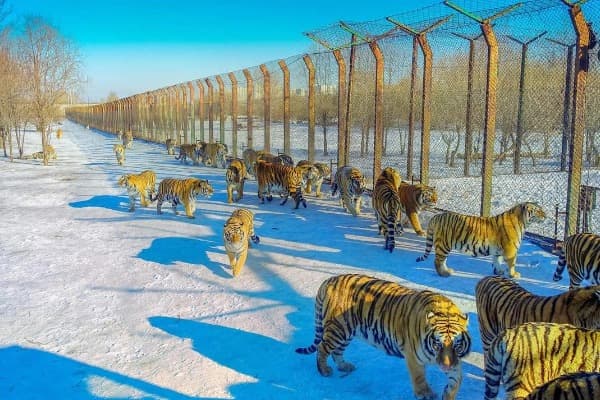
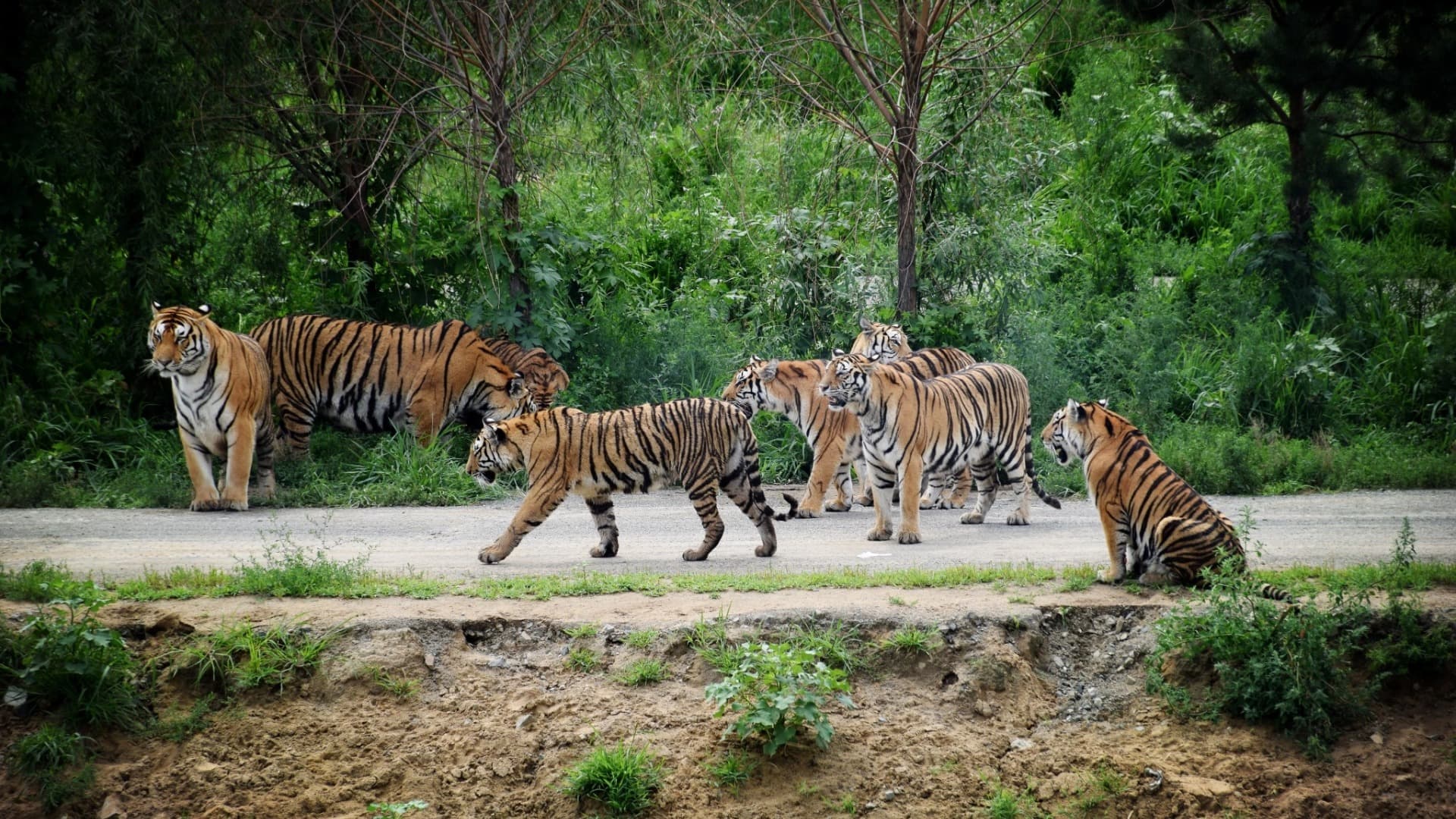
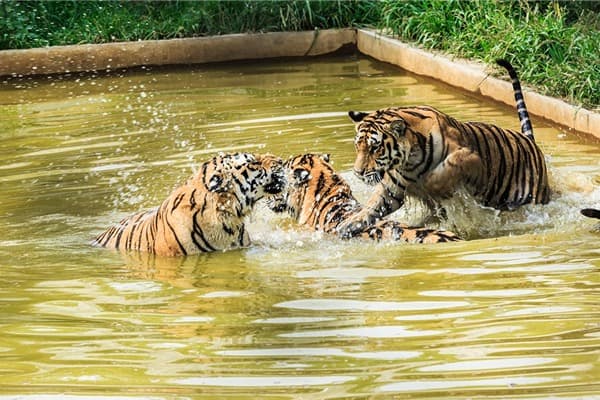
For visitors, the vehicle circuit is the defining experience. Instead of moving continuously between individual viewing windows on foot, you travel through enclosures and observe animals at different distances from the bus. Some will be resting, while others will be walking or responding to activity around the vehicles.
This makes the visit visually different from Harbin's architectural sights and ice exhibitions. Much of your attention is directed towards the animals' movements and the changing view through the vehicle windows. The walking section then gives you greater control over how long to remain at a particular display.
The park also exhibits other large cats. Treat the labels at each enclosure as the guide to what you are seeing: the wider animal collection and the Siberian tiger breeding programme are separate subjects.
Is the Park Worth Including in Your Trip?
Include the park if seeing large cats is a clear interest and you have room for a separate north-bank outing. The vehicle-based viewing offers an experience that differs substantially from the city's streets, museums and winter sculpture exhibitions.
For a first visit lasting only two full days, decide what you would otherwise remove. Travellers primarily interested in architecture and local food will usually gain more from a longer city walk. Those visiting specifically for the winter exhibitions should give Sun Island and Ice and Snow World adequate time before adding another attraction.
Families should make the decision around the actual experience. Children who enjoy watching animals are likely to be more engaged than children expecting a succession of rides or hands-on activities. Boarding queues, time seated in a vehicle and the walking section all form part of the outing.
Animal-welfare preferences also matter. The park combines captive display with commercial visitor feeding. Travellers who avoid either of these practices have a clear reason to choose another attraction, regardless of the facility's breeding role.
For visitors who want to observe the tigers without purchasing feeding activities, the standard vehicle is the more straightforward choice. It keeps the visit centred on watching the animals through enclosed windows.
How to visit or get to Siberian Tiger Park?
·Arrival and Boarding
Begin by finding the visitor entrance and matching your booking to the correct vehicle category. A ticket labelled "admission" on one platform may be sold as a bus-inclusive package on another, so the vehicle named on the confirmation is important.
After admission, allow time to reach the boarding area and join the appropriate queue. Use this stage to put on any layers needed later and organise your camera. Searching through a large bag once the vehicle starts moving is awkward and distracts from the viewing.
Groups travelling together should establish their vehicle choice before purchasing. Choosing different products creates an unnecessary complication at boarding, particularly when adults are accompanying children.
·The Vehicle Circuit
The bus travels through the animal enclosures along the operated route. Staff control the movement of the vehicle and any permitted feeding activity.
Choose a seat from which you can comfortably look outside, then watch both near and distant animals. A tiger resting farther away may offer a clearer view of its whole body than one standing close to the bus.
The circuit is shared with other passengers. Keep camera bags and loose belongings within your own space, and leave other people room to see. The vehicle's movement and the animals' positions determine the opportunities during that particular ride.
·Walking Areas
The visitor experience continues on foot after the vehicle section. Published information identifies walking displays, a cub area and educational facilities among the park's public areas. These give the visit more variety than the bus circuit alone.
Use this part of the outing selectively. Visitors with a strong interest in the animals can spend longer reading interpretation and watching individual enclosures. Families whose children have already lost interest can shorten the remaining walk.
Before leaving the boarding area, identify the route towards the exit. This is particularly useful in winter, when a long detour to revisit a display adds outdoor time to an outing that already includes waiting and walking.
·The Map of Siberian Tiger Park
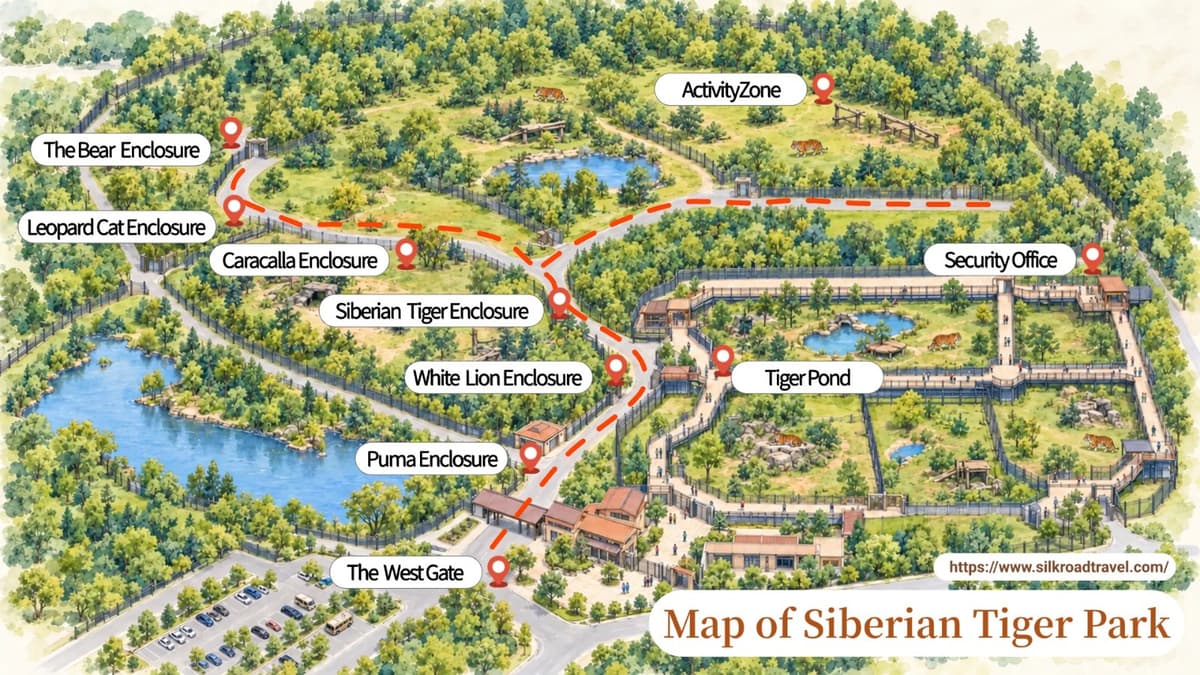
Given the park's sprawling grounds and scattered walking exhibits, a clear layout map is a valuable planning tool for first-time international visitors. Below is an overview map of Heilongjiang Northeast Tiger Forest Park, marking the standard sightseeing bus circuit, themed walking enclosures, service facilities, and the recommended north-west entrance. Using this map, you can pre-plan your walking route, locate heated rest shelters and dining spots in advance, and avoid unnecessary backtracking across the site — a particular benefit for winter travellers looking to minimise time spent outdoors in the cold.
·Which Sightseeing Bus Should You Choose?
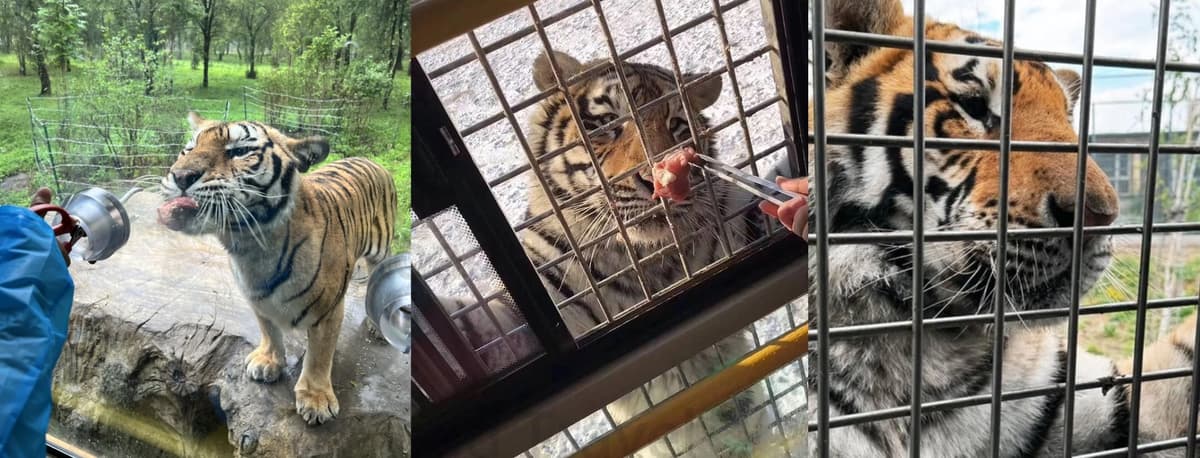
The principal distinction is between the enclosed standard vehicle and the vehicle fitted with special feeding openings, often translated as the "thrill" or "adventure" bus.
Vehicle | Main experience | Who should choose it? |
Standard sightseeing bus | Observation through enclosed windows | Visitors concentrating on watching the animals; travellers who prefer a quieter experience |
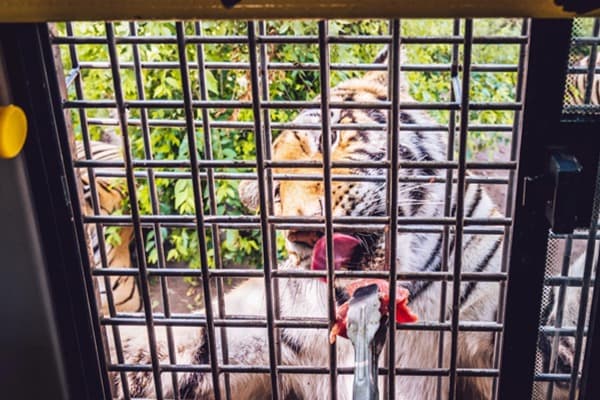
Feeding-window sightseeing bus | Viewing with supervised feeding opportunities through designated openings | Visitors who specifically want to investigate the park's optional feeding experience |
The standard vehicle is a sound choice for a first visit. Enclosed windows provide a clear boundary between passengers and the animals, and there is no need to buy an interaction simply to make the outing worthwhile.
The feeding-window vehicle changes the character of the ride. Passengers purchasing food participate under staff direction, and other passengers may watch that activity nearby. Paying for this vehicle does not buy a private encounter.
For photography, neither category is automatically superior. Glass introduces reflections; protective structures can appear in the frame. Choose primarily for the experience you want, then adapt your photography to the viewing conditions.
Tickets, Booking and Additional Costs
Compare tickets by their inclusions, especially the vehicle category. The headline admission price alone is insufficient for comparing different sellers.
The park's July–August 2026 visitor guide listed adult admission with a standard sightseeing bus at CNY110 per person, and admission with the feeding-window vehicle at CNY130 per person. These are dated summer references, not confirmed prices for winter 2026–2027. The same guide identified the ticket office, the park's official online channels and major Chinese booking platforms as purchase options.
For an overseas booking, the useful details are:
The exact vehicle included.
The date for which the ticket is valid.
The identity document accepted for the booking.
Whether entry uses a booking code, a document check or ticket collection.
The cancellation conditions and any seller's service charge.
Carry the passport used for the reservation. If the platform offers only a Chinese identity-card field, use a sales channel that explicitly supports your document or arrange the purchase with the ticket office.
Feeding food is an additional purchase on the ticket products reviewed. It should be treated as an optional expense, separate from the vehicle choice. A package with a feeding-window bus does not automatically include food.
Children's and senior concessions require particular care because published sellers do not describe eligibility consistently. Provide the child's height and age, or the adult's age and passport details, when obtaining the applicable ticket. A family total should identify each person's admission and vehicle entitlement.
For winter planning, book around a morning or early-afternoon visit. The summer guide's closing and last-admission times should not be carried into a winter itinerary; the winter schedule needs to be attached to the ticket offer used for your date.
What Should You Know About Feeding?
Supervised meat feeding is part of the park's commercial visitor experience. Staff direct it through designated openings or approved facilities, and visitors purchase the relevant food separately.
Participation is optional. However, declining to purchase food does not remove feeding from the surroundings: other passengers may participate on the same vehicle. This distinction matters for families and visitors who prefer to avoid watching animal feeding.
The park regulates feeding within its enclosures. In February 2026, staff described a rotation under which individual enclosures were temporarily taken out of the visitor-feeding programme. That is a useful illustration of how animal management affects the activity available during a particular circuit.
Older travel accounts also describe live-animal feeding. A current, authoritative description of whether that activity is offered was not established for this update. If seeing it would affect your decision to visit, ask the park specifically about live-prey feeding on the visitor route, rather than asking only whether feeding is available.
Use only the park's approved food and follow staff instructions. Bringing your own meat, reaching towards an animal or improvising an interaction is outside the advertised supervised experience.
For travellers concerned about animal welfare, the practical choice is straightforward: assess the captive setting and feeding model before buying. The park's breeding background does not answer every question about the visitor activities offered.
How Long Should You Allow, and When Should You Go?
Allow approximately two to three hours at the park as a planning estimate, covering admission, boarding, the vehicle circuit and a selective walk afterwards. Add the journey from your hotel separately.
This is more useful than planning around the vehicle ride alone. The boarding wait can change how much time remains for the walking displays, particularly when travelling with children or meeting a driver at a fixed time.
A morning visit works well before lunch and a second north-bank attraction. An early-afternoon visit suits travellers who prefer a slower start, provided the remaining opening hours cover both the bus and walking sections.
Winter changes the balance between time inside the vehicle and time outside. Have gloves, a hat and your outer layer ready before reaching the entrance. A bus-based attraction still involves outdoor transitions and stationary waiting.
In warmer months, the walking section is easier to extend, but standing beside an enclosure for longer does not ensure more activity. Choose the season around your wider Harbin trip rather than a promise that the animals will behave in a particular way.
For a visit followed by an evening ice exhibition, eat a proper meal between the two. Trying to use snacks as a substitute turns two separate outings into one long day without a comfortable break.
·Getting to the Correct Entrance
The park's registered address is 88 Songbei Street, Songbei District. More importantly for arrival, its 2026 visitor guide directs guests to the north-west entrance near the junction of Zhongyuan Avenue and Xuezi Street.
For a taxi or prearranged transfer, save the Chinese destination 东北虎林园西北门. This is more precise than navigating to the centre of the park's large mapped grounds.
The same guide identifies buses 35 and 122 serving Hulinyuan stop, and Metro Line 2 to Shimao Dadao, followed by a road connection. The metro therefore covers only part of the journey.
For a family, several people sharing transport, or a winter day with another timed admission, a taxi or arranged vehicle offers the simpler connection. It reduces the need to navigate a bus interchange and stand outside between services.
Public transport suits visitors comfortable using Chinese map applications and making a local connection. Save the return route as well as the outbound directions, especially if your next destination is elsewhere in Songbei.
Agree on the collection location before entering. "Outside the tiger park" is too vague for a large site with parking areas and different mapped access points. A named gate and a shared map pin make the return easier.
·Combining the Park with Other Harbin Attractions
The park belongs in a north-bank plan, but the surrounding attractions are connected by roads rather than a continuous sightseeing walk.
·Sun Island
Pairing the tiger park with Sun Island gives the day two different focuses: animal observation and a landscaped or seasonal exhibition setting. In winter, both visits make substantial use of daylight, so begin with the attraction that matters most to your group.
For families, lunch between the two creates a useful decision point. Continue to the second attraction if everyone still has energy; otherwise, return to the hotel and preserve the following day.
·Ice and Snow World
A tiger park visit followed by Ice and Snow World works best with a meal and indoor rest between them. The later attraction requires its own admission and time for entry, walking and the return journey.
Avoid adding Sun Island to the same day simply because all three places are north of the river. That arrangement concentrates transport, queues and outdoor walking into a demanding schedule.
Silk Road Travel's 5 Days Harbin Winter Tour with Yabuli Skiing includes the tiger park alongside Sun Island and Ice and Snow World on its published Harbin sightseeing day. It suits travellers seeking broad coverage; visitors wanting longer at each attraction should discuss a slower arrangement before booking. The selected tiger-park vehicle and optional feeding need to be identified separately in the booking details.
·Visiting with Children and Taking Photographs
For children, explain the bus experience before boarding: passengers stay in their assigned space, follow staff instructions and watch the animals through the vehicle's protected viewing arrangements. This gives them a clearer expectation than describing the outing simply as "seeing tigers".
Choose clothing that works for sitting as well as walking. A child who is comfortable moving around outdoors may feel colder while waiting for a vehicle. Keep spare gloves accessible, particularly before continuing to a second attraction.
A pushchair is useful only for the parts of the visit where it can be taken. Families who depend on one should establish the boarding and storage arrangement before buying; a vehicle-based circuit involves a separate transfer from the walking route.
For photographs, turn off the flash. Through glass, place the lens close to the window without pressing against it, and use a darker sleeve or coat to reduce reflections. On a phone, tapping the animal on screen helps prevent the camera from focusing on the glass.
On vehicles with protective mesh or feeding openings, keep equipment within the permitted passenger area. A wider composition showing the animal in its enclosure is often more successful than trying to force a close-up through an obstructed angle.
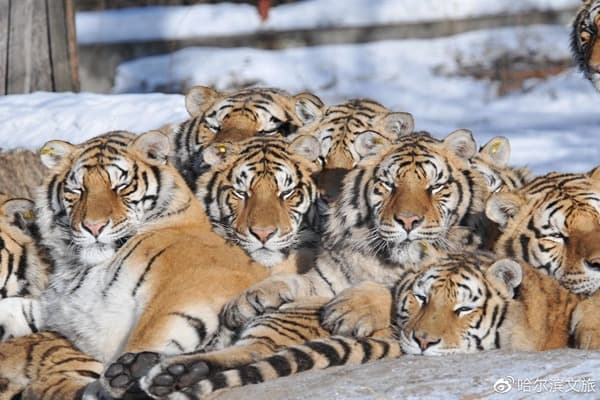
For a moving animal, take several short bursts rather than one long video. Leave room in the frame in the direction it is travelling. Resting tigers offer a different opportunity: fur markings, paws and posture are easier to study when you are not following movement.
More Experiences & Highlights Beyond the Siberian Tigers
While the free-range Siberian (Amur) tiger drive-through is the signature draw of Heilongjiang Northeast Tiger Forest Park, the walking zone and themed exhibits add considerable depth to a visit. For travellers spending 2–3 hours on site, these supplementary experiences turn a simple tiger-watching trip into a fuller wildlife and conservation outing.
·Rare Big Cats & Predator Species
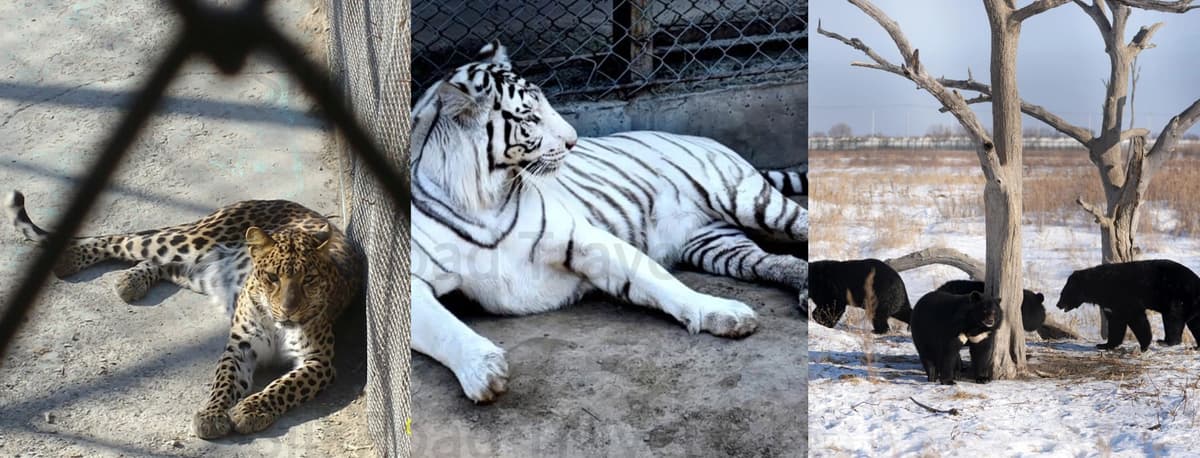
Beyond purebred Siberian tigers, the park's walking enclosures house a notable collection of rare felines and large predators, including white tigers, white lions, African lions, ligers, leopards, cheetahs and jaguars. Each species has its own dedicated display area with identification panels, allowing visitors to compare size, coat pattern and behaviour at a closer, steadier pace than the bus circuit allows. This makes the park a worthwhile stop for anyone with a general interest in big cats, not only Amur tiger enthusiasts.
·Asian Black Bear Interaction Zone
One of the most popular stops in the walking area is the black bear enclosure. Visitors can purchase fruit and vegetable portions (typically apples and carrots) to feed the bears under staff supervision. The bears are known for approaching the viewing platforms and responding to visitors, making this a highly photogenic and family-friendly highlight. It offers a lighter, more playful contrast to the imposing presence of the tigers on the bus tour.
·Tiger Cub Viewing & Petting Zoo Area
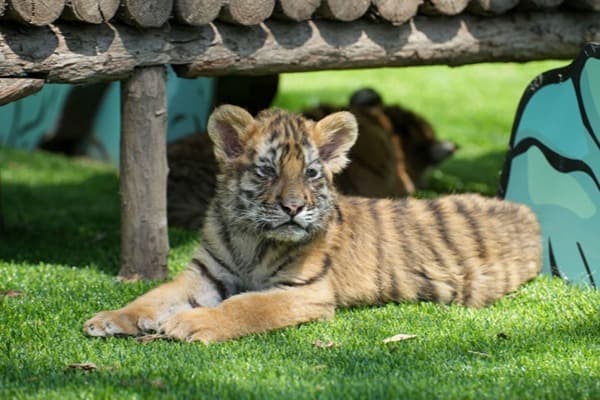
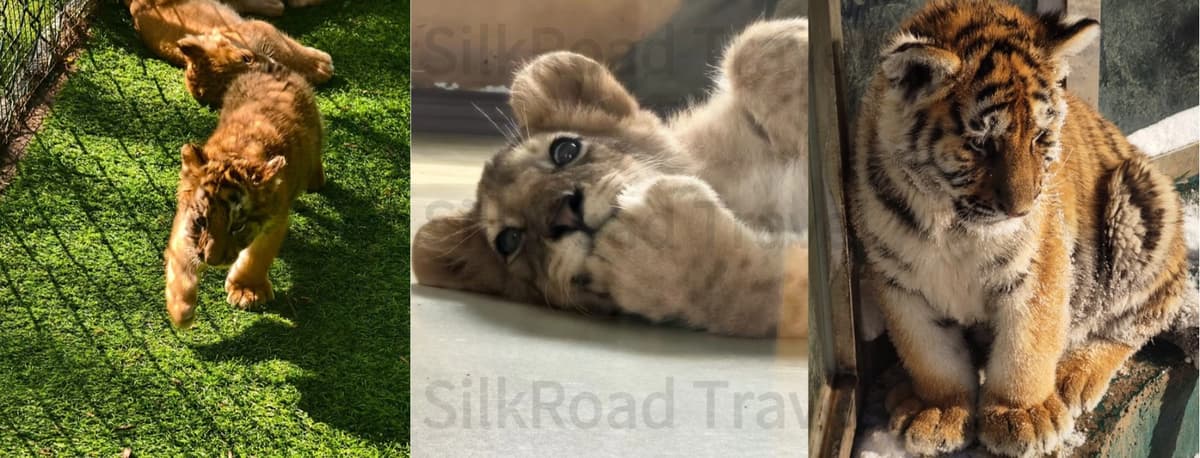
Near the exit, a dedicated cub enclosure showcases young tiger cubs and sometimes lion cubs at certain ages. Adjacent to it is a small petting zoo area with alpacas, deer, goats and other gentle animals. This section is particularly popular with families and younger travellers, providing softer, cuter photo opportunities after the more dramatic big-cat sections. For winter visitors, indoor viewing areas help keep visits comfortable in cold weather.
·Elevated Viewing Platform & Conservation Exhibition
An elevated viewing platform offers a top-down perspective over sections of the tiger habitat, giving a different photographic angle from the bus-level view. The on-site hall introduces the park's breeding programme, Amur tiger conservation status, anti-poaching efforts and the ecological role of big cats in northeast Asian forests. For culturally or educationally inclined travellers, this adds meaningful context beyond casual sightseeing.
·Winter-Exclusive Snow Landscape
For visitors on a winter Harbin itinerary, the park takes on a special character: tigers and other animals move through thick snow, their fur standing out against pure white ground. This creates striking photographic conditions you cannot experience in summer, and pairs naturally with a day of ice and snow attractions on the north bank of the Songhua River. Warm indoor rest areas and snack stalls help break up the cold-weather outing.
·On-Site Amenities & Souvenirs
To complete the visit, the park provides basic dining options, heated rest shelters (essential in winter) and a souvenir shop with Siberian tiger-themed merchandise, plush toys and local craft items. Luggage storage is available at the visitor centre for those transferring directly between attractions or heading to the station after their tour.
Siberian Tiger Park FAQs
·Can I visit without feeding the tigers?
Yes. Choose an observation-focused ticket and decline additional food purchases. On a feeding-window vehicle, other passengers may still participate beside you.
·Is it suitable for a rainy or very cold day?
The bus circuit provides a seated viewing element, but admission, boarding and the walking section still involve outdoor exposure. Choose it for the animal experience rather than as a fully indoor alternative.
·Does a ticket include a particular photograph or close encounter?
The ticket covers the specified admission and vehicle product. Animal positions and movements determine the views during the circuit.
·Can I drive my own car through the enclosures?
Plan to use the park's visitor sightseeing vehicle. Private transport is useful for reaching the entrance and continuing to another attraction.
·Is the tiger park part of Sun Island?
No. They are separate attractions in the north-bank area, with separate entrances, visits and admission arrangements.
·Are there discounted tickets for children, seniors, students and other eligible visitors at Harbin Siberian Tiger Park?
Yes. Children under 6 years old or shorter than 1.2m, seniors aged 65 and above, visitors with disabilities and active military personnel qualify for free park admission, though they still need to buy a sightseeing bus ticket. Minors aged 6–18, full-time undergraduate and below students, and seniors aged 60–64 can get half-price admission. Valid physical ID documents must be presented for verification on site.
·What is the best time of day to visit Heilongjiang Northeast Tiger Forest Park to see active Siberian tigers?
The prime viewing window is 9:00–11:00 in the morning, when Amur tigers tend to be most active. 14:00–16:00 in the afternoon is the second-best option. Avoid midday hours, as most tigers rest and sleep in the shade or shelter during hot noon time.
·Can I buy food and drinks inside the Siberian Tiger Park in Harbin?
Small snack stalls and shops operate inside the park, selling bottled water, packaged snacks, instant noodles and simple hot food. The selection is limited and prices are higher than outside. Indoor heated rest areas are available, especially valuable for winter Harbin trips.
·Can I bring my own food and drinks into the Northeast Tiger Forest Park?
You may bring bottled water and personal snacks for yourself. Bringing any meat or raw food to feed tigers privately is strictly forbidden. Unauthorized feeding violates park rules and may lead to fines. All tiger feeding must use official park food and happen under staff supervision.
·Do winter and summer opening hours differ at Harbin Siberian Tiger Park?
Yes, opening times change seasonally. Summer hours are generally 08:30–16:30, with the last sightseeing bus boarding at 16:00. Winter opening hours are shorter, normally 09:00–16:00. Times may shift according to weather; always check the latest official notice before your Harbin visit.
·Is luggage storage available at Siberian Tiger Park for Harbin travellers?
Luggage storage is offered at the main visitor centre. You can leave standard-sized backpacks and suitcases here, which is convenient if you are transferring between Harbin attractions or heading straight to transport after your tiger park tour.
·What other animals can you see besides Siberian tigers at Heilongjiang Northeast Tiger Forest Park?
The park's walking zone holds more big cat and wildlife exhibits besides Amur tigers. Visitors can view white tigers, white lions, African lions, leopards and black bears. There is also a tiger cub viewing area and interpretive displays about feline breeding and wildlife conservation.
·Are drones allowed for aerial photography inside Harbin Siberian Tiger Park?
Drones are banned across the whole park. Flying drones may stress the tiger population, and it also breaks the park's site security and fire prevention regulations.
·Can I cancel or reschedule my pre-booked Siberian Tiger Park tickets?
Most unused tickets booked via official online channels support free cancellation and automatic expiry refunds. Rescheduling usually requires cancelling the original booking and purchasing a new ticket for your target date. Refund rules vary by booking platform, so read terms before checkout.
·What essential safety rules should I follow during my tour of the Northeast Tiger Forest Park?
While riding the sightseeing bus, never stretch your hands, head or camera gear out of the windows. Do not tap windows or shout loudly to disturb the tigers. Stay behind railings in the walking exhibit area. Parents must keep children under close supervision at all times.