

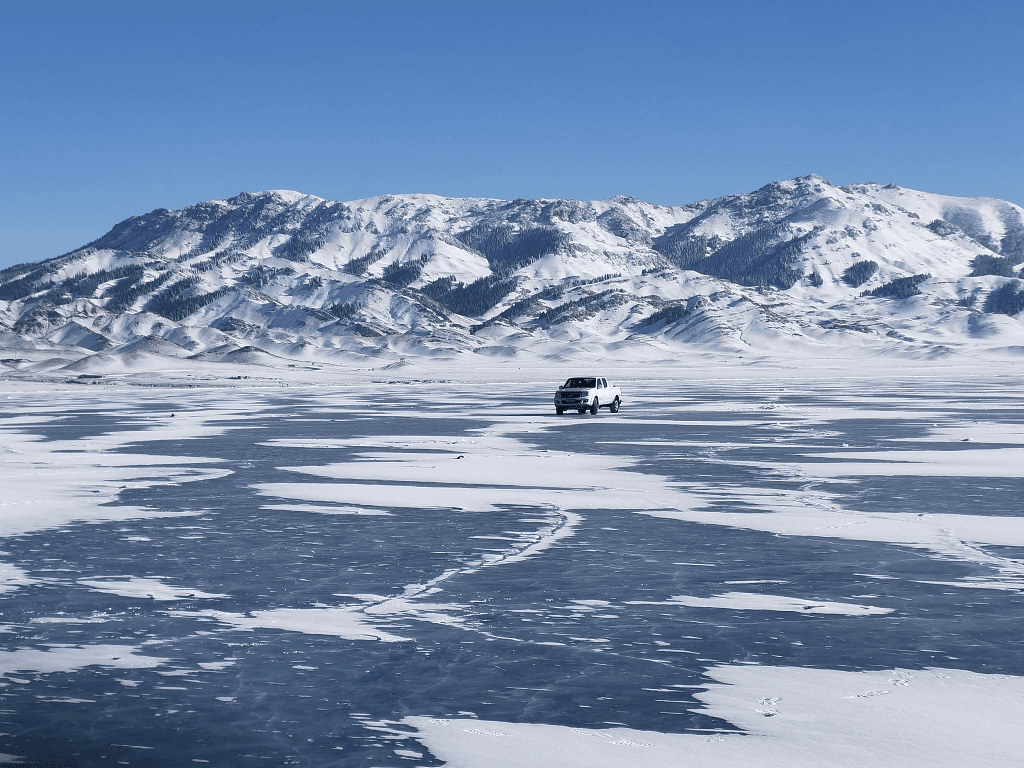

Best Xinjiang Ski Guide and Itineraries: All You Must Know Before You Go
Stretching from the Altai Mountains on the Siberian border to the Tianshan range above Urumqi, Xinjiang is China’s largest, coldest, and most exciting ski frontier — a region where dry “champagne powder” falls for up to 240 days a year, where a 12,000-year-old cave painting depicts the world’s first skiers, and where lift passes still cost a fraction of what you would pay in Hokkaido or the Alps. Whether you want the longest season in Asia at Keketuohai, China’s biggest vertical at Jikepulin, or an easy city-based warm-up at Urumqi’s Silk Road Resort, this guide explains everything you need to plan a Xinjiang ski holiday: the main ski regions, best time to go, itineraries by duration, transportation, accommodation, food, packing, and practical winter tips.
Xinjiang Skiing: Quick Facts
Ski season: Late October to early May at Keketuohai (China’s longest); mid-November to early April at most Tianshan and Altay resorts
Best snow window: December to February — deepest, driest powder, but the coldest temperatures (-10°C to -30°C in Altay; -17°C to -7°C average in Urumqi)
Snowfall: Continental Siberian air flow produces exceptionally low-moisture snow; average depths near one meter in the Altai mountains
Main gateways: Urumqi Diwopu International Airport (URC); Altay Airport (AAT) for Jiangjunshan; Fuyun Koktokay Airport (FYN) for Keketuohai; Kanas Airport (KJI) for Jikepulin–Hemu
Recommended duration: 5–7 days for a first ski trip; 10–12 days to combine Altay resorts with Kanas–Hemu and Urumqi
Daylight: Roughly 09:30–19:00 under Beijing time in midwinter — plan ski days around the late sunrise
Resort altitudes: Base ~1,800 m to summit 3,100 m (Keketuohai) — no serious altitude concerns for most visitors
Currency saver: Major resorts have periodically offered discounted or free passes for international arrivals and out-of-province visitors — check current terms before booking
Why Go Skiing in Xinjiang?
Asia’s Finest “Champagne Powder”
Xinjiang’s high latitude, inland position, and Siberian air flow produce an exceptional 170–180 days of snowfall annually, with average snow depths around one meter in the Altai range. Because the air is extremely cold and dry, the snow has very 0low moisture content — the fabled “champagne powder” that floats rather than packs. Conditions are calm enough that the region has hosted Freeride World Tour qualifier events, and locals boast more blue-ski powder days than almost anywhere in Asia.
The Birthplace of Human Skiing
In 2005, archaeologists identified a painted mural in Dundebulak Cave near Altay City showing figures on long skis hunting — dated to more than 12,000 years ago, the earliest known evidence of human skiing. The tradition survives: Tuva communities in the region still craft and race horsehide (furry) skis, and the craft is a protected intangible heritage. A ski trip here doubles as a journey to the very root of the sport.
Big-Mountain Terrain Without Alpine Prices
Vertical drops of over 1,400 meters, an 11.2-km continuous run, night skiing, and modern gondolas come at daily lift-pass prices of roughly ¥300–700 (US$40–100) — far below Japan, let alone Europe. A full ski day including rental, lunch, and mid-range lodging often lands near ¥800–1,200 per person, and economy travelers manage on ¥500–700.
A Snow-Culture Calendar Beyond the Slopes
Between ski days you can ride horse sleighs through Hemu Village, watch nets hauled from beneath the ice at the Fuhai Ulungur Lake Winter Fishing Festival (typically mid-January to mid-February), wander the Urumqi Grand Bazaar for Uyghur handicrafts and cumin-dusted lamb kebabs, and browse Sayram Lake’s blue-ice shoreline on a winter road trip. Few ski destinations bundle culture this distinctly.
The Main Ski Regions & Resorts in Xinjiang
Xinjiang currently operates two distinct ski corridors — the Altay Prefecture in the far north and the Tianshan corridor around Urumqi in the center — each with a different personality. Understanding the differences is the key to choosing where your days should go.
Altay Prefecture — China’s Powder Capital
Altay in the far north is where the snow is deepest, the season is longest, and the terrain is biggest. Four international-standard resorts operate here.
1. Jiangjunshan (General’s Mountain) International Ski Resort — The City Mountain
Just 2 km — about a 10-minute drive — from downtown Altay, Jiangjunshan is China’s rare urban ski mountain: ski all day, then eat lamb skewers downtown at night.
Runs: 72 (including 2 FIS-certified)
Max vertical drop: 460 m
Longest run: 3,000 m
Lifts: 8 chairlifts plus magic carpets
Signature experiences: night skiing on floodlit slopes with Altay’s city lights below, sunset runs, snow tubing, and snowmobiling
Best for: First-timers, families, and anyone pairing skiing with city comfort
2. Keketuohai (Koktokay) International Ski Resort — China’s Longest Season
Set beside the dramatic granite canyon of Keketuohai National Geopark near Fuyun County, Keketuohai is the headline act: a summit at 3,100 m, a maximum vertical drop of 1,350 m, and a season that runs from early October into early May — roughly 200 days.
Runs: 20+ trails totaling roughly 61 km (expansion ongoing)
Longest run: “Gemstone Avenue,” about 9–9.7 km
Steepest terrain: China’s steepest groomed run — a 71.28% gradient “Black Diamond”
Terrain: wide beginner boulevards to freeride faces; low wind and abundant sunshine
Best for: Intermediates wanting long cruisers, experts chasing steeps and powder, and early/late-season skiers who want snow when everywhere else is green
3. Jikepulin (Hemu) International Ski Resort — The Giant Next to Kanas
Inside the greater Hemu–Kanas scenic area, 5S-rated Jikepulin is planned as China’s largest resort by vertical drop, lift length, and run count — with 103 runs in the master plan and over 500 hectares of skiable terrain.
Max altitude: 2,848 m
Vertical drop: 1,466 m — the largest in China
Longest run: 11.2 km — China’s longest single ski run
Longest lift: a 4.93-km gondola — China’s longest
Signature experiences: hour-long continuous descents through golden birch and spruce forest, near-windless powder, and the unbeatable add-on of Tuvan log-cabin culture in Hemu Village next door. Jikepulin hosts Freeride World Tour qualifier events
Best for: Intermediate-to-advanced skiers who want mileage and scenery, and photographers combining snow with the fairy-tale village
4. Qinggeli Wolf Mountain International Ski Resort — Ski Beside Wolves
A 4S-rated resort with a twist: more than 200 steppe wolves live in designated zones on the property, viewable safely at feeding sessions. Its “Wolf King Trail” drops at a 39.9% gradient — one of the steepest angles for a groomed run in China — and the resort runs solid beginner schools and training camps.
Best for: Curious intermediates, families wanting a wildlife wow-factor, and thrill-seekers sampling Altay’s steeps
Urumqi & the Tianshan Corridor — Convenient City Skiing
5. Silk Road International Ski Resort — The Urumqi Day-Trip Classic
Located in Nanshan National Forest Park about 38–40 km (a 40-minute to 1-hour drive) from downtown Urumqi, Silk Road is a 5S-certified resort and the most convenient serious skiing in the province.
Top elevation: 2,500 m; vertical drop: ~700 m
Lifts: 9 lifts including an 8-person high-speed gondola; ~10–28 runs depending on the count used
Signature experiences: the legendary Xuanzang Trail for advanced skiers, tree-lined cruisers through Tianshan spruce, night skiing, and the quirky *Monkey Magic* character statues at the summit
Best for: Time-limited travelers, families, mixed-ability groups, and anyone flying into Urumqi who wants to ski without a long transfer
6. Tianshan Tianchi (Heavenly Lake) Ski Area — The Scenic Day Trip
At the foot of Heavenly Lake, this smaller resort combines stunning scenery with high-quality groomers. Ski with views of snow-capped Bogda Peak and the frozen lake — about 1.5 hours from Urumqi, easy to pair with a frozen-waterfall photo stop.
Best for: Intermediate skiers, photographers, and travelers wanting a quieter alternative to the big resorts
Xinjiang Ski Resort Comparison Table
Resort | Region | Grade | Vertical Drop | Standout Feature | Season | Best For |
Jiangjunshan | Altay City | 5S | 460 m | Night skiing 10 min from downtown | Nov–Apr | Beginners, families, night sessions |
Keketuohai | Fuyun, Altay | 5S | 1,350 m | China’s longest season (Oct–May); steepest groomer (71.28%) | Oct–early May | Experts, early/late season |
Jikepulin | Hemu, Altay | 5S | 1,466 m | China’s longest run (11.2 km); 4.93-km gondola | Nov–Apr | Mileage skiers, Hemu combo |
Qinggeli Wolf Mountain | Altay | 4S | 640 m | Wolves on site; 39.9% Wolf King Trail | Nov–Mar | Families, novelty seekers |
Silk Road Resort | Urumqi Nanshan | 5S | 600 m | 40 min from Urumqi; Xuanzang Trail | Mid-Nov–Mar | Day trippers, families |
Tianshan Tianchi | Fukang, Urumqi | 5S | ~500 m | Frozen Heavenly Lake views | Dec–Feb | Scenic day trips |
When Is the Best Time to Ski in Xinjiang?
November: Early-season value. Jiangjunshan and Silk Road spin up lifts; Keketuohai is already in full swing. Crowds are minimal and passes are cheapest.
December–February (peak powder): The deepest, driest snow of the year, full night-skiing schedules, ice-snow festival events in Altay City and Urumqi, and the Fuhai winter fishing season. Also the coldest window — dress for -30°C in Altay and -17°C in Urumqi.
March–April (late season): Longer, warmer days and soft spring snow; Keketuohai keeps spinning while most of China’s resorts have closed. Excellent for relaxed cruising and spring park events.
Chinese New Year note: Resorts are lively and atmospheric but book out weeks ahead; expect peak pricing around the holiday.
Two timing truths: First, Xinjiang keeps Beijing time but lives on local solar time, so midwinter daylight runs roughly 09:30–19:00 — there’s no need for dawn patrol; first lifts align nicely with the sun. Second, heavy snowfall can briefly close the mountain roads to Keketuohai, Hemu, and Kanas; build one buffer day into any multi-resort itinerary.
How Many Days Do You Need for a Xinjiang Ski Trip?
Distances in Xinjiang are real — Urumqi to Altay is a 1.5-hour flight, and Altay City to Keketuohai is about 250 km (3–4 hours by road, or a short flight to Fuyun). A well-designed trip should balance:
Transfer time (fly the long legs)
Ski days per resort (at least two to explore properly)
One cultural stop (Hemu, Kanas, Grand Bazaar, or the winter fishing festival)
A buffer day for weather
Generally, the recommended duration is:
5–6 days: Urumqi + Silk Road Resort sampler with Grand Bazaar and Tianshan day trips
7–8 days: The classic two-region loop (Urumqi + Silk Road, then fly to Altay for Jiangjunshan + Keketuohai, or Jikepulin/Hemu)
10–12 days: Three-resort grand tour plus Kanas–Hemu snow villages and a Sayram Lake winter add-on
Suggested Xinjiang Ski Itineraries
5–6 Days: Urumqi Comfort and First Powder
Day 1: Arrive Urumqi Diwopu Airport; Grand Bazaar night tour
Day 2: Full day at Silk Road Resort — Xuanzang Trail for strong skiers, cruisers off the gondola for everyone else
Day 3: Ski Silk Road again or day-trip to Tianshan Tianchi for frozen-lake scenery
Day 4: Urumqi food crawl — big plate chicken, lamb skewers, baked buns; optional Xinjiang Museum
Day 5–6: Optional Sayram Lake blue-ice day trip, or depart from Urumqi
7–8 Days: The Classic Two-Region Loop
Day 1: Arrive Urumqi; Grand Bazaar night tour
Day 2: Ski Silk Road Resort; transfer back to the city
Day 3: Fly Urumqi → Altay (1.5 hours); warm-up ski at Jiangjunshan with night skiing under the city lights
Day 4: Morning ski at Jiangjunshan, then drive (3–4 hours) or fly to Fuyun for Keketuohai
Days 5–6: Two full days at Keketuohai — Gemstone Avenue cruisers, the 71.28% Black Diamond, and geopark canyon views
Day 7: Return toward Altay via Fuyun town; hot pot evening
Day 8: Final Jiangjunshan session or Hemu snow-village add-on; depart from Altay Airport
10–12 Days: Three Resorts, One Snow Kingdom
Combine the loop above with 2 nights in Hemu Village and 1–2 ski days at Jikepulin, flying Urumqi → Kanas Airport (KJI) for a 1-hour shuttle to the resort, and finish with the Fuhai winter fishing festival in season. Add a Sayram Lake blue-ice extension or a Kashgar cultural detour for the definitive Xinjiang ski-and-culture circuit.
How to Get to Xinjiang
Flying to Xinjiang
Urumqi Diwopu International Airport (URC) is the province’s main hub, receiving flights from Beijing, Shanghai, Guangzhou, Chengdu, Xi’an, and international cities across Central Asia. From Urumqi, connect onward:
Altay Airport (AAT): ~1–1.5 hours from Urumqi — for Jiangjunshan and Altay City
Fuyun Koktokay Airport (FYN): ~1 hour from Keketuohai by car — for the long-season resort
Kanas Airport (KJI): ~1 hour from Hemu/Jikepulin — for the scenic giants
Fly the long legs — road distances between resort clusters are 3–5 hours each.
Getting Between Major Destinations
Route | Recommended Transport | Approximate Time |
Urumqi → Altay | Flight / overnight sleeper | ~1–1.5 hrs / ~9.5–13 hrs |
Urumqi → Fuyun (Keketuohai) | Flight to FYN + car | ~1.5 hrs + ~1 hr |
Urumqi → Silk Road Resort | Taxi / resort shuttle | ~40–60 min |
Altay City → Jiangjunshan | Taxi / hotel shuttle | ~10 min |
Altay → Keketuohai | Private car / ski bus | 3–4 hrs |
Altay → Hemu | Private 4x4 with winter driver | 3–4.5 hrs |
Altay → Kanas | Private 4x4 with winter driver | 4–5 hrs |
Kanas Airport → Jikepulin/Hemu | Resort shuttle / private car | ~1 hr |
Why a Private Winter Driver Is Recommended
The roads that make Xinjiang memorable — the snow lanes to Hemu, the canyon approach to Keketuohai, the birch corridors around Jikepulin — demand a vehicle with winter tires and a driver who reads mountain weather. A private 4x4 with an experienced local driver offers roadside safety when temperatures plunge, flexibility for light-chasing photographers, and calm transfers instead of white-knuckle ones. Self-driving is possible but rarely worth the stress in deep winter — foreign visitors would also need a Chinese driver’s licence and a medical check.
Xinjiang Ski Packing Guide
Xinjiang’s cold is extreme and bone-dry — “the cold of the north is a dry blade” — so packing smart makes or breaks the trip.
Clothing (Layering for -30°C)
Base layer: merino or synthetic thermals, top and bottom (avoid cotton — it stays damp)
Mid layer: fleece or light down; add a heavy 800-fill down parka for mornings and Hemu nights
Outer layer: windproof, insulated snow pants and a hooded jacket with storm cuffs
Extremities: fleece-lined beanie, balaclava, glove liners plus insulated mittens, wool socks, and battery or chemical hand/toe warmers — buy plenty locally, they’re cheap
Ski Equipment
Rental shops at all six major resorts stock adequate skis, boards, boots, and helmets; advanced skiers may prefer bringing their own boots
Bring your own goggles with low-light lenses for snowy days
Skin & Sun Protection
SPF 50+ sunscreen — UV reflects off snow and is intense at altitude
Lip balm, heavy moisturizer, and saline nasal spray for the arid air
UV-protective sunglasses or goggles for glare
Electronics & Camera Care
Spare batteries kept warm inside your coat — cold drains them within an hour
A power bank (kept insulated) and offline maps downloaded in advance
A thermos; hotel hot water is free and constant
Let camera gear acclimatize inside a sealed bag when moving between extreme cold and warm rooms
Common Mistakes Skiers Make in Xinjiang
Mistake 1: Underestimating distances. Urumqi, Altay, Keketuohai, and Jikepulin sit hours apart by road. Don’t plan two resorts in one day; give each mountain two full days.
Mistake 2: Underestimating the cold. “Winter clothes” built for Beijing fail at -30°C. You need expedition-grade down, windproof pants, and full face coverage — or you’ll spend the trip indoors.
Mistake 3: Booking January flights and cabins too late. Chinese New Year empties availability weeks in advance. Reserve lodging and inter-regional flights the moment your dates are fixed.
Mistake 4: Ignoring the daylight window. With sunrise near 09:30–10:00 Beijing time, losing a morning costs half a day. The upside: night skiing lets you ride until 21:00+ at Jiangjunshan and Silk Road.
Mistake 5: Expecting the weather to cooperate. Heavy snowfall can close the Keketuohai, Hemu, or Kanas road for a day. Build one buffer day and check road conditions with your driver each evening.
Mistake 6: Skipping the border-permit check. Some border-area sights (e.g., Baihaba, parts of Kanas) require a permit arranged in advance — foreign visitors should organize this through a licensed agency.
Mistake 7: Forgetting the payment apps. Many resorts, bazaars, and taxis run on WeChat Pay or Alipay; link an international card before you arrive.
Mistake 8: Disrespecting local etiquette. Ask before photographing people, especially in Tuvan and Kazakh villages and at the winter fishing festival; accept tea when it is offered.
How to Choose Your Perfect Xinjiang Ski Route
If this is your first ski trip: Silk Road Resort + Urumqi, 5–6 days. Gentle terrain, night skiing, zero logistics stress, plus Grand Bazaar culture.
If you’re an intermediate or advanced skier: Jiangjunshan + Keketuohai, 7–8 days. Vertical mileage, the 71.28% Black Diamond, and October-to-May reliability.
If you want powder plus fairy-tale villages: Jiangjunshan + Jikepulin + Hemu, 8–9 days. Combine China’s longest run with log-cabin mornings and horse sleighs.
If you’re a photographer: Kanas + Hemu + one resort. Dawn smoke over cabins, frozen waterfalls, star-filled skies, plus a day of action shots on the pistes.
If you’re combining Xinjiang with a wider China winter trip: Enter via Urumqi, ski Silk Road as a warm-up, then continue to Altay for the big mountains — or extend south to Sayram Lake’s blue ice, Turpan’s winter sun, or a Kashgar cultural finish for the region’s full contrast in one loop.
Xinjiang Skiing FAQ
Is Xinjiang good for beginner skiers?
Yes. Jiangjunshan’s magic-carpet zones and Silk Road’s wide boulevards are ideal for learning, and English-speaking or translated instruction can be arranged. Two or three days is enough to progress to green and easy blue runs.
When does the ski season start and end in Xinjiang?
Keketuohai typically runs from early October into early May — China’s longest season. Jiangjunshan, Jikepulin, Silk Road, and the other resorts operate roughly mid-November through March or early April.
How cold does it really get on the slopes?
Ski-area temperatures commonly sit between -10°C and -20°C, with cold snaps to -30°C in Altay in January (Urumqi averages -17°C to -7°C). Calm, sunny powder days are frequent — dress in proper layers and it’s entirely comfortable.
Can I ski in Xinjiang without speaking Chinese?
Yes, with preparation. Major resorts increasingly offer English services, ride-hailing and translation apps work in Urumqi and Altay, and booking through a travel agency removes the language barrier for transfers and cabins.
Is Xinjiang cheaper than skiing in Japan or Europe?
Substantially. Lift passes run roughly ¥300–700 (US$40–100) and complete ski days often cost half or a third of comparable Niseko or Alps days, with lodging to match.
Can I combine skiing with Kanas and Hemu in one trip?
Absolutely — this is Xinjiang’s signature combo. Jikepulin sits beside Hemu Village, and standard itineraries pair 3–4 ski days with 2 nights in the snow villages.
Do I need insurance or special permits?
Buy travel insurance that covers winter sports. Regular Xinjiang travel requires only a valid Chinese visa (and many nationalities now qualify for 30-day visa-free transit); border-zone sights like Baihaba need a permit arranged in advance.
Plan Your Xinjiang Ski Trip with Silk Road Travel
Planning a ski trip to Xinjiang involves practical detail — choosing between the Altay powder mountains and Urumqi’s Tianshan resorts, booking ski passes and inter-region flights, checking winter road conditions to Keketuohai, Hemu, and Kanas, reserving snow-village cabins early for Chinese New Year, and matching each resort to your ability. If you’d prefer to leave these arrangements to someone familiar with the region, Silk Road Travel can help.
There is no charge for an initial itinerary draft, and you are welcome to adjust the plan until it suits you.
If you have questions about skiing in Xinjiang, or would like a customized itinerary quote, feel free to get in touch:
Silk Road Travel
Email: info@silkroadtravel.com
Phone / WhatsApp: +86 15909912575