


The Ultimate Xinjiang Tour Travel Guide for First-Time Visitors
How to Plan a Xinjiang Tour: The Ultimate Travel Guide for First-Time Visitors
Xinjiang is one of the most fascinating and diverse travel destinations in China. Located in the far northwest of the country, this vast region is famous for its spectacular landscapes, ancient Silk Road history and unique multicultural atmosphere.
Covering more than 1.6 million square kilometers, Xinjiang is the largest provincial-level region in China. Its enormous size means that a journey through Xinjiang feels completely different from traveling in most other parts of China.
Instead of visiting several cities within a short distance, traveling in Xinjiang is about experiencing changing landscapes along the way. A single journey can take you from snow-covered mountains to desert highways, from ancient Silk Road ruins to traditional villages surrounded by forests and grasslands.
For international travelers, Xinjiang offers a side of China that is very different from destinations such as Beijing, Shanghai or Xi’an.
Here, you can experience:
· The alpine lakes and forests of Northern Xinjiang
· The ancient Silk Road cities of Southern Xinjiang
· The vast deserts and mountain landscapes
· The traditional lifestyles of different ethnic communities
However, planning a Xinjiang trip requires more preparation than many other destinations in China. The region is extremely large, transportation distances are long, and different areas have their own best travel seasons.
Choosing the right route, travel period and transportation method will greatly influence your experience.
This guide will help you understand how to plan a Xinjiang tour, including the best places to visit, the best time to travel, recommended routes and practical travel information.
Why Visit Xinjiang?
Xinjiang is a destination where nature, history and culture come together.
Unlike many famous tourist destinations in China that are known mainly for historical attractions or urban experiences, Xinjiang offers a much wider variety of landscapes and travel experiences.
From the mountains of the Altai Range in the north to the deserts and oasis cities of the south, every part of Xinjiang has its own character.
Explore Some of China’s Most Beautiful Natural Landscapes
Xinjiang is home to some of the most dramatic natural scenery in China.
Because of its unique geography, travelers can experience several completely different environments within one region:
· Snow mountains
· Alpine lakes
· Forest valleys
· Grasslands
· Deserts
· Gobi landscapes
Alpine Lakes and Snow Mountains
The mountain landscapes of Northern Xinjiang are among the most impressive natural attractions in China.
The Altai Mountains and Tianshan Mountains create spectacular scenery with crystal-clear lakes, dense forests and snow-covered peaks.
Kanas Lake
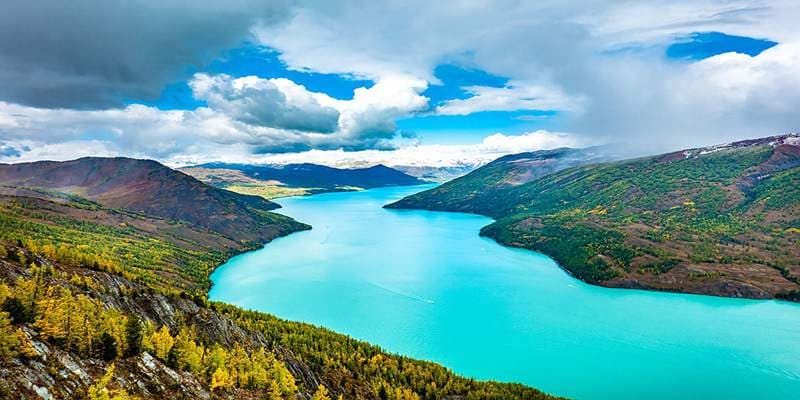
Located in the Altai Mountains of northern Xinjiang, Kanas Lake is one of the region’s most famous natural attractions.
The lake is surrounded by:
· Forest-covered mountains
· Snow-capped peaks
· Clear rivers
· Traditional villages
The color of Kanas Lake changes with the weather and season, creating different shades of blue and green throughout the year.
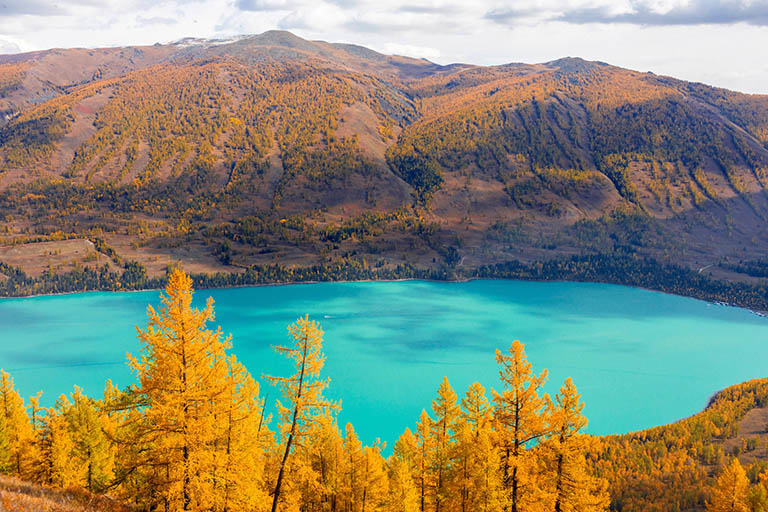
The area is especially famous in autumn when the surrounding birch forests turn golden, creating one of the most beautiful photography landscapes in China.
Nearby Hemu Village is another highlight of the Altai region, offering visitors the chance to experience traditional wooden houses, mountain scenery and the lifestyle of the local Tuvan community.
Sayram Lake
Located near the western border of Xinjiang, Sayram Lake is often considered one of the most beautiful alpine lakes in the region.
The lake sits beside the Tianshan Mountains and is surrounded by:
· Grasslands
· Snow mountains
· Open valleys
· Pastoral landscapes
During summer, the surrounding meadows become green and colorful with wildflowers.
In autumn, the landscape becomes quieter, with golden grasslands contrasting with the deep blue water.
Grasslands and Mountain Valleys
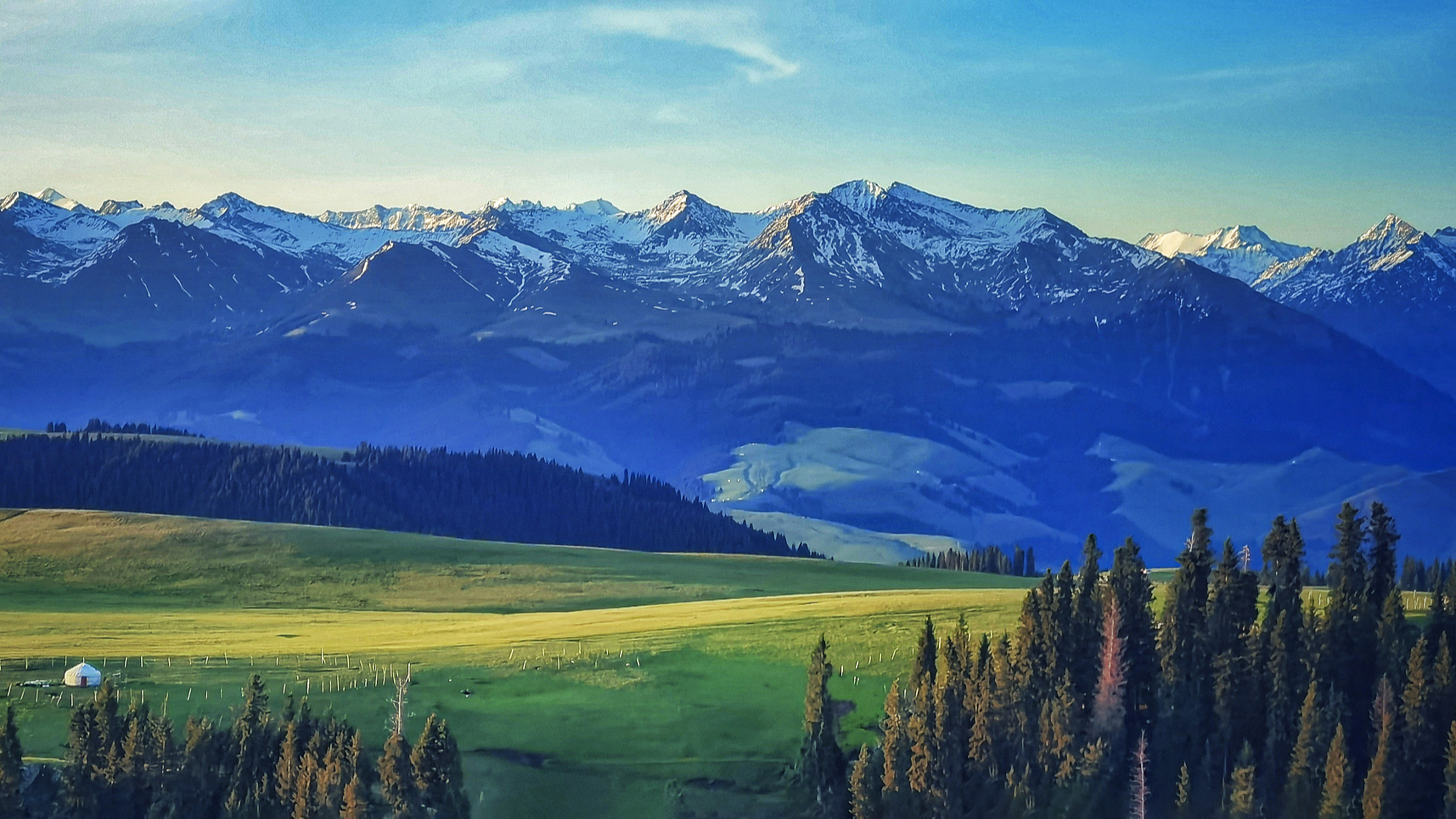
Xinjiang is also famous for its vast grasslands, especially in the Ili Valley.
The combination of mountains, rivers and open meadows creates some of the most beautiful pastoral scenery in China.
Popular destinations include:
Nalati Grassland
Nalati is one of the most famous grassland areas in Xinjiang.
The region is known for:
· Alpine meadows
· Snow mountain views
· Kazakh nomadic culture
· Horse-riding experiences
During summer, the grasslands are covered with wildflowers and become one of the best places to experience Xinjiang’s traditional pastoral landscapes.

Kalajun Grassland
Located in the Tianshan Mountains, Kalajun is famous for its rolling hills and wide mountain scenery.
Compared with some more developed scenic areas, Kalajun offers a more natural and open landscape.
It is especially popular among travelers interested in:
· Hiking
· Photography
· Outdoor experiences
Deserts and Gobi Landscapes
Although Xinjiang is famous for its mountains and lakes, deserts are also an important part of its landscape.
The region contains some of the largest desert areas in China, including the Taklamakan Desert.
Travelers can experience:
· Endless sand dunes
· Desert highways
· Oasis towns
· Dramatic sunsets
Taklamakan Desert
Located in Southern Xinjiang, the Taklamakan Desert is one of the largest sandy deserts in the world.
The desert played an important role in Silk Road history because ancient travelers had to cross or travel around this challenging environment.
Today, visitors can experience the unique beauty of the desert through:
· Desert roads
· Scenic viewpoints
· Oasis towns

Kumtag Desert
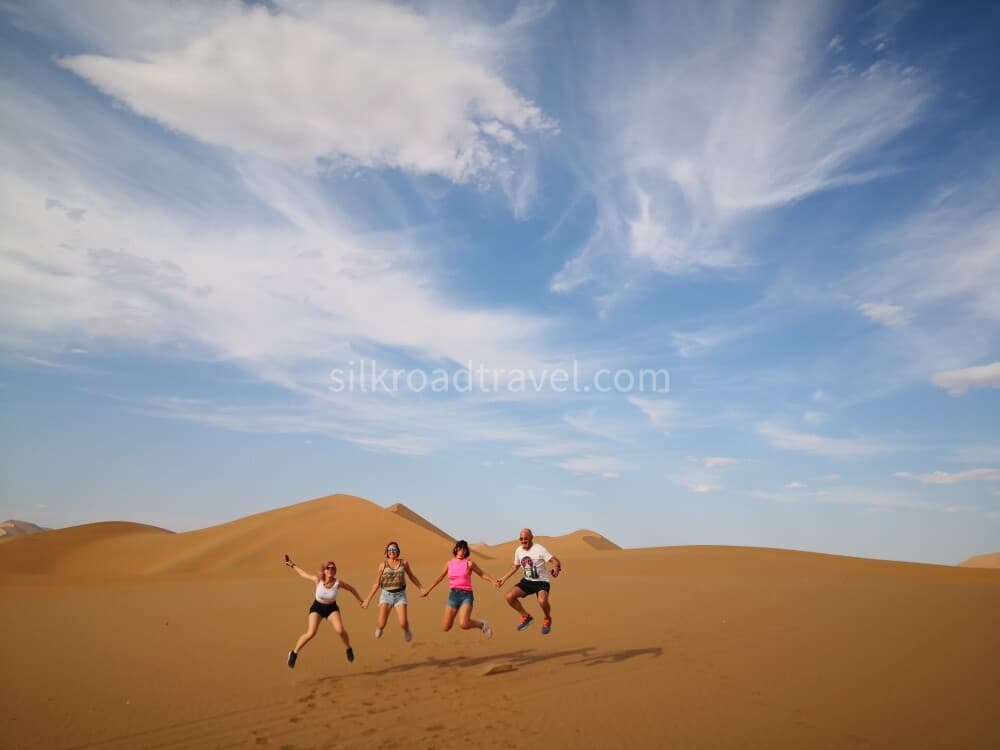
Located near Turpan, Kumtag Desert is one of the most accessible desert areas in Xinjiang.
Unlike remote desert regions, Kumtag allows travelers to experience desert landscapes within a relatively short distance from Turpan.
It is a good choice for visitors who want to see:
· Sand dunes
· Desert sunsets
· Unique desert scenery
.jpg)
Discover the Ancient Silk Road Civilization
Xinjiang has been a key region along the ancient Silk Road for more than two thousand years.
Located between China, Central Asia and South Asia, Xinjiang was historically an important crossroads where different civilizations met.
Merchants, travelers and explorers passed through this region, bringing:
· Goods
· Religions
· Languages
· Art
· Ideas
Today, many historical sites throughout Xinjiang still reflect this fascinating past.
Turpan: The Ancient Oasis City
Located east of Urumqi, Turpan was one of the most important oasis cities on the ancient Silk Road.
Although surrounded by desert, Turpan developed into a prosperous agricultural center because of the advanced Karez irrigation system.
The city is famous for its combination of:
· Ancient ruins
· Desert landscapes
· Traditional agriculture
· Unique climate
Jiaohe Ancient City
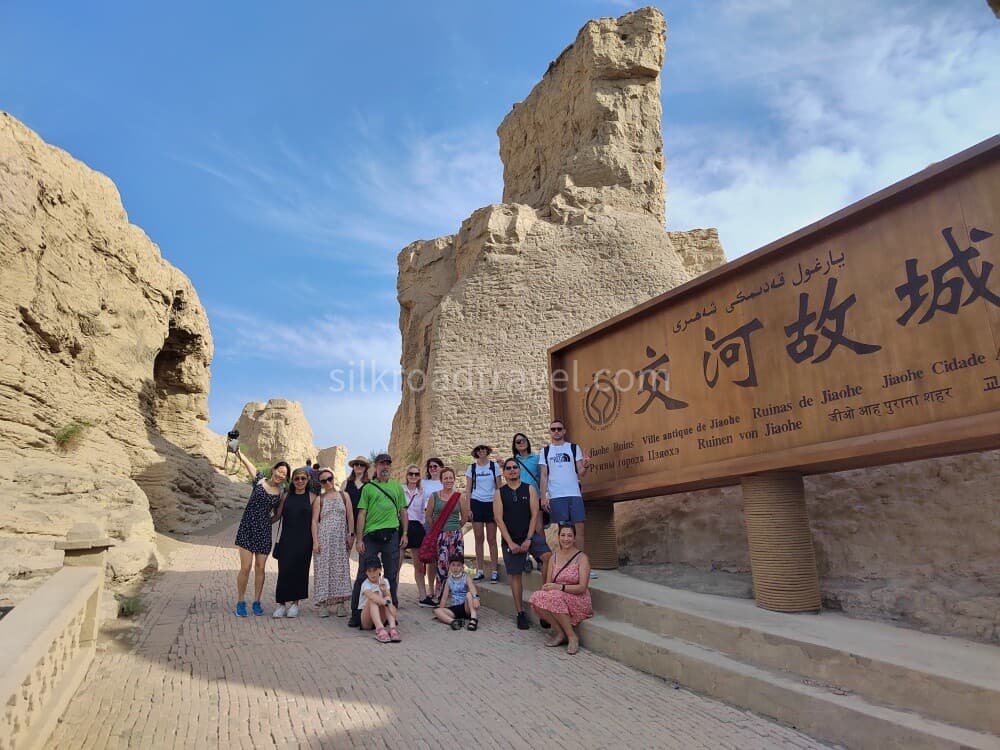
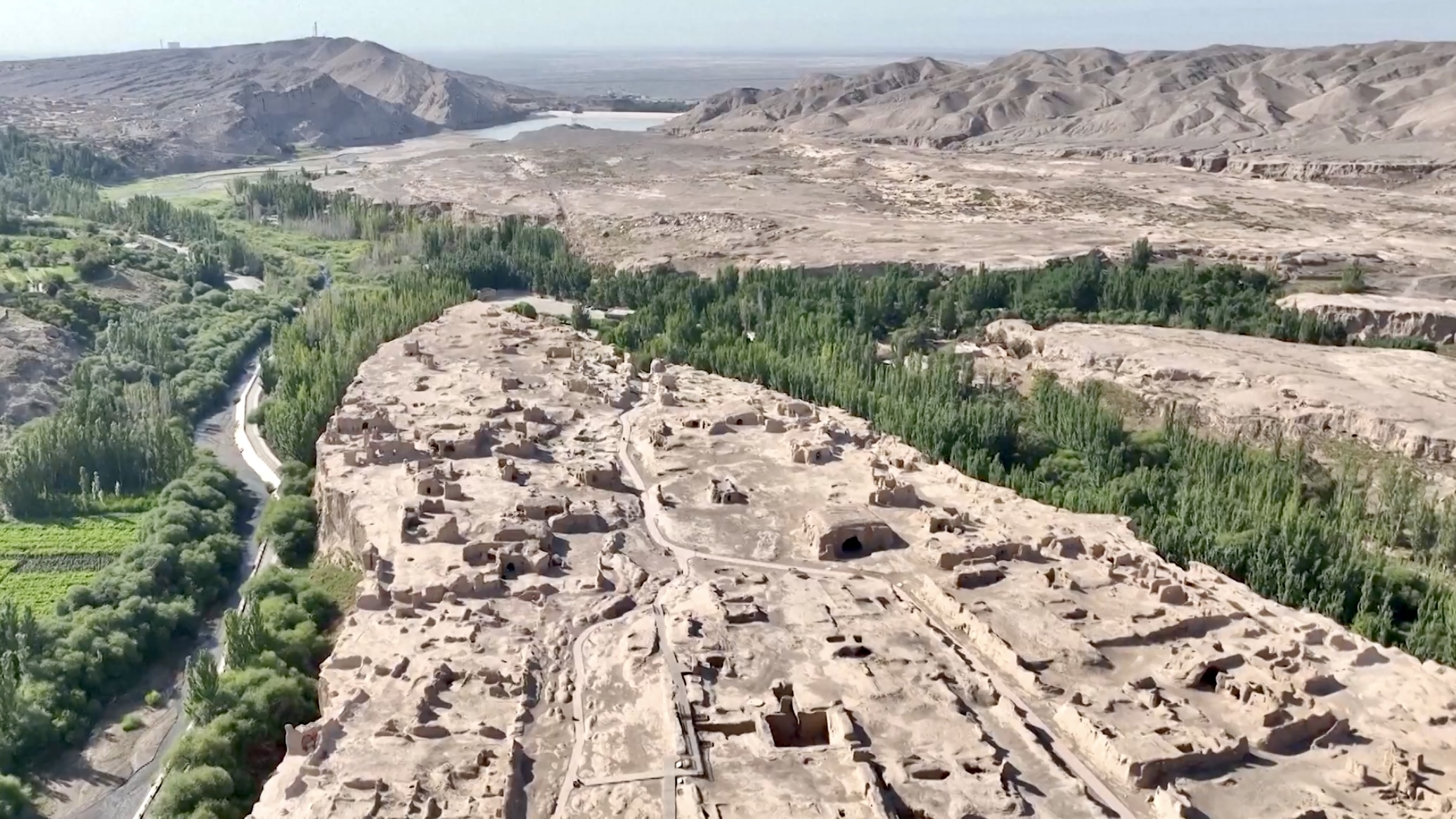
Jiaohe Ancient City is one of the best-preserved ancient cities in Xinjiang.
Built on a natural earthen plateau, the ruins show the layout of an ancient Silk Road settlement.
Walking through the remains of streets, temples and residential areas provides a glimpse into life more than a thousand years ago.
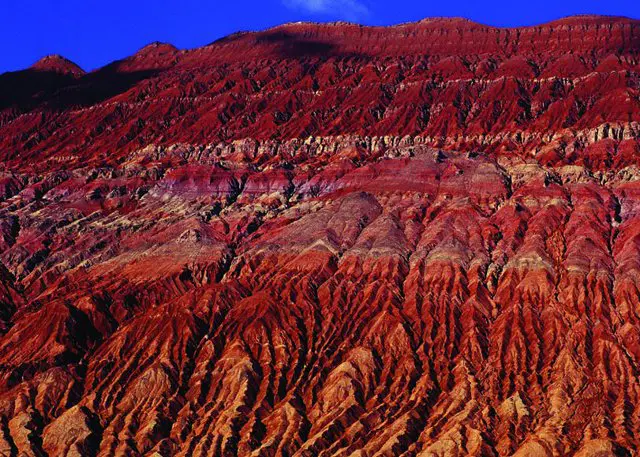
Flaming Mountains
The Flaming Mountains are one of the most recognizable landscapes in Xinjiang.
The red-colored mountains stretch across the Turpan Basin and become especially dramatic under strong sunlight.
The area represents the harsh but fascinating desert environment that shaped local life for centuries.
Karez Irrigation System
The Karez system is one of the greatest examples of ancient water engineering in Xinjiang.
This underground irrigation network allowed people to bring mountain water into the desert oasis, supporting agriculture and settlement.
It demonstrates how ancient communities adapted to one of the driest environments in China.
Kashgar: The Cultural Heart of Southern Xinjiang
Located in the westernmost part of China near the borders of Central Asia, Kashgar has been one of the most important trading centers along the ancient Silk Road for centuries.
Because of its strategic location between China, Central Asia and South Asia, Kashgar became a meeting point for different civilizations, religions and cultures.
Today, the city still preserves a strong historical atmosphere, with traditional neighborhoods, lively bazaars and distinctive Uyghur architecture.
For many international travelers, Kashgar represents the cultural soul of Xinjiang.
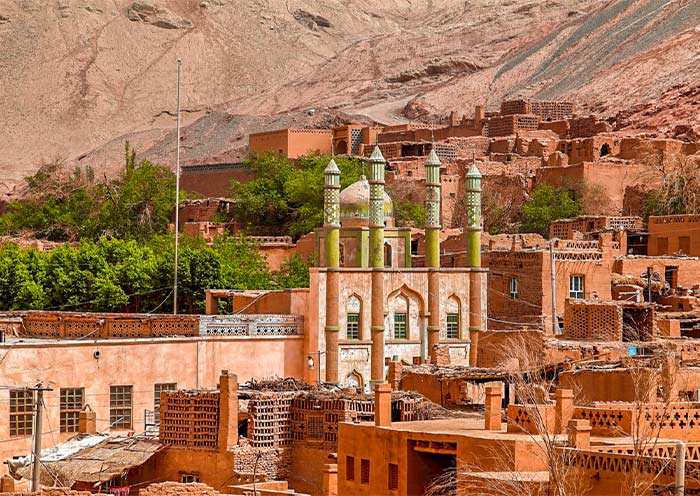
Kashgar Old City
Kashgar Old City is one of the best places to experience traditional Xinjiang culture.
Unlike many modern Chinese cities, Kashgar still maintains a unique urban landscape featuring:
· Traditional courtyard houses
· Narrow streets
· Local workshops
· Small family businesses
Walking through the old streets allows visitors to observe everyday life, including craftsmen making traditional products, local residents gathering in neighborhood squares and merchants selling regional specialties.
The old city is especially enjoyable to explore slowly on foot, as many of the most interesting experiences are found away from the main streets.
Kashgar Sunday Bazaar
Kashgar has long been famous as a trading center, and its markets remain an important part of local life.
The traditional bazaar offers a wide variety of products, including:
· Fresh fruits
· Spices
· Handmade crafts
· Textiles
· Local foods
The market reflects Kashgar’s historical role as a place where traders from different regions exchanged goods and ideas.
Id Kah Mosque
Located in the center of Kashgar, Id Kah Mosque is one of the most famous religious buildings in Xinjiang.
The mosque represents the long history of Islamic culture in the region and is an important landmark of Kashgar.
Visitors interested in architecture and local history can appreciate its traditional design and historical significance.
Experience Xinjiang’s Unique Ethnic Cultures
Xinjiang is one of the most culturally diverse regions in China.
Throughout history, different ethnic groups have lived in this region, creating a rich mixture of traditions, languages, architecture and lifestyles.
Major ethnic communities include:
· Uyghur
· Kazakh
· Tajik
· Mongolian
· Tuvan communities
Traveling through Xinjiang offers opportunities to experience different cultural environments, from desert oasis towns to highland villages and grassland communities.
Uyghur Culture in Southern Xinjiang
The Uyghur people have played an important role in the history and culture of Southern Xinjiang.
Visitors can experience Uyghur culture through:
· Traditional architecture
· Local cuisine
· Music and dance
· Handicrafts
· Traditional markets
Food is also an important part of the travel experience.
Popular local dishes include:
· Hand-pulled noodles
· Roasted lamb
· Pilaf
· Fresh naan bread
· Seasonal fruits
The combination of food, music and traditional neighborhoods creates a distinctive cultural experience.
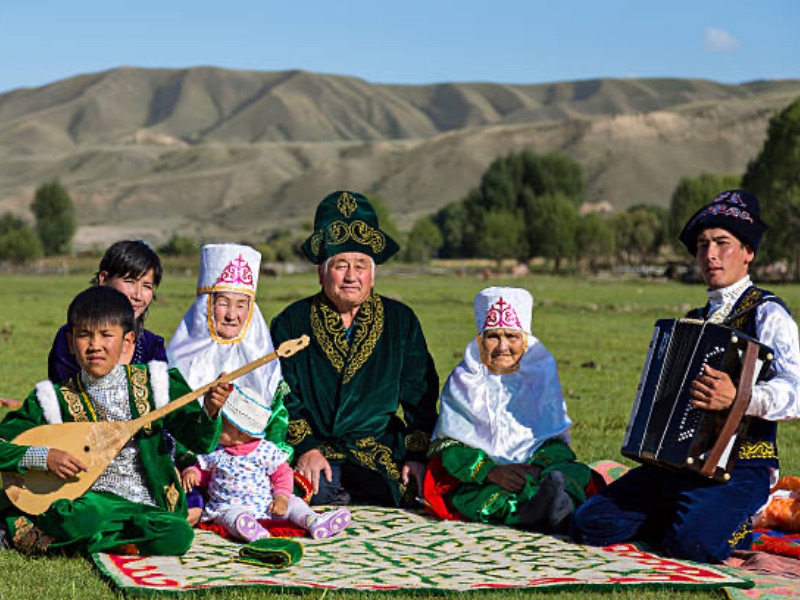
Kazakh Nomadic Culture in Northern Xinjiang
Northern Xinjiang, especially the Altai Mountains and Ili Valley, is home to many Kazakh communities.
Traditional Kazakh culture is closely connected with grasslands and animal husbandry.
Travelers may experience:
· Horse riding
· Grassland camps
· Traditional dairy products
· Local festivals
Visiting areas such as Nalati, Kalajun and Sayram Lake provides opportunities to see how local communities have adapted to the mountain and grassland environment.
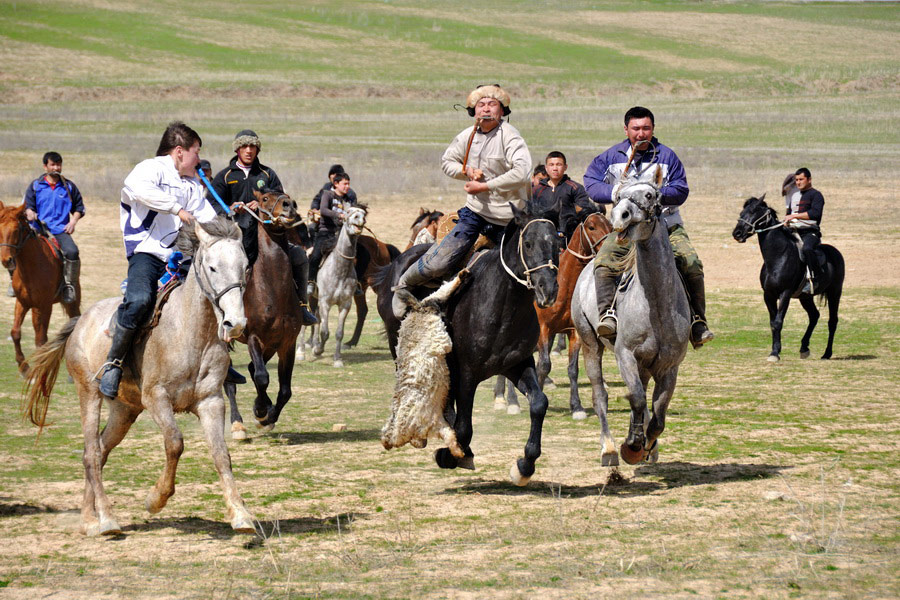
Tajik Highland Culture on the Pamir Plateau
The Pamir Mountains in southwestern Xinjiang are home to Tajik communities.
The region around Tashkurgan offers a completely different cultural experience from other parts of Xinjiang.
Visitors can experience:
· Highland villages
· Mountain lifestyles
· Traditional clothing
· Spectacular plateau scenery
The combination of the Pamir landscape and Tajik culture makes this area one of the most unique destinations in Xinjiang.
Why Xinjiang Requires Careful Planning
Xinjiang offers incredible travel experiences, but planning a trip here is different from visiting most other destinations in China.
The biggest challenge is the region’s enormous size.
The distance between major attractions can be much longer than many travelers expect.
For example:
· Urumqi to Kanas: approximately 700 km by road
· Urumqi to Kashgar: approximately 1,400 km by road
· Kashgar to Tashkurgan: approximately 300 km by road
Because of these distances, a realistic itinerary should balance:
· Travel time
· Sightseeing time
· Seasonal conditions
· Road conditions
Trying to visit too many areas in a short period often results in spending most of the trip on the road.
Choose Your Travel Region First
The first step in planning a Xinjiang tour is deciding which part of Xinjiang you want to explore.
Xinjiang travel is generally divided into three main regions:
Northern Xinjiang
Best for:
· Natural scenery
· Lakes
· Forests
· Grasslands
Main destinations:
· Kanas Lake
· Hemu Village
· Sayram Lake
· Ili Valley
· Nalati Grassland
Northern Xinjiang is especially popular among first-time visitors.
Southern Xinjiang
Best for:
· Silk Road history
· Ancient cities
· Ethnic culture
· Desert landscapes
Main destinations:
· Kashgar
· Turpan
· Kuqa
· Tashkurgan
· Taklamakan Desert
Southern Xinjiang offers a deeper cultural and historical experience.
Xinjiang Grand Loop
Best for:
· Travelers with more time
· Visitors who want a comprehensive experience
This route combines:
· Northern Xinjiang’s natural scenery
· Southern Xinjiang’s historical sites
· Ili Valley landscapes
A complete Xinjiang journey usually requires at least two weeks.
Best Time to Visit Xinjiang
Because Xinjiang covers a huge geographical area, there is no single “best month” that suits every traveler.
The ideal travel season depends on:
· Which part of Xinjiang you plan to visit
· The landscapes you want to experience
· Your preferred travel style
Northern Xinjiang, with its mountains, forests and alpine lakes, follows a very different seasonal pattern from Southern Xinjiang, where deserts, oasis cities and Silk Road heritage are the main attractions.
In general:
· April to May is ideal for Southern Xinjiang cultural and historical tours.
· June to August is the best period for grasslands, lakes and mountain scenery.
· September to October is the most beautiful season for Northern Xinjiang autumn landscapes.
· November to March offers unique winter scenery but requires more preparation.
Spring in Xinjiang (April to May): Best for Southern Xinjiang Exploration
Spring is one of the most comfortable seasons to explore Southern Xinjiang.
While some high-altitude areas in Northern Xinjiang may still have snow, cities and oasis areas in the south begin to warm up earlier.
The mild weather makes spring especially suitable for:
· Historical sightseeing
· Cultural exploration
· Desert landscapes
· Ancient Silk Road sites

Kashgar: Exploring Silk Road Culture in Comfortable Weather
Kashgar is one of the best destinations to visit during spring.
The pleasant temperatures make it comfortable to explore the city on foot, especially:
· Kashgar Old City
· Traditional neighborhoods
· Local bazaars
· Historical buildings
Compared with the hot summer months, spring allows travelers to spend more time outdoors and experience the city at a relaxed pace.
Turpan: Ancient Sites Without Extreme Heat
Turpan is famous for its desert environment and historical attractions.
Summer temperatures in Turpan can be extremely high, while spring provides much better conditions for sightseeing.
Recommended places include:
· Jiaohe Ancient City
· Karez Irrigation System
· Flaming Mountains
· Grape Valley
Spring is also a good season for travelers interested in understanding how ancient communities adapted to life in the desert environment.
Kuqa and the Southern Silk Road Route
For travelers interested in history and archaeology, spring is one of the best times to explore the Southern Silk Road.
The region around Kuqa features:
· Ancient Buddhist sites
· Canyon landscapes
· Historical ruins
The cooler weather makes outdoor exploration much more enjoyable.
Summer in Xinjiang (June to August): Best for Lakes, Mountains and Grasslands
Summer is the peak travel season in Xinjiang, especially for Northern Xinjiang.
During this period, the region reaches its most vibrant stage.
Mountain forests become green, grasslands are covered with flowers, and alpine lakes reflect the surrounding snow mountains.
For first-time visitors who want to experience Xinjiang’s famous natural scenery, summer is one of the safest choices.

Kanas Lake and Hemu Village
The Altai Mountains are among the most beautiful areas in Xinjiang during summer.
At this time:
· Forests are green
· Rivers are clear
· Mountain trails are accessible
· Villages are full of life
Kanas Lake offers spectacular views of alpine landscapes, while Hemu Village provides a chance to experience traditional wooden architecture and mountain village scenery.
Compared with autumn, summer has fewer visitors and a more peaceful atmosphere.
Sayram Lake: Blue Water and Flowering Grasslands
Summer is one of the best seasons to visit Sayram Lake.
The surrounding grasslands become green, and wildflowers bloom across the valleys.
The scenery combines:
· Deep blue lake water
· Snow-covered mountains
· Wide grasslands
· Open skies
Visitors can enjoy:
· Lakeside walks
· Photography
· Horse riding
· Pastoral scenery
Nalati and Kalajun Grasslands
The Ili Valley reaches its peak beauty during summer.
Grasslands such as Nalati and Kalajun are famous for:
· Alpine meadows
· Mountain views
· Kazakh nomadic culture
· Outdoor activities
This period is ideal for travelers who want to experience Xinjiang’s traditional grassland landscapes.
Things to Consider in Summer
Summer is also the busiest travel season in Xinjiang.
Popular destinations may experience:
· Higher hotel prices
· More visitors
· Limited availability in scenic areas
Travelers planning to visit places such as Kanas, Hemu and Sayram Lake should arrange accommodation and transportation in advance.
Autumn in Xinjiang (September to October): The Best Season for Photography
For many travelers, autumn is the most beautiful season in Xinjiang.
The combination of:
· Clear skies
· Golden forests
· Comfortable temperatures
· Excellent visibility
creates ideal conditions for photography and outdoor travel.
Northern Xinjiang, especially the Altai Mountains, becomes one of the most spectacular autumn destinations in China.
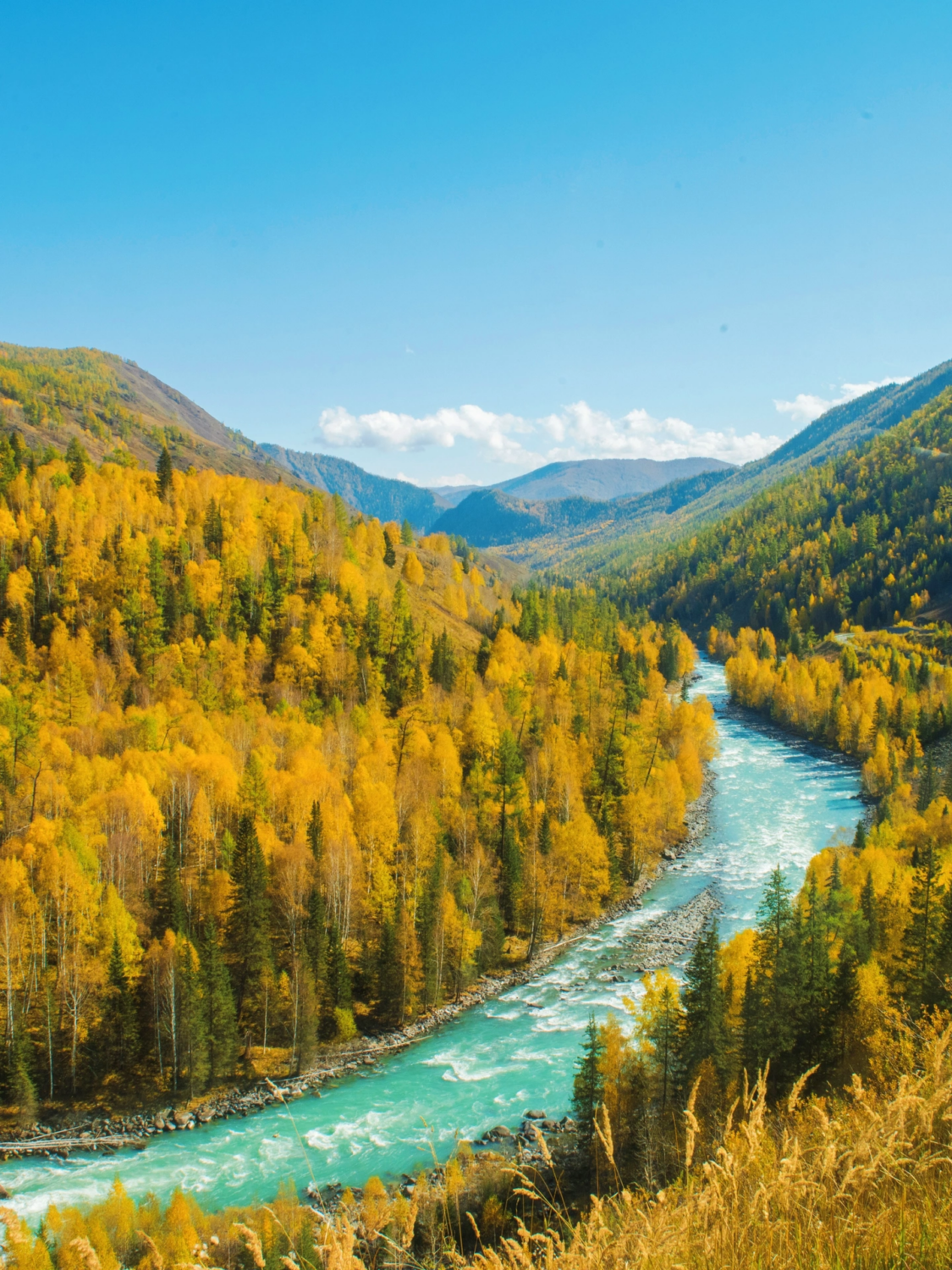
Kanas Lake and Hemu Village in Autumn
The period from late September to early October is considered the highlight of the year for Kanas and Hemu.
The forests surrounding the villages turn golden, creating a dramatic contrast with:
· Blue lakes
· Snow mountains
· Wooden houses
· Morning mist
The sunrise viewpoints in Hemu and the mountain scenery around Kanas are among the most photographed landscapes in Xinjiang.
Sayram Lake in Autumn
Sayram Lake becomes quieter and more peaceful in autumn.
The grasslands change from green to golden, while the surrounding mountains become clearer under the dry autumn skies.
It is an excellent season for travelers who prefer:
· Fewer crowds
· Photography
· Relaxed sightseeing
Ili Valley in Autumn
The Ili Valley also offers beautiful autumn scenery.
The combination of:
· Golden forests
· Agricultural landscapes
· Mountain valleys
creates a different atmosphere from Northern Xinjiang’s famous lake areas.
Things to Consider in Autumn
Autumn is the most popular season for Northern Xinjiang.
Travelers should prepare for:
· Higher demand for hotels
· Earlier booking requirements
· More visitors at major attractions
For popular destinations such as Kanas and Hemu, planning several months ahead is recommended during peak autumn periods.
Winter in Xinjiang (November to March): Snow Landscapes and a Different Experience
Winter transforms Xinjiang into a completely different destination.
Northern Xinjiang becomes a snow-covered world, while Southern Xinjiang remains suitable for cultural and historical exploration.
Winter is ideal for travelers looking for:
· Snow scenery
· Quiet destinations
· Winter photography
· Local experiences
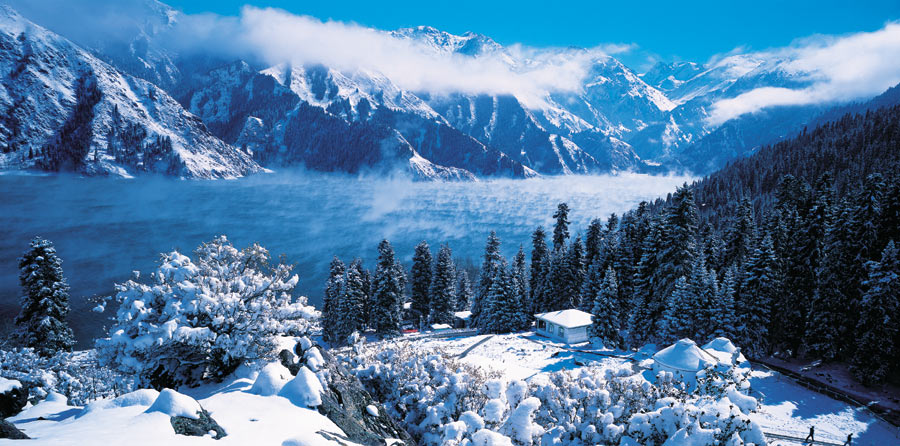
Altay and Hemu: Snow-Covered Mountain Villages
The villages and forests of Northern Xinjiang look completely different in winter.
Snow-covered wooden houses, frozen rivers and quiet mountain landscapes create a unique atmosphere.
Hemu in winter is especially attractive for photographers who want to experience a peaceful snowy village environment.
Urumqi and Surrounding Areas
Urumqi can also be visited during winter.
Nearby attractions include:
· Tianshan Tianchi Lake
· Snow activities
· Local markets
Winter allows visitors to experience another side of Xinjiang beyond summer landscapes.
Kashgar in Winter
Southern Xinjiang is relatively warmer than the north during winter.
Kashgar remains suitable for exploring:
· Old City streets
· Traditional markets
· Historical sites
· Local cuisine
The lower number of tourists also allows visitors to experience a more authentic atmosphere.
How Many Days Do You Need for a Xinjiang Tour?
Xinjiang is not a destination that can be fully experienced in just a few days.
The biggest factor travelers need to consider is distance.
Unlike many popular destinations in China where attractions are close together, Xinjiang’s major scenic areas can be hundreds of kilometers apart.
A comfortable Xinjiang itinerary should balance:
· Transportation time
· Sightseeing time
· Rest time
· Seasonal conditions
5-7 Days: Short Xinjiang Experience
A 5-7 day trip is suitable for travelers who want to experience one specific region.
The best approach is to focus on either Northern Xinjiang or Southern Xinjiang.
Northern Xinjiang Short Route
Recommended highlights:
· Urumqi
· Kanas Lake
· Hemu Village
· Burqin
Suitable for:
· Nature lovers
· First-time visitors
· Photography travelers
Southern Xinjiang Short Route
Recommended highlights:
· Kashgar
· Tashkurgan
· Pamir Plateau
Suitable for:
· Cultural travelers
· History lovers
· Travelers interested in Silk Road heritage
8-10 Days: The Most Popular Xinjiang Travel Duration
For most international visitors, 8-10 days is the most practical length for a Xinjiang trip.
This allows enough time to explore one major region without rushing.
Popular choices include:
· Classic Northern Xinjiang Nature Route
· Southern Xinjiang Silk Road Route
Travelers can enjoy major highlights while keeping daily driving distances manageable.
12-16 Days: Complete Xinjiang Experience
For travelers who want to see the diversity of Xinjiang, 12-16 days is recommended.
A longer itinerary can combine:
· Northern Xinjiang landscapes
· Ili Valley scenery
· Southern Xinjiang culture
· Silk Road historical sites
This allows travelers to experience the full contrast of Xinjiang:
From:
· Forests and lakes in the north
to:
· Deserts and ancient cities in the south
How to Choose Your Xinjiang Travel Route?
Choosing the right route is the most important step when planning a Xinjiang tour.
Because Xinjiang is extremely large, it is usually not practical to combine all major destinations into a short trip.
A well-planned Xinjiang itinerary should consider:
· Your available travel days
· The season of your visit
· Your travel interests
· The type of scenery you want to experience
Generally, Xinjiang travel can be divided into three classic routes:
Northern Xinjiang Nature Route
Best for:
· First-time visitors
· Nature lovers
· Photography travelers
· Summer and autumn travel
Main highlights:
· Kanas Lake
· Hemu Village
· Burqin
· Sayram Lake
· Ili Valley
· Grasslands and forests
Northern Xinjiang is famous for its dramatic natural landscapes.
The region features some of the most beautiful mountain scenery in China, including alpine lakes, dense forests, grasslands and snow-covered peaks.
Southern Xinjiang Silk Road Culture Route
Best for:
· History lovers
· Cultural travelers
· Travelers interested in ancient civilizations
Main highlights:
· Turpan
· Kuqa
· Kashgar
· Tashkurgan
· Pamir Plateau
· Taklamakan Desert
Southern Xinjiang offers a completely different experience from the north.
Instead of forests and lakes, travelers will discover:
· Ancient Silk Road cities
· Desert landscapes
· Historic ruins
· Traditional bazaars
· Diverse ethnic cultures
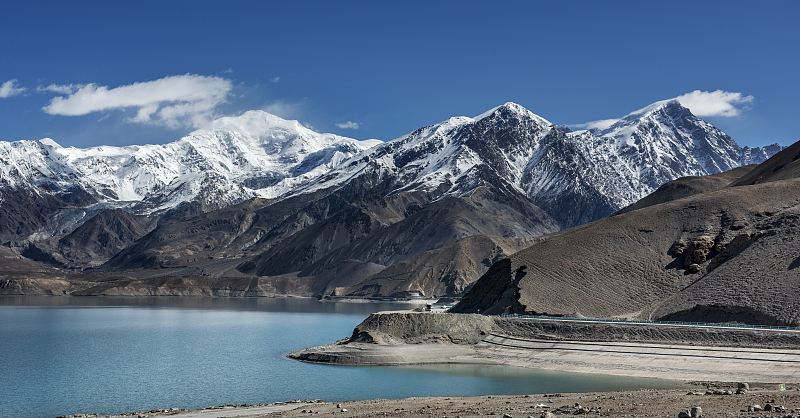
Xinjiang Grand Loop
Best for:
· Travelers with enough time
· First-time visitors who want a complete experience
Main highlights:
· Northern Xinjiang landscapes
· Ili Valley
· Southern Xinjiang culture
· Silk Road history
A complete Xinjiang journey requires more time, but it offers the greatest variety of landscapes and experiences.
Route 1: Classic Northern Xinjiang Nature Route
Duration: 8-10 Days
The Classic Northern Xinjiang Nature Route is the most popular choice for travelers visiting Xinjiang for the first time.
This route focuses on the most iconic landscapes of Northern Xinjiang, including the Altai Mountains, Kanas Lake, Hemu Village and Sayram Lake.
The journey combines:
· Alpine lakes
· Forest valleys
· Traditional villages
· Grasslands
· Gobi landscapes
It is especially recommended from June to October, with late September and early October being the best period for autumn scenery.
Why Choose This Route?
This route is ideal for travelers who want to experience Xinjiang’s most famous natural landscapes without spending too much time on cultural sightseeing.
The biggest advantages are:
· Some of Xinjiang’s most beautiful scenery
· Relatively comfortable travel pace
· Excellent photography opportunities
· Suitable for first-time visitors
Compared with Southern Xinjiang, Northern Xinjiang has shorter historical distances between attractions and is easier to arrange as a first Xinjiang experience.
Day 1: Arrival in Urumqi
Explore Xinjiang’s Gateway City
Urumqi is the capital of Xinjiang and the starting point for most Xinjiang journeys.
Although many travelers only use Urumqi as a transportation hub, spending some time here provides a good introduction to Xinjiang’s diverse cultures.
Recommended places include:
Xinjiang Museum
Xinjiang Museum is a good first stop for understanding the history of the region.
The museum displays:
· Silk Road artifacts
· Ancient cultural discoveries
· Historical exhibitions
Before visiting ancient cities and ethnic communities throughout Xinjiang, the museum provides useful historical background.
Xinjiang International Grand Bazaar
The International Grand Bazaar is one of Urumqi’s most famous landmarks.
Visitors can experience:
· Traditional architecture
· Local products
· Handicrafts
· Xinjiang cuisine
It is also a good place to try local specialties before beginning the road journey.
Stay: Urumqi
Day 2: Urumqi → Urho / Karamay
Distance: Approximately 400 km
Driving time: Around 5-6 hours
The journey begins from Urumqi toward the Junggar Basin and northern Xinjiang.
As the road leaves the city, the landscape gradually changes into:
· Gobi desert
· Open plains
· Mountain scenery
· Oilfield areas
This transition shows the geographical diversity of Xinjiang.
World Devil City
Located near Urho, World Devil City is one of the most famous geological landscapes in Northern Xinjiang.
Millions of years of wind erosion created unusual rock formations that resemble castles, towers and other shapes.
The best time to visit is usually in the afternoon when the sunlight creates stronger contrasts across the desert landscape.
Highlights include:
· Wind-eroded formations
· Desert scenery
· Sunset photography
Stay: Urho / Karamay
Day 3: Urho / Karamay → Burqin
Distance: Approximately 320 km
Driving time: Around 4-5 hours
Continue northwest toward Burqin, the gateway town to the Altai Mountains.
The landscape gradually changes from dry desert areas into greener river valleys.
Along the way, travelers can observe the transition between:
· Gobi desert
· Grasslands
· Mountain landscapes
Colorful Beach (Wucaitan)
Located near Burqin, Colorful Beach is famous for its colorful rock formations along the Irtysh River.
The area combines:
· River scenery
· Desert vegetation
· Colorful cliffs
The landscape changes throughout the day, but sunset is generally considered the best visiting time.
When the sunlight hits the cliffs, the colors become much more vivid.
Stay: Burqin
Day 4: Burqin → Kanas
Distance: Approximately 180 km
Driving time: Around 3-4 hours
Today the journey enters the Altai Mountains.
The scenery changes dramatically from open desert landscapes into:
· Mountain forests
· Alpine valleys
· Snow-covered peaks
Kanas is the highlight of Northern Xinjiang and one of the most famous natural areas in China.
Kanas Lake
Located deep in the Altai Mountains, Kanas Lake is famous for its turquoise water, surrounding forests and spectacular mountain scenery.
The area offers several different experiences:
Fish Viewing Platform
The Fish Viewing Platform is one of the best viewpoints in Kanas.
From the top, visitors can enjoy panoramic views of:
· Kanas Lake
· Surrounding mountains
· Forest valleys
It is especially beautiful in autumn when the forests turn golden.
Kanas Village
Kanas Village is home to the Tuvan community.
The village features:
· Traditional wooden houses
· Mountain scenery
· Local lifestyle
Staying overnight near Kanas allows travelers to experience the peaceful atmosphere after most day visitors leave.
Three Bays of Kanas River
The famous viewpoints include:
· Shenxian Bay
· Moon Bay
· Wolong Bay
These areas are especially popular for photography.
Stay: Kanas Scenic Area
Day 5: Kanas → Hemu Village
Distance: Approximately 35-50 km
Driving time: Around 1.5-2 hours
Continue from Kanas to Hemu Village.
The short travel distance allows a relaxed schedule and more time to enjoy the mountain scenery.
Hemu Village
Hemu is one of the most beautiful villages in Xinjiang.
Surrounded by forests and mountains, the village is famous for:
· Wooden houses
· River valleys
· Traditional architecture
· Quiet mountain atmosphere
The village is home to Tuvan and Kazakh communities who have maintained traditional lifestyles for generations.
Hemu Sunrise Viewpoint
The sunrise viewpoint is one of Hemu’s most famous experiences.
Early morning offers views of:
· The village below
· Morning mist
· Forest-covered mountains
During autumn, golden forests create one of the most iconic landscapes in Xinjiang.
Stay: Hemu Village
Day 6: Hemu Village → Bole / Sayram Lake
Distance: Approximately 500-600 km
Driving time: Around 7-8 hours
Today is a longer driving day as the journey leaves the Altai Mountains and heads west toward the Ili Valley region.
The scenery changes gradually from the forested mountains of Northern Xinjiang to the wide landscapes of western Xinjiang.
Along the way, travelers can observe several different landscapes:
· Altai mountain valleys
· Open grasslands
· Gobi plains
· Tianshan Mountain scenery
Although the driving distance is long, the changing landscapes make this one of the most interesting road journeys in Xinjiang.
Sayram Lake: The Pearl of the Tianshan Mountains
Depending on the travel schedule, travelers can visit Sayram Lake either on the same afternoon or the following morning.
Located in the western part of Xinjiang near the Tianshan Mountains, Sayram Lake is the largest alpine lake in Xinjiang.
The lake sits at an altitude of around 2,000 meters and is surrounded by:
· Snow-covered mountains
· Grasslands
· Forests
· Wide open valleys
The scenery is often compared with alpine landscapes in Central Asia and Europe.
Recommended Activities Around Sayram Lake
Lakeside Scenic Drive
The best way to explore Sayram Lake is usually by driving around the lake.
Different viewpoints offer completely different perspectives, including:
· Mountain reflections on the water
· Open grasslands
· Local herds of animals
· Snow mountain backgrounds
Flower Season Experience
From June to July, the grasslands around Sayram Lake become covered with wildflowers.
This is one of the most beautiful periods to visit.
The combination of:
· Colorful flowers
· Blue lake water
· Snow mountains
creates some of the most memorable scenery in western Xinjiang.
Sunset at Sayram Lake
Sunset is one of the highlights of Sayram Lake.
As the sun moves lower, the mountains and lake change colors, creating excellent photography opportunities.
Stay: Bole / Sayram Lake area
Day 7: Sayram Lake → Yining
Distance: Approximately 150 km
Driving time: Around 2-3 hours
Today is a relatively relaxed day.
After enjoying the scenery of Sayram Lake, continue toward Yining, the capital city of Ili Kazakh Autonomous Prefecture.
The Ili Valley is one of the most fertile and beautiful areas in Xinjiang.
Because of its mild climate and abundant water resources, the region has traditionally been an important agricultural and cultural center.
Explore Yining City
Yining offers a different atmosphere from Northern Xinjiang’s mountain destinations.
The city combines:
· Kazakh culture
· Uyghur traditions
· Russian-style architecture
· Modern city life
Kazanqi Folk Tourism Area
Kazanqi is one of the best places in Yining to experience local culture.
The area preserves traditional neighborhood features, including:
· Blue-colored houses
· Traditional courtyards
· Local handicraft shops
· Small streets
Visitors can walk through the neighborhood and observe everyday life.
Liuxing Street
Liuxing Street is another popular area in Yining.
The district is known for its unique street layout and colorful buildings.
It is a pleasant place for:
· Walking
· Photography
· Trying local food
Stay: Yining
Day 8: Yining → Urumqi
Distance: Approximately 700 km
Driving time: Around 8-9 hours by road
Today marks the final journey back to Urumqi.
For travelers with limited time, there are two possible options:
· Return by road
· Take a flight from Yining to Urumqi
The road journey passes through the Tianshan Mountains and offers a final view of Xinjiang’s diverse landscapes.
Optional Stop: Duku Highway (Seasonal)
For travelers visiting during the opening period of the Duku Highway, the route can be adjusted to include this spectacular mountain road.
The Duku Highway is one of China’s most famous scenic roads, crossing the Tianshan Mountains and connecting northern and southern Xinjiang.
The road features:
· Snow mountains
· Grasslands
· Valleys
· Alpine scenery
However, it is usually only open during the summer months due to weather conditions.
End of the Northern Xinjiang Nature Route
This 8-day route covers some of the most representative landscapes of Northern Xinjiang:
· Desert and Gobi scenery around Urho
· Colorful geological landscapes near Burqin
· Alpine lakes and forests in Kanas
· Traditional mountain villages in Hemu
· Grasslands and lakes around Sayram Lake
· Cultural experiences in Yining
For first-time visitors, this route provides an excellent introduction to Xinjiang’s natural beauty.
Route 2: Southern Xinjiang Silk Road Culture Route
Duration: 8-10 Days
Southern Xinjiang offers a completely different travel experience from the north.
While Northern Xinjiang is famous for forests, lakes and grasslands, Southern Xinjiang focuses on:
· Ancient Silk Road history
· Desert landscapes
· Oasis civilizations
· Ethnic cultures
This route is ideal for travelers who want to understand the historical and cultural side of Xinjiang.
Why Choose This Route?
Southern Xinjiang is one of the most fascinating regions along the ancient Silk Road.
For thousands of years, caravans traveled through this area connecting China with Central Asia and beyond.
Travelers can explore:
· Ancient Buddhist ruins
· Historic oasis cities
· Traditional markets
· Mountain border landscapes
The route also offers some of Xinjiang’s most dramatic geographical contrasts:
From:
· Desert basins
to:
· High mountain plateaus
Day 1: Arrival in Urumqi → Turpan
Distance: Approximately 200 km
Driving time: Around 3 hours
Begin the journey from Urumqi toward Turpan, one of the most important ancient Silk Road cities.
The landscape changes quickly from modern city areas to:
· Gobi desert
· Mountain valleys
· Oasis landscapes
Turpan: Ancient Oasis Civilization
Turpan is located in a basin surrounded by desert and mountains.
Despite the extremely dry environment, the city developed into a prosperous agricultural center through advanced irrigation techniques.
The city is famous for:
· Ancient ruins
· Buddhist heritage
· Desert scenery
· Grape cultivation
Jiaohe Ancient City
Jiaohe Ancient City is one of the most important historical sites in Turpan.
The ruins preserve the remains of an ancient city built on a natural plateau.
Visitors can see:
· Ancient streets
· Residential areas
· Religious buildings
The site provides an excellent introduction to Silk Road history.
Karez Underground Irrigation System
The Karez system demonstrates the wisdom of ancient desert civilizations.
This underground water network transported mountain water into the oasis, allowing agriculture and settlement to develop.
Stay: Turpan
Day 2: Turpan → Kuqa
Distance: Approximately 700 km
Driving time: Around 8-9 hours
Today the journey continues westward along the ancient Silk Road route from Turpan toward Kuqa.
This is one of the longer travel days of the itinerary, but it also offers a fascinating transition from the eastern oasis region into the heart of Southern Xinjiang.
Along the way, the landscape gradually changes:
· From the Turpan Basin
· Across the Gobi Desert
· Toward the northern edge of the Taklamakan Desert
Travelers can observe how ancient Silk Road settlements developed around limited water resources in this challenging environment.
Kuqa: An Ancient Buddhist Center on the Silk Road
Kuqa was once one of the most important kingdoms along the ancient Silk Road.
More than a thousand years ago, it was a major cultural and religious center connecting China with Central Asia.
The area is famous for:
· Buddhist cave temples
· Ancient ruins
· Canyon landscapes
· Silk Road history
Kizil Thousand Buddha Caves
Located near Kuqa, the Kizil Thousand Buddha Caves are among the most important Buddhist heritage sites in Xinjiang.
The caves contain:
· Ancient murals
· Buddhist sculptures
· Historical religious artwork
The site reflects the cultural exchanges that took place along the Silk Road.
The artistic styles show influences from different civilizations, demonstrating how Xinjiang served as a bridge between East and West.
Tianshan Grand Canyon
The Tianshan Grand Canyon near Kuqa is one of the most impressive natural landscapes in Southern Xinjiang.
The canyon features:
· Red sandstone cliffs
· Unique geological formations
· Desert mountain scenery
The contrast between the dry landscape and the dramatic canyon walls makes it an excellent photography destination.
Stay: Kuqa
Day 3: Kuqa → Aksu
Distance: Approximately 300 km
Driving time: Around 4-5 hours
Continue west along the northern edge of the Taklamakan Desert toward Aksu.
The journey passes through landscapes typical of Southern Xinjiang:
· Desert plains
· Oasis farmland
· Tianshan Mountain scenery
Aksu: Gateway to the Tianshan Mountains
Aksu has historically been an important oasis city along the Silk Road.
The area is known for:
· Fruit production
· Mountain landscapes
· Ancient cultural sites
Depending on the itinerary and season, travelers can explore nearby natural attractions or use Aksu as a transit point toward Kashgar.
Tianshan Tomur Grand Canyon (Optional)
Located near Aksu, the Tomur Grand Canyon area features spectacular mountain scenery.
The region is connected with the Tianshan Mountains and offers views of:
· Deep valleys
· Red rock formations
· Snow-covered peaks
For travelers interested in geology and photography, it is a worthwhile addition.
Stay: Aksu
Day 4: Aksu → Kashgar
Distance: Approximately 460 km
Driving time: Around 6-7 hours
Today the journey reaches Kashgar, the cultural center of Southern Xinjiang.
The road passes through the western part of the Tarim Basin before arriving at this historic Silk Road city.
Kashgar: The Cultural Heart of Xinjiang
Kashgar is one of the most important destinations in Xinjiang.
For centuries, it was a major trading hub where merchants from China, Central Asia and South Asia exchanged goods and ideas.
Today, Kashgar remains one of the best places to experience traditional Xinjiang culture.
Explore Kashgar Old City
The Old City is the best place to begin understanding Kashgar.
Visitors can explore:
· Traditional houses
· Narrow streets
· Local workshops
· Neighborhood life
Unlike many historical districts that have become purely tourist areas, Kashgar Old City still maintains a strong connection with local daily life.
Walking slowly through the streets allows travelers to discover:
· Craftsmen working in small workshops
· Traditional food shops
· Local families’ courtyards
Id Kah Mosque
Id Kah Mosque is one of Kashgar’s most famous landmarks.
The mosque represents the long history of Islamic culture in the region and is an important symbol of Kashgar.
Its traditional architecture and location in the center of the old city make it an important stop during a city tour.
Kashgar Livestock Market
The Kashgar Livestock Market is one of the most traditional markets in the region.
On market days, visitors can experience a lively atmosphere with:
· Local farmers
· Traders
· Livestock transactions
· Traditional interactions
It provides a glimpse into the agricultural and pastoral lifestyle of Southern Xinjiang.
Stay: Kashgar
Day 5: Kashgar → Tashkurgan
Distance: Approximately 300 km
Driving time: Around 5-6 hours
Today begins one of the most spectacular journeys in Xinjiang: the road from Kashgar to Tashkurgan along the Karakoram Highway.
This route climbs gradually from the Kashgar Basin toward the Pamir Plateau.
The scenery changes dramatically:
· Oasis landscapes
· Mountain valleys
· Snow peaks
· High-altitude lakes
Karakul Lake
Located on the Pamir Plateau, Karakul Lake is one of the most beautiful high-altitude lakes in Xinjiang.
The lake is surrounded by some of the region’s highest mountains, including views of Mount Muztagh Ata.
The scenery combines:
· Deep blue lake water
· Snow-covered peaks
· Wide plateau landscapes
It is one of the most unforgettable natural experiences in Southern Xinjiang.
Tashkurgan Stone City
Tashkurgan was historically an important stop along the ancient Silk Road.
The Stone City ruins stand on a high plateau overlooking the surrounding valleys.
The site reflects the strategic importance of this region, which connected China with Central Asia.
Tajik Culture Experience
Tashkurgan is home to Tajik communities.
Travelers can experience:
· Highland village life
· Traditional architecture
· Local customs
· Plateau landscapes
This makes Tashkurgan different from other destinations in Xinjiang.
Stay: Tashkurgan
Day 6: Tashkurgan → Kashgar
Distance: Approximately 300 km
Driving time: Around 5-6 hours
Return to Kashgar through the Pamir Mountains.
The return journey offers another opportunity to enjoy the mountain scenery from different perspectives.
Depending on weather and road conditions, travelers can make additional stops along the Karakoram Highway.
Optional Stops
Possible stops include:
· White Sand Lake
· Mountain viewpoints
· Local villages
These stops provide opportunities for photography and short walks.
Stay: Kashgar
Day 7: Kashgar Free Exploration
A relaxed day allows travelers to experience Kashgar at a slower pace.
Recommended activities include:
Walking Through Traditional Neighborhoods
Spend time exploring streets around the old city.
This is the best way to discover:
· Local architecture
· Traditional lifestyles
· Small shops
Taste Southern Xinjiang Cuisine
Kashgar is one of the best places in Xinjiang to experience local food.
Popular dishes include:
· Roast lamb
· Pilaf
· Naan bread
· Hand-pulled noodles
· Fresh fruit
Food is an important part of understanding local culture.
Stay: Kashgar
Day 8: Kashgar Departure
The Southern Xinjiang Silk Road Route ends in Kashgar.
Travelers can continue their journey by:
· Flying to Urumqi
· Connecting to other destinations in China
· Continuing toward Central Asia
Route 3: Xinjiang Grand Loop
Duration: 12-16 Days
The Xinjiang Grand Loop is the most complete way to explore Xinjiang.
Unlike shorter routes that focus on either Northern Xinjiang or Southern Xinjiang, this itinerary combines the best landscapes and cultural experiences from the entire region.
Travelers can experience:
· The alpine lakes and forests of Northern Xinjiang
· The ancient Silk Road civilization of Southern Xinjiang
· The mountain landscapes of the Pamir Plateau
· The grasslands and valleys of the Ili region
This route is ideal for travelers who want to understand why Xinjiang is considered one of China’s most diverse travel destinations.
Why Choose the Xinjiang Grand Loop?
Xinjiang’s greatest charm lies in its incredible diversity.
A journey through the region feels like traveling through several different countries.
Within one trip, travelers can experience:
· Desert landscapes similar to Central Asia
· Snow mountains similar to the Alps
· Ancient cities connected to the Silk Road
· Traditional nomadic cultures
The Grand Loop allows enough time to experience these contrasts without rushing.
However, because of the large distances involved, this route requires a longer travel period and careful planning.
Day 1: Arrival in Urumqi
Begin Your Xinjiang Journey
Urumqi is the main transportation hub of Xinjiang and the starting point for most travelers.
Depending on arrival time, travelers can explore some of the city’s highlights.
Recommended places:
Xinjiang Museum
Xinjiang Museum provides an introduction to the region’s complicated history.
The exhibitions cover:
· Ancient Silk Road civilizations
· Archaeological discoveries
· Historical cultural exchanges
It is a useful first stop before visiting ancient cities and historical sites throughout Xinjiang.
International Grand Bazaar
The Grand Bazaar is one of Urumqi’s most recognizable landmarks.
Visitors can experience:
· Xinjiang handicrafts
· Traditional architecture
· Local snacks
· Regional products
It is a good place to get a first impression of Xinjiang’s cultural diversity.
Stay: Urumqi
Day 2: Urumqi → Turpan
Distance: Approximately 200 km
Driving time: Around 3 hours
The journey begins toward Turpan, one of the most important ancient Silk Road cities.
The landscape changes quickly from urban areas into:
· Gobi desert
· Mountain valleys
· Oasis farmland
Jiaohe Ancient City
Jiaohe Ancient City is one of Xinjiang’s most significant historical sites.
The city was built on a natural plateau and served as an important settlement along the ancient Silk Road.
Visitors can explore:
· Ancient streets
· Residential areas
· Religious buildings
Flaming Mountains
The Flaming Mountains are among Xinjiang’s most famous landscapes.
The red mountains stretch across the Turpan Basin and create a dramatic desert atmosphere.
Karez Irrigation System
The Karez underground irrigation system demonstrates how ancient communities developed agriculture in one of China’s driest regions.
Stay: Turpan
Day 3: Turpan → Kuqa
Distance: Approximately 700 km
Driving time: Around 8-9 hours
Continue west through the Gobi desert toward Kuqa.
Although this is a long travel day, it provides a strong impression of the scale of Xinjiang.
The landscape gradually changes from:
· Desert plains
to:
· Tianshan Mountain scenery
Kuqa: Ancient Buddhist Center
Kuqa was one of the most important cultural centers on the ancient Silk Road.
Highlights include:
Kizil Thousand Buddha Caves
The caves contain ancient Buddhist murals and reflect the cultural exchanges between different civilizations.
Tianshan Grand Canyon
The canyon features dramatic red cliffs and unique geological formations.
Stay: Kuqa
Day 4: Kuqa → Kashgar
Distance: Approximately 700 km
Driving time: Around 8-9 hours
Today the journey continues west toward Kashgar.
The route crosses the northern edge of the Taklamakan Desert before reaching the cultural center of Southern Xinjiang.
Arrival in Kashgar
Kashgar is one of the most historically important cities along the Silk Road.
After arrival, travelers can explore the old city area.
Recommended:
· Traditional streets
· Local markets
· Historic buildings
Stay: Kashgar
Day 5: Kashgar → Tashkurgan
Distance: Approximately 300 km
Driving time: Around 5-6 hours
Today begins the spectacular journey along the Karakoram Highway toward the Pamir Plateau.
The road climbs gradually from the oasis region into high-altitude mountain landscapes.
White Sand Lake
White Sand Lake is a beautiful stop along the route.
The scenery combines:
· White sand dunes
· Blue lake water
· Snow mountains
It is one of the most photogenic landscapes on the Pamir Plateau.
Karakul Lake
Karakul Lake is one of the highlights of the Pamir Mountains.
The lake is surrounded by snow-covered peaks, including views of Mount Muztagh Ata.
Tashkurgan Stone City
The ancient Stone City reflects the historical importance of Tashkurgan as a Silk Road settlement.
Stay: Tashkurgan
Day 6: Tashkurgan → Kashgar
Distance: Approximately 300 km
Driving time: Around 5-6 hours
Return to Kashgar through the Pamir Mountains.
Depending on weather and road conditions, travelers can make additional stops along the way.
Possible stops:
· Mountain viewpoints
· Local villages
· Plateau landscapes
Stay: Kashgar
Day 7: Kashgar → Yining
Transportation: Flight recommended
Because of the enormous distance between Southern and Western Xinjiang, flying is usually the most efficient option.
The flight connects two completely different regions:
· Southern Xinjiang’s Silk Road culture
· Ili Valley’s mountain landscapes
Explore Yining
Yining is located in the fertile Ili Valley.
The city combines:
· Kazakh culture
· Uyghur traditions
· Central Asian influences
Recommended areas:
Kazanqi Folk Tourism Area
A traditional neighborhood featuring:
· Local houses
· Courtyards
· Traditional lifestyles
Liuxing Street
A colorful historic district suitable for walking and photography.
Stay: Yining
Day 8: Yining → Sayram Lake
Distance: Approximately 150 km
Driving time: Around 2-3 hours
Today explore one of Western Xinjiang’s most beautiful natural landscapes.
Sayram Lake
Sayram Lake is often called the “Pearl of the Tianshan Mountains.”
The lake offers different scenery throughout the year:
Summer:
· Green grasslands
· Wildflowers
· Pastoral scenery
Autumn:
· Golden grasslands
· Clear mountain views
Lakeside Exploration
Recommended activities:
· Scenic drive around the lake
· Photography stops
· Short walks
Stay: Sayram Lake area / Bole
Day 9: Sayram Lake → Nalati Grassland
Distance: Approximately 300 km
Driving time: Around 4-5 hours
Continue east into the Ili Valley.
The landscape changes from alpine lake scenery to wide grasslands and mountain valleys.
Nalati Grassland
Nalati is one of Xinjiang’s most famous grassland destinations.
The area is known for:
· Alpine meadows
· Snow mountain backgrounds
· Kazakh pastoral culture
Visitors can enjoy:
· Grassland sightseeing
· Horse riding
· Local cultural experiences
Stay: Nalati
Day 10: Nalati → Kanas Region
Distance: Approximately 600 km
Driving time: Around 8-9 hours
Today is a longer travel day connecting the Ili Valley with Northern Xinjiang.
The route passes through changing landscapes:
· Grasslands
· Mountain valleys
· Gobi areas
Stay: Burqin / Kanas area
Day 11: Kanas Lake Exploration
Discover the Altai Mountains
Kanas is one of the most beautiful destinations in Xinjiang.
Highlights include:
· Kanas Lake
· Three Bays of Kanas River
· Forest landscapes
Three Bays of Kanas River
The famous viewpoints include:
· Shenxian Bay
· Moon Bay
· Wolong Bay
Each viewpoint offers different scenery.
Fish Viewing Platform
The viewpoint provides a panoramic view of Kanas Lake and surrounding mountains.
Stay: Kanas
Day 12: Kanas → Hemu Village
Distance: Approximately 50 km
Driving time: Around 1-2 hours
Continue to Hemu Village.
Hemu Village
Hemu is famous for:
· Wooden houses
· Mountain scenery
· Traditional village atmosphere
The sunrise viewpoint is especially recommended.
Stay: Hemu
Day 13: Hemu → Burqin / Urho
Distance: Approximately 300 km
Driving time: Around 4-5 hours
Leave the mountains and return toward the lower landscapes of Northern Xinjiang.
Possible stop:
Colorful Beach
The colorful cliffs along the Irtysh River provide a final opportunity to enjoy Northern Xinjiang’s unique geology.
Stay: Urho / Karamay
Day 14: Urho → Urumqi
Distance: Approximately 400 km
Driving time: Around 5-6 hours
Return to Urumqi.
Depending on departure arrangements, travelers can continue their journey or spend additional time exploring the city.
Transportation Guide: How to Travel Around Xinjiang
Xinjiang’s enormous size makes transportation planning one of the most important parts of the trip.
Unlike destinations where attractions are concentrated around one city, Xinjiang requires long-distance travel between regions.
The main transportation options are:
· Private car with driver
· Self-driving
· Public transportation
Traveling by Private Car with Driver
For international travelers, a private car with driver is usually the most comfortable and flexible option.
Advantages include:
· Flexible schedule
· No need to manage long-distance driving
· Easier communication
· Ability to stop for photography
· Suitable for remote areas
This option is especially recommended for routes including:
· Kanas
· Pamir Plateau
· Duku Highway
· Desert roads
Transportation Guide: How to Travel Around Xinjiang
Because Xinjiang is one of the largest regions in China, transportation planning is a key part of creating a successful itinerary.
Many first-time visitors underestimate the distances between destinations.
A journey that appears close on the map may still require several hours of driving because of:
· Mountain roads
· Desert highways
· Scenic area access restrictions
· Weather conditions
Choosing the right transportation method can greatly improve the travel experience.
The three main options for exploring Xinjiang are:
· Private car with driver
· Self-driving
· Public transportation
Private Car with Driver: The Most Comfortable Option
For most international travelers, traveling by private car with an experienced driver is the most convenient way to explore Xinjiang.
This option provides the greatest flexibility, especially in remote areas where public transportation is limited.
Advantages of Private Car Travel
Flexible Schedule
A private vehicle allows travelers to adjust the itinerary according to:
· Weather conditions
· Photography opportunities
· Personal interests
· Travel pace
Xinjiang is a destination where unexpected stops are often part of the experience.
A beautiful mountain view, a herd of animals crossing the road or a sunset over the desert can become some of the most memorable moments of the journey.
Comfortable for Long Distances
Many Xinjiang routes include long driving days.
Examples:
· Urumqi to Kanas: around 700 km
· Kashgar to Tashkurgan: around 300 km
· Hemu to Sayram Lake: more than 500 km
Having a private vehicle makes these journeys much more comfortable.
Travelers can:
· Take breaks when needed
· Stop for photos
· Avoid carrying luggage between different transportation connections
Better Access to Remote Areas
Many of Xinjiang’s most beautiful landscapes are located away from major cities.
Examples include:
· Pamir Plateau
· Kanas and Hemu villages
· Grassland areas
· Desert viewpoints
A private vehicle provides easier access to these destinations.
Self-Driving in Xinjiang
Self-driving is becoming increasingly popular among experienced travelers.
Xinjiang has many spectacular scenic roads, making it attractive for road trip enthusiasts.
Popular self-driving routes include:
· Northern Xinjiang loop
· Duku Highway
· Karakoram Highway route
· Ili Valley routes
Advantages of Self-Driving
Complete Freedom
Travelers can decide:
· Where to stop
· How long to stay
· Which places to explore
This is especially attractive for photographers and travelers who enjoy spontaneous exploration.
Scenic Road Experiences
Xinjiang has some of the most beautiful roads in China.
Examples include:
Duku Highway
The Duku Highway crosses the Tianshan Mountains and connects Northern and Southern Xinjiang.
The road passes through:
· Snow mountains
· Grasslands
· Forests
· Canyons
Because of weather conditions, it is usually only open during the warmer months.
Ili Valley Roads
The roads around Sayram Lake, Nalati and Kalajun offer spectacular mountain scenery.
Driving through these areas is an important part of the travel experience.
Things to Consider Before Self-Driving
Although self-driving offers freedom, travelers should consider:
· Long driving distances
· Mountain road conditions
· Limited fuel stations in remote areas
· Weather changes
· Scenic area restrictions
Foreign visitors should also confirm whether they are legally allowed to drive in China and arrange the necessary documents before planning a self-drive trip.
For most international travelers visiting Xinjiang for the first time, a private vehicle with a local driver is usually a more convenient choice.
Public Transportation in Xinjiang
Public transportation is available between major cities, but it is less convenient for reaching remote scenic areas.
Main options include:
· Domestic flights
· Trains
· Long-distance buses
Flights
Flying is the fastest way to travel between distant parts of Xinjiang.
Useful domestic flight connections include:
· Urumqi ↔ Kashgar
· Urumqi ↔ Yining
· Kashgar ↔ Hotan
Flights are especially useful when combining Northern and Southern Xinjiang.
For example, instead of spending more than a day traveling by road between Kashgar and Yining, travelers can save significant time by taking a flight.
Trains
Xinjiang has an expanding railway network connecting major cities.
Train travel is useful for:
· Urumqi
· Turpan
· Kashgar
· Korla
Advantages:
· Comfortable
· Affordable
· Reliable
However, trains usually cannot reach many famous natural attractions directly.
Additional transportation is still needed after arriving at railway stations.
Buses
Long-distance buses connect many towns in Xinjiang.
However, buses are generally less recommended for international visitors because:
· Travel times are longer
· Schedules are less flexible
· Remote scenic areas may require additional transfers
Accommodation Guide for Xinjiang
Accommodation quality varies greatly depending on the destination.
Major cities generally offer a wide range of hotels, while remote scenic areas have more limited choices.
Hotels in Major Cities
Cities such as:
· Urumqi
· Kashgar
· Turpan
· Yining
have many accommodation options.
Travelers can choose from:
· International-style hotels
· Local four-star hotels
· Boutique hotels
· Budget accommodations
These cities are good places to enjoy more comfortable facilities before and after long journeys.
Accommodation in Scenic Areas
Staying overnight inside or near scenic areas often provides a much better experience.
Examples:
Kanas
Staying near Kanas allows travelers to enjoy:
· Early morning scenery
· Fewer crowds
· Sunrise photography
Hemu Village
Overnight stays in Hemu are highly recommended.
The village atmosphere changes completely after day visitors leave.
Early morning and evening are the best times to experience:
· Wooden houses
· Mountain mist
· Quiet village scenery
Sayram Lake
Accommodation near Sayram Lake allows travelers to enjoy:
· Sunset
· Sunrise
· Night sky photography
Booking Accommodation in Peak Season
During popular periods such as:
· July and August
· Late September to early October
Xinjiang’s best hotels and guesthouses can sell out quickly.
Advance booking is recommended, especially for:
· Kanas
· Hemu
· Sayram Lake
Xinjiang Food Guide
Food is an important part of the Xinjiang travel experience.
The region’s cuisine reflects its multicultural history, combining influences from Central Asia, Chinese traditions and local ethnic cultures.

Popular Xinjiang Dishes
Roast Lamb
Roast lamb is one of the most famous Xinjiang dishes.
The meat is usually seasoned with local spices and cooked until tender.
Xinjiang Pilaf (Polo)
Pilaf is a traditional dish made with:
· Rice
· Lamb
· Carrots
· Onions
It is especially popular in Southern Xinjiang.
Naan Bread
Naan is a traditional bread commonly eaten throughout Xinjiang.
Different areas have different styles and flavors.
Hand-Pulled Noodles
Xinjiang-style noodles are famous for their handmade texture and rich flavors.
Halal Food Options
Many restaurants in Xinjiang serve halal food.
Muslim travelers generally find many suitable dining options, especially in:
· Kashgar
· Urumqi
· Turpan
Practical Travel Tips for Xinjiang
Prepare for Large Temperature Differences
Xinjiang has a continental climate.
Temperatures can vary greatly between:
· Day and night
· Desert and mountain areas
· Different regions
For example:
A summer day in Turpan can be extremely hot, while the evening temperature in mountain areas may be much cooler.
Travelers should prepare:
· Light clothing
· Warm layers
· Sun protection
Allow Enough Travel Time
One of the most important Xinjiang travel tips is not to underestimate distances.
A comfortable itinerary should avoid scheduling too many attractions in one day.
Long-distance journeys are part of the Xinjiang experience, but rushing will reduce the enjoyment.
Book Popular Attractions in Advance
During peak seasons, some scenic areas may require advance reservations.
Popular places include:
· Kanas
· Hemu
· Sayram Lake
Planning ahead helps avoid unnecessary problems during the trip.
Respect Local Cultures
Xinjiang is home to many ethnic communities.
Travelers should respect:
· Local customs
· Religious traditions
· Photography etiquette
When visiting villages, markets or religious sites, it is always recommended to observe local practices.
Plan Your Xinjiang Journey with Silk Road Travel
Xinjiang is a destination that rewards careful planning.
With its huge geographical area, diverse landscapes and long travel distances, having an experienced travel team can make the journey smoother and more enjoyable.
Silk Road Travel specializes in customized China tours and Xinjiang journeys, offering assistance with:
· Private Xinjiang itineraries
· English-speaking guides
· Transportation arrangements
· Hotel bookings
· Customized travel experiences
Whether you want to explore the alpine landscapes of Northern Xinjiang, discover the Silk Road history of Southern Xinjiang, or create a complete Xinjiang Grand Loop, Silk Road Travel can help design a journey according to your travel style and schedule.
For more information or to customize your Xinjiang tour, please contact:
Silk Road Travel
Email: info@silkroadtravel.com
Phone / WhatsApp: +86 15909912575