


Harbin Ice and Snow Festival & Harbin Ice and Snow World Travel Guide
The Harbin International Ice and Snow Sculpture Festival is one of the world’s four largest winter celebrations of ice and snow art, and its crown jewel — Harbin Ice and Snow World — is the largest ice-and-snow theme park on the planet, certified by Guinness World Records. For the 2025–2026 season, the park has expanded to a record-breaking 1.2 million square meters, opening on December 17, 2025 and scheduled to welcome visitors through late February 2026. This guide walks you through the festival’s history, the must-see highlights of Harbin Ice and Snow World, practical information on tickets, transportation, shows, and everything you need to plan an unforgettable winter journey to China’s “Ice City.”
Why the Harbin Ice and Snow Festival Is a Must-Visit in China
Harbin, the capital of Heilongjiang Province in northeast China, is nicknamed the “Ice City” thanks to its long, bitterly cold winters and abundant natural ice and snow. For more than half a century, the city has transformed its harsh climate into a stage for some of the most spectacular ice-and-snow art on earth. The festival is officially recognized as one of the world’s four great ice and snow festivals, alongside Japan’s Sapporo Snow Festival, Canada’s Quebec Winter Carnival, and Norway’s Ski Festival.
What sets Harbin apart is the sheer scale and diversity of its winter offering. Rather than a single exhibition, the festival spreads across multiple themed venues — colossal ice architecture at Harbin Ice and Snow World, monumental snow sculptures on Sun Island, and the historic Ice Lantern Art Fair at Zhaolin Park — complemented by winter sports, cultural performances, intangible-heritage shows, and street carnivals. Combined with Harbin’s distinctive Russian-influenced architecture, Central Avenue (Zhongyang Pedestrian Street), and Saint Sophia Cathedral, a winter trip here delivers an experience found nowhere else in the world.
What Is the Harbin Ice and Snow Festival
History and Origin
The roots of the festival reach back to 1963, when Harbin first staged a small ice lantern show at Zhaolin Park, a tradition born from the local custom of hollowing out ice blocks and placing candles inside to light the long winter nights. After a pause during the Cultural Revolution, the ice lantern shows resumed in the late 1970s and grew steadily in popularity, drawing increasing numbers of tourists and prompting local officials to formalize the event.
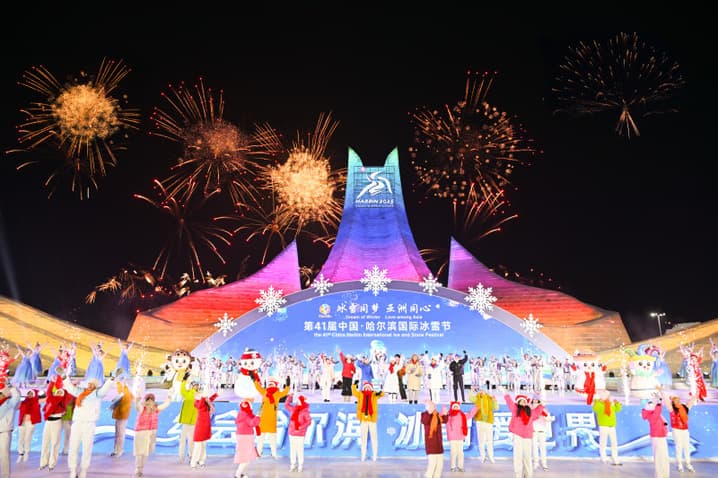
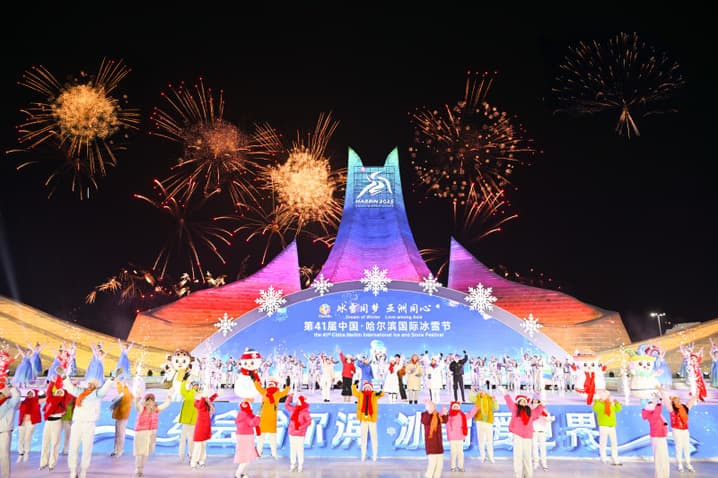
On January 5, 1985, the first Harbin Ice Festival was officially inaugurated as an annual event at Zhaolin Park. In 2001, the Harbin Ice Festival merged with Heilongjiang’s International Ski Festival and received its current official name — the Harbin International Ice and Snow Sculpture Festival (中国哈尔滨国际冰雪节). The 42nd edition opened with a grand ceremony at Harbin Ice and Snow World on January 5, 2026.
Main Venues and Components
The festival is not a single park but a citywide celebration organized across several signature venues:
Harbin Ice and Snow World — the flagship venue and main stage for the opening ceremony, famous for its towering illuminated ice structures and entertainment rides.
Sun Island International Snow Sculpture Art Expo — the world’s largest snow sculpture exhibition, featuring massive, intricately carved snow artworks set across the river from Ice and Snow World. The 38th edition closed on February 26, 2026.
Zhaolin Park Ice Lantern Art Fair — the most historic and beloved venue, where the ice lantern tradition was born. The 2026 fair opened on January 1 with free admission and a landmark installation titled “The Birthplace of Chinese Ice Lanterns.”
Songhua River Ice and Snow Carnival and the Ice Collecting Festival on the frozen Songhua River, where workers harvest the natural ice blocks used throughout the festival.
Harbin Ice and Snow World — The Heart of the Festival
Scale, Theme, and Record-Breaking Highlights
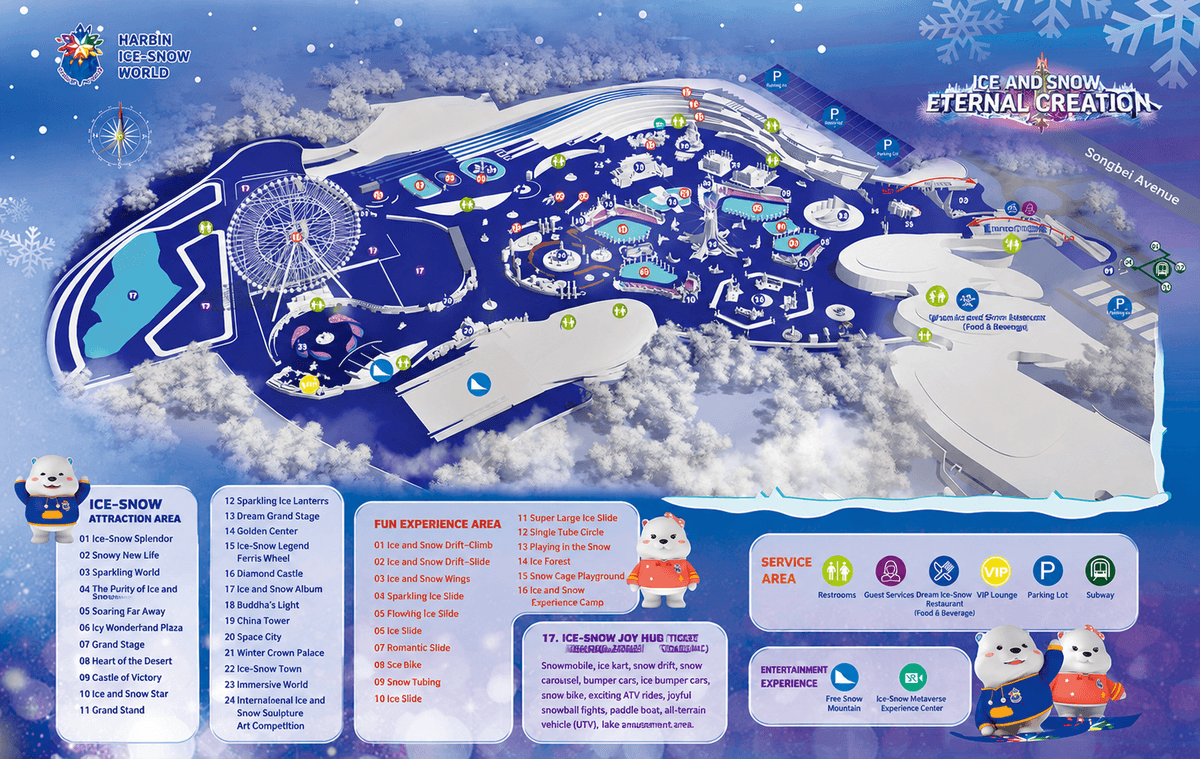
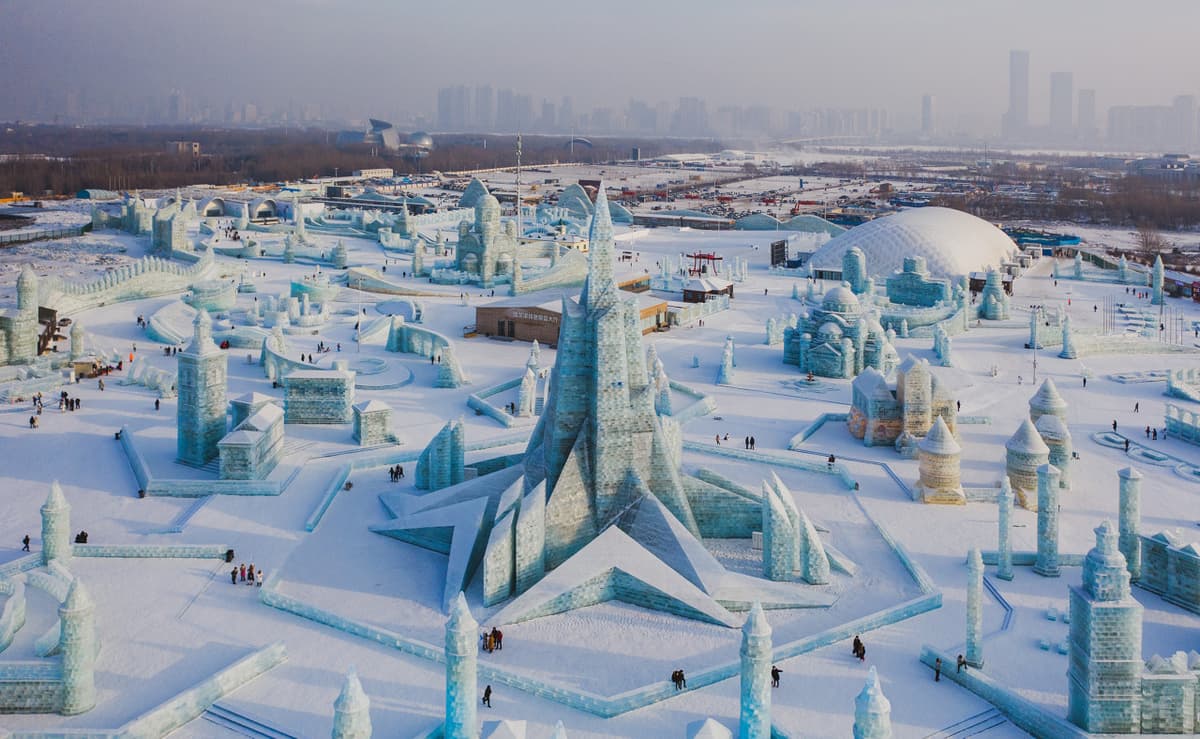
Harbin Ice and Snow World is the largest ice and snow theme park in the world, officially certified by Guinness World Records. It was first established in 1999, when the Harbin Municipal Government launched a large-scale ice-and-snow art project to welcome the new millennium. Since then, it has opened for 27 consecutive years and become Harbin’s most iconic tourism brand, popularly called the “Disneyland of Ice and Snow.”
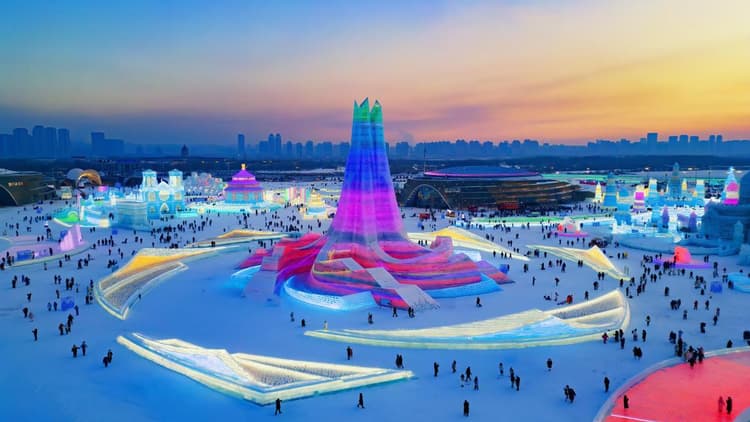
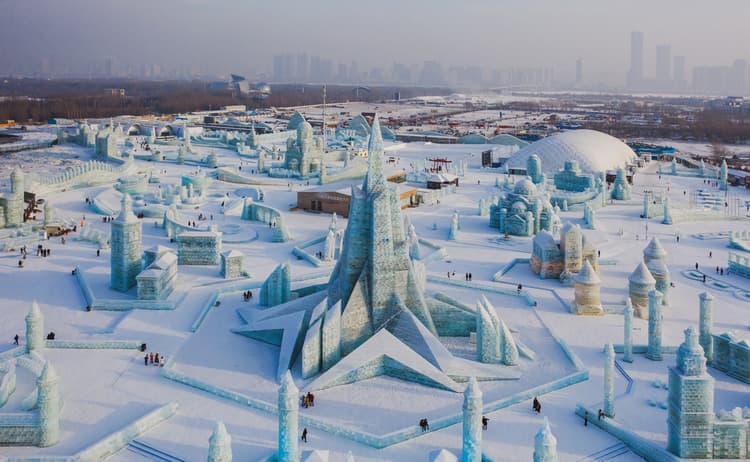
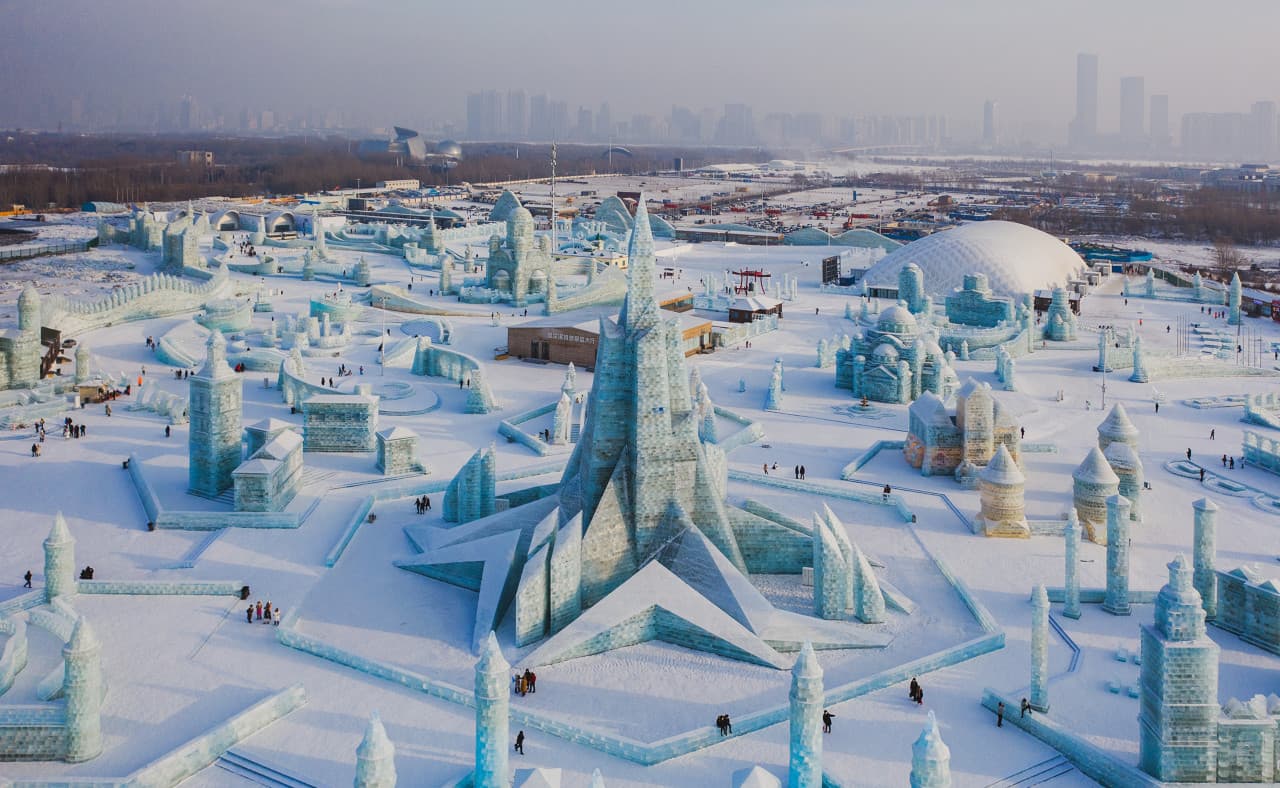
For the 2025–2026 season, the 27th edition takes “A Snowy Fairytale Land” as its central theme, weaving together urban heritage, ice-snow art, and diverse international cultures. Spanning 1.2 million square meters — its largest size ever — and built from more than 400,000 cubic meters of ice and snow, the park features over 2,000 ice and snow sculptures that blend cultural heritage with immersive tech-light effects, surpassing the monotonous displays found at most other winter parks worldwide.
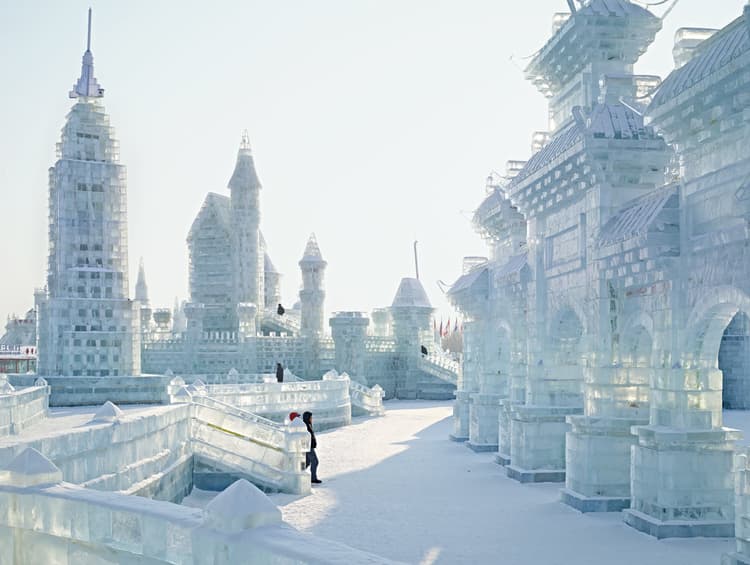
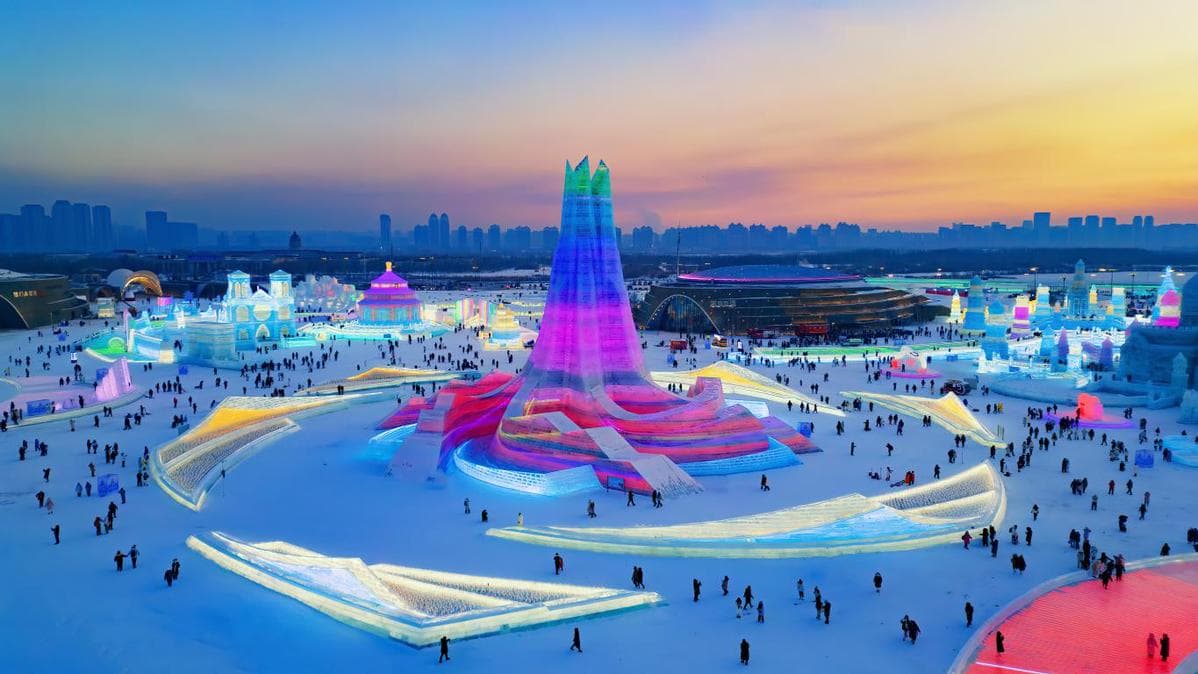
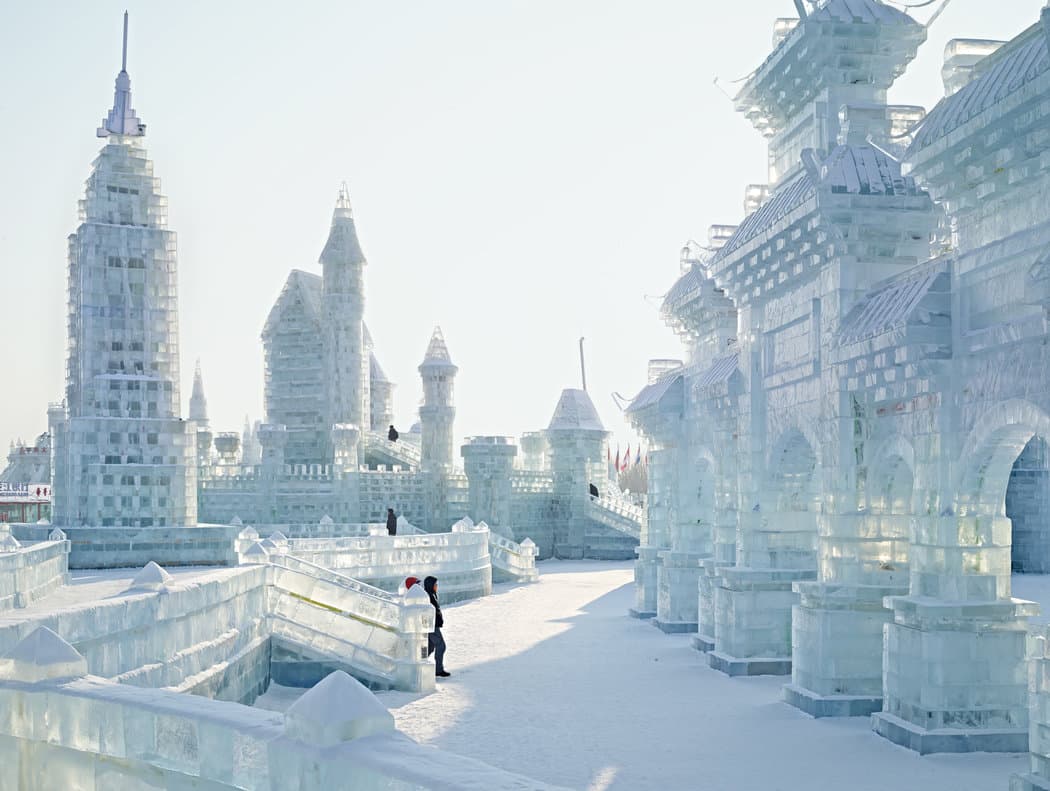
The centerpiece of the 27th edition is the “Ice Lantern Igniting Dreams” main tower, shaped like the Chinese character “山” (mountain) and seemingly lifted by snowflakes, embodying the idea that “ice and snow are as precious as gold and silver.” It rises to more than 14 stories high, anchoring a skyline of ice castles, pagodas, and towers crafted from blocks of natural ice harvested from the Songhua River.
Signature Attractions
Apart from the breathtaking ice architecture, the park is packed with rides and interactive experiences:
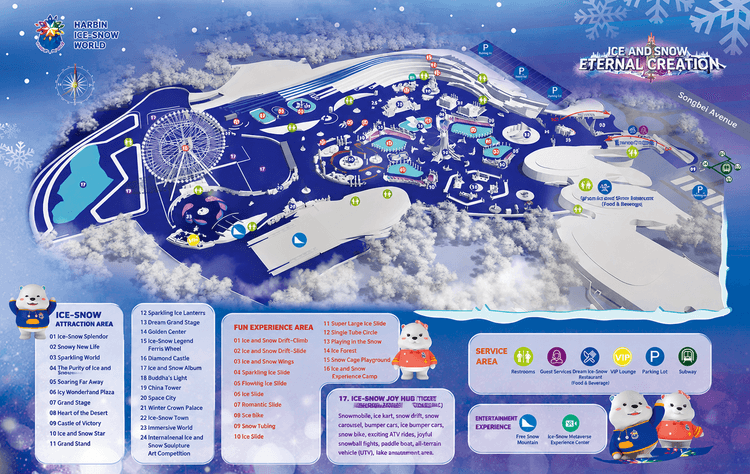
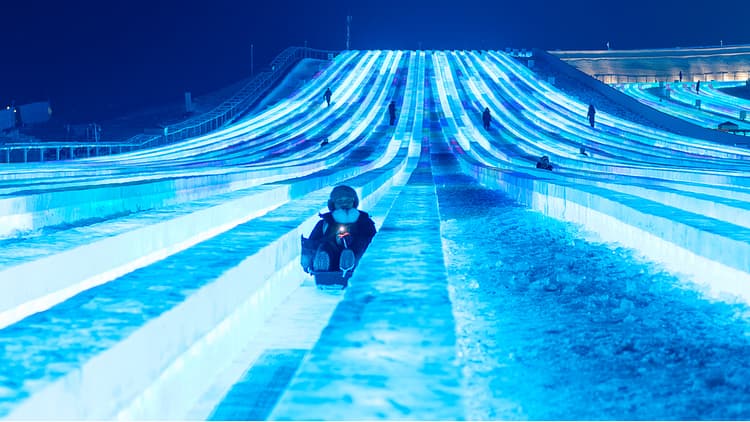
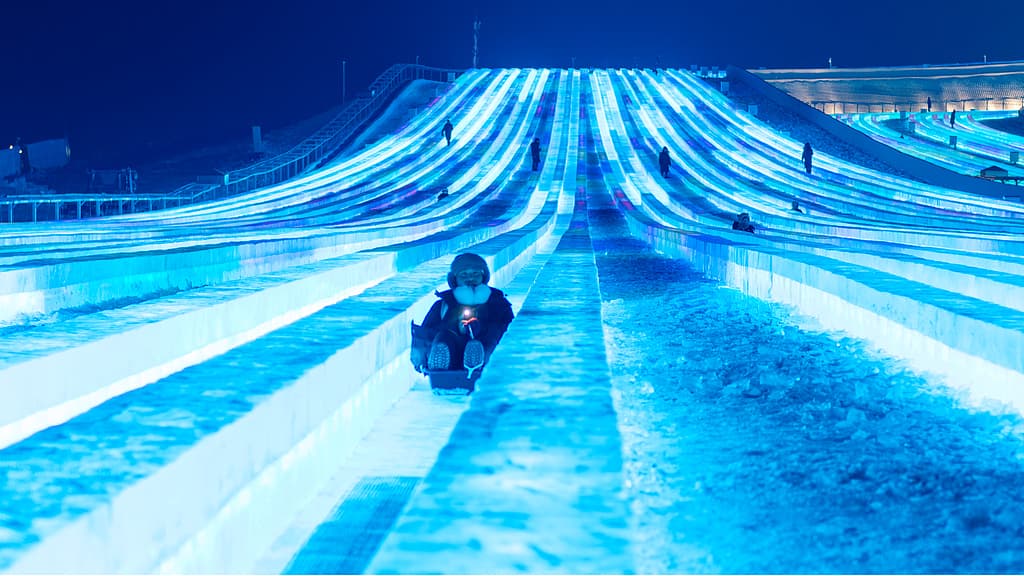
The Super Ice Slide — a 521-meter-long thrill ride that is the longest of its kind, alongside a 320-meter secondary slide. This year’s version features Great Wall beacon-tower elements for a stunning visual effect. Access is limited to visitors aged 15–60 and at least 1.6 meters tall; mini slides and parent-child slides are available for younger guests.
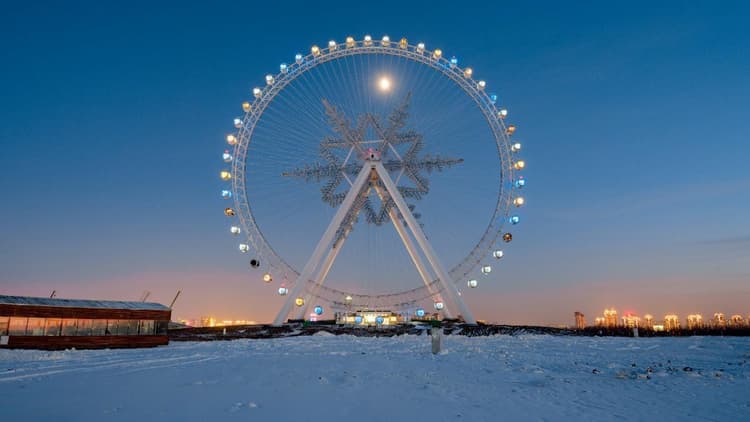
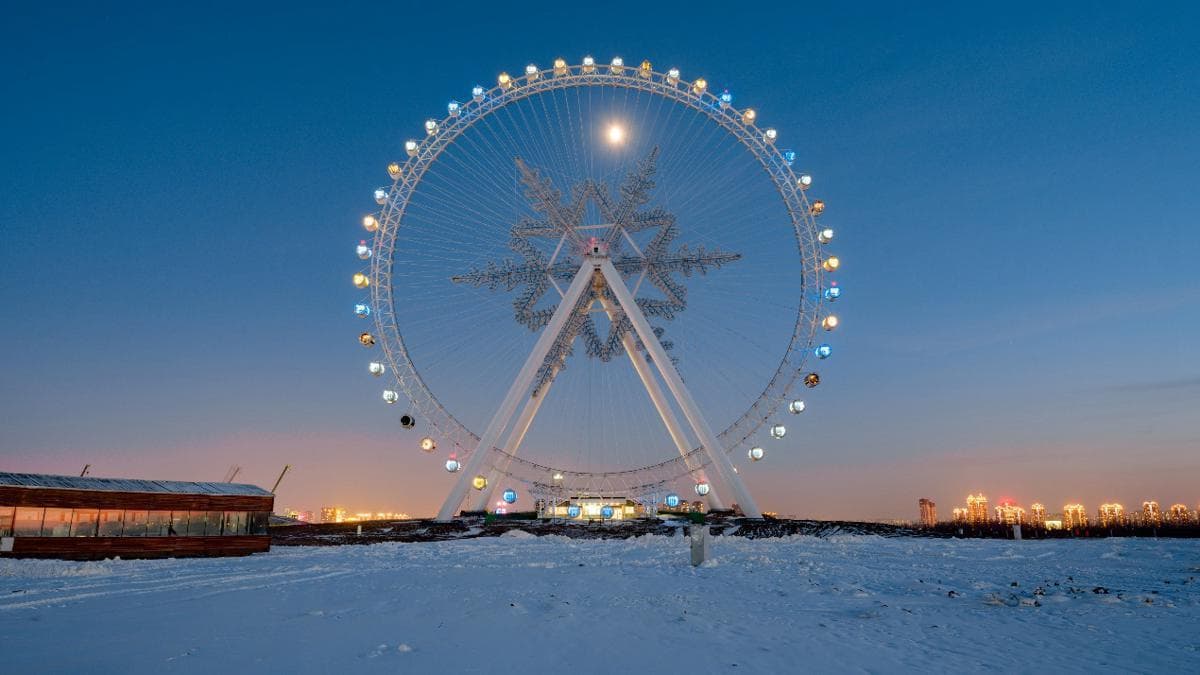
The Snowflake Ferris Wheel — a 145-meter-high landmark that treats riders to 20-minute panoramic flights over the entire park, particularly spectacular at sunset and after dark when the ice structures glow with multicolored light.
Over 20 winter sports and activities, including ice skating, curling, ice hockey, ice biking, ice bumper cars, ice fishing, skiing, snow tubing, snowmobiles, snow football, and more.
Top Things to Do in Harbin Ice and Snow World
Admire the Ice and Snow Architecture
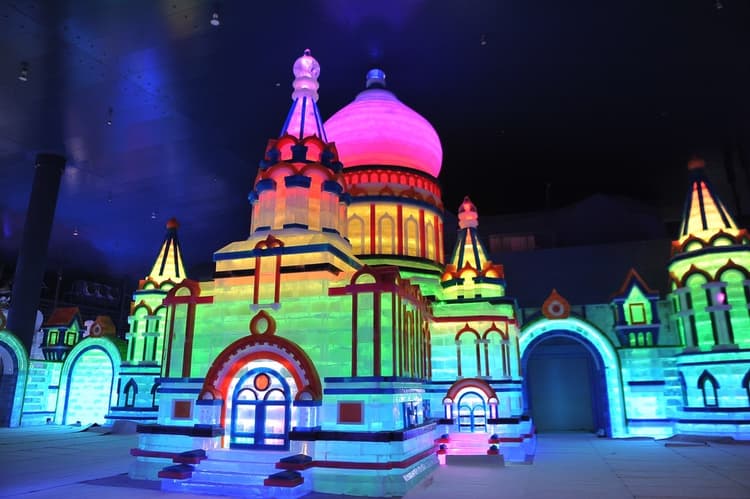
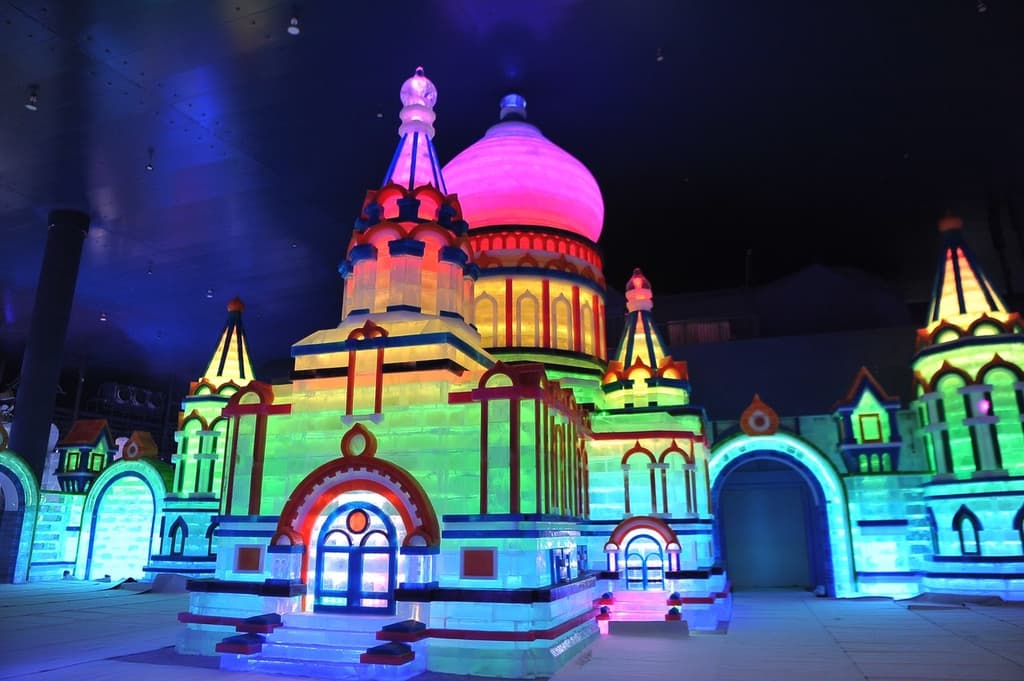
Arrive at the park before sunset and you can observe the ice structures clearly in daylight — impressive in their crystalline clarity — then watch them transform as the embedded multicolored lights switch on around 4:00 PM. Against the dark winter sky, the lit-up ice towers, pagodas, and castles create a surreal kaleidoscope of color that is the visual highlight of any winter trip to China.
Join the Entertainment Rides
The recreation zone offers more than 20 options across ice and snow sports. The 521-meter Super Ice Slide and the 320-meter ice slide deliver speed and adrenaline, while the Snowflake Ferris Wheel offers the most breathtaking panoramic views of the entire park. Families with children can rent tractable snow tubes (around CNY 50) to pull kids smoothly across the park’s wide, flat areas — convenient and great fun.
Watch the Spectacular Performances
Throughout the day, skilled performers present a dynamic lineup of free shows included with park admission:
Ice-and-Snow Parade — a vibrant procession winding through the park’s main avenues.
Dream Stage Show — a lively stage performance where visitors can disco with singers, sing along with artists, and join interactive games.
Ice Car Ballet Show — professional drivers execute single-rail drifts and 360° spins on ice while motorcyclists demonstrate one-wheel balancing feats.
Intangible Cultural Heritage Iron Flower Performance — a traditional molten-iron fireworks display unique to Chinese folk culture.
Chariot of Valor — a large-scale fantasy show combining acrobatics, martial arts, and storytelling (separate ticket required).
Indoor Ice and Snow Theme Park
Harbin Ice and Snow World is only open during the winter festival season (late December to late February). If you visit Harbin in other seasons, you can still enjoy a cool icy world inside two year-round venues:
Four-Season Amusement Hall — covering around 13,000 square meters, equipped with parent-child entertainment facilities, tech-enabled interactive experiences, and children’s theater performances.
Dream Ice & Snow Hall — a 23,800-square-meter venue holding the title of the “largest indoor ice-themed park in the world,” where the temperature stays between −12°C and −8°C even in summer. It offers magnificent ice and snow sculptures, colorful lanterns, exquisite ice artworks, cultural activities, and winter sports year-round.
How to Get Around the Park
Departure Point | Distance | Travel Time by Car |
Harbin Taiping International Airport | 40 km | ~45 min |
Harbin Railway Station | 12 km | ~30 min |
Harbin West Railway Station | 12 km | ~30 min |
Harbin East Railway Station | 23 km | ~40 min |
Harbin North Railway Station | 12 km | ~20 min |
Sun Island | 5 km | ~30 min |
Harbin Polarland | 2.6 km | ~7 min |
Zhongyang Street (Central Avenue) | 7 km | ~20 min |
Saint Sophia Church | 8 km | ~30 min |
Stalin Park | 7 km | ~20 min |
Zhaolin Park | 8 km | ~25 min |
Siberian Tiger Park | 10 km | ~20 min |
Yabuli Ski Resort | 240 km | 2.5–3.5 hrs |
China Snow Town | 280 km | 4.5–6 hrs |
Most visitors opt to walk leisurely through the park while capturing photos. Families with young children will find that renting a tractable snow tube (around CNY 50) is an absolute must — the tubes let you pull kids smoothly across the park’s wide, flat areas without worrying about rough terrain or steep slopes, and they’re as fun for the ride as they are convenient.
Warm Tips for Your Travel in Harbin
Harbin’s winter temperatures can plunge to −20°C to −30°C, so preparation is essential for a safe and enjoyable visit:
Clothing Ideas: Bundle up in multiple warm layers that you can take off indoors. If you’re not from a cold climate, your regular winter gear may not suffice — buy or rent a down jacket in Harbin. Wear thick touch-screen-friendly gloves, a warm hat, a scarf, and a breathable mask.
Slip Prevention Tips: Wear comfortable, non-slip snow boots, or attach ice cleats to your footwear. Watch out for icy and slippery surfaces.
High-Risk Activity Safety: For activities like skiing, always listen to your instructor and keep yourself safe.
Electronics Protection: Cold drains batteries quickly — carry heating pads, extra camera batteries, and multiple power banks as backups.
Frostbite Prevention & Relief: If you get too cold, head to indoor halls to warm up. In case of frostbite, do not warm the area with hot water — seek medical help.
Sunscreen Reminder: Harbin has strong UV rays in winter; wear sunscreen even on snowy days.
Snow Blindness Prevention: Bring sunglasses to prevent snow blindness from the glare.
Harbin Ice and Snow World vs. World-Famous Ice & Snow Attractions
Harbin Ice and Snow World has long been a shining pearl in the global winter tourism landscape, boasting a unique combination of grand-scale ice and snow architecture, diverse entertainment experiences, and profound cultural integration. To offer an objective view of its strengths, here is a comparison with other world-renowned winter festivals:
Comparison Dimension | Harbin Ice and Snow World (China) | Kemi SnowCastle (Finland) | Quebec Winter Carnival (Canada) | Sapporo Snow Festival (Japan) |
Scale & Volume | 1.2 million m², with dozens of giant ice structures | Medium-sized ice-snow complex, with 1,100-m castle walls | Scattered ice/snow sculptures across Quebec’s Old Town | Art exhibition-style scale, 1.5 km main venue |
Core Features | Sightseeing, entertainment, interaction, and performance | Ice-snow art and unique accommodation | French-Canadian folk activities | Snow sculpture art exhibitions |
Entertainment Diversity | Over 20 ice-snow activities for all ages | Castle tours, ice hotel stays, icebreaker cruises | Parades, street performances, traditional snow sports | Taking photos and admiring snow sculptures |
Cultural Integration | Chinese traditions and international elements | Finnish Sami folklore and Norse mythology | French-style lovers | Japanese history/anime |
Best Visiting Period | 2–3 months, covering major holidays for flexible planning | Dec–Mar, but long polar nights limit daytime visiting | 10 days (late Jan–early Feb) | 7 days (early Feb) |
How to Plan a Harbin Tour with Harbin Ice and Snow World
Things to Do in Harbin: Harbin Ice and Snow World, Sun Island, Saint Sophia Church, Zhongyang Pedestrian Street, Laodaowai Baroque Streets, Siberian Tiger Park, Zhaolin Park, Volga Manor, China Snow Town, Yabuli Ski Resort.
How to Get to Harbin: International flights from Korea (~2 hrs), Japan (~4 hrs), and other Asian hubs; domestic flights from Shanghai (~3 hrs), Guangzhou (~4 hrs), Chengdu (~3.5–4 hrs); or high-speed trains from Beijing (~4.5–6.5 hrs).
Best Time to Visit Harbin: Winter, from December to February, with January and early February offering the most reliable ice-and-snow conditions. Note that in 2026, both Harbin Ice and Snow World and the Sun Island Snow Sculpture Expo closed ahead of schedule (February 21 and February 26 respectively) due to an unseasonable warm spell — so planning your visit for January through early February is the safest bet.
There is no doubt that the Harbin International Ice and Snow Sculpture Festival is the biggest highlight of any Harbin tour. If your time is limited, plan to spend around 3 days to cover the three signature venues: the International Ice Sculpture displays at Harbin Ice and Snow World, the International Snow Sculpture Art Fair on Sun Island, and the Ice Lantern Show at Zhaolin Park. With 1–2 extra days, you can explore hot destinations around Harbin — Yabuli Ski Resort for skiers of all levels, and China Snow Town for postcard-perfect snow villages and sunrise over snow-covered hills. Travelers wanting a broader winter China experience often combine Beijing and Harbin into one trip via high-speed train (6–7 days), or extend to an 8-day Beijing–Harbin–Shanghai circuit.
Travel Harbin and Other Places in China with Silk Road Travel
Planning a winter trip to Harbin — with its sub-zero temperatures, multiple venues, ticketing in Chinese, and complex transfers between the airport, railway stations, and scenic spots — can feel overwhelming, especially for international visitors navigating the language and logistics for the first time. That’s where Silk Road Travel comes in. We offer a highly convenient private transfer and tour service that saves you time and frees you from worry: our experienced private drivers will escort you throughout your entire journey with no repeated transfers, and our knowledgeable local guides will lead you on an in-depth tour of Harbin’s ice-and-snow wonders, from the illuminated towers of Harbin Ice and Snow World to the snow sculpture masterpieces of Sun Island and the historic lanterns of Zhaolin Park.
Whether you’re a family with young children, a photography enthusiast chasing the perfect night shot, or a traveler combining Harbin with Beijing, Yabuli, China Snow Town, or other classic China destinations like Xi’an, Shanghai, Zhangjiajie, Guilin, Chengdu, and Yunnan, our private consultants will tailor a tour plan around your interests, schedule, and budget — including pre-booked tickets, reservation of in-demand facilities like the Super Ice Slide and Snowflake Ferris Wheel, and 24-hour support throughout your holiday. Upon receiving your inquiry, we guarantee a response within 24 hours.
Silk Road Travel
Email: info@silkroadtravel.com
Phone / WhatsApp: +86 15909912575
Begin crafting your personalized Harbin winter journey today — reach out to our travel specialists and let us turn the Ice City into your most unforgettable China adventure.