


Things to Do in Guangdong
Guangdong — China’s southern gateway and the beating heart of Lingnan culture — is one of Asia’s most rewarding travel destinations, blending 2,000-year-old Buddhist heritage, UNESCO-listed landforms, subtropical islands, and world-class theme parks into a single, easy-to-navigate province. Whether you are tracing Zen Buddhism back to its roots, hiking rust-red cliffs, sailing beneath the Canton Tower, or watching lions roam at Chimelong, the things to do in Guangdong span every travel style, from slow cultural immersion to fast-paced family adventure. This guide walks you through the province’s top experiences, the best time to visit, and practical tips to plan a seamless Guangdong travel itinerary.
Content›Explore Ancient Relics: Dialogues Across Time ›Natural Landscapes: The Masterpieces of Nature ›Island Fun: Embracing the Romance of the Ocean ›FAQ |
Explore Ancient Relics: Dialogues Across Time
Guangdong carries more than two millennia of recorded history, and its sacred halls preserve the essence of southern Chinese civilisation. Three landmarks in particular reward travellers who want to step beyond the modern skyline and into the past.
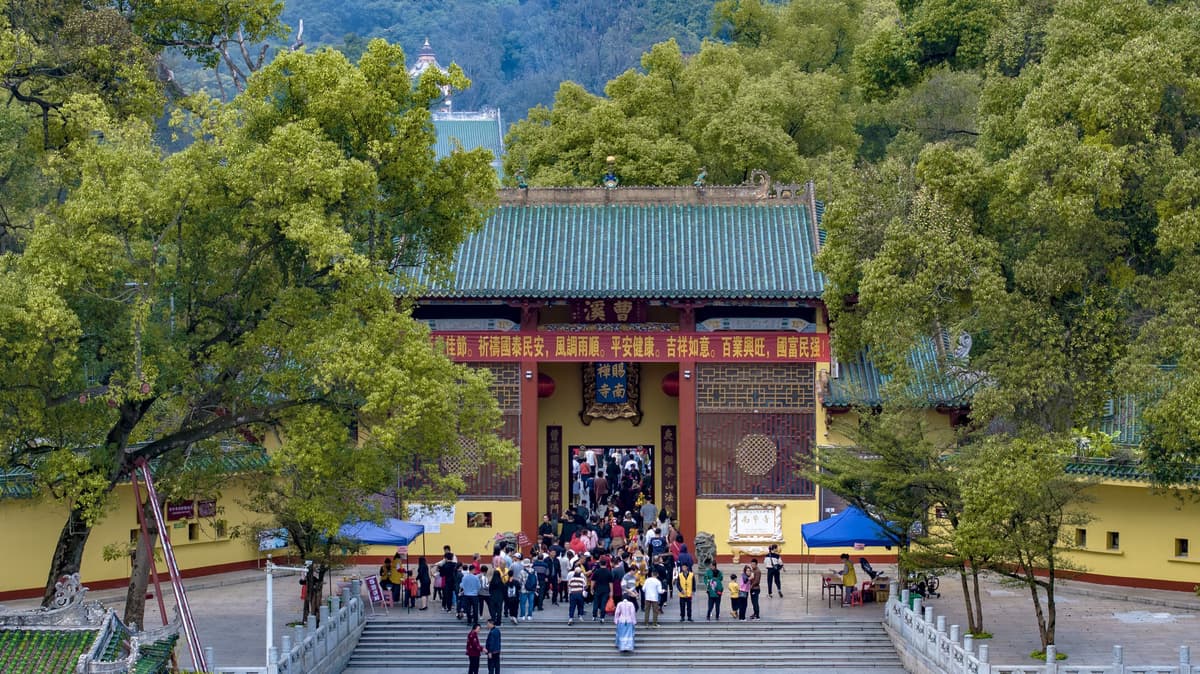
Nanhua Temple — The Cradle of Chinese Zen Buddhism
Founded in 502 AD during the Northern and Southern Dynasties by the Indian monk Zhiyao Sanzang, Nanhua Temple in Shaoguan is regarded as one of the birthplaces of Chinese Zen (Chan) Buddhism. It was here that the Sixth Patriarch Huineng (638–713) — author of the *Platform Sutra* — began his monastic life, and his gilded whole-body relic is still enshrined behind the main hall today.
Towering ancient banyan trees, a nine-storey wooden pagoda, and thousands of rare Song, Yuan, and Ming dynasty Buddhist statues give the compound a stillness that many visitors describe as the most serene hour of their entire Guangdong tour. Allow 2–3 hours, and arrive before 10:00 if you prefer the halls in quiet contemplation.
Foshan Ancestral Temple — The Heart of Lingnan Culture
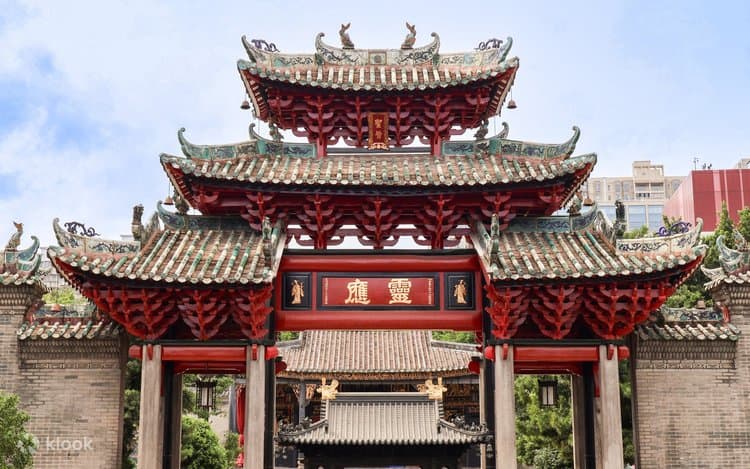
In the centre of Foshan, the Ancestral Temple (Zumiao) is far more than a Taoist shrine — it is the living stage of Lingnan culture. Built during the Northern Song dynasty and expanded across successive eras, the complex showcases exquisite Shiwan ceramic ridge tiles, intricate wood carvings, and gilded lion sculptures. Its courtyards also host regular lion-dance and martial-arts performances, honouring Foshan’s reputation as a birthplace of Wing Chun and the home of folk hero Wong Fei-hung.
Traditional handicraft stalls and folk rituals around the temple make the surrounding streets feel like a step back into a bustling ancient trading town — an easy half-day excursion from Guangzhou by metro.
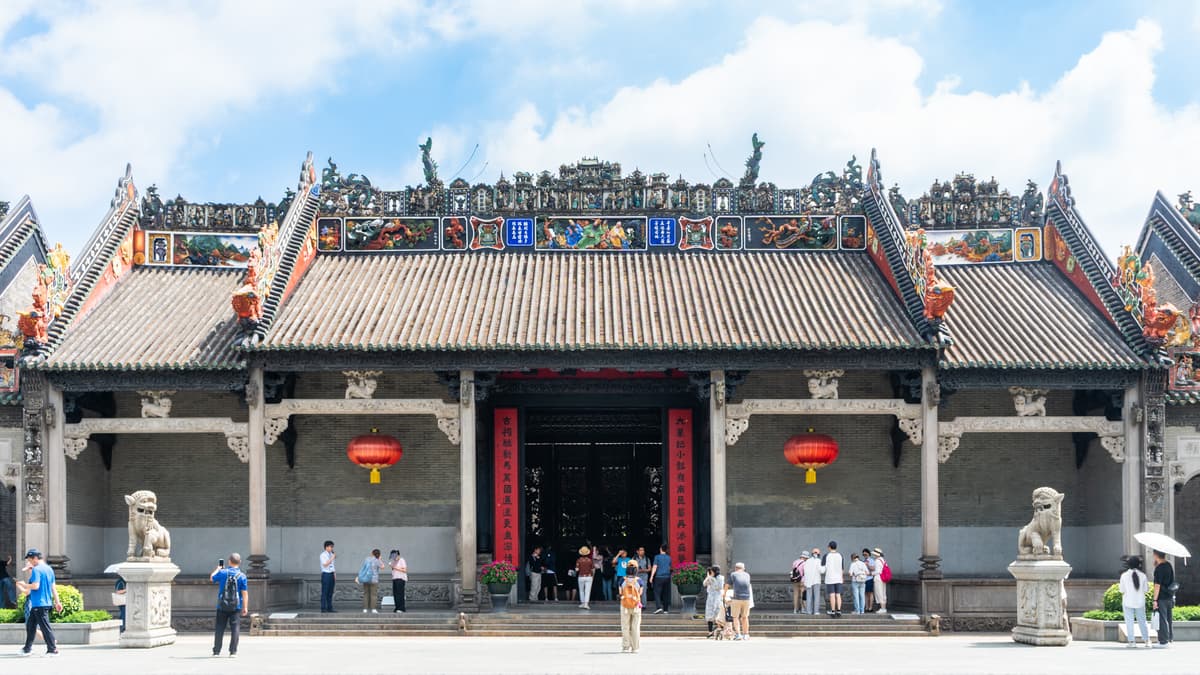
Chen Clan Ancestral Hall — The Gem of Lingnan Architecture
Construction of the Chen Clan Ancestral Hall (Chen Clan Academy) in Guangzhou began in 1888 and was completed in 1893, funded by Chen lineages from 72 counties across Guangdong Province. Widely hailed as the pinnacle of Lingnan architectural art, its roofs, ridges, beams, and gateways are covered with layered wood, brick, stone, lime, and iron carvings — every surface tells a folk tale.
Now home to the Guangdong Folk Art Museum, it is one of the most photographed heritage sites in the city and pairs perfectly with an afternoon of Cantonese dim sum nearby. Tip: the entrance courtyard faces south, so late-afternoon sunlight brings out the richest colours for photographers.
Natural Landscapes: The Masterpieces of Nature
Beyond the cities, Guangdong protects some of southern China’s most distinctive landforms, including the type locality of the very word “Danxia” in world geology.
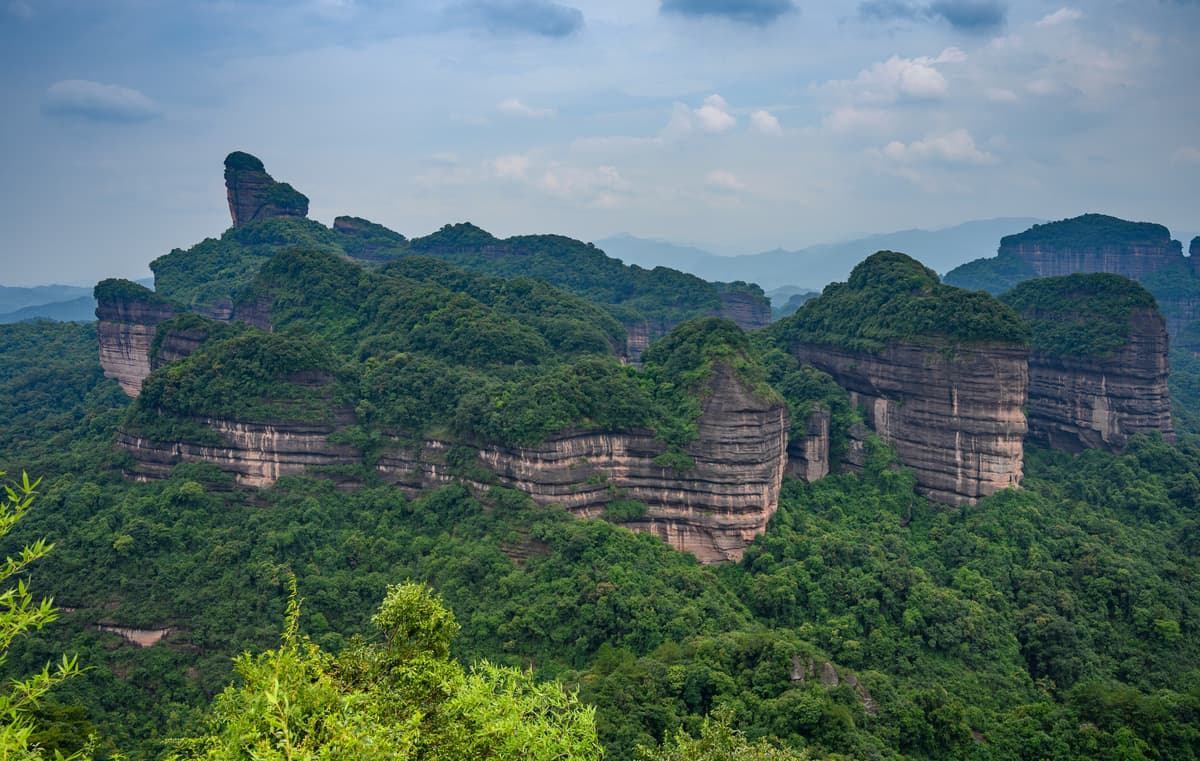
Danxia Mountain — A UNESCO World Heritage Site
Rising above the Jingjiang River in Shaoguan, Danxia Mountain (Danxiashan) was inscribed on the UNESCO World Heritage List in August 2010 as part of the serial property “China Danxia,” and was designated a UNESCO Global Geopark in 2004. Its rust-red sandstone pillars, cliffs, and ravines were formed from Late Cretaceous red beds and shaped by millions of years of subtropical weathering — the landscapes that gave the international geological term *Danxia landform* its name.
The signature “Male Stone” and “Female Stone” formations, legendary viewpoints that draw both geologists and photographers, are reachable via well-maintained trails. For the classic postcard shot, drift on a bamboo raft along the Jinjiang River, gliding beneath the striped cliffs as fishermen’s rafts pass by. Best season: October to December, when skies are clear and temperatures hover around 20 °C.
Dinghu Mountain — China’s First National Nature Reserve
Located just outside Zhaoqing, Dinghu Mountain was established in 1956 as China’s first national nature reserve and is today a UNESCO Man and Biosphere reserve. Its dense primeval forest shelters more than 2,000 plant species and a wealth of birdlife, while cascades such as Feishui Pool cool the trails in summer.
Because of its extraordinary biodiversity and negative-oxygen-ion-rich air, Chinese scientists affectionately call it a “natural oxygen bar.” Strolling along the mossy stone paths past ancient temples like Qingyun Temple, you hear birdsong instead of traffic — a half-day reset that pairs well with a visit to Zhaoqing’s Seven Star Crags.
Island Fun: Embracing the Romance of the Ocean
With more than 4,100 km of coastline, Guangdong is dotted with islands where subtropical water meets soft sand — perfect for travellers who want to end a culture-heavy itinerary with barefoot days by the sea.
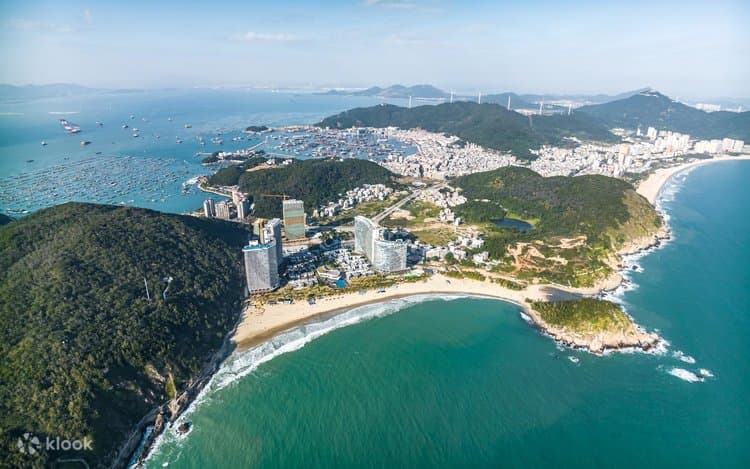
Hailing Island & Dajiao Bay (Yangjiang) — The “Eastern Hawaii”
Dajiao Bay on Hailing Island in Yangjiang holds a national 5A scenic-area rating, and the island itself has been named one of China’s “Top Ten Most Beautiful Islands” by *Chinese National Geography*. The bay’s beach stretches roughly 2.5 km with fine, soft sand and water that consistently meets first-class national standards for quality, noise, and air.
Swimming, surfing, jet-skiing, and parasailing are all on offer along the Maritime Silk Road tourism area, and evening beach festivals light up the shore in summer. Families gravitate to the Dajiao Bay Water Park, where a full set of slides keeps children occupied for hours. Best season: May to October, when sea temperature averages 23.5 °C.
Dong’ao Island (Zhuhai) — Coral Reefs & Dolphin Bay
Just under an hour by ferry from Zhuhai, Dong’ao Island sits in the Wanshan Archipelago and offers a quieter, more romantic island escape. Lovers’ Bay frames photogenic sunrises and sunsets, while the island’s fringing coral reefs make it a favourite for snorkelling and diving excursions in search of tropical fish — and, with luck, dolphins offshore.
Because visitor numbers are managed, the beaches retain an unhurried feel; boutique cliffside resorts now complement the older seaside guesthouses. Tip: book ferry tickets and accommodation at least a few days ahead during May Day and National Day holidays.
A Night Cruise along the Pearl River — Experiencing the Splendour of the Flower City
The Pearl River Night Cruise is one of Guangzhou’s signature experiences and a must for anyone who wants to understand why the city is nicknamed the “Flower City.” As dusk falls and thousands of LEDs come alive, the boat slips past the illuminated Canton Tower (whose 600-metre silhouette is the city’s postcard icon), Haixinsha Island, the twin towers of Zhujiang New Town, and the colonial-era arcades of Shamian Island.
Commentary along the route links each landmark to Guangzhou’s 2,200-year trading history — from the ancient Maritime Silk Road to today’s Canton Fair — so the cruise doubles as a compact city history lesson. Cruises depart from several piers (Tianzi, Canton Tower, and Dashatou) between 18:40 and 22:00, with the 75–90 minute voyages being the most popular. Best experience: book an open-air upper deck in October–December, when the humidity drops and the skyline sparkles most clearly.
Travel in Chimelong — A Journey of Joy and Fantasy
Chimelong is Guangdong’s flagship resort group and one of Asia’s most-visited theme-park destinations, with major parks in both Guangzhou (Panyu) and Zhuhai (Hengqin). It is particularly popular with families travelling with children.
Chimelong Safari Park (Guangzhou) — the region’s standout wildlife attraction, designed around vast naturalistic habitats. Board the open mini-train that winds through the “African Savannah” zone to watch lions, giraffes, and zebras roam freely, then walk the koala and panda houses on foot.
Chimelong Paradise (Guangzhou) — a full-scale amusement park packed with thrill rides, including one of the world’s tallest diving coasters, for travellers chasing speed and adrenaline.
Chimelong International Circus (Guangzhou) — a long-running big-top spectacle combining acrobatics, lighting design, and stage illusions that entrances children and adults alike.
Chimelong Ocean Kingdom (Zhuhai, Hengqin) — one of the world’s largest marine-theme parks, home to giant whale-shark aquariums, orca exhibits, polar animals, and record-breaking roller coasters.
Many visitors combine two days in Guangzhou with two days in Zhuhai, connected by high-speed rail in under an hour — a rhythm that balances adrenaline with waterfront downtime.
Hot Spring Relaxation — Enjoying the Comfort of Body and Mind
Guangdong is richly endowed with geothermal springs, and a soak is the ideal way to recover after days of walking through temples, mountains, and theme parks.
Conghua Hot Spring — “The Best Hot Spring in Lingnan”
Set amid the forested hills north of Guangzhou, Conghua Hot Spring has earned the traditional title “Best Hot Spring in Lingnan.” The mineral-rich water — naturally warm and gentle on the skin — has been praised since the 1950s, when the area became a well-known retreat. Today a cluster of resort hotels lines the Liuxi River, offering private-soak rooms, outdoor pools under the trees, and riverside walking trails.
Guishan Hot Spring Town (Heyuan) — Wellness Beyond the Soak
In Heyuan, Guishan Hot Spring Town builds a full wellness experience around its geothermal source. Beyond the classic thermal baths, guests can book herbal baths, petal baths, fish-spa pools, and traditional Chinese-medicine therapy sessions — ideal for travellers who want a restorative overnight stay rather than a quick dip. Best season: November to March, when the cool northern air makes the steaming pools especially satisfying.
A Culinary Journey — Tasting the Flavours of Guangdong
In Guangdong, eating is never an afterthought — it is the itinerary itself. Cantonese cooking prizes freshness, seasonality and the natural sweetness of the ingredient, and the province packs three of China’s great culinary traditions — Cantonese (Guangfu), Chaoshan and Hakka — into a single, delicious journey.
Guangzhou Morning Tea — The Ritual of “Yum Cha”
No visit is complete without “one pot of tea, two baskets” (一盅两件). Guangzhou Restaurant (广州酒家), trading since 1935 under the slogan “the first house for eating in Guangzhou,” serves its benchmark har gow, siu mai and steamed chicken feet from 07:00 at its Wenchang Road flagship, while Bing Sheng (炳胜品味) — listed in the Michelin Guide — is the address for lacquered roast goose and honey-glazed char siu, and Hui Shi Jia on the Pearl River bank fires its signature juejue claypots tableside. Tip: arrive before 08:00 at the classic teahouses, or expect a queue of locals doing exactly the same thing.
Shunde — A UNESCO City of Gastronomy
The Shunde district of Foshan was designated a UNESCO Creative City of Gastronomy in December 2014 and is regarded as a birthplace of Cantonese cuisine — as the saying goes, “the best chefs come from Shunde.” Slurp silky double-skin milk (双皮奶) at century-old houses such as Minxin on the Huagai Road pedestrian street and Renxin in the Daliang old town, then work through the knife-work showcase of Shunde fish sashimi, the delicate congee-base hotpot, and eel claypot rice in the surrounding water towns. Best experience: pair a long lunch with an afternoon stroll through the classical Qinghui Garden next door.
Chaoshan Flavours — Beef Hotpot and Gongfu Tea
East of the delta, Chaozhou and Shantou speak a deliciously different food language. Chaoshan beef hotpot uses a clear, faintly sweet beef-bone broth and cuts so specific that each has its own name and a cooking time counted in seconds; pair it with hand-pounded beef balls and a crisp oyster omelette. The showpiece is braised goose (卤鹅) — the mighty lion-head goose steeped in generations-old master stock. Between meals, slow down with gongfu tea: tiny cups, Phoenix dancong oolong, and a pouring ritual the locals call the first act of every day. Wander Chaozhou Old Town and the riverside Longhu Ancient Village to eat your way through a thousand years of history.
Return to the Qiaoxiang — A Homecoming for Overseas Chinese
For tens of millions of overseas Chinese, Guangdong is not simply a destination — it is the ancestral home. Family names, dialects, ancestral halls and village recipes have been kept alive in the province’s qiaoxiang (侨乡, overseas-Chinese hometowns), waiting for second- and third-generation descendants to come and find them.
Jiangmen — The “Overseas Chinese Capital” of China
The five counties of Jiangmen — Xinhui, Taishan, Kaiping, Enping and Heshan — have sent emigrants abroad since the Tang dynasty, and today more than 5.3 million people of Wuyi descent live in some 145 countries and regions, giving the city its title of “China’s Qiaodu (侨都).” Begin at the China Qiaodu Overseas Chinese Museum, then drive into Kaiping, whose fortified watchtowers — the Kaiping Diaolou and Villages, inscribed on the UNESCO World Heritage List in 2007 — were built with remittances from returning immigrants and fuse Roman columns with Chinese tiled roofs. Nearby Chikan Old Town lines three kilometres of riverbank with more than 600 restored arcade buildings. Tip: allow a full day; Kaiping is roughly 1.5 hours by road from Guangzhou, with high-speed rail to Kaiping South station.
Taishan and the Wuyi Villages — Walking Your Ancestors’ Streets
Taishan, the best known of the Wuyi counties, is the ancestral home of figures as varied as Canada’s former Governor General Adrienne Clarkson and former U.S. Ambassador Gary Locke. The Taishan Overseas Chinese Culture Museum displays the qiaopi (“silver letters”) — remittance letters sent home that are inscribed on the UNESCO Memory of the World Register — and the surrounding villages keep their ancestral halls, clan schools and family registers intact. Many visitors time the trip to a clan-association gathering, when the village lanes fill again with the sound of Taishanese dialect. Tip: bring whatever fragments your family holds — an old letter, a village name, a generation poem (字辈) — and contact the local overseas-Chinese federation (侨联) a few weeks ahead; staff and volunteers routinely help visiting descendants match names to villages.
Practical Tips for the Homecoming Trip
Visas: foreigners of Chinese origin can apply for a five-year multiple-entry Q visa for family visits, and since 17 December 2024 China’s visa-free transit has been extended to 240 hours (10 days) through entry ports that include Guangzhou and Shenzhen — enough for a compact qiaoxiang loop. Payments: Alipay and WeChat Pay now accept international credit cards, and most hotels, restaurants and high-speed-rail stations take foreign cards. Language: Cantonese, Taishanese and Hakka are still spoken in the villages, and English signage is widespread at stations and museums. Best season: October to December for cool, clear weather, or the Qingming festival in April, when family grave-sweeping makes reunions especially natural.
Best Time to Visit Guangdong
Guangdong has a humid subtropical climate, so timing shapes your experience:
October – December (recommended for most travellers): Mild temperatures (18–26 °C), low rainfall, clear skies for the Danxia cliffs and Pearl River skyline, and comfortable conditions for city sightseeing.
January – February: Cool and dry; ideal for hot springs and Chinese New Year festivities, though some northern attractions are quieter.
March – May: Warm and humid; gardens and waterfalls are at their greenest, but pack a compact umbrella for spring showers.
June – September: Hot and wet, with occasional typhoons. This is prime beach-and-island season on Hailing and Dong’ao, but monitor the weather forecast before ferry travel.
FAQ
How many days do I need in Guangdong?
Four to six days covers Guangzhou, Foshan, and a night cruise comfortably. Add two days each for Danxia Mountain, Hailing Island or Dong’ao Island, and the Chimelong parks to build a 7–10 day deep-dive itinerary.
Do I need a visa to visit Guangdong?
Travellers from many countries can use China’s visa-free transit policy or the 240-hour visa-free transit scheme when entering through Guangzhou, Shenzhen, or other approved ports. Check the latest policy with Chinese authorities or your tour operator before booking.
Is Guangdong easy to get around?
Yes. Guangzhou, Shenzhen, Foshan, Dongguan, and Zhuhai are linked by one of China’s densest metro and high-speed-rail networks, and English signage is widespread at major stations and attractions. Private car-and-driver services remain the most comfortable way to reach Shaoguan, Heyuan, or the Yangjiang coast.
What should I eat in Guangdong?
Cantonese cuisine is a highlight in its own right — sample steamed fresh-caught seafood, Cantonese roast goose, clay-pot rice, silky shrimp dumplings (har gow), and a slow-braised Cantonese double-boiled soup. A morning of “yum cha” (dim sum with tea) is an essential Guangdong ritual.
Plan Your Guangdong Journey with Silk Road Travel
From 1,500-year-old temple courtyards to the neon sweep of the Pearl River, Guangdong rewards travellers who look past the obvious — and the right local partner makes the difference. With 20,000+ travellers served since 2003, an experienced in-country consultant team, and private guides in Guangdong, and beyond, Silk Road Travel crafts tailor-made Guangdong tours around your interests, pace, and budget — whether that means a culture-and-cuisine city break or a two-week loop through temples, mountains, and islands.
Getting started is simple:
Email: info@silkroadtravel.com
WhatsApp: +86 159 0991 2575
Send us your travel dates, group size, and interests, and our consultants will reply with a customised Guangdong itinerary within 24 hours. Your southern China adventure starts with one message — we look forward to travelling with you.