

Dunhuang Painting and Art Gallery
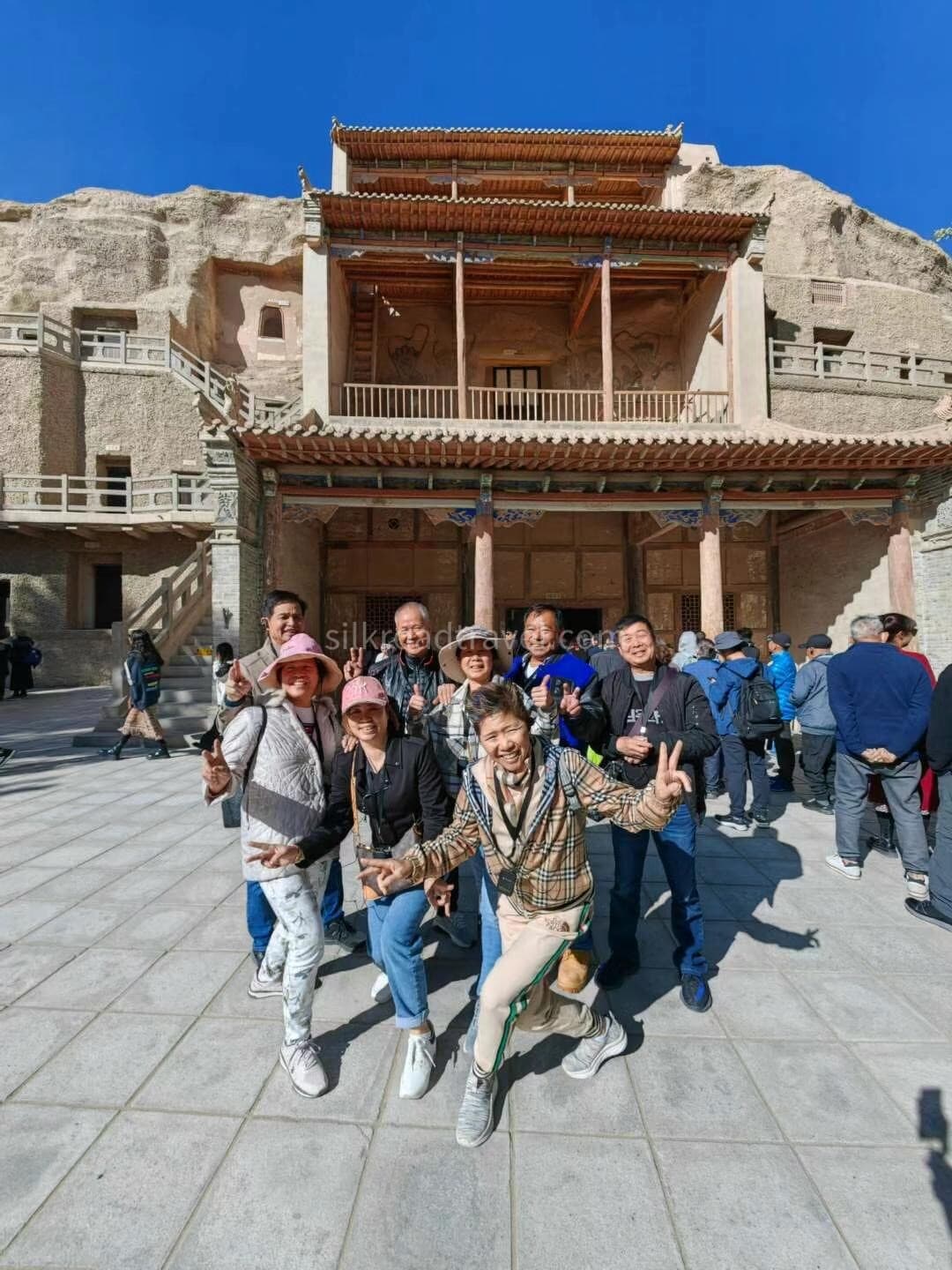
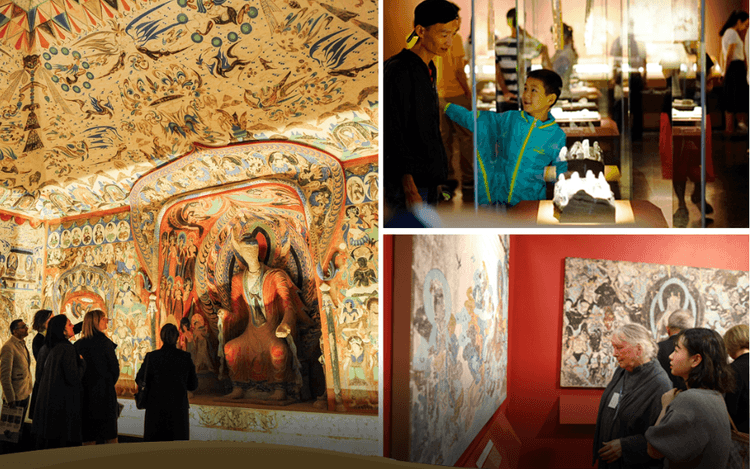
The Mogao Grottoes are one of the most famous attractions in Dunhuang, renowned for their magnificent Buddhist caves, sculptures, and wall paintings. A visit to the Mogao Grottoes is not limited to exploring the ancient caves themselves. Within the scenic area, visitors can also explore several exhibition venues, including the Dunhuang Painting and Art Gallery (Dunhuang Research Academy Art Gallery) and the Dunhuang Grotto Art Protection and Research Exhibition Center, to learn more about the history, art, and cultural heritage of the Mogao Grottoes.
The art gallery and exhibition center provide visitors with opportunities to learn more about the grottoes before or after visiting the caves. Together with the cave tour, these venues offer a more complete experience of Dunhuang's rich artistic and cultural heritage.
Recommended Tours:
8 Days Dunhuang to Lanzhou Tour
Gallery Overview: A Comfortable Art Stop Next to the Mogao Grottoes
Located within the Mogao Grottoes scenic area, the Dunhuang Research Academy Art Gallery is a place where you can take a break from the heat in the air-conditioned comfort of an exhibition venue. Take a break and use the opportunity for cultural enrichment while visiting the Mogao Grottoes.
Whether you visit the gallery before or after exploring the Mogao Caves, it can help you learn more about the art and history of Dunhuang. If you visit before entering the caves, you can gain useful background knowledge about the artworks and grottoes you are about to see.
Mogao Grottoes Visiting Route Map
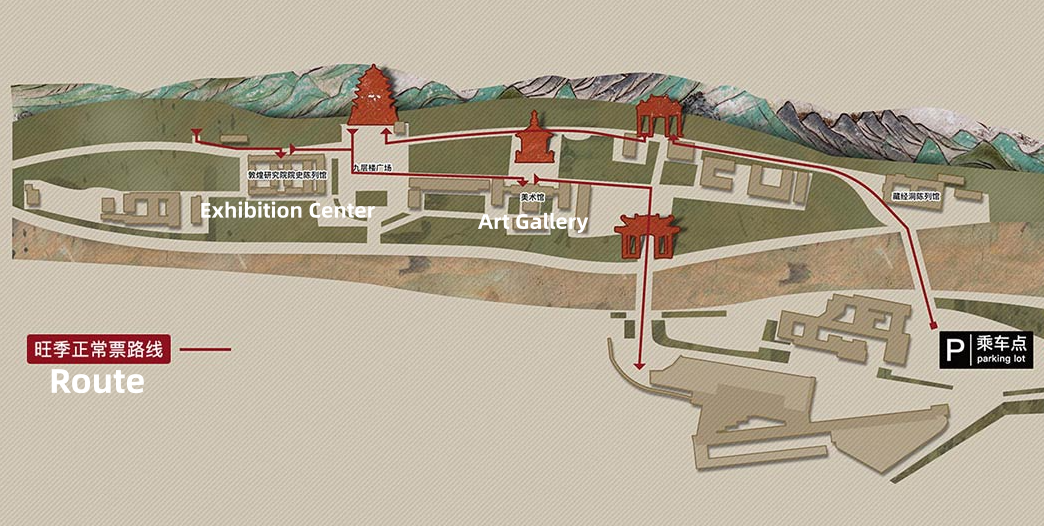
Mogao Grottoes visiting route map
Mogao Grottoes visiting route map showing the locations of the Dunhuang Art Gallery and the Dunhuang Research Exhibition Center. The map can help visitors understand where the art gallery and exhibition center are located within the Mogao Grottoes scenic area and plan their visit more easily.
What to See at the Art Gallery
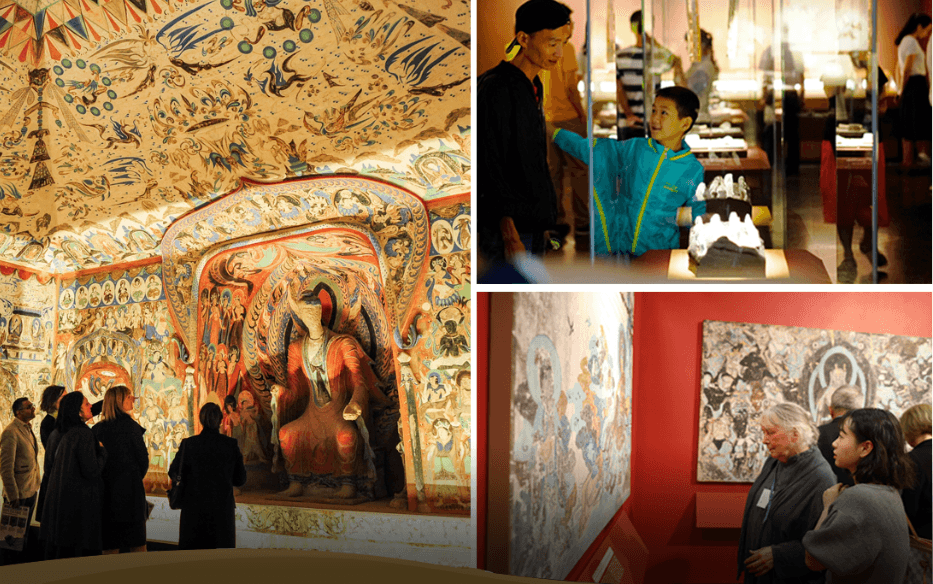
The Dunhuang Research Academy Art Gallery features exhibitions that introduce the art, history, and cultural heritage of the Mogao Grottoes. Visitors can explore displays related to Dunhuang murals, Buddhist sculptures, cave art, and cultural traditions, gaining a better understanding of how grotto art developed over different historical periods. The gallery may also feature reproductions of famous Mogao Cave artworks, allowing visitors to appreciate details, colors, and artistic techniques that can be difficult to observe during the cave visit. Together, these exhibits provide useful background for understanding the history and artistic influences behind the Mogao Caves and make the gallery a worthwhile addition to a visit to the grottoes.
What to See at the Exhibition Center
The Dunhuang Grotto Art Protection and Research Exhibition Center, also located within the Mogao Grottoes scenic area, gives visitors a chance to learn more about the Mogao Caves either before or after their visit. The center offers bilingual explanations of the artworks, demonstrations, and models.
If you wish to prolong your Mogao Cave experience, make sure to stop by the Exhibition Center. You will also find art replicas of the caves in the exhibition center, providing an opportunity to learn more about the grottoes and their artistic features.
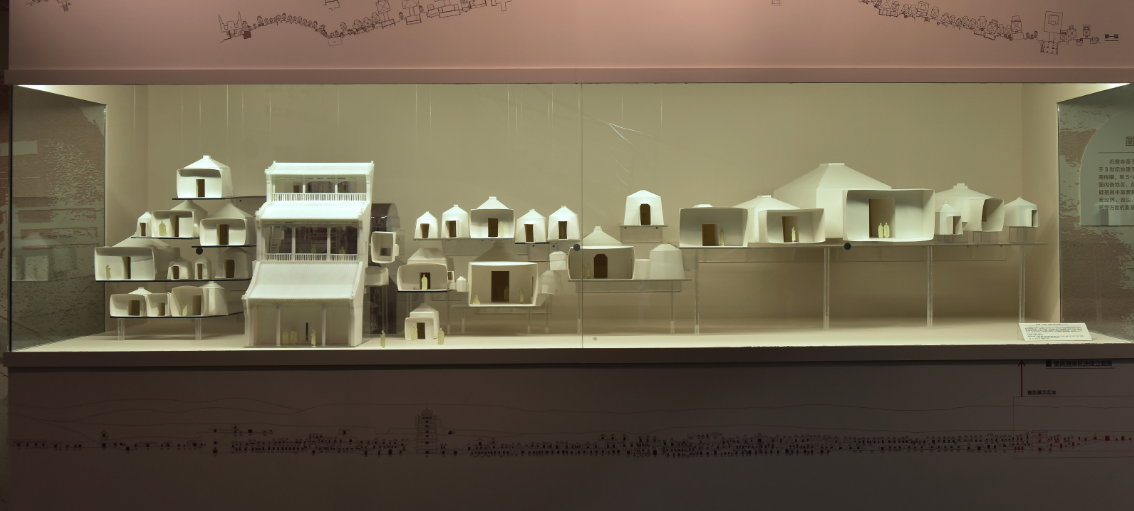
Understanding Dunhuang Art
Historical Background of Dunhuang
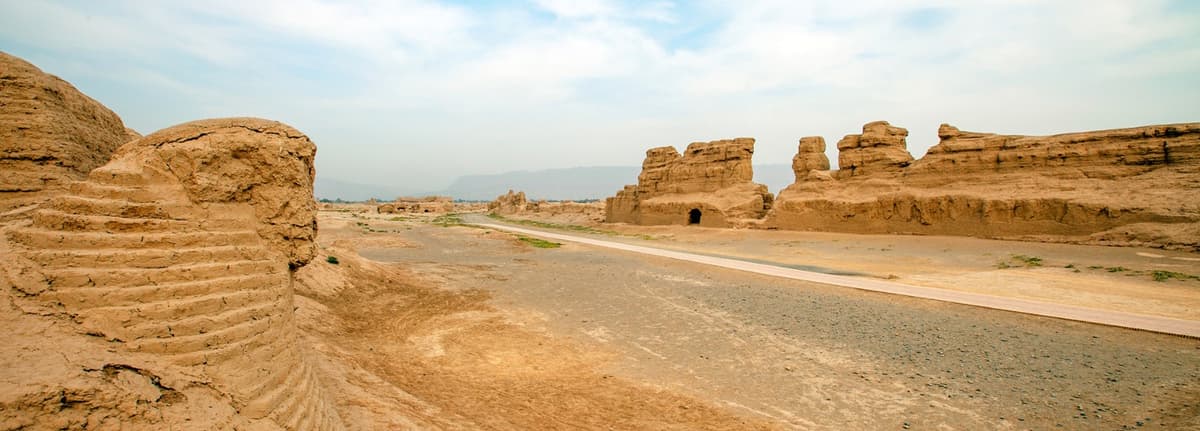
From the present-day city, it's hard to picture the importance of ancient Dunhuang. Its strategic position meant that it was an important transit point for the spread of Buddhism, which entered China during the 3rd century AD. As Buddhism developed, so did the city.
During the 4th century, Dunhuang was the last stop for Chinese Buddhist pilgrims traveling to India and the first stop for arriving missionaries. Its position along the ancient Silk Road brought together different peoples, religions, and artistic traditions, laying the foundation for the diverse cultural heritage seen in Dunhuang grotto art.
Artistic Influences and Sculptural Styles
Reflecting the convergence of influences in this area, the architecture in the caves is a mixture of Chinese, Central Asian, and Indian styles, which is more apparent in the earlier pre-Tang caves. After the Tang Dynasty, there wasn't any space left to carve new caves, forcing artisans to rework older caves.
Some stylistic differences can be seen in the sculptures. The older statues tend to be stiffer and appear stronger, with clearly defined lines. Tang Dynasty sculptures tend to be more fluid, with flowing lines—this is especially clear when looking at the robes of the statues. Whereas earlier statues have stern and solemn faces, Tang statues are lively and expressive.
The Wall Paintings of the Mogao Caves
The wall paintings are one of the biggest attractions of the Mogao Caves. If the paintings were lined up end to end, they would measure approximately 25 kilometers (15.5 miles). The paintings are also important historical records that provide valuable insights into the culture and daily life of ancient Dunhuang.
Some paintings depict Buddhist scriptures and sutras, while others illustrate the different ethnicities that passed through Dunhuang. Social hierarchies, traditions, clothing, music, and dancing have all been recorded by ancient painters.
Different traditions and how they evolved can be seen in scenes ranging from important life events such as marriages to everyday activities such as farming and business transactions. Together, these paintings offer a vivid picture of the social and cultural life of ancient Dunhuang.
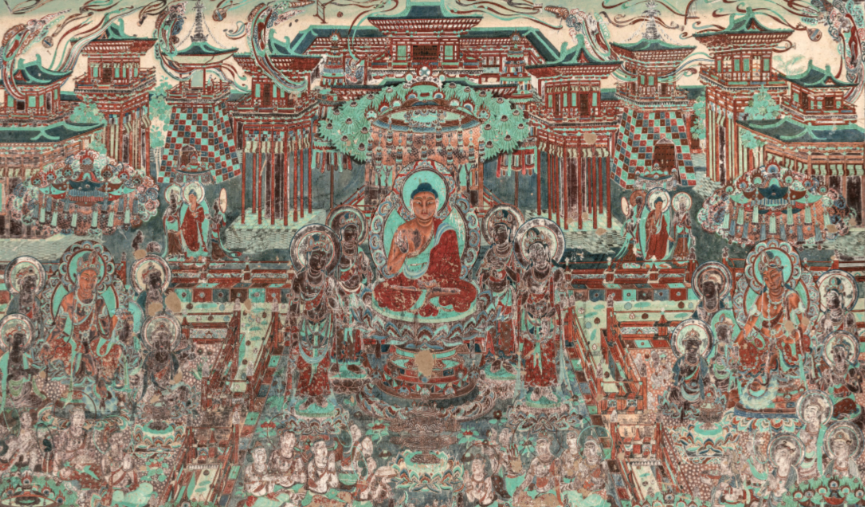
Travel Tips for Visiting the Art Gallery
Visit before or after the caves
You can visit the art gallery and exhibition center before entering the caves to gain some background knowledge, or visit them afterward to deepen your understanding of what you have seen.
Follow the designated visiting route
Both venues are located within the Mogao Grottoes scenic area, so follow the official visitor route when moving between the caves and exhibition venues.
Take a break from the desert heat
The air-conditioned art gallery provides a comfortable indoor space to rest, especially during the hotter months.
Allow extra time for the exhibition venues
If you are interested in Dunhuang art and history, set aside some additional time to explore the art gallery and exhibition center instead of leaving immediately after visiting the caves.
Check the latest visiting information
Opening hours, visiting arrangements, and access policies may change according to the season or current management arrangements. Check the latest official information before your trip.
Opening Hours
April 1–November 30: 8:00 AM–6:00 PM (Ticket sales end at 3:30 PM; last entry at 4:10 PM.)
December 1–March 31: 9:00 AM–5:00 PM (Ticket sales and entry end at 3:10 PM.)
FAQ About Visiting the Gallery
1. Where is the Dunhuang Research Academy Art Gallery located?
The Dunhuang Research Academy Art Gallery is located in the Mogao Grottoes scenic area in Dunhuang. Visitors can reach it by following the designated visiting route within the scenic area.
2. Is the Art Gallery inside the Mogao Grottoes scenic area?
Yes. The art gallery is located within the Mogao Grottoes scenic area, together with other exhibition venues, including the Dunhuang Grotto Art Protection and Research Exhibition Center.
3. What is the difference between the Art Gallery and the Exhibition Center?
The Dunhuang Research Academy Art Gallery focuses on the display and appreciation of Dunhuang art, while the Dunhuang Grotto Art Protection and Research Exhibition Center provides additional interpretation of grotto art through explanations, demonstrations, models, and cave replicas.
4. Should I visit the Art Gallery before or after the Mogao Caves?
You can visit it either before or after exploring the caves. Visiting beforehand can give you useful background knowledge about Dunhuang art, while visiting afterward can help you better understand the artworks and history you have just experienced.
5. How much time should I allow for the Art Gallery and Exhibition Center?
The amount of time depends on your interests and the exhibitions available during your visit. If you are interested in Dunhuang art and history, it is worth allowing some additional time to explore the exhibition venues.
6. Can I visit the Art Gallery without visiting the Mogao Caves?
The art gallery is located within the Mogao Grottoes scenic area, so access is subject to the scenic area's visiting arrangements. It is best to check the latest official information and ticket requirements before your visit.
Conclusion
The Dunhuang Research Academy Art Gallery offers an additional way to explore the artistic heritage of the Mogao Grottoes beyond the cave visit itself. Together with the Dunhuang Grotto Art Protection and Research Exhibition Center, it allows visitors to learn more about Dunhuang's grotto art, history, and cultural exchange along the ancient Silk Road.
Whether you visit before entering the caves or after exploring the grottoes, taking some time to explore these exhibition venues can make your Mogao Grottoes experience more complete and meaningful.