

Dunhuang Silk Road: History, Culture & Sites
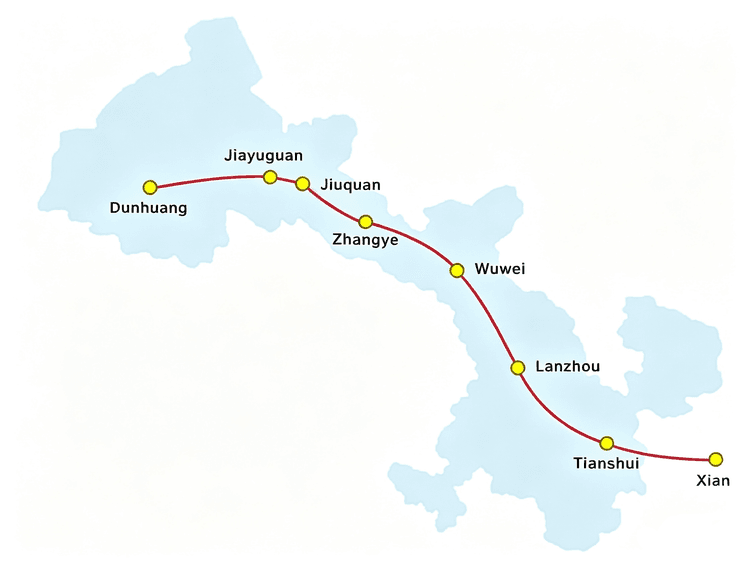
Located at the western end of the Hexi Corridor, Dunhuang was one of the most important cities along the ancient Silk Road. For centuries, its strategic location connected the heartland of China with the Western Regions, making it an important stop for merchants, travelers, envoys, and Buddhist monks journeying between East and West.
As a major crossroads of the ancient Silk Road, Dunhuang was not only a center of trade and transportation but also a meeting point for different cultures, religions, art, and knowledge. The movement of people and goods through the city shaped a unique cultural heritage that can still be seen in its ancient grottoes, historic passes, and archaeological sites.
Today, Dunhuang offers travelers a unique opportunity to explore the legacy of the Silk Road. From the world-famous Mogao Grottoes and historic Yangguan Pass to the desert landscapes of Mingsha Mountain and Crescent Lake, the city brings the history of the ancient Silk Road to life through its remarkable cultural and natural attractions.
_%E5%89%AF%E6%9C%AC.jpg&w=1200&q=75 "dunhuang silk road")
Recommended Tours:
8 Days Dunhuang to Lanzhou Tour
Dunhuang and the Ancient Silk Road
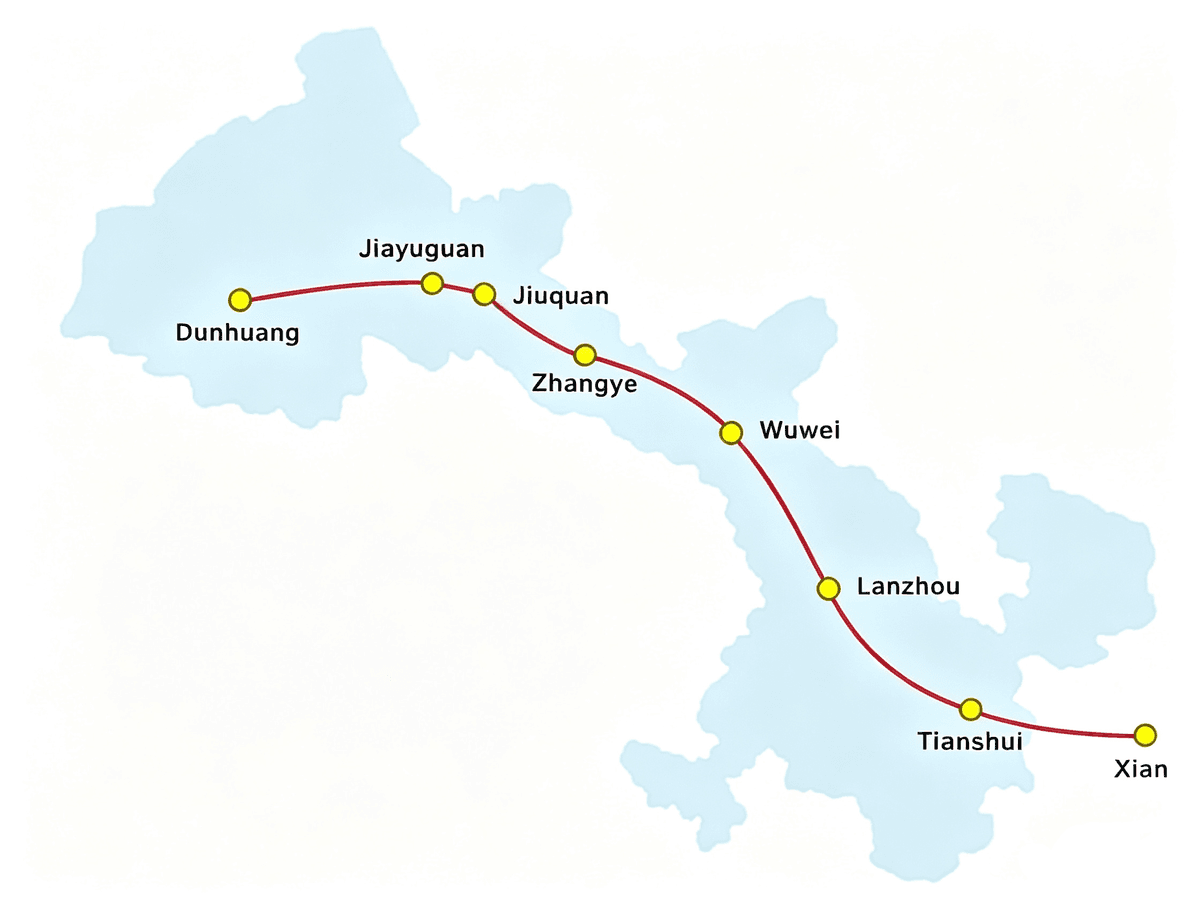
Dunhuang's importance on the ancient Silk Road was largely determined by its strategic location. Situated at the western end of the Hexi Corridor, the city stood at a key point between the central regions of ancient China and the lands to the west.
The Hexi Corridor
The Hexi Corridor is a narrow stretch of land between the Qilian Mountains to the south and the Gobi Desert to the north. For centuries, it served as an important passage connecting the ancient Chinese heartland with the regions further west.
Dunhuang was located at the western end of this corridor, where travelers could continue toward the Western Regions. Its position made it a natural stopping point for merchants, caravans, officials, and religious travelers crossing the region.
A Gateway to the Western Regions
In ancient Chinese history, the areas west of the Hexi Corridor were commonly known as the Western Regions. From Dunhuang, Silk Road routes continued westward toward areas that are now part of Xinjiang and Central Asia.
Dunhuang was established as a county in 111 BC during the Han Dynasty, strengthening its role as an important frontier settlement and gateway to the west. For travelers heading in either direction, the city became an important point of connection between the Chinese heartland and the lands beyond the frontier.
Because major routes heading west passed through the region, Dunhuang was historically regarded as a place where the roads to the west converged.
Dunhuang Through History
The Dunhuang area has a long and complex history. It was known as Sanwei in ancient times and was later associated with the name Guazhou. The name Dunhuang, meaning "prosperous and flourishing," was adopted during the Han Dynasty. During the Tang Dynasty, Dunhuang was also known as Shazhou, reflecting the city's close relationship with the surrounding desert landscape.
These changes in name and administration reflect the city's long history as a frontier settlement and an important point of contact between China and the Western Regions.
An Important East–West Transportation Hub
The ancient Silk Road was not a single road but a network of routes connecting different regions across Asia. Dunhuang became an important transportation hub within this network.
Travelers heading west could continue from Dunhuang toward several routes leading into Xinjiang and Central Asia, while those traveling east could follow the Hexi Corridor toward the heartland of China.
This strategic position allowed Dunhuang to develop into a prosperous city and helped establish its lasting importance in Silk Road history.

Why Was Dunhuang Important on the Silk Road?
Dunhuang's importance on the ancient Silk Road went far beyond its location. As a frontier city at the western end of the Hexi Corridor, it played an important role in military defense, travel, administration, and religious exchange. For centuries, the city served as a crucial link between the Chinese heartland and the Western Regions.
A Frontier Stronghold
Dunhuang was an important frontier settlement and defensive stronghold in ancient China. Its position near the western end of the Hexi Corridor made it strategically important for protecting the routes leading toward the Western Regions.
During the Han Dynasty, the establishment of Dunhuang as a county in 111 BC strengthened the Chinese presence in the region. Defensive structures, military settlements, and frontier passes were developed to protect important routes and maintain control over movement through the area.
The remains of the Han Dynasty Great Wall, Yumen Pass, and Yangguan Pass provide evidence of Dunhuang's role as a frontier center. These sites also show how military defense and transportation were closely connected along the ancient Silk Road.
A Gateway for Travelers and Envoys
Dunhuang was an important gateway between China and the Western Regions. Merchants, envoys, officials, monks, and other travelers passed through the city as they journeyed between East and West.
For travelers heading west, Dunhuang was a major stopping point before continuing toward the desert and the regions beyond the Chinese frontier. For those arriving from the west, it provided an important entrance into the Hexi Corridor and the Chinese heartland.
As different groups passed through Dunhuang, the city became a place where people, goods, information, and ideas came together. Its role as a transportation hub helped make the Silk Road not just a network for trade, but also a route for communication between different regions and civilizations.
A Center of Religious Exchange
Dunhuang was also an important center of religious exchange, particularly for the spread and development of Buddhism along the Silk Road.
Buddhist monks and travelers crossed Central Asia and the Western Regions before reaching China, and Dunhuang became an important stop along these journeys. They brought Buddhist teachings, scriptures, artistic traditions, and cultural influences from different parts of Asia.
Over the centuries, these exchanges contributed to the development of Dunhuang's distinctive Buddhist culture. The Mogao Grottoes, Yulin Grottoes, and West Thousand Buddha Caves preserve remarkable evidence of this history through their murals, sculptures, and religious art.
The grottoes demonstrate that the Silk Road carried more than merchants and goods. It also provided a route through which religions, artistic traditions, knowledge, and ideas traveled across Asia.
Buddhism and the Silk Road
The Silk Road played an important role in the spread of Buddhism across Asia, and Dunhuang became one of the most important centers of Buddhist culture along the route.
Buddhism in Dunhuang
As Buddhism spread eastward along the Silk Road, it reached Dunhuang and gradually became an important part of the city's cultural and religious life.
Over many centuries, Buddhist communities, monks, artists, and patrons contributed to the construction and decoration of grottoes in and around Dunhuang. These caves served not only as places of religious practice but also as important repositories of art, history, and cultural knowledge.
Monks and Travelers
Buddhist monks were among the many travelers who crossed the Silk Road. Some traveled between India, Central Asia, and China in search of Buddhist teachings and scriptures.
Dunhuang's strategic location made it an important stop along these journeys. Religious travelers brought teachings, manuscripts, artistic styles, and cultural traditions from different regions, contributing to the development of Dunhuang's Buddhist culture.
The grottoes of Dunhuang preserve important evidence of this movement of religion and knowledge across Asia.
Buddhist Culture and Art
Dunhuang is particularly famous for its Buddhist grottoes, including the Mogao Grottoes, Yulin Grottoes, and West Thousand Buddha Caves.
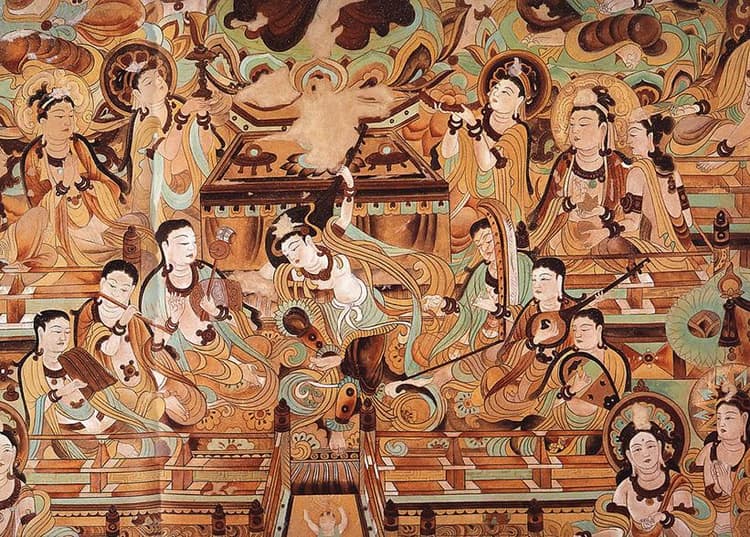
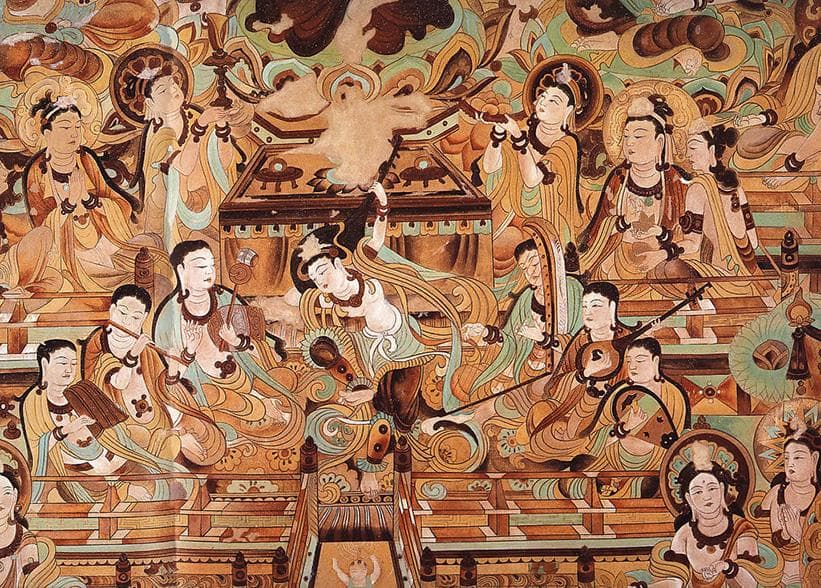
The murals and sculptures found in these grottoes reflect the development of Buddhist art over many centuries. They also contain images of music, dance, architecture, clothing, daily life, and religious ceremonies, providing valuable insights into the societies connected by the Silk Road.
The artistic traditions preserved in Dunhuang demonstrate how religious and cultural influences traveled along the ancient Silk Road and developed through interaction with local traditions.
Mogao Grottoes: A Silk Road Cultural Treasure
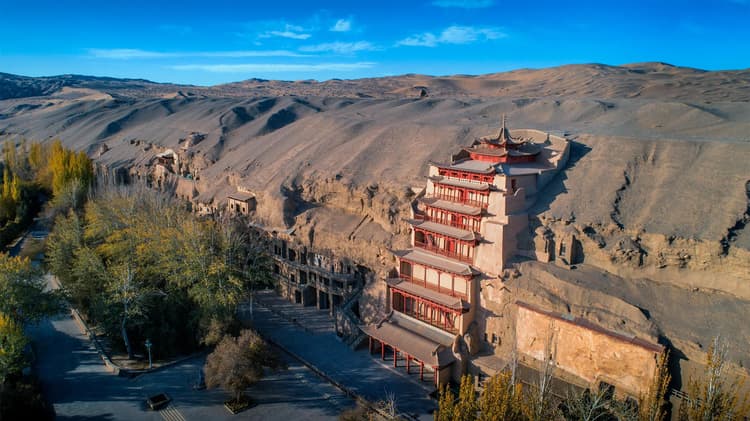
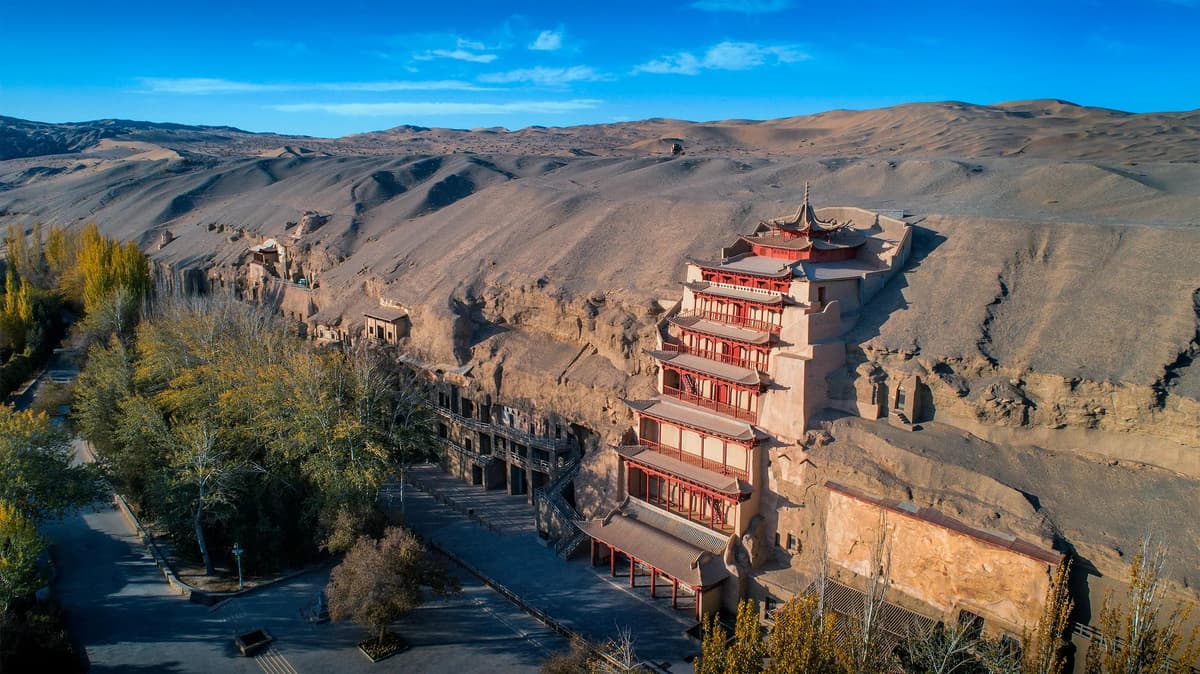
The Mogao Grottoes are the most famous cultural attraction in Dunhuang and one of the world's most important collections of Buddhist art.
Located about 25 kilometers southeast of Dunhuang, the grottoes were built along a cliff at the eastern foothills of Mingsha Mountain. The grotto complex stretches for approximately 1.6 kilometers along the cliff.
History of the Mogao Grottoes
According to historical records, construction of the Mogao Grottoes began in 366 AD, traditionally attributed to a monk named Lezun.
Over the following centuries, successive generations continued to construct, expand, and decorate the caves. From the Northern Wei to the Yuan Dynasty, hundreds of grottoes were created, preserving more than a thousand years of Buddhist art and history.
Today, 492 caves survive at the Mogao Grottoes. Together, they contain approximately 45,000 square meters of mural paintings and more than 3,000 painted sculptures, making the site an extraordinary record of the development of Buddhist art in China.
Murals
The Mogao Grottoes murals are among the site's most remarkable features. The paintings depict Buddhist stories, celestial figures, religious ceremonies, musicians, dancers, animals, architecture, and scenes from everyday life.
Beyond their artistic value, the murals provide important information about the societies and cultures connected by the Silk Road. They offer glimpses into historical clothing, music, architecture, religious practices, and cultural traditions from different periods.
Sculptures
The grottoes also contain thousands of painted sculptures, ranging from small figures to large Buddhist statues.
Their styles changed over time, reflecting both the development of Buddhist art in China and artistic influences from other parts of Asia. Together with the murals, these sculptures demonstrate the long history of religious and artistic exchange in Dunhuang.
Cultural Influences
The significance of the Mogao Grottoes lies not only in their religious art but also in the cultural connections they preserve.
Dunhuang was a major meeting point along the Silk Road, and the art found in the grottoes reflects the interaction of different cultural traditions. The site therefore provides an important window into the movement of religion, art, knowledge, and ideas across ancient Asia.
UNESCO World Heritage Site
In 1987, the Mogao Grottoes were inscribed on the UNESCO World Heritage List. UNESCO recognizes the grottoes as a remarkable example of Buddhist art and as an important cultural site located at a strategic point along the ancient Silk Road.
Today, the Mogao Grottoes are one of the most important destinations for travelers interested in the history and cultural legacy of the Silk Road.
Silk Road Sites to Visit in Dunhuang
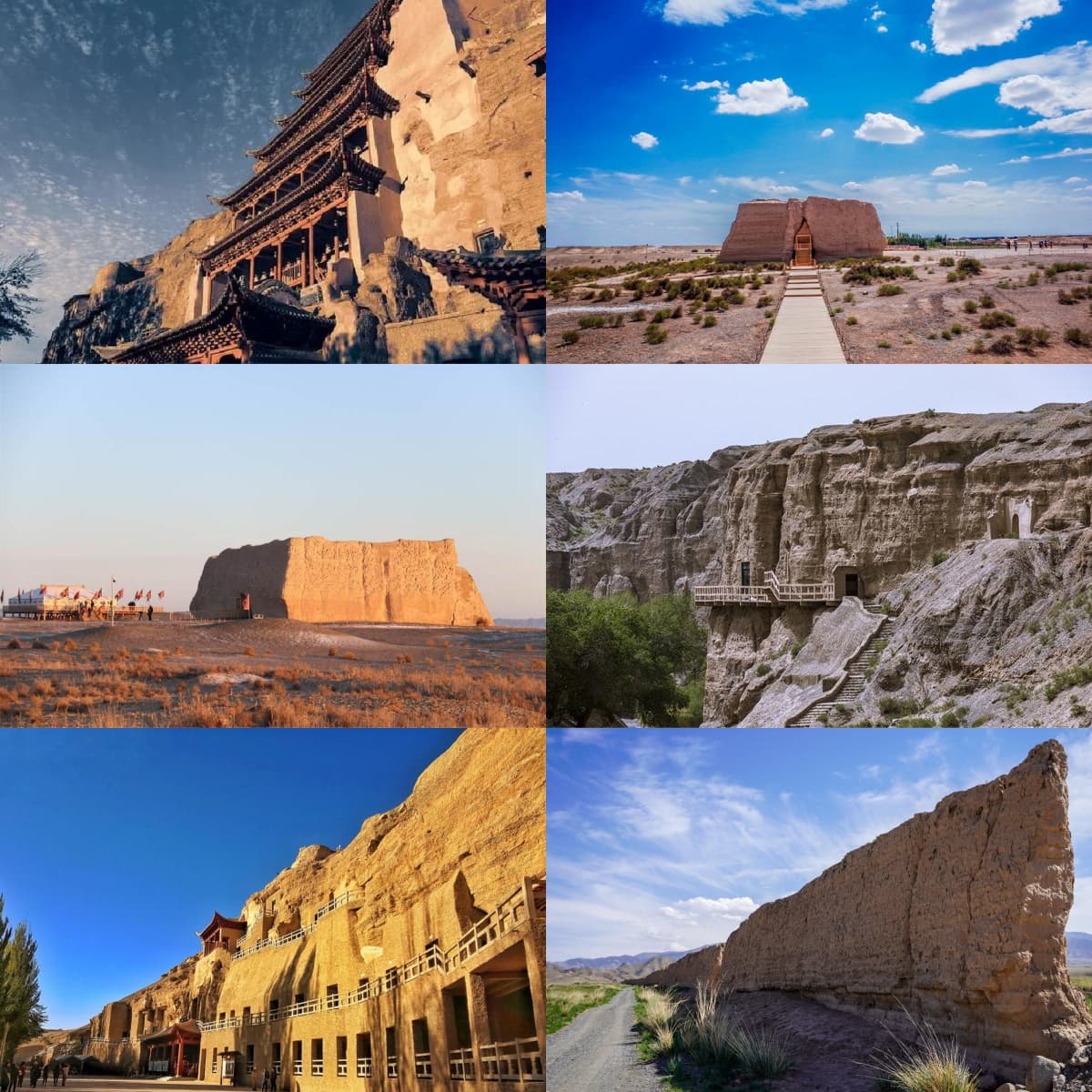
Dunhuang is home to a variety of historical sites connected with the ancient Silk Road. Visiting these places allows travelers to understand the city's history from different perspectives, from Buddhist art and religious exchange to trade routes and frontier defense.
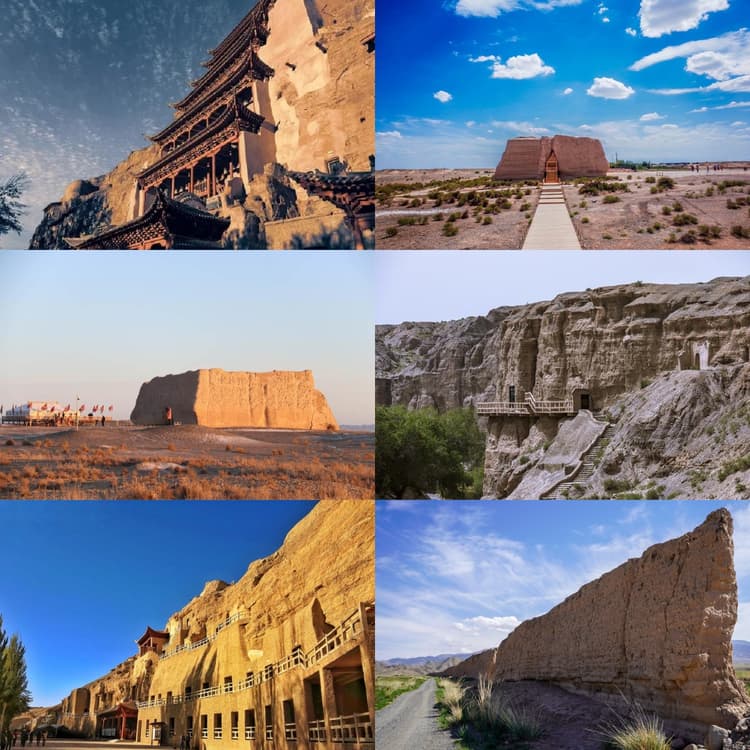
Mogao Grottoes
The Mogao Grottoes are the essential stop for anyone interested in the cultural history of the Silk Road. With centuries of Buddhist murals, sculptures, and grotto architecture, the site provides a remarkable introduction to the religious, artistic, and cultural exchanges that took place in Dunhuang.
Yangguan Pass
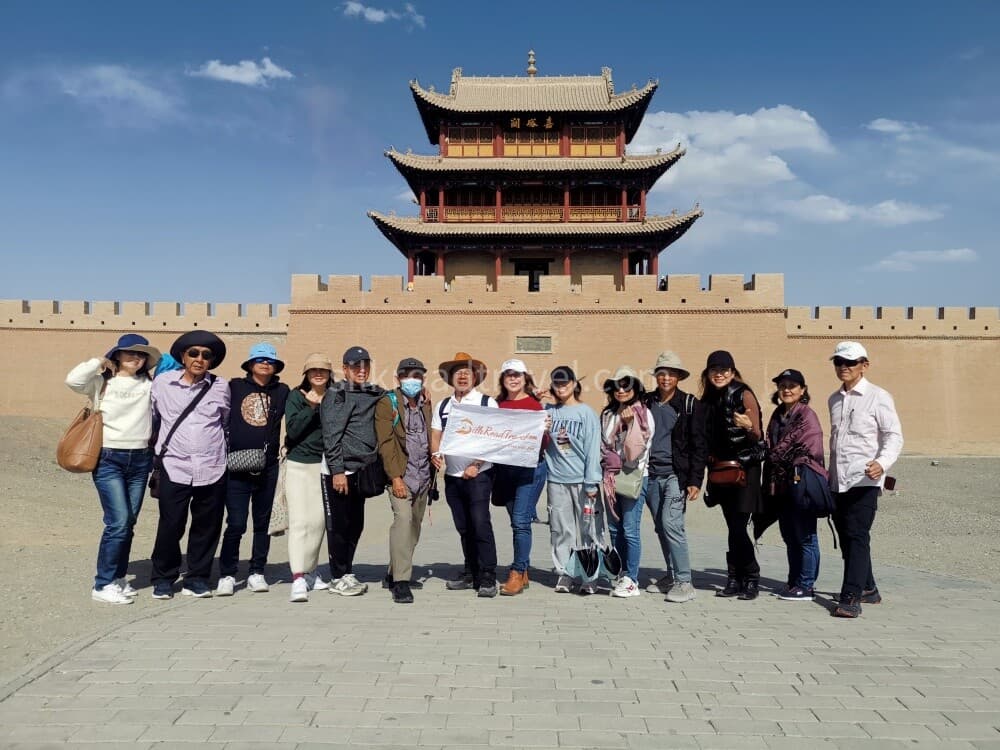
Located southwest of Dunhuang, Yangguan Pass was one of the important frontier passes associated with the ancient Silk Road.
For travelers heading west, passing through Yangguan meant leaving the central regions of China and entering the Western Regions. Today, the surrounding desert landscape and historical remains offer visitors a sense of the challenging journeys undertaken by ancient travelers.
Yumen Pass
Yumen Pass, also known as Little Square City, was another important frontier checkpoint near Dunhuang. The pass formed part of the ancient defensive system in the region and played an important role in controlling routes leading toward the west.
Surrounded by the vast Gobi Desert, the remains of Yumen Pass offer a striking glimpse into the frontier landscape through which Silk Road travelers once passed.
Yulin Grottoes
Located in Guazhou County near Dunhuang, the Yulin Grottoes are another important collection of Buddhist grottoes.
The site contains numerous murals and sculptures created during different historical periods. Like the Mogao Grottoes, Yulin Grottoes reflect the development of Buddhist art and the cultural connections that existed along the Silk Road.
West Thousand Buddha Caves
The West Thousand Buddha Caves are located southwest of Dunhuang and contain Buddhist grottoes with murals and sculptures from different historical periods.
Although smaller and less famous than the Mogao Grottoes, the site provides another perspective on the development of Buddhist culture and art in the Dunhuang region.
Han Dynasty Great Wall
The area around Dunhuang also preserves remains of the Han Dynasty Great Wall and associated frontier structures.
Unlike the famous brick walls near Beijing, sections of the western Han Dynasty Great Wall were often built with local materials such as rammed earth. These remains demonstrate how ancient China protected important settlements and routes along its western frontier.
Experience the Silk Road in Dunhuang Today
Although the ancient Silk Road is no longer used as a major trade route, its legacy remains an important part of the Dunhuang travel experience. Today, visitors can explore ancient cultural sites, discover desert landscapes, and experience activities that evoke the journeys of ancient Silk Road travelers.
Camel Riding
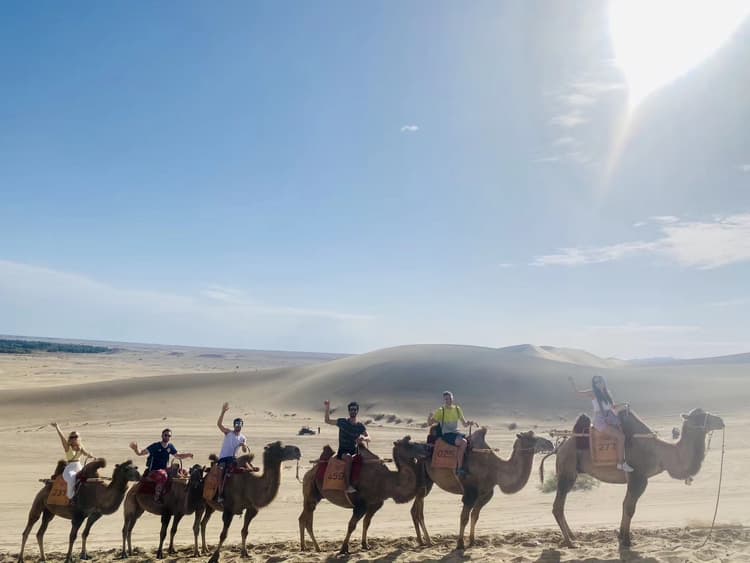
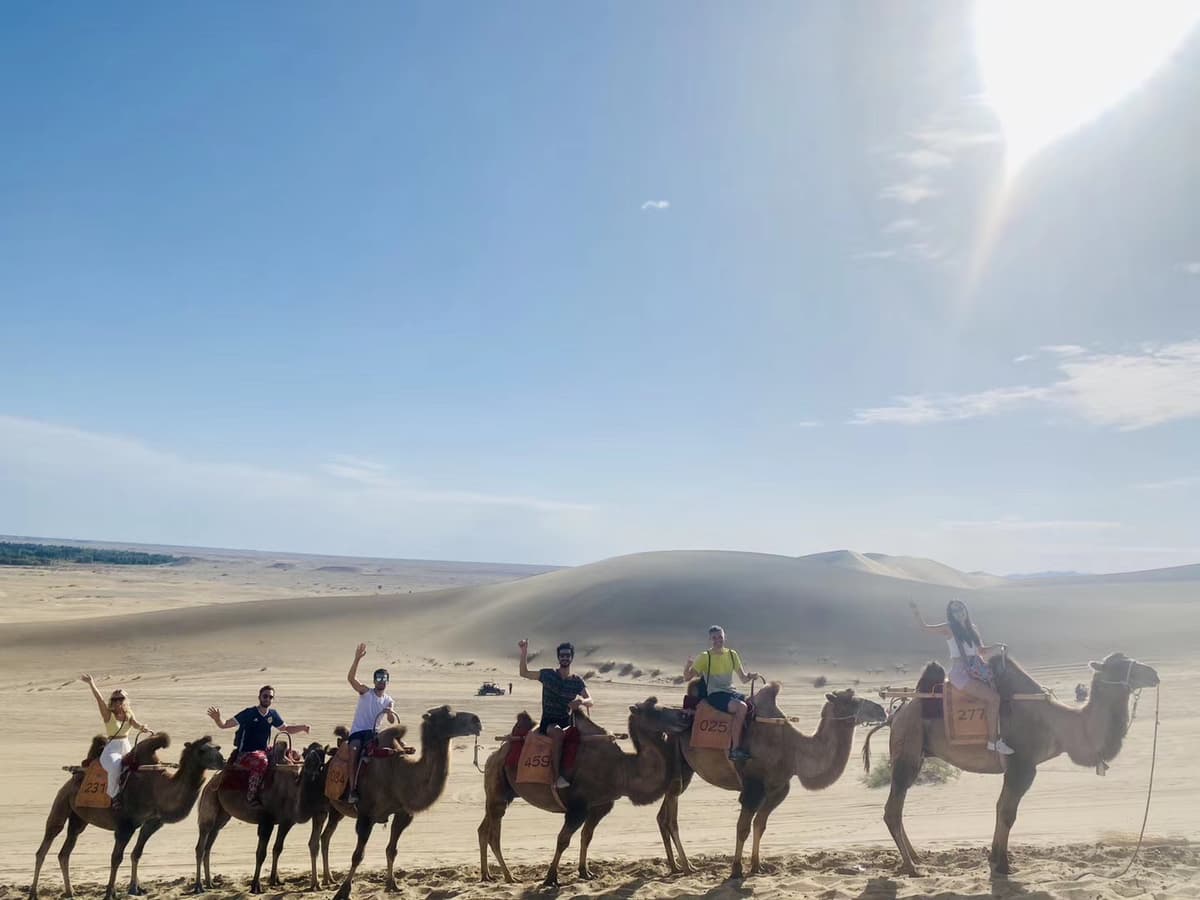
Camel riding is one of the most popular ways to experience the desert around Dunhuang. Camels were traditionally used by travelers and caravans to cross the deserts along the Silk Road. Riding a camel among the dunes offers visitors a memorable way to connect with this aspect of ancient Silk Road travel.
Desert Experiences
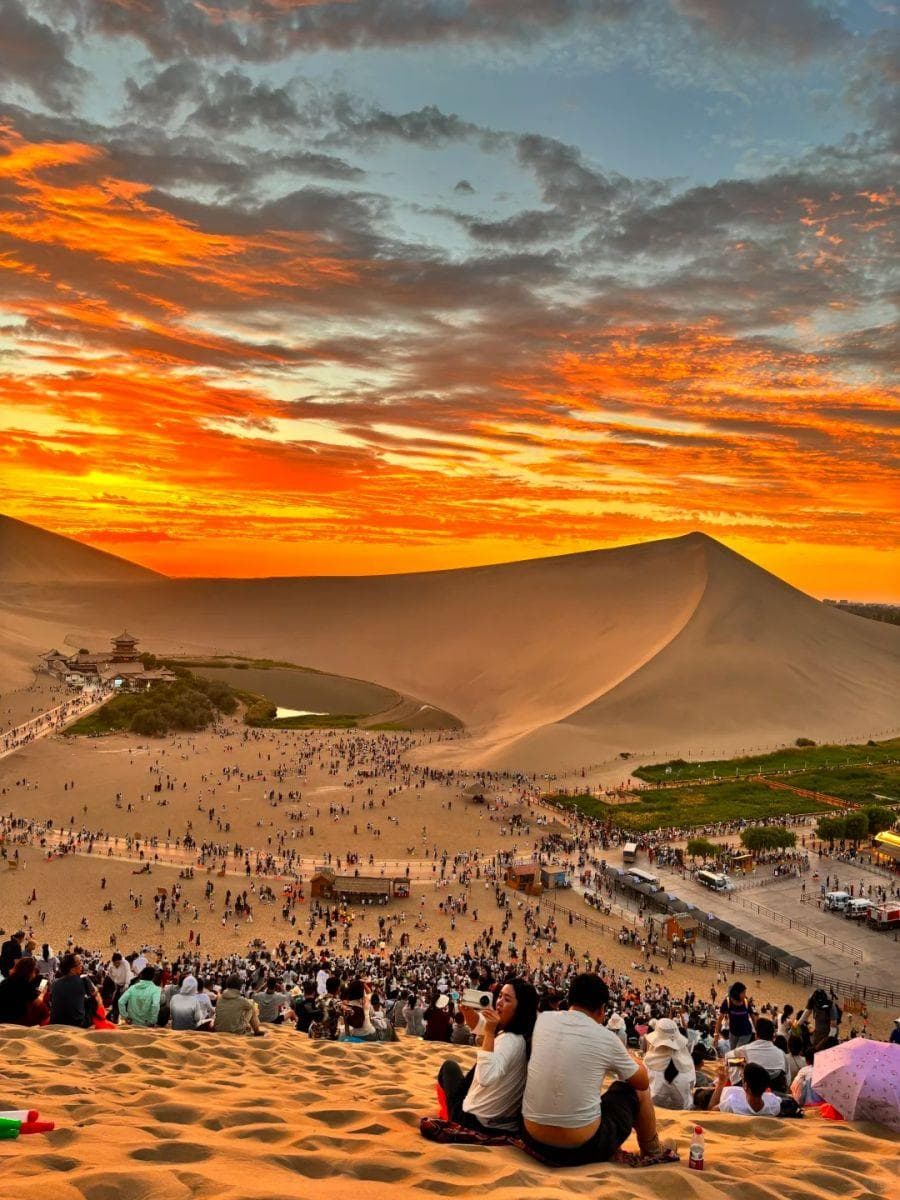
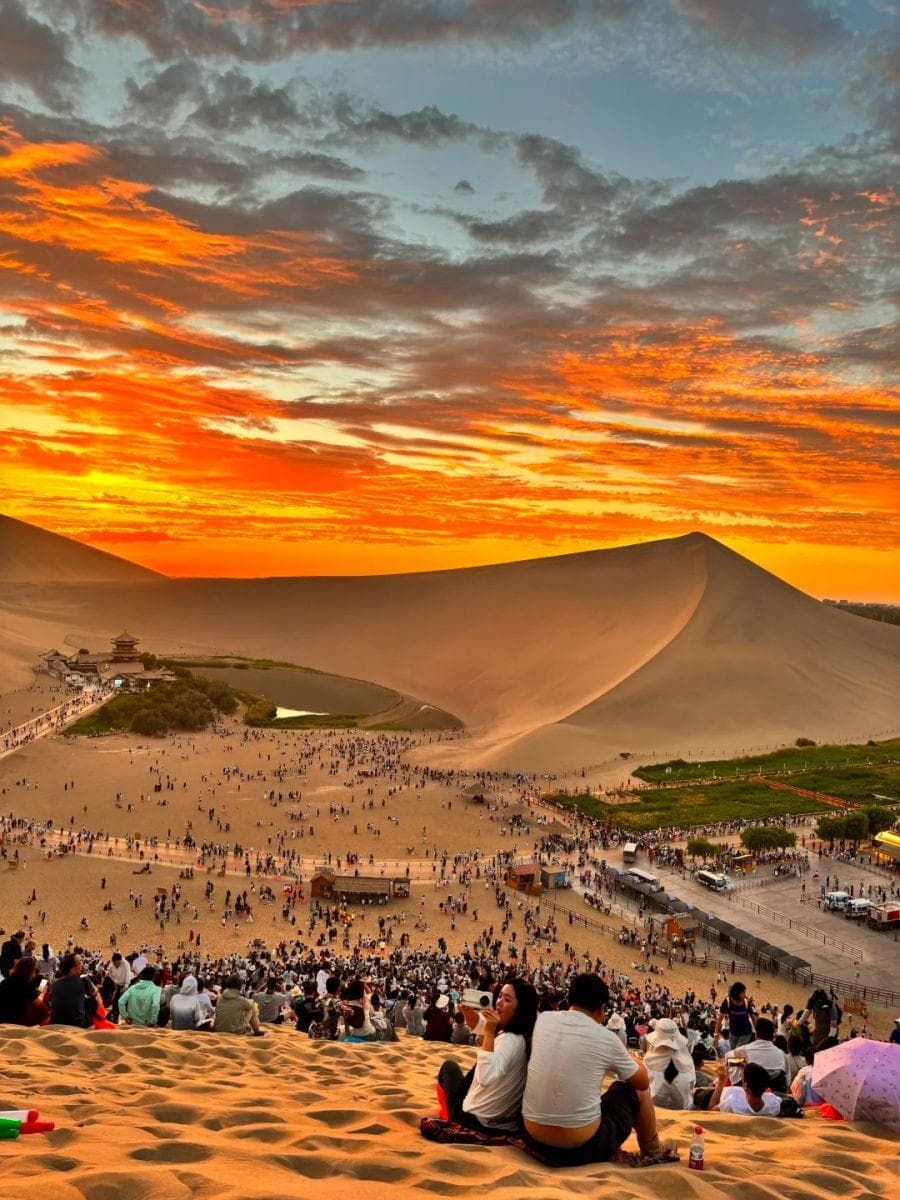
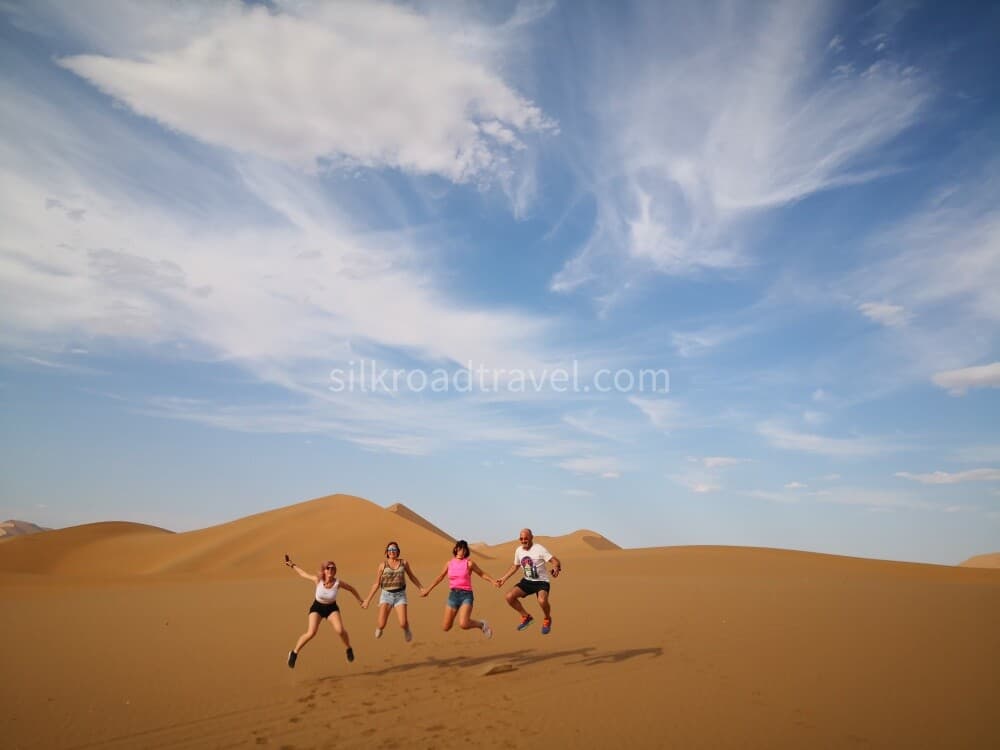
The desert landscapes around Dunhuang are an essential part of the city's Silk Road atmosphere. At Mingsha Mountain, travelers can walk across the dunes, enjoy panoramic desert views, and experience the striking contrast between the golden sand and surrounding mountains.
The landscape also helps visitors appreciate the challenging environment faced by merchants and caravans crossing the deserts of northwestern China.
Explore Ancient Passes
Visiting Yangguan Pass and Yumen Pass provides a different Silk Road experience from exploring the grottoes. Standing among the remains of these ancient frontier sites, travelers can imagine merchants, soldiers, envoys, and other travelers passing through the region on their journeys between China and the Western Regions.
Silk Road Museums and Cultural Experiences
Dunhuang's museums and cultural sites provide additional opportunities to learn about the ancient Silk Road. Through archaeological discoveries, historical documents, cultural relics, and exhibitions, visitors can learn more about trade, religion, daily life, and cultural exchange in ancient Dunhuang.
These experiences are particularly useful for travelers who want to understand the historical context behind the city's famous attractions.
Dunhuang Silk Road FAQ
1. Why is Dunhuang important on the Silk Road?
Dunhuang was an important transportation, trade, and cultural center along the ancient Silk Road. Its location at the western end of the Hexi Corridor connected the Chinese heartland with the Western Regions and made it an important stopping point for merchants, travelers, and Buddhist monks.
2. What was Dunhuang's role in the ancient Silk Road?
Dunhuang served as a major trade and transportation hub and a center of cultural and religious exchange. Goods, people, religions, art, and ideas moved through the city as travelers journeyed between East and West.
3. What Silk Road sites can I visit in Dunhuang?
Major Silk Road sites in and around Dunhuang include the Mogao Grottoes, Yangguan Pass, Yumen Pass, Yulin Grottoes, West Thousand Buddha Caves, and Han Dynasty Great Wall.
4. Why are the Mogao Grottoes important to the Silk Road?
The Mogao Grottoes preserve more than a thousand years of Buddhist art and cultural history. Their murals and sculptures reflect the religious and artistic exchanges that took place along the Silk Road, making them an important record of ancient cultural interaction.
5. Can I still experience the Silk Road in Dunhuang today?
Yes. Although the ancient trade routes are no longer active in the same way, travelers can explore historic Silk Road sites, visit the Mogao Grottoes, see ancient passes, explore the desert, and enjoy activities such as camel riding.
6. How many days do I need to explore Dunhuang's Silk Road sites?
For a first visit, 2–3 days is generally enough to see the major Silk Road attractions, including the Mogao Grottoes, Mingsha Mountain and Crescent Lake, and one or more historic sites around the city. Travelers with more time can explore additional grottoes, ancient ruins, and nearby Silk Road sites.
Conclusion
Dunhuang is one of the best places to discover the history and cultural legacy of the ancient Silk Road in China. Its strategic location at the western end of the Hexi Corridor made it an important gateway between China and the Western Regions, while centuries of trade, travel, and cultural exchange transformed it into a major center of Silk Road civilization.
Today, the city's Mogao Grottoes, ancient passes, Buddhist grottoes, desert landscapes, and historic sites allow travelers to experience different aspects of this remarkable history. Whether exploring centuries-old murals, standing beside ancient frontier ruins, or riding a camel across the desert, a journey through Dunhuang offers a unique opportunity to follow in the footsteps of the travelers who once crossed the Silk Road.
_%25E5%2589%25AF%25E6%259C%25AC.jpg&w=750&q=75 "dunhuang silk road")